Romanticism · 1830
Niagara Falls (Thomas Cole, 1830)
Thomas Cole (1801–1848) sukūrė Niagara Falls. Šis kūrinys datuojamas 1830 m. Šis kūrinys priklaulo Romanticism kieruliui. Pagaminta naudojant Oil On Canvas.
- 1830
- Oil On Canvas

 Peržiūrėti realaus dydžio版

 Rankinio darbo aliejinės imitacijos paveikslas
 Pasidalinti
 Dalintis
 Informacinė l lapelė


 Atsisiųsti
 Panašūs eksponatai
 Rentgeno spindulių nuotrauka
 Automatinė diorama
 问答

 Statistika
Niagara Falls, trumpai
- Pavadinimas
- Niagara Falls
- Autorius
- Thomas Cole (1801–1848)
- Dizainere/is gimęs
- Boltonas, Jungtinė Karalystė
- Data
- 1830
- Mediumas
- Oil On Canvas
- Judėjimas
- Romanticism
- Laikotarpis
- 19th Century
- Tema
- waterfall, people, trees, rocks, river, mist
Ką vaizduoja Niagara Falls?
Identification of Niagara Falls by Thomas Cole
Niagara Falls is an oil painting created by Thomas Cole in 1830. The work focuses on the American wilderness and the depiction of natural power. It captures a large body of water falling from a great height, creating a scene of cascading water and rising mist. The landscape includes several trees and rocky terrain surrounding the falls.
The composition includes a man standing on a rock in the foreground. Two other individuals are visible within the scene: one person stands closer to the left side, while another is positioned further back on the right side. These figures provide a sense of scale against the massive movement of the water. The environment is characterized by lush, forested cliffs and a sky filled with clouds and mist.
The Composition and Visual Elements
The composition is centered on a large body of water falling from a great height, creating a vertical movement that dominates the scene. This cascading water descends into a lower river area, surrounded by several trees that frame the landscape. A man is positioned on a rock in the foreground, facing the falls. His presence provides a sense of scale against the massive volume of the water.
Two other people are visible within the landscape, distributed to create depth. One individual stands closer to the left side of the composition, while another person is located further back on the right side. These figures are placed amidst the natural terrain, which includes rocky outcrops and dense foliage. The arrangement of the trees and the placement of the figures guide the eye from the immediate foreground toward the distant, falling water.
Technique and Artistic Style
This oil painting is a primary example of the Romantic landscape style. As a foundational work of the Hudson River School, it utilizes a composition that emphasizes the scale of the natural world. The artist employs a specific technique of layering oil to render the textures of the cascading water and the surrounding rock formations. The application of paint allows for a depiction of mist rising from the base of the falls, creating a sense of atmospheric depth against the sky.
The artist relies heavily on the interplay of light and shadow to establish the environment. Light appears to catch the spray of the water and the edges of the foliage, while deep shadows are placed within the crevices of the cliffs and the dense areas of the forest. This contrast defines the physical volume of the landscape. The brushwork captures the movement of the water and the varied textures of the trees, grounding the scene in a tangible, physical reality.
Related Works by Thomas Cole
The artist's exploration of the American wilderness includes several significant compositions from different periods of his career. In 1826, he produced Kaaterskill Falls. This work focused on the vertical energy of the landscape. Later, in 1836, he completed The Oxbow. This painting juxtaposes a river valley against cultivated farmland. During that same year, he also finished The Course of Empire, a five-part series tracing the rise and fall of civilizations.
Cole continued to develop his approach to landscape and allegory in his later years. In 1842, he created The Voyage of Life, an allegorical series depicting the various stages of an individual's existence. These works demonstrate his ongoing interest in the relationship between the natural environment and human presence. His output moved from the study of specific waterfalls to broader, more complex thematic sequences.
Niagara Falls dididraudžios kokybės vaizdai

Viešoji domenė: suregalis mirė 1848 m.
Kiti dydžiai, iškarai ir citavimo informacija →Thomas Cole, Niagara Falls (1830). Viešoji domenė.
Atsakimai į klausimus apie Niagara Falls
Kuriem metais buvo sukurta „Niagara Falls“ – Thomas Cole?
„Niagara Falls“ – Thomas Cole sukurtas 1830 m.
Kokia technika buvo panaudota kūriniam darbui „Niagara Falls“ – Thomas Cole?
Thomas Cole kūriniui „Niagara Falls“ panaudojo Oil On Canvas techniką. Ši technika apibrėžė originalaus kūrinio medžiaginę prigimtį.
Kokios temos atsispindi kūrynioje „Niagara Falls“ – Thomas Cole?
„Niagara Falls“ – Thomas Cole vaizdeletas: waterfall, people, trees, rocks, river, mist, clouds.
Ar „Niagara Falls“ – Thomas Cole vaizdą galima laisvai reprodukcijaoti?
„Niagara Falls“ – Thomas Cole yra yra viešosios erdvės dalis – jo autorinė teisė pasibaigusi. Šis statusas nustato, kaip galima reprodukcijaus šio kūrinio vaizdą.
Kas sukūrė „Niagara Falls“?
„Niagara Falls“ kūrybinį darbą sukūrė Thomas Cole. Šioje puslapio informacijoje aprašomas Thomas Cole originalus kūrinys.
Kokiam meno stiliui priklauso „Niagara Falls“ – Thomas Cole?
„Niagara Falls“ yra Romanticism stiliaus kūrinys. Šis dailos kryptis nurodo meninę tradiciją, kurios šis darbas yra dalis.
Kokio Thomas Cole kūrybos laikotarpio priklauso „Niagara Falls“?
„Niagara Falls“ atspindi Thomas Cole kūrybinį laikotarpį Mature Period.
Kokia buvo Thomas Cole amžius sukuriant „Niagara Falls“?
Kai 1830 m. buvo sukurta „Niagara Falls“, Thomas Cole – gimęs 1801 m. – buvo 29 metų amžiaus.
Ar Thomas Cole kūrinys „Niagara Falls“ yra viešosios nuoslegos ir kodėl?
Autorinės teisės statusas kūriniui „Niagara Falls“ – yra viešosios erdvės dalis – jo autorinė teisė pasibaigusi – nustatomas remiantis to, kad menininkas mirė 1848 m.
Apie šį menininką, Thomas Cole

1801–1848, Jungtinė Karalystė
Thomas Cole
Amerikos kraujaudų tapimo pionierius Thomas Cole – vardas, tapęs sinonimu gimimo tikrai amerikietiškoje menėje, yra viena esminių XIX amžiaus tapybos figūrų. Gimęs 1801 m. Anglijos Lanksire, Bolton le Moors mieste, jis savo ankstyvojo gyvenimo neišskleidė jokių ženklų apie tai, kokį gilią įtaką jis padės meninei aplinkai. Emigravęs į Jungtines Amerikos Valstijas su šeima 1ng 1818 m.
Taip pat Thomas Cole darbai
 Šiaurės Amerika Šešėlis
 Architekto svajonė1840
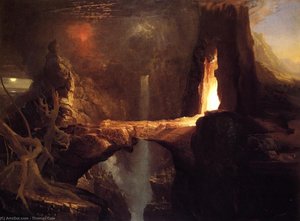 Išvarymas. Mėnulio ir ugnies šviesa1828
 Fiorentų vaizdas iš San Miniato1837

Esdai apie Niagara Falls
 French artworks of the 1880sFrench Impressionist masterpieces by Claude Monet, Pierre-Auguste Renoir, and Georges Seurat. Find museum-quality reproductions on Original…
 Barbizon School vs. Hudson River School: Two Visions of the Natural WorldDiscover the key differences between Barbizon and Hudson River School landscapes. Master art history with our expert comparison guide.
 The Sublime Cascade: Examining the Tradition of Waterfall Landscapes in Art HistoryExplore the evolution of waterfall landscapes from the Northern Renaissance to the Hudson River School. Trace this epic art history now.