Pre-Raphaelite Revival · 1847
Infancy (John Everett Millais, 1847)
Infancy is a work by John Everett Millais (1829–1896). It dates from 1847. It belongs to the Pre-Raphaelite Revival movement. It is made in Oil On Canvas. It is kept at Leeds Art Gallery in Leidas, Jungtinė Karalystė.
- 1847
- Oil On Canvas
- Leeds Art Gallery, Leidas

 Peržiūrėti realaus dydžio版

 Rankinio darbo aliejinės imitacijos paveikslas
 Pasidalinti
 Dalintis
 Vadovas


 Atsisiųsti
 Panašūs eksponatai
 Rentgeno spindulių nuotrauka
 Automatinė diorama
 问答

 Statistika
Infancy: the essentials
- Title
- Infancy
- Artist
- John Everett Millais (1829–1896)
- Artist born in
- Sautamptonas, Jungtinė Karalystė
- Date
- 1847
- Medium
- Oil On Canvas
- Where to see it
- Leeds Art Gallery, Leidas, Jungtinė Karalystė
- Movement
- Pre-Raphaelite Revival
- Period
- 19th Century
- Subject
- motherhood, childhood, pastoral, innocence, victorian, landscape
Looking at Infancy
Infancy by Sir John Everett Millais: A Window into Victorian Sentiment
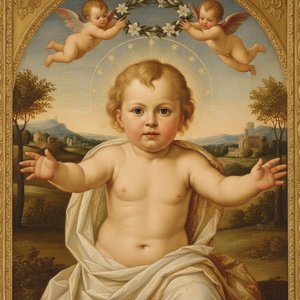
Sir John Everett Millais’s “Infancy,” completed in 1847, is more than just a depiction of a mother and her children; it's a meticulously crafted meditation on innocence, domesticity, and the burgeoning ideals of the Pre-Raphaelite movement. This serene scene, rendered with an almost unsettling realism, immediately draws the viewer into a world of quiet contemplation, inviting us to witness a tender moment frozen in time. The painting’s arched composition, reminiscent of medieval altarpieces, elevates the subject matter, suggesting a sacredness and timeless quality that resonated deeply with Victorian sensibilities.
A Masterclass in Pre-Raphaelite Technique
- Detailed Observation: Millais’s genius lay in his unwavering commitment to observation. He spent an extraordinary amount of time studying the subjects – the model, the children, and even the sheep – striving for a level of accuracy that bordered on photographic. This dedication is evident in every detail, from the delicate folds of the mother's dress to the individual strands of hair framing her face.
- Layered Application: The painting’s remarkable smoothness stems from Millais’s masterful technique of layering paint. He built up tones gradually, creating subtle gradations that give the figures and landscape a palpable sense of depth and volume. This painstaking process demanded immense patience and control.
- Color Palette & Light: The muted color palette – dominated by blues, creams, and browns – contributes significantly to the painting’s tranquil atmosphere. Millais expertly manipulated light, employing soft, diffused illumination that eliminates harsh shadows and enhances the sense of serenity.
Symbolism and Emotional Resonance
“Infancy” is rich in symbolic meaning, reflecting the prevailing concerns and aesthetic values of Victorian society. The presence of sheep, a recurring motif in Millais’s work, carries multiple layers of interpretation. They can be seen as representing purity, gentleness, or even allusions to biblical imagery – particularly the story of Jacob wrestling with the angel. Beyond these specific references, the painting powerfully conveys feelings of peace, tenderness, and maternal devotion. The arched format itself suggests a portal, a sacred space where the viewer is invited to contemplate the beauty and sanctity of family life.
Historical Context and Artistic Influence
Created during a period of significant artistic upheaval in Britain, “Infancy” stands as a pivotal work within the Pre-Raphaelite Brotherhood. This group of artists rebelled against the academic conventions of the Royal Academy, seeking to revive the style and spirit of art produced before Raphael. Millais’s meticulous realism, his emphasis on naturalism, and his rejection of idealized forms were all hallmarks of this movement. “Infancy” exemplifies these principles perfectly, solidifying Millais's position as a leading figure in British art and profoundly influencing generations of artists to come. The painting’s enduring appeal lies not only in its technical brilliance but also in its ability to evoke a timeless sense of wonder and beauty.
Where Infancy hangs today
Leeds Art Gallery
Leidas, Jungtinė Karalystė
Viktorietiška Britų vizijos šventovė Įkvėpusi į gyvybingą Vakarų Jorkšyro širdį, Leidos meno galerija stoji kaip gilus meno globėjimo ir miesto didvybiškumo įžymė. Įkurta 1888 metais, siekiant pažymėti Viktorijos karalienės Auksiną jubilieją, galerija gimė iš didingo intelektualinio augimo gesto, atspindinčio to laikotarpio gilų įsipareigojimą pažangai ir estetinėms subtilybėms. Pati pastatas yra Beaux Arts architektūros šedevras, kurį suprojektavo vizionierius William Henry Thorp.


Infancy in high resolution
John Everett Millais, Infancy (1847), Leeds Art Gallery. Public domain.
A digital expert checks the colors against the original painting and retouches the file, faithful to the artist's brushwork.
Buy the high-resolution imageQuestions about Infancy
Kaip kontrastas ir harmonija susilieja kūryboje „Infancy“?
„Infancy“ – John Everett Millais spalvų kompozicijoje Statement kontrastas susilieja su Softly Mixed Palette harmonija.
Kuriame namų kambaryje gerai tiktų „Infancy“ reprodukcija?
Kūrinys „„Infancy“ – John Everett Millais“ rekomenduojamas Living Room. Šis pasiūlymas pagrįstas darbo tema, spalvomis ir nuotaika.
Kokią atmosferą į kambarį atneštų „Infancy“ – John Everett Millais reprodukcija?
Savo Serene nuotaika „Infancy“ siūloma Living Room erdvei.
Kokio dydžio „Infancy“ – John Everett Millais spausdinimas tinka rekomenduojamai patalpai?
Rekomenduojamas derinimas kūriniui „Infancy“ – John Everett Millais: Large dydžio spausdinimas, skirtas Living Room.
Ar studentams skirtas informacinis lapelis apie „Infancy“ – John Everett Millais yra prieinamas?
„Infancy“ – John Everett Millais Informacinė medžiaga puslapioje galima rasti spausdinamą dviejų lapų informacinę lentelę: kūrinį su jo tapatybės lentele, laikotarpį nurodantį juostą, atitinkantį gyvenimo metus, kitus šio autoriaus darbus, išmatuotą spalvų paletę bei keturiomis stiliais paruoštus citavimo pavyzdžius.
Ar „Infancy“ – John Everett Millais yra portretinė, peisžinio tipo ar kvadratinė kompozicija?
„Infancy“ – John Everett Millais yra Panoramic kompozicija. Prieš renkantis spausdinimo dydį, verta patikrinti proporcijas.
Kokia yra „Infancy“ – John Everett Millais kūrybos data ir stilius?
„Infancy“ – John Everett Millais sukurta 1847 m. ir priklauso Pre-Raphaelite Revival stiliui.
Kokią spalvų harmoniją išpriešia „Infancy“ – John Everett Millais?
„Infancy“ – John Everett Millais pasižymi Softly Mixed Palette spalvų harmonija.
Ar galiu pamatyti „Infancy“ – John Everett Millais rentgeno nuotrauką?
„Infancy“ – John Everett Millais rentginio vaizdas (X-Ray) galima rasti šio kūrinio Rentgeninis vaizdas puslapio: tai interaktyvus vaizdo tyrimas per vienuolika optinių sluoksnių.
About the artist, John Everett Millais

1829–1896, Jungtinė Karalystė
John Everett Millais
Ankstyvieji Metai ir Prerafaelitų Brolijos Gimimas Džonas Everetas Milėjus (John Everett Millais) gimė 1829 metais Sauthamptono mieste, Jungtinėje Karalystėje, ir jau vienuolikos metų amžiaus įstojo į Karališkąją Akademiją – jauniausias kada nors priimtas studentas. Šis ankstyvas talentas pranašavo karjerą, kuri ne tik apibrėžtų meno judėjimą, bet ir užfiksuotų viktorijos epochos vaizduotę savo kvapą atimančiu realizmu bei emociniu gylumu. Nuo pat jaunystės Milėjumi pasižymėjo nepaprastas stebėjimo dovanas – savybė, kuri tapo pagrindiniu jo meninio stiliaus akmeniu. Jis ne tik vaizdavo tai, ką matė, bet ir kruopščiai atkuria, įkviepiant kiekvieną potepį beveik fotografinei ištikimybei.
About John Everett Millais Notable works by John Everett Millais
Also by John Everett Millais
 Ofelija1851
 Christ in the House of His Parents (`The Carpenter1849
 Blindė merga1856
 Huguenotas Šv. Bartolojaus dienos metu atsisakantis apsaugoti save iš dangaus nešiojant Romos katalikų žemelio ženklo1852
Essays around Infancy
 10 Pre-Raphaelite Masterpieces: Vivid Colors and Timeless DetailExplore iconic Pre-Raphaelite works by Millais and Waterhouse. Discover museum-quality art on OriginalUniqueArt.com.
 Sir John Everett Millais: Pre-Raphaelite Rebellion & Victorian Narrative DetailExplore the revolutionary art of Sir John Everett Millais & the Pre-Raphaelite Brotherhood. Discover their radical realism, symbolic narrat…
 Divine Innocence: A Guide to Capturing the Beauty of Baby Jesus in Fine Art HistoryExplore the profound beauty of Baby Jesus in fine art history. From Raphael's Renaissance masterpieces to symbolic light, discover how clas…