

 Peržiūrėti realaus dydžio版
 Siųsti
 Dalintis
 Išsamiau
 Vadovas

 Atsisiųsti
 Panašūs eksponatai
 Rentgeno spindulių nuotrauka
 Diaporama
 Statistika
Susannah and the Elders
 Oil On Canvas
- WallArt
- Baroque
 97.0 x 116.0 cm
 Salford Museum - Art Gallery
 Rodyti daugiau
Rankų darbo aliejinės reprodukcijos
Rankiniu būdu tapytas aliejus ant droblio jūsų pageidaujamame dydį ir rėmuose – mūsų menininkų darbas pagal užsakymą. ( Perjungti į spausdinimą Perejti prie skaitmeninių vaizdų)




P118B €10

P118H €10

P118W €10

P438Z €10

P508JH €12

P508YH €12

P805H €10

P805Z €10

P919BZ €10

P919G €10

P919XJ €10

P959ZH €10

P968JZ €12

W106C €8

W218G €10

W218JH €8

W218Y €10

W307PJ €10

W316G €10

W316PJ €8

W316Y €10

W398PJ €8

W4111J €10

W500HY €15

W500JH €15

W692G €12

W849H €8

W940BG €15

W953PJ €8




Pasirinkite iš mūsų nustatytų dydžių, atitinkančių originalaus meno kūrinio proporcijas.

Įveskite jums reikiamą plotį ir aukštį, kad paveikslas atitiktų jūsų rėmą ar sieną. Kadangi šis darbas yra rankinio darbo, siekiant išgauti kitokio formos dydį, paveikslas gali būti šiek tiek didesnis (nuo kraštų bus palikta daugiau erdvės) arba mažesnis – pasirinkite jums patogiausią variantą. Prieš pradedant tapyti, atsiųsime jums skaitmeninį maketą patvirtinimui. Šioje puslapio nuotraukoje matomas vaizdas nėra galutinis rezultatas – jį parodys tik sukurtas maketas.
Gavus užsakymą, OriginalUniqueArt.com komanda susisieks su klientu el. paštu dėl instrukcijų ir pateiks maketo pavyzdį
Pristatymas visame pasaulyje () per 3–4 savaites, o ne įprastai – per 5 savaites. (25 spalis). Kokybė lieka nepakeičiama.

Nemokamas greitasis pristatymas visame pasaulyje

Aukštos kokybės lininis drobė

Pilnas siuntimo draudimas

Muitinės mokesčių grąžinimo garantija

Tikro spalvų atitikimo garantija

100 dienų grąžinimo politika (tik esant įtaigoms)

100% pinigų grąžinimo garantija

Nuolaida dideliems užsakymams
 Stiklo variantas prieinamas tik pasirinkus dydį iki 110 cm

Susannah and the Elders
Reprodukcijos technika
Reprodukcijos dydis
-


Visų pasirinktų variantų kaina
€ 263
Luca Giordano: A Symphony of Light and Emotion in “Susannah and the Elders”
Luca Giordano’s “Susannah and the Elders,” completed in 1697, stands as an unparalleled testament to the Baroque aesthetic—a style that prioritized dramatic visual impact above all else. Housed within Salford Museum & Art Gallery, this monumental canvas (measuring 97 x 116 cm) transcends mere representation; it’s a carefully orchestrated performance of light and color designed to evoke profound emotion in the viewer.
The Baroque Vision: Drama and Illusion
Born in Naples in 1634, Giordano quickly established himself as “Luca Fa Presto”—Luca the quick one—a moniker reflecting his remarkable speed and prodigious output. Trained initially under Jusepe de Ribera, he absorbed the lessons of tenebrism – the masterful manipulation of light and shadow – which would become a cornerstone of his artistic vocabulary. Unlike Ribera’s somber palette, Giordano embraced luminosity, creating an illusionistic space that seems to shimmer with palpable energy.
A Detailed Examination: Composition and Technique
The painting depicts Susannah, a young woman caught in a moment of stunned disbelief as she gazes upwards at two older men engaged in conversation. Giordano’s meticulous technique—characterized by rapid brushstrokes and the layering of thin glazes—captures the immediacy of the scene with breathtaking accuracy. The artist skillfully employs chiaroscuro – the interplay between light and dark – to sculpt the figures, emphasizing their contours and creating a sense of three-dimensionality that defies conventional perspective.
Symbolism Within the Landscape
Beyond the central narrative, Giordano’s landscape background contributes significantly to the painting's symbolic resonance. The cloudy sky—a recurring motif in Baroque art—represents uncertainty and divine judgment, mirroring Susannah’s apprehension. The muted earth tones of the terrain serve as a grounding element, anchoring the figures within a broader context of moral contemplation.
Emotional Resonance: Capturing the Sublime
"Susannah and the Elders" isn't merely a depiction of an event; it’s an exploration of human psychology—a confrontation with fear, surprise, and the unsettling awareness of mortality. Giordano achieves this profound emotional impact through his masterful use of color and light, transporting viewers into the very heart of Susannah’s experience. The painting continues to inspire awe and contemplation centuries after its creation, cementing Giordano's legacy as one of the Baroque era’s most influential artists.
- Artist: Luca Giordano (1634-1705)
- Medium: Oil on Canvas
- Location: Salford Museum & Art Gallery, United Kingdom
- Size: 97 x 116 cm
- Style: Baroque
Discover a stunning hand-painted reproduction of “Susannah and the Elders” at OriginalUniqueArt.com!
问答 (or more naturally for a website heading): Klausimai ir atsakymai
Kaip „Susannah and the Elders“ subalansuoja šviesą ir tamsą?
„Susannah and the Elders“, autorius – Luca Džordanas įrašytas kaip deep_shadow, turintis Dark apšvietimo.
Koks spausdinimo dydis ir orientacija rekomenduojami kūriniui „Susannah and the Elders“, autorius – Luca Džordanas?
Dėl „Susannah and the Elders“ rekomenduojamas spausdinimo nustatymas yra Large dydžio ir Landscape orientacijos.
Kokia yra „Susannah and the Elders“, autorius – Luca Džordanas švytėjimo intensyvumas?
Įrašytas kūrinio „Susannah and the Elders“, autorius – Luca Džordanas šviesumas yra Dark.
Autoriaus biografija
Luca Giordano (18 October 1634 – 3 January 1705): Exploring the Vibrant Baroque Masterpieces of ‘Luca Fa Presto’
Luca Giordano, born in Naples on October 18, 1634, stands as one of Italy's most celebrated and prolific painters of the late Baroque era. He wasn’t merely a craftsman; he was an incandescent force—a whirlwind of creativity whose output dramatically reshaped both canvases and architectural spaces across Italy and Spain. His father, Antonio Giordano, instilled in him early artistic training, but it was under the tutelage of Jusepe de Ribera that Luca truly honed his distinctive style, forging connections with a master who profoundly shaped his formative years. This apprenticeship bequeathed an unmistakable mark—the dramatic intensity and meticulous realism characteristic of Giordano’s initial compositions, reflecting Ribera's darker palette and more austere approach. Yet, unlike Ribera’s somber aesthetic, Giordano possessed an innate inclination toward luminosity and movement—qualities that would ultimately define his singular artistic vision. Even then, he earned the moniker “Luca fa presto”—Luca the quick one—a testament to his remarkable speed and seemingly boundless energy; a descriptor that perfectly encapsulated his unparalleled ability to capture profound emotion and breathtaking spectacle with effortless grace.From Naples to Spain: A Journey Fueled by Commissions and Artistic Exploration
Giordano’s artistic trajectory transcended mere geographical boundaries. It was propelled forward by successive commissions and extensive travels, traversing the Italian peninsula and venturing beyond its shores. Establishing himself as a rising star in Naples solidified his reputation, prompting him to seek opportunities in Rome, Florence, and Venice—cities that absorbed the diverse stylistic currents of their respective periods like sponges. In Venice, he immersed himself in the legacy of Titian and Veronese, embracing their opulent color palettes and dynamic compositional techniques—a deliberate contrast to Ribera’s tenebristic style. Florence witnessed Giordano undertake monumental fresco cycles, most notably adorning the dome of the Corsini Chapel at Santa Maria del Carmine, showcasing his burgeoning mastery of illusionistic space and narrative storytelling—a feat that cemented his position as one of the foremost artists of his time. However, it was his decade-long engagement with Spain (1682–1692) – appointed court painter to Charles II – that irrevocably etched his name into European artistic history. During this period, Giordano revitalized Spanish interiors with lavish frescoes imbued with Italian exuberance—a bold departure from the prevailing stylistic conventions of the era and demonstrating his ability to fuse intellectual depth with visual splendor. The Biblioteca Riccardiana in Florence stands as a testament to this transformative influence, showcasing Giordano’s unparalleled skill in blending classical ideals with Baroque dynamism.A Synthesis of Styles: Giordano's Artistic Signature
Giordano’s genius resided not in inventing entirely novel techniques but rather in synthesizing existing artistic traditions into a remarkably fluid and decorative style—a hallmark of his mature oeuvre. He skillfully blended the dramatic realism inherited from Ribera, the luminous colorism inspired by Venetian painters, and the dynamic compositional principles championed by Pietro da Cortona—resulting in an aesthetic that defied categorization yet resonated powerfully with audiences across Europe. His brushwork was characterized by its freedom and spontaneity, conveying an impression of effortless grace and capturing fleeting moments of emotion with breathtaking precision. Giordano eschewed rigid formalism, preferring instead to infuse his canvases with intricate details and swirling draperies—a stylistic choice that underscored his commitment to visual richness and expressive depth. This multifaceted approach enabled him to tackle a diverse range of subjects – from religious iconography and mythological narratives to portraits and decorative schemes – with equal conviction and artistry.Notable Achievements & Artistic Connections
Giordano’s legacy extends far beyond his own lifetime, influencing generations of artists who followed in his footsteps. He trained numerous pupils—including Paolo de Matteis—who subsequently achieved considerable success as painters themselves, disseminating Giordano's stylistic innovations throughout Italy and beyond. His work served as a pivotal bridge between the High Baroque and the Rococo periods, fostering a lighter, more playful aesthetic that would dominate artistic expression during the latter half of the eighteenth century. The sheer volume of his output—estimated at over six hundred paintings and numerous fresco cycles – continues to captivate audiences today. The Palazzo San Francesco in Naples houses an exceptional collection of Giordano’s masterpieces, offering a comprehensive panorama of his artistic evolution. Furthermore, Giordano's connections with prominent artists of his era—such as Ribera, Titian, Veronese, and Cortona—demonstrated the breadth of his intellectual engagement and solidified his position as one of Italy’s most influential figures of the Baroque period.Concluding Reflections: The Enduring Brilliance of ‘Luca Fa Presto’
Luca Giordano died peacefully in Naples on January 3, 1705, leaving behind an indelible mark on Italian art history—a testament to his unwavering dedication to artistic excellence and his unparalleled ability to transform visual experience into a conduit for profound emotion. His enduring brilliance continues to inspire artists and scholars alike, ensuring that “Luca fa presto”—Luca the quick one—remains synonymous with the vibrant spirit of the late Baroque and a beacon of creativity for centuries to come.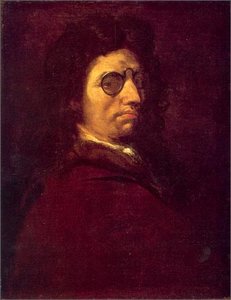
Luca Džordanas
1634 - 1705 , Италия
Trumpa informacija apie kūrėją
- Artistic Movement Or Style: Vėlyvas Barokas
- Artists Who Influenced This Artist:
- Chosė de Ribera
- Tietijanas
- Veronėzas
- Pietro da Kortona
- Date Of Birth: 1634 m.
- Date Of Death: 1705 m.
- Full Name: Luca Giordano
- Nationality: Italianas
- Notable Artworks:
- Šv. Jonas Krikštytojas
- Kristus su gydytojais
- Freskų darbai Neapolyje
- Place Of Birth: Neapolijus, Italija
Susiję straipsniai
Luca Giordano: Neapolitan Baroque Master & His European Influence
Explore the life & works of Luca Giordano, the celebrated Neapolitan Baroque master. Discover his prolific fresco cycles, Roman commissions, and lasting influence on European art history. Learn more at OriginalUniqueArt.

Baroko Šedevrai: 10 Menų Simbolių, Apibūdinusių Epoką | OriginalUniqueArt
Atraskite 10 baroko šedevrų, kurie apibrėžė epoką! Karolis Rubenzas, Berninis ir kiti meistrai – jų kūriniai, istorijos bei spalvos. Aukščiausios kokybės dailės reprodukcijos ir interjero įkvėpimas OriginalUniqueArt.com. Išnagrinėkite visą kolekciją internete!
Alte Pinakothek: 25 Šedevrai, Įkvėpę Kartas | Tapyba, Menininkai ir Interjero Dekoracijos
Atraskite 25 įspūdingiausius 'Alte Pinakothek' šedevrus! Renesanso ir Baroko paveikslai, Albrecht Dürer, Rembrandtas ir kiti garsūs menininkai. Įkvėpkite interjerui su aukštos kokybės reprodukcijomis – OriginalUniqueArt.com

Baroko dramatiška elegancija: kaip suteikti savo erdvėms prabangių šviesos ir meistriškumo pojūtį
Atraskite baroko dramatiškumą su OriginalUniqueArt. Ekspertai siūlo aukščiausios kokybės rankų darbo aliejinės reprodukcijos ir personalizuotus portretus. Atgaivinkite savo erdvę prabanga, šviesa ir autentiška meistriškuma. Patikimas meno kelias į jūsų namų eleganciją.
Aukštesnės Kokybės Skaitmeninė Tapyba Iš Nuotraukų: Estetika, Ilgaamžiškumas Ir Emocinis Rezonansas
Atraskite aukštos kokybės skaitmeninę tapybą iš nuotraukų! Meno kūriniai, sukurti profesionalių dailininkų. Estetika, ilgaamžiškumas ir emocinis rezonansas – investicija į unikalius interjero akcentus. Užsisakykite paveikslą dabar!