 Skaityti daugiau


 Dėl meno kūrinių ar reprodukcijų, kurių bet kuri pusė yra didesnė nei 105 cm (apie 41 inch), rėmas bus siunčiamas kaip išskaidytas surinkimo rinkinys. Šis metodas užtikrina saugų pristatymą ir apsaugo nuo transportavimo metu galimos žalos.


Daugiau informacijos apie šį paveikslą
Teksto dydis

() ·
A print made for you, with care
Giclée / Meno spausdinimas
Muziejų lygio „giclée“ arba drobos spausdinimas: greita gamyba ir lankstios apdailos parinktys. ( Pirkti rankų darbo tapybą Perejti prie skaitmeninių vaizdų)
Autoriaus biografija
jean hey (c. 1475-1505) was an early Netherlandish painter known for his work in France & Burgundy, associated with the Bourbon court. His style blends Flemish and French influences, notable in works like the Moulins Triptych.
nuo ·
1 skyrius
On which medium should it be printed?
Canvas is printed with giclée inks and can be stretched or framed like a painting; paper comes flat, or framed behind glass.
2 skyrius
Kokio dydžio turėtų būti?
Slinkite, kad pakeistumėte dydį; kairėje pusėje esančiame paveikslėlyje rodomas tikrasis rėmo plotis. Originalios proporcijų išlaikomos.
Standartinis dydis
pagal užsakymą
CM
INCH
Pasirinkite iš mūsų nustatytų dydžių, atitinkančių originalaus meno kūrinio proporcijas.
Kraunami dydžiai...

plotis
aukštis
Įveskite jums reikiamą plotį ir aukštį, kad atvaizdas derėtų prie jūsų rėmo ar sienos. Spausdiną galima tik sumažinti, bet nepadidinti virš originalaus paveikslėlio dydžio, todėl keičiant proporcijas, dalis vaizdo prarandama. Prieš spausdinimą atsiųsime jums skaitmeninį maketą patvirtinimui. Šioje puslapio nuotraukoje matomas pjūvis nėra tikslus – jį rodo tik maketas.
3 skyrius
Kokia būda yra siunčiamas?
Pasirinkite ištempto drobės kraštus
Pasirinkite rėmelį

Baltas apasutojimas €1

Išblėstantis šonas €1

Išplėstinis €1

P118B €10

P118H €10

P118W €10

P438Z €10

P508JH €12

P508YH €12

P805H €10

P805Z €10

P919BZ €10

P919G €10

P919XJ €10

P959ZH €10

P968JZ €12

W106C €8

W218G €10

W218JH €8

W218Y €10

W307PJ €10

W316G €10

W316PJ €8

W316Y €10

W398PJ €8

W4111J €10

W500HY €15

W500JH €15

W692G €12

W849H €8

W940BG €15

W953PJ €8

H24-GOLD €30

H24-SILVER €30

H36-GOLD €45

H36-SILVER €45
Įrėmintas
Rėmo apvadas: . Bendras dydis su rėmu: .
4 skyrius
Pristatymas visame pasaulyje () per 2 weeks, o ne įprastas 4/5 savaičių laikotarpis. (22 lapkritis)
Paskutinės detalės
Pavadinimo plokštelė, kaip muziejuje?
Išgraviruotos bronzinės plokštelės detalės
This elegant plaque features the artist's name and the title of the artwork, finely engraved for a timeless presentation.
It is made from bronze with a refined, elegant finish. The text is precisely laser-engraved for a sharp and permanent result. Measuring 9x2 cm, the plaque is compact yet easy to read. It's built to be durable and scratch-resistant, offering a professional, museum-quality look. Mounting is simple thanks to the included adhesive backing.
Skaidrios akrilo plokštelės informacija
The plaque includes essential engraved details such as the artist's name, the title of the artwork, the date it was created, the type of media used-like oil on canvas or watercolor-a brief description of the piece, and a QR code that links to the complete artwork information.
It is crafted from clear acrylic, offering a sleek, modern appearance. The text is UV-engraved in black to ensure strong visual contrast. With a size of 10x15 cm, it ensures optimal readability. It comes equipped with two metal hooks for secure wall mounting. The plaque is designed to be weather-resistant, making it suitable for various environments, and it includes interactive features that work seamlessly with smartphone scanning.
Juodos akrilo plokštelės informacija
This elegant plaque includes engraved information such as the artist's name, the title of the artwork, the date it was created, the type of media used (like oil on canvas or watercolor), a short description of the artwork, and a QR code for quick access to more information.
The plaque itself is made from refined black acrylic with a premium finish. The text is laser-engraved in white for high contrast and readability. Its size is 10x15 cm, designed to be easy to read. It comes with two metal hooks for professional mounting. The design is sleek and fits any interior style. It is also weather-resistant and durable, with built-in digital integration for mobile compatibility.
Apsauginis lakas?
Kada jums reikia?
5 skyrius
Your print, as you ordered it
The Nativity
Reprodukcijos technika
Reprodukcijos matmenys
-
Reprodukcijos rėmėjimo parinktys
-
-
Dėl meno kūrinių ar reprodukcijų, kurių bet kuri pusė yra didesnė nei 105 cm (apie 41 inch), rėmas bus siunčiamas kaip išskaidytas surinkimo rinkinys. Šis metodas užtikrina saugų pristatymą ir apsaugo nuo transportavimo metu galimos žalos.
Reikalingas profesionalus surinkimas – tai nėra „pasidaryk pats“ (DIY) produktas.
Rinkinys turi būti surinktas, o drobė išplėsta naudojant patyrį profesionalų rėmininką, medžio klijus (nėra įtraukti į rinkinį), drobės plėšimo kleslę bei presas, kad rėmo rėžiai išliktų tiesūs, kol klijai išdžiūvus. Netinkamas surinkimas arba netolydus drobės įtampa gali negrįžtamai sugadinti meno kūrinį, todėl šie atvejai nėra užtraukiami mūsų garantijos.
Į komplektą įeina visi vientisos medienos elementai, tiksliai išpjauti pagal dydį.
Surmontinama naudojant pridėtus varžtus bei papildomai reikalingą medžio kliją kampų jungtims, kuris nėra pridėtas ir turi būti parinktas rėmininkui.
Reikalingi profesionalūs įrankiai, kurie nėra įtraukti į rinkinį: drobės kėlimo plytelės (stiprintuvai) ir klemiai, laikantys rėmo strygius tiesiu kampu, kol džiūsta lipas.
Svarbu:
Kampų jungtims reikalingi medžio klijai, barams reikia laikyti naudojant presas, kol klijai visiškai išdžiūvės, o surinktam rėmui įtempiamai privilgti būtinos drobės įtempimo plytযুক্ত. Šios priemonės į rinkinį neįtrauktos. Prieš užsakydami šio dydžio rinkinį, rekomenduojame pasimalkoti patyrusiu rėmų meistru.
Pavadinimo lentelė
-
-
Apsauginis lakas
Blizgus lakas (ryškina spalvas, saugo nuo šviesos ir drėgmės)
-
Skubiai
Pristatymas visame pasaulyje () per 2 savaites, o ne standartines 4/5 savaičių. (22 lapkritis)
-
Skubus pristatymas
Pristatymas visame pasaulyje () per 4–5 weeks. (29 lapkritis).
Įskaičiuota
Bendroji kaina
€ 72
Stiklo variantas prieinamas tik pasirinkus dydį iki 110 cm
Pridedama prie kiekvieno užsakymo
- Nemokamas greitasis pristatymas visame pasaulyje
- Aukštos kokybės lininis drobė
- Pilnas siuntimo draudimas
- Muitinės mokesčių grąžinimo garantija
- Tikro spalvų atitikimo garantija
- 100 dienų grąžinimo politika (tik esant įtaigoms)
- 100% pinigų grąžinimo garantija
- Nuolaida dideliems užsakymams
 Peržiūrėti realaus dydžio版

 Pasidalinti
 Dalintis
 Išsamiau
 Vadovas


 Atsisiųsti
 Panašūs eksponatai
 Rentgeno spindulių nuotrauka
 Automatinė diorama
 问答
 Statistika
Skaičiais
- 1490metai, kai buvo nupiežta
- 29pasirinkimo rėmai
- standartinės dydžio, savo proporcijomis
- 5savaitės sugryžti ir pristatyti
Apie originalą

- 55.0 x 71.0 cm


Jean Hey
1455 - 1505, France
Trumpa informacija apie Jean Hey
- Artistic Movement Or Style: Early Netherlandish
- Artists Who Influenced This Artist: ['Hugo van der Goes']
- Full Name: Jean Hey
- Notable Artworks:
- Moulins Triptych
- The Annunciation
- Meeting at the Golden Gate
- Place Of Birth: United Kingdom
- Date Of Birth: 1475
- Date Of Death: 1505
Autoriaus biografija
The Enigmatic Shadow of the Bourbon Court
In the twilight of the fifteenth century, amidst the opulent courts of France and Burgundy, there emerged a painter whose name would become synonymous with a profound, quiet mastery. Jean Hey, often whispered in art historical circles as the Master of Moulins, remains one of the most captivating enigmas of the Early Netherlandish period. While the biographical details of his life are shrouded in the mists of time—with only scant records suggesting he may have been active around 1475 and perhaps spent his final years in Paris—his brushwork speaks with an unmistakable and enduring voice. His identity, once a puzzle of fragmented documentation, now stands as a testament to a period where artistic brilliance often transcended the need for personal fame.
The origins of Hey’s talent are steeped in scholarly speculation, fueling a narrative of cross-cultural influence that defines his very essence. Many historians believe his stylistic foundations were laid under the tutelage of Hugo van der Goes, the titan of Flemish Primitivism. This connection is evident in the way Hey breathes life into his subjects through a meticulous attention to detail and a sophisticated use of light. His work represents a sublime intersection of Northern Renaissance realism and a burgeoning French elegance, creating a visual language that is both structurally rigorous and emotionally tender.
A Masterpiece of Devotion: The Moulins Triptych
The pinnacle of Jean Hey’s career, and perhaps the most significant achievement of his entire oeuvre, is the monumental Moulins Triptych housed in the Moulins Cathedral. Completed around 1494-1495, this work serves as a breathtaking window into the spiritual and political heart of the Bourbon court. The central panel, depicting the Madonna and Child adored by celestial angels, radiates a serene divinity that anchors the entire composition. However, it is the flanking wings that truly ground the divine in the earthly realm, presenting poignant portraits of the era's nobility.
Through these panels, Hey captures the essence of Burgundian prestige with unparalleled skill:
- Peter II, Duke of Bourbon: Presented by Saint Peter, this portrait showcases the artist's ability to render heavy fabrics and the solemn dignity of high office.
- Anne de Beaujeu, Duchess of Bourbon: A masterpiece of Early Renaissance elegance, where subtle sfumato shading captures the delicate features and aristocratic grace of one of France's most powerful women.
- The Presence of Suzanne: The inclusion of the Duke’s daughter adds a layer of familial intimacy to the grand religious narrative, showcasing Hey's talent for humanizing the divine.
Legacy of Light and Detail
Beyond the grand scale of his triptychs, Jean Hey’s smaller works—ranging from intimate portraits to profound biblical scenes—reveal a painter obsessed with the interplay of light and texture. In works such as The Annunciation and Meeting at the Golden Gate, one observes a dramatic use of lighting that predates many later Renaissance developments, lending a sense of theatricality to sacred moments. His ability to render the tactile quality of velvet, the cold sheen of armor, and the soft glow of skin remains a hallmark of his technical prowess.
The historical significance of Jean Hey lies not just in the beauty of his surviving panels, but in his role as a bridge between traditions. He took the meticulous, almost scientific realism of the Netherlandish masters and infused it with a lyrical, French sensibility. Though his life was brief and much of his biography remains lost to history, his legacy is preserved in every meticulously painted fold of drapery and every soulful gaze captured on panel. He remains a pivotal figure whose work continues to illuminate the transition from the medieval spirit to the dawn of the modern era.
Susiję straipsniai
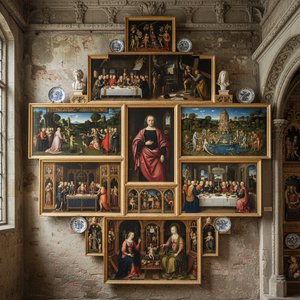
Early Netherlandish Masters: 10 Paintings That Revolutionized Art & Decor
Journey into the Early Netherlandish Renaissance! Explore 10 iconic paintings by Jan van Eyck, Rogier van der Weyden & more. Discover stunning detail, symbolism, and oil painting techniques. Find museum-quality art reproductions for your home at OriginalUniqueArt.com.

Shadows & Splendor: The Dramatic Evolution of Nativity Art from Early Christian Symbols to Baroque Masterpieces
Trace the dramatic evolution of Nativity art from Roman catacombs to Baroque masters. Explore this epic journey through art history now.

Sacred Light and Shadow: Tracing the Evolution of the Nativity Scene in Art History
Explore the profound evolution of Nativity iconography from early catacombs to Renaissance masters. Trace this sacred history with us.

Master of Emotion: The 25 Greatest Artworks by Rogier van der Weyden
Immerse yourself in the profound emotion of Rogier van der Weyden’s greatest works. Explore 25 iconic Northern Renaissance masterpieces, from intricate textures to divine pathos. Find museum-quality art reproductions and decor inspiration. Discover all masterpieces on OriginalUniqueArt.com.