Symbolist Expressionism · 1895
The Skeleton Painter (James Ensor, 1895)
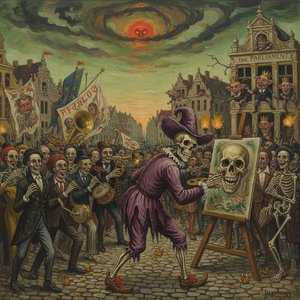
James Ensor (1860–1949) sukūrė The Skeleton Painter. Šis kūrinys datuojamas 1895 m. Šis kūrinys priklaulo Symbolist Expressionism kieruliui. Pagaminta naudojant Acrylic On Canvas. Eksponatas saugomas Koninklijk Museum voor Schone Kunsten Antverpė, Belgija.
- 1895
- Acrylic On Canvas
- Koninklijk Museum voor Schone Kunsten, Antverpė

 Peržiūrėti realaus dydžio版

 Rankinio darbo aliejinės imitacijos paveikslas
 Pasidalinti
 Dalintis
 Informacinė l lapelė


 Atsisiųsti
 Panašūs eksponatai
 Rentgeno spindulių nuotrauka
 Automatinė diorama
 问答

 Statistika
The Skeleton Painter, trumpai
- Pavadinimas
- The Skeleton Painter
- Autorius
- James Ensor (1860–1949)
- Dizainere/is gimęs
- Ostendė, Belgija
- Data
- 1895
- Mediumas
- Acrylic On Canvas
- Kur galima pamatyti
- Koninklijk Museum voor Schone Kunsten, Antverpė, Belgija
- Judėjimas
- Symbolist Expressionism
- Tema
- skeleton, artist, death, masks, paintings, room
Ką vaizduoja The Skeleton Painter?
A Dance with Mortality: James Ensor’s “The Skeleton Painter”
James Ensor's "The Skeleton Painter," completed in 1895, is not merely a painting; it’s an unsettling plunge into the subconscious, a meticulously crafted tableau of morbidity and artistic obsession. The image, rendered with a distinctive and increasingly personal style, immediately confronts the viewer with a scene both bizarre and profoundly familiar – a room overflowing with art, dominated by a central figure: a skeleton diligently wielding a paintbrush. This isn’t a morbid spectacle intended to shock for shock's sake; rather, it’s a complex meditation on life, death, creativity, and the inescapable nature of artistic endeavor. Ensor, born in Ostend, Belgium, in 1860, cultivated an intensely individual vision, one deeply rooted in his upbringing amidst the vibrant chaos of a seaside resort town and fueled by a fascination with masks, disguise, and the theatricality of human experience.
The Artist’s Studio – A Realm of Shadows
The setting itself is crucial to understanding the painting's power. The room is crammed with canvases, each bearing witness to Ensor’s restless hand. A dining table, laden with objects—a clock, a partially consumed meal—suggests an interrupted life, a space where sustenance and creation intertwine. The presence of other skeletons, scattered amongst the chairs and leaning against walls, reinforces the pervasive theme of mortality. These aren't simply decorative elements; they are active participants in the scene, almost as if they’re observing or even contributing to the artist’s work. The inclusion of a cat, curled up near the left edge, adds an element of domesticity and perhaps a subtle critique – a creature of instinct and survival nestled within this world of intellectual pursuit.
Symbolism and Technique: A Palette of Unease
Ensor’s technique is immediately recognizable. He employed a thick, impasto application of paint, building up layers of color to create a tactile surface that seems almost sculptural. The palette is deliberately muted – browns, greys, ochres, and deep blues dominate—contributing to the painting's somber mood. The skeletal figure itself is rendered with remarkable detail, highlighting the fragility of bone while simultaneously conveying a sense of focused determination. Notice how Ensor uses strong diagonals – particularly in the arrangement of the chairs and paintings – to create a feeling of unease and instability. The use of color is not about beauty; it’s about evoking emotion, creating a visual atmosphere of melancholy and contemplation. His style evolved significantly throughout his career, moving away from academic influences towards a highly expressive, often unsettling, approach that anticipated the Symbolist movement.
Ensor's Exploration of Artistic Identity
"The Skeleton Painter" can be interpreted as an exploration of Ensor’s own artistic identity and his relationship to mortality. The skeleton artist represents not just death but also the inevitable end of creative endeavor, the fading of inspiration with time. It speaks to the paradox of the artist – someone who often seems detached from the everyday realities of life, yet is ultimately defined by their engagement with them. Ensor’s own struggles with artistic recognition and his rejection of traditional academic training likely fueled this preoccupation with themes of isolation and the ephemeral nature of existence. The painting isn't a celebration of art; it’s a questioning of its purpose and its ultimate significance in the face of oblivion. It invites us to consider what drives an artist to create, knowing that their work, like their own physical form, will eventually succumb to time.
OriginalUniqueArt offers exquisite, hand-painted reproductions of James Ensor’s “The Skeleton Painter,” allowing you to bring this haunting masterpiece into your home or office. Each reproduction is created with the same meticulous attention to detail and expressive technique as the original, capturing the painting's unique atmosphere and emotional depth. Explore our collection today and experience the unsettling beauty of Ensor’s vision.
Kuriame muziejuje eksponuojamas karya The Skeleton Painter?
Koninklijk Museum voor Schone Kunsten
Antverpė, Belgija
Origins and History of the Museum The Koninklijk Museum voor Schone Kunsten was established in 1810. Its foundation is rooted in the legacy of the Antwerp Guild of Saint Luke, an institution that was active from the late 14th century until 1773. The museum's collection began with the artworks owned by this guild, establishing a direct link between the city's mercantile past and its artistic development.


The Skeleton Painter dididraudžios kokybės vaizdai

Viešoji domenė: suregalis mirė 1949 m.
Kiti dydžiai, iškarai ir citavimo informacija →James Ensor, The Skeleton Painter (1895), Koninklijk Museum voor Schone Kunsten. Viešoji domenė.
Atsakimai į klausimus apie The Skeleton Painter
Kur galima pamatyti „The Skeleton Painter“ – James Ensor originalą?
Originalų kūrinį „The Skeleton Painter“ galite pamatyti Koninklijk Museum voor Schone Kunsten, Antverpė, Belgija.
Kuriem metais buvo sukurta „The Skeleton Painter“ – James Ensor?
„The Skeleton Painter“ sukurta 1895 m. Ši data leidžia įvardyti kūrinį James Ensor kūrybinėje karjeroje bei jo epochoje.
Kokia technika sukurta „The Skeleton Painter“ – James Ensor?
„The Skeleton Painter“ – James Ensor technika – Acrylic On Canvas. Kopijos siekia atkartoti šios technikos vaizdą.
Kokios temos atsispindi kūrynioje „The Skeleton Painter“ – James Ensor?
„The Skeleton Painter“ – James Ensor temos apima skeleton, artist, death, masks, paintings, room, cat, decay. Kartu jie apibendrina šio kūrinio tematiką.
Ar „The Skeleton Painter“ yra viešosios teisės kūrinys?
Kalbant apie autorišką teisę, „The Skeleton Painter“ yra yra viešosios erdvės dalis – jo autorinė teisė pasibaigusi.
Kuriam menininkui priskiriamas kūrinys „The Skeleton Painter“?
„The Skeleton Painter“ priskiriamas James Ensor.
Kokiam stiliui priklauso „The Skeleton Painter“?
„The Skeleton Painter“ yra Symbolist Expressionism stiliaus kūrinys. Šis dailos kryptis nurodo meninę tradiciją, kurios šis darbas yra dalis.
Kokio James Ensor kūrybos laikotarpio priklauso „The Skeleton Painter“?
„The Skeleton Painter“ priklauso James Ensor kūrybos karjeros Late Period etapui. Ši klasifikacija atspindi kūrinio ryšį su menininko evoliucija.
Kokia buvo James Ensor amžius sukuriant „The Skeleton Painter"]?
Kai 1895 m. buvo sukurta „The Skeleton Painter“, James Ensor – gimęs 1860 m. – buvo 35 metų amžiaus.
Apie šį menininką, James Ensor

1860–1949, Belgija
James Ensor
Pradinis gyvenimas, šeima ir meninė mokslas James Ensoras gimė 1860 m. balandžio 13 d. Ostende, Belgijoje. Jo tapatybę lemė ypatingas kultūrų susiliejimas: jo tėvas, James Frederic Ensor, gimė Briuselyje angliškos šeimos, o motina, Maria Catherina Haegheman, buvo belgė.
Taip pat James Ensor darbai
 Kristaus į Bruselį įėjimas1888
 Savas Veido Portretas su Maskomis1899
 Prauno Ostende
 Šešėliai šildosi1889

Esdai apie The Skeleton Painter
 Beauty in Mortality: Capturing the Soul of the Skull through the Luminous Lens of Impressionist ArtExplore the profound beauty of mortality through Impressionism. Discover how masters like Monet and Renoir transformed the Memento Mori tra…
 The Psychology of Playful Imagery: Exploring Humorous and Whimsical Paintings as Catalysts for Emotional Wellbeing and Social ConnectionExplore the psychology of playful art! Discover how humorous & whimsical paintings foster emotional wellbeing & connection. Expert insights…
 James Ensor's Grotesque Visions: Social Commentary & Artistic InnovationExplore the unsettling yet captivating world of James Ensor, a pioneer of Expressionism. Discover his satirical masterpieces, symbolic imag…