Expressionist Orientalism
Chinoiseries (James Ensor)
James Ensor (1860–1949) sukūrė Chinoiseries. Šis kūrinys priklaulo Expressionist Orientalism kieruliui. Pagaminta naudojant Acrylic On Canvas.
- Acrylic On Canvas

 Peržiūrėti realaus dydžio版

 Rankinio darbo aliejinės imitacijos paveikslas
 Pasidalinti
 Dalintis
 Informacinė l lapelė


 Atsisiųsti
 Panašūs eksponatai
 Rentgeno spindulių nuotrauka
 Automatinė diorama
 问答

 Statistika
Chinoiseries, trumpai
- Pavadinimas
- Chinoiseries
- Autorius
- James Ensor (1860–1949)
- Dizainere/is gimęs
- Ostendė, Belgija
- Mediumas
- Acrylic On Canvas
- Judėjimas
- Expressionist Orientalism
- Tema
- chinoiseries, james ensor, masks, figures, exoticism, belgium
Ką vaizduoja Chinoiseries?
A World Within Walls: Unpacking James Ensor’s “Chinoiseries”
James Ensor's "Chinoiseries," painted in 1880, isn’t merely a depiction of an interior scene; it’s a carefully constructed psychological landscape. This captivating work, residing within the Royal Museums of Fine Arts of Belgium in Brussels, offers a glimpse into the artist’s uniquely unsettling and intensely personal vision. Ensor, born in Ostend to an English father and Belgian mother, possessed a sensibility deeply shaped by his upbringing amidst the vibrant chaos of a seaside resort town – a place saturated with masks, curiosities, and a potent sense of theatricality. This early exposure profoundly influenced his artistic trajectory, leading him away from conventional academic training and toward a fiercely independent style that would forever challenge the established norms of art.
The Dance of Form and Feeling: Style and Technique
“Chinoiseries” is a masterclass in Expressionist technique, subtly blended with elements of Orientalism. Ensor’s brushstrokes are not delicate or refined; they are bold, assertive, and often deliberately rough, conveying an underlying sense of unease and emotional intensity. The color palette—dominated by deep blues and greens—creates a claustrophobic atmosphere, intensifying the feeling of being trapped within the confines of the room. Notice how he utilizes contrasting colors – the vibrant reds and yellows of the decorative objects against the somber background – to draw the eye and heighten the drama. The composition itself is deliberately unbalanced, with the figures positioned in ways that disrupt any sense of harmony or stability. This deliberate distortion reflects Ensor’s interest in exploring the darker aspects of human experience.
- Oil on Canvas: The medium lends itself perfectly to Ensor's expressive style, allowing for rich textures and a dynamic application of paint.
- Bold Brushwork: Visible brushstrokes contribute significantly to the painting’s emotional impact.
- Color Palette: Deep blues and greens create an atmosphere of mystery and introspection.
Decoding the Symbols: Orientalism, Masks, and Human Connection
The title itself, “Chinoiseries,” immediately signals Ensor’s fascination with the exotic – specifically, Chinese-inspired motifs. The table laden with porcelain vases, bowls, and cups isn't simply decorative; it represents a deliberate attempt to introduce an element of the ‘other’ into a European setting. This reflects a broader trend in 19th-century art, where artists sought to explore and interpret foreign cultures through visual representation. However, Ensor doesn’t offer a romanticized view of the Orient. Instead, he presents these objects within a context that is unsettling and ambiguous. The two figures present – one standing, the other seated – are deliberately undefined, their faces obscured or averted, suggesting a lack of genuine connection. The cat, perched on the floor, adds another layer of intrigue, embodying mystery and perhaps even a touch of foreboding.
A Portrait of an Artist’s Mind: Context and Legacy
“Chinoiseries” is often compared to the work of Clyfford Still, a pioneer of Abstract Expressionism, due to their shared emphasis on emotional intensity and non-representational forms. However, Ensor's approach is far more rooted in psychological observation than pure abstraction. His paintings are not simply about depicting objects; they’re about conveying feelings – anxiety, isolation, and the unsettling nature of human relationships. The painting’s creation coincided with a period of significant social and artistic change, mirroring the growing anxieties of modern life. It's a testament to Ensor’s ability to capture the complexities of the human condition through a uniquely personal and often disturbing lens. Reproductions of “Chinoiseries” offer a remarkable opportunity to experience this powerful work firsthand, bringing its enigmatic atmosphere into any space.
Explore more captivating works by James Ensor and discover high-quality reproductions at OriginalUniqueArt.com. For deeper insights into the artist’s life and oeuvre, visit his Wikipedia profile: https://en.wikipedia.org/wiki/James_Ensor.
Chinoiseries dididraudžios kokybės vaizdai

Viešoji domenė: suregalis mirė 1949 m.
Kiti dydžiai, iškarai ir citavimo informacija →James Ensor, Chinoiseries. Viešoji domenė.
Spalvos suderintos su originalu skaitmeninio eksperto, failas kruopščiai retušuotas ir tiksliai atitinkantis autoriaus brushwork stilių.
Atsisiųskite aukštos iš}|$resolution iš høj-resolution failoAtsakimai į klausimus apie Chinoiseries
Kokia technika buvo panaudota kūriniam darbui „Chinoiseries“ – James Ensor?
James Ensor kūriniui „Chinoiseries“ panaudojo Acrylic On Canvas techniką. Ši technika apibrėžė originalaus kūrinio medžiaginę prigimtį.
Ką vaizduoja „Chinoiseries“ – James Ensor?
„Chinoiseries“ – James Ensor temos apima chinoiseries, james ensor, masks, figures, exoticism, belgium, carnival, symbolism. Kartu jie apibendrina šio kūrinio tematiką.
Ar „Chinoiseries“ – James Ensor priklauso viešosios teisės domenui?
„Chinoiseries“ – James Ensor yra yra viešosios erdvės dalis – jo autorinė teisė pasibaigusi. Šis statusas nustato, kaip galima reprodukcijaus šio kūrinio vaizdą.
Kas sukūrė „Chinoiseries“?
Kūrinį „Chinoiseries“ sukūrė James Ensor. Darbas katalogizuojamas James Ensor vardu.
Kokiam meno stiliui priklauso „Chinoiseries“ – James Ensor?
Kūrinio „Chinoiseries“ – James Ensor stilius – Expressionist Orientalism. Ši klasifikacija leidžia šį darbą įtraukti į bendrą susijusių menininkų ir kūrinių kontekstą.
Kokio James Ensor kūrybos etapo dalis yra „Chinoiseries“?
„Chinoiseries“ atspindi James Ensor kūrybinį laikotarpį Mature Period.
Kodėl „Chinoiseries“ autoriškos teisės statusas yra toks, koks yra?
Autorinės teisės statusas kūriniui „Chinoiseries“ – yra viešosios erdvės dalis – jo autorinė teisė pasibaigusi – nustatomas remiantis to, kad menininkas mirė 1949 m.
Ką „Chinoiseries“ turi bendro su visa James Ensor kūryba?
„Chinoiseries“ priklauso James Ensor Expressionist Orientalism kūrybai, kurios įrašytoms temoms priskiriamas expressionist distortion, oriental motifs, belgian identity, cultural fusion, masks, hidden emotions, satire, ensor’s unique visual language.
Ar „Chinoiseries“ yra būdingas tam, ką James Ensor paprastai kūrė?
Tarp užfiksuotų James Ensor temų – expressionist distortion, oriental motifs, belgian identity, cultural fusion, masks, hidden emotions, satire, ensor’s unique visual language – kūrinys „Chinoiseries“ akcentuoja chinoiseries, james ensor, masks, figures, exoticism, belgium, carnival, symbolism.
Apie šį menininką, James Ensor

1860–1949, Belgija
James Ensor
Pradinis gyvenimas, šeima ir meninė mokslas James Ensoras gimė 1860 m. balandžio 13 d. Ostende, Belgijoje. Jo tapatybę lemė ypatingas kultūrų susiliejimas: jo tėvas, James Frederic Ensor, gimė Briuselyje angliškos šeimos, o motina, Maria Catherina Haegheman, buvo belgė.
Taip pat James Ensor darbai
 Kristaus į Bruselį įėjimas1888
 Savas Veido Portretas su Maskomis1899
 Prauno Ostende
 Skeletons Warming Themselves1889

Esdai apie Chinoiseries
 Raw Emotion & Bold Strokes: Top 10 Neo-Expressionism MasterpiecesExplore iconic Neo-Expressionist works by Basquiat and Baselitz. Discover museum-quality art at OriginalUniqueArt.com.
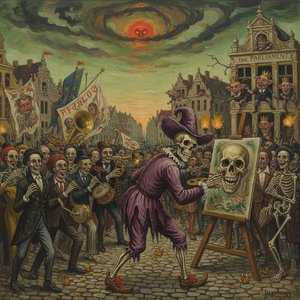 James Ensor's Grotesque Visions: Social Commentary & Artistic InnovationExplore the unsettling yet captivating world of James Ensor, a pioneer of Expressionism. Discover his satirical masterpieces, symbolic imag…
 Capturing the Exotic: A Journey Through the Allure and Complex Legacy of Orientalist ArtExplore the mesmerizing world of Orientalist art. From Napoleon's influence to Renoir's exotic textures, discover the history, beauty, and …