Symbolism · 1903
Art (Jacek Malczewski, 1903)
Jacek Malczewski (1854–1929) sukūrė Art. Šis kūrinys datuojamas 1903 m. Šis kūrinys priklaulo Symbolism kieruliui. Pagaminta naudojant Oil On Canvas. Eksponatas saugomas National Museum in Wrocław Wrocław, Poland. Dimensijos – 70 × 98 cm.
- 1903
- Oil On Canvas
- 70 × 98 cm
- National Museum in Wrocław

 Peržiūrėti realaus dydžio版

 Rankinio darbo aliejinės imitacijos paveikslas
 Pasidalinti
 Dalintis
 Informacinė l lapelė


 Atsisiųsti
 Panašūs eksponatai
 Rentgeno spindulių nuotrauka
 Automatinė diorama
 问答

 Statistika
Art, trumpai
- Pavadinimas
- Art
- Autorius
- Jacek Malczewski (1854–1929)
- Dizainere/is gimęs
- Radomas, Lenkija
- Data
- 1903
- Mediumas
- Oil On Canvas
- Matmenys
- 70 × 98 cm
- Kur galima pamatyti
- National Museum in Wrocław, Wrocław, Poland
- Judėjimas
- Symbolism
- Laikotarpis
- 19th Century
- Tema
- symbolism, polish art, mythology, portraiture, national identity, allegory
Ką vaizduoja Art?
Identification of the Artwork and Artist
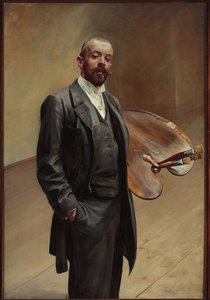
Art is an oil on canvas painting executed by Jacek Malczewski in 1903. The work belongs to the Symbolist movement, a style in which Malczewski established himself as a central figure. His practice often integrated themes of national identity and folklore into complex allegorical compositions.
Malczewski was a Polish symbolist painter. His approach frequently utilized mythological and religious motifs to explore psychological and existential states. This specific work, created at the turn of the twentieth century, reflects the artist's characteristic use of symbolic imagery to communicate ideas beyond literal representation.
Composition and Visual Elements
The composition is tightly framed, focusing the viewer's attention on the faces and upper bodies of the clustered figures. This arrangement creates a sense of intimacy and shared experience among the subjects, though the overall placement feels somewhat chaotic yet deliberate. A large, golden horse dominates the background, its head acting as a visual anchor that stabilizes the grouping of humans in the foreground.
The color palette is dominated by earthy tones, including browns, beiges, and muted greens. These base colors are contrasted by the vibrant golden hue of the horse and subtle touches of red in the hair and clothing of the figures. Lighting is diffused and soft, appearing to emanate from multiple sources without creating harsh shadows or strong contrasts. This gentle illumination contributes to the dreamlike quality of the scene.
The perspective is somewhat flattened due to the close-up framing, which limits the sense of spatial recession. Depth is achieved primarily through the layering of figures and the placement of the equine subject in the background. Organic and rounded shapes define the human forms and the natural contours of the horse, avoiding sharp angles or geometric structures.
Technique and Material Composition
Executed in oil on canvas, the work utilizes a method of blended brushstrokes to achieve its specific visual effects. The application of paint involves a visible layering process, which contributes to the depth and richness of the composition. This layering allows for a subtle transition between the earthy tones of the background and the more luminous highlights found on the figures and the equine subject.
The surface texture appears relatively smooth, a result of the extensive blending of the oil paints. This technique softens the edges of the forms, particularly in the rendering of hair and the drape of clothing. Consequently, the lines defining the facial features remain somewhat indistinct, contributing to a dreamlike quality. The interplay of light and shadow is achieved through these soft transitions rather than through harsh, high-contrast edges.
Related Works by Jacek Malczewski
The artist's exploration of symbolic and allegorical themes is evident in several other compositions. His 1901 work, Self-portrait with the Vistula in the Background, offers a different perspective on his relationship with the Polish landscape. Other significant pieces include Chimera 1 and the Thanatos series, which further investigate the psychological and spiritual dimensions central to his practice.
Malczewski also drew heavily from folklore and mythology to construct his visual language. This is particularly evident in his collection titled Bajki (Fables). These works, alongside his various symbolic studies, demonstrate the breadth of his engagement with national and universal motifs.
Kuriame muziejuje eksponuojamas karya Art?
National Museum in Wrocław
Wrocław, Poland
The Architecture of the National Museum in Wrocław The National Museum in Wrocław occupies a former Silesian regency building situated on the banks of the Odra river. Constructed between 1883 and 1886, the structure reflects the architectural language of the late 19th century. Its Neo-Renaissance design provides a formal setting for the collections housed within its three floors.


Art dididraudžios kokybės vaizdai

Viešoji domenė: suregalis mirė 1929 m.
Kiti dydžiai, iškarai ir citavimo informacija →Jacek Malczewski, Art (1903), National Museum in Wrocław. Viešoji domenė.
Atsakimai į klausimus apie Art
Kuriam muziejui priklauso originalus „Art“?
Kūrinys „Art“ – Jacek Malczewski rodomas National Museum in Wrocław, Wrocław, Poland. Muziejaus informacija nuoroda į originalą, o ne į reprodukciją.
Kada buvo sukurta „Art“?
„Art“ – Jacek Malczewski kūrybos metai – 1903.
Kokia technika buvo panaudota kūriniam darbui „Art“ – Jacek Malczewski?
„Art“ – Jacek Malczewski technika – Oil On Canvas. Kopijos siekia atkartoti šios technikos vaizdą.
Kokie yra originalaus „Art“ matmenys?
Originalaus kūrinio „Art“ – Jacek Malczewski matmenys yra 70 x 98 cm.
Ką vaizduoja „Art“ – Jacek Malczewski?
„Art“ – Jacek Malczewski temos apima symbolism, polish art, mythology, portraiture, national identity, allegory, artistic inspiration. Kartu jie apibendrina šio kūrinio tematiką.
Ar „Art“ – Jacek Malczewski priklauso viešosios teisės domenui?
Autorių teisių statusas kūriniui „Art“ – Jacek Malczewski: kūrinys priklauso yra viešosios erdvės dalis – jo autorinė teisė pasibaigusi. Tai nulemia, ar galima laisvai reprodukciuoti šį vaizdą.
Kuriam menininkui priskiriamas kūrinys „Art“?
„Art“ priskiriamas Jacek Malczewski.
Kokiam stiliui priklauso „Art“?
„Art“ yra Symbolism stiliaus kūrinys. Šis dailos kryptis nurodo meninę tradiciją, kurios šis darbas yra dalis.
Kokį Jacek Malczewski kūrybos etapą atspindi „Art“?
„Art“ priklauso Jacek Malczewski kūrybos karjeros Mature Period etapui. Ši klasifikacija atspindi kūrinio ryšį su menininko evoliucija.
Apie šį menininką, Jacek Malczewski
1854–1929, Lenkija
Jacek Malczewski
Jacekas Malčevskis: Tėvynės Ilgimui Skirta Gyvenimo Saga Jacekas Malčevskis, gimęs 1854 m. liepos 14 d. Radome, tuometinėje Rusijos imperijos kontroliuojamoje Kongreso Lenkijoje, buvo daugiau nei tik dailininkas; jis buvo vizualinis Lenkijos nacionalinės tapatybės įsikūnijimas ir gilus balso atgarsis tautai, trošusiai savarankiškumo. Jo gyvenimo trajektorija bei meninė vizija buvo neatsiejamai susietos su nepriklausomybės romantiniais idealais, kuriuos stipriai įdiegė jo tėvas, Julianas Malčevskis – atsidavęs patriotas, kuris jaunajame Jaceke auklėjo nenusakomą meilę Lenkijos kultūrai, literatūrai ir istorijai.
Taip pat Jacek Malczewski darbai
 Self-portrait in armor with violin.1908
 Madonna and Children1897
 Portrait of artist's sister Helene with lute1906
 The Artist's death1909
Esdai apie Art
 19th century Polish painters19th-century Polish art comes alive through the masterpieces of Jan Matejko and Jacek Malczewski. View the full collection online at Origin…
 Masterpieces of the Soil: The Top 25 Jean-François Millet ArtworksImmerse yourself in the soul of French Realism with our curated list of the top 25 Jean-François Millet artworks. From iconic peasant scene…
 20th century Polish painters20th-century Polish painters like Tamara de Lempicka, Sigmar Polke, and Aleksandra Ekster define an era. Find museum-quality reproductions …