Realism
The Reader (Honoré Daumier)
Honoré Daumier (1808–1879) sukūrė The Reader. Šis kūrinys priklaulo Realism kieruliui. Pagaminta naudojant Oil On Panel. Dimensijos – 34 × 26 cm.
- Oil On Panel
- 34 × 26 cm

 Peržiūrėti realaus dydžio版

 Rankinio darbo aliejinės imitacijos paveikslas
 Pasidalinti
 Dalintis
 Vadovas


 Atsisiųsti
 Panašūs eksponatai
 Rentgeno spindulių nuotrauka
 Automatinė diorama
 问答

 Statistika
The Reader: pagrindinė informacija
- Pavadinimas
- The Reader
- Autorius
- Honoré Daumier (1808–1879)
- Dizainere/is gimęs
- Marselis, Prancūzija
- Mediumas
- Oil On Panel
- Matmenys
- 34 × 26 cm
- Judėjimas
- Realism
- Laikotarpis
- 19th Century
- Tema
- man, book, reading, brown, ochre, red
Ką vaizduoja The Reader?
Identification of The Reader by Honoré Daumier
The quiet intensity of The Reader meets the viewer through the focused gaze of its subject. Painted by Honoré Daumier, this work captures a moment of profound stillness. The piece emerges from around c. 1857, a time when the artist's hand moved with a particular sense of purpose and weight. It exists as a painting, a physical presence that holds the light and shadow of a private, contemplative world.
Honoré Daumier brings a sense of lived experience to this study. The figure remains lost in the pages of a book, oblivious to the world outside the frame. There is a weight to the atmosphere, a feeling of solitude that settles over the scene. The work carries the mark of its creation, a tangible connection to the era of its origin.
This specific painting, The Reader, remains a significant part of the artist's visual language. It avoids the distractions of a grand setting to focus entirely on the human condition in a state of deep engagement. Through this work, the act of reading becomes a heavy, significant event, frozen in time for those who stop to look.
Composition and Visual Elements
The composition follows a vertical orientation, drawing the eye immediately to the man positioned slightly off-center. He sits in a moment of profound stillness, his gaze directed steadily downwards toward the open book held in his hands. This downward focus creates a tight, intimate space around his head and shoulders. Behind him, a blurred object, perhaps a cushion or a potted plant, rests in the background, providing a sense of depth without pulling attention away from the central figure.
Soft, diffused light falls from an unseen source above and to the left, casting gentle shadows across the man's face. This lighting emphasizes his features and the texture of the pages before him, while the shallow perspective keeps the viewer's focus firmly on the interaction between the reader and his text. The atmosphere feels quiet and heavy with contemplation.
The color palette relies on a somber arrangement of earthy tones. Deep browns, ochres, and muted reds dominate the scene, grounding the subject in a warm but melancholic environment. These colors wrap around the figure, reinforcing the sense of solitude and the weight of the thoughts contained within the book.
Technique and Physical Materials
The oil paint clings to the panel with a palpable, heavy presence. Each stroke carries the weight of the artist's hand, applied with a loose and expressive energy that refuses to settle into stillness. You can see the evidence of layering, where colors are built upon one another to create a sense of depth and substance. These layers blend into one another, creating soft transitions that suggest the subtle shifts of light across a surface.
A visible roughness defines the texture of the work. The brushstrokes remain unpolished and direct, leaving a tactile quality that speaks to the immediacy of the moment. This ruggedness gives the surface a physical life, where the paint does not merely sit upon the panel but seems to emerge from it. The interplay of these thick applications and the careful blending of tones creates a surface that feels both spontaneous and deeply considered.
The Reader dididžioja:resoliucija

Viešoji domenė: suregalis mirė 1879 m.
Daugiau variantų, iškaržymų ir citavimo →
Honoré Daumier, The Reader. Viešoji domenė.
Skaitmeninis ekspertas lygina spalvas su originaliu paveikslu ir retušuoja failą, tiksliai atkartojantys autoriaus brushwork stilių.
Pirkti didelės raiškos vaizdąDalykas The Reader: klausimai
Kokia technika sukurta „The Reader“ – Honoré Daumier?
Honoré Daumier kūriniui „The Reader“ panaudojo Oil On Panel techniką. Ši technika apibrėžė originalaus kūrinio medžiaginę prigimtį.
Kokie yra originalaus „The Reader“ matmenys?
Įrašyti kūrinio „The Reader“ – Honoré Daumier matmenys yra 34 x 26 cm. Kopijas galima užsisakyti kitais dydžiais, išlaikant tą pačius proporcijas.
Ką vaizduoja „The Reader“ – Honoré Daumier?
„The Reader“ – Honoré Daumier temos apima man, book, reading, brown, ochre, red, shoulders, face. Kartu jie apibendrina šio kūrinio tematiką.
Ar „The Reader“ – Honoré Daumier priklauso viešosios teisės domenui?
Autorių teisių statusas kūriniui „The Reader“ – Honoré Daumier: kūrinys priklauso yra viešosios erdvės dalis – jo autorinė teisė pasibaigusi. Tai nulemia, ar galima laisvai reprodukciuoti šį vaizdą.
Kas sukūrė „The Reader“?
„The Reader“ priskiriamas Honoré Daumier.
Kokiam meno stiliui priklauso „The Reader“ – Honoré Daumier?
„The Reader“ yra Realism stiliaus kūrinys. Šis dailos kryptis nurodo meninę tradiciją, kurios šis darbas yra dalis.
Kokio Honoré Daumier kūrybos laikotarpio priklauso „The Reader“?
„The Reader“ priklauso Honoré Daumier kūrybos karjeros Mature Period etapui. Ši klasifikacija atspindi kūrinio ryšį su menininko evoliucija.
Ar Honoré Daumier kūrinys „The Reader“ yra viešosios nuoslegos ir kodėl?
„The Reader“, kurį sukūrė Honoré Daumier, yra yra viešosios erdvės dalis – jo autorinė teisė pasibaigusi. Autorinės teisės apsaugos terminai skaičiuojami nuo autoriaus mirties, o Honoré Daumier mirė 1879 m.
Kaip kūrinys „The Reader“ dera su Honoré Daumier temomis ir stiliumi?
„The Reader“ priklauso Honoré Daumier Realism kūrybai, kurios įrašytoms temoms priskiriamas rubens' chiaroscuro, realism, social and political critique, lithography and painting, human condition.
Apie šį menininką, Honoré Daumier

1808–1879, Prancūzija
Honoré Daumier
Ankstyvieji Metai ir Formavimasis: Kelionė Prancūzijoje Gimus Marselyje 1808 metais, Honoré-Victorino Daumier’io gyvenimas buvo glaudžiai susietas su XIX amžiaus Prancūzijos audringais srovėmis. Ankstyvieji jo metai, pažymėti tėvo poetiškų siekių ir vėlesniu persikėlimu į Paryžių 1814 metais, panardino jį į miestą, trykštantį menine energija. Nors iš pradžių buvo numatoma teisininko karjera, jaunasis Daumier’is instinktyviai traukėsi link meno. Jis mokėsi pas Alexandre Lenoir, įsisavinęs klasikines įtakas kartu su Rubens dramatiško šviesos ir šešėlio įvertinimu, o vėliau tobulino savo įgūdžius Académie Suisse.
Taip pat Honoré Daumier darbai
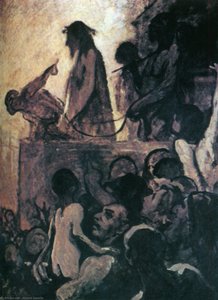 Honoré Daumier Mes norime Barabaso (Ecce Homo)1852
 The Third-class Carriage1860
 Unknown, maybe Hippolyte Lucien-Joseph Lucas (1807-1878), a Journalist, maybe P.Mendez de Vigo (1790-1860) a Spanish General, but Most Probably the Count Pelet de la Lozere (1785-1871), a Politician1833
 Ratapoil (front view)1850
Esdai apie The Reader
 The Art of the Gaze: A Collector's Guide to Mastering Portrait Composition and Emotional DepthMaster the nuances of portrait composition with our expert guide for collectors. Discover how light, gaze, and texture create emotional dep…
 Spontaneity and Matter: Distinguishing CoBrA from Art InformelMaster the differences between CoBrA and Art Informel with our expert guide. Learn to identify these post-war movements today.
 Ink and Light: How Impressionist Painters Captured the Act of ReadingExplore how masters like Renoir and Vermeer captured the intimacy of reading. Discover the profound link between literature and fine art.