

 Peržiūrėti realaus dydžio版
 Siųsti
 Dalintis
 Išsamiau
 Vadovas

 Atsisiųsti
 Panašūs eksponatai
 Rentgeno spindulių nuotrauka
 Diaporama
 Statistika
Spring Evening
 Oil On Panel
- Symbolist Painting
 1879
1879 67.0 x 129.0 cm
 Szépművészeti Múzeum
 Rodyti daugiau
Giclée / Meno spausdinimas
Muziejų lygio „giclée“ arba drobos spausdinimas: greita gamyba ir lankstios apdailos parinktys. ( Pirkti rankomis tapytą reprodukciją Perejti prie skaitmeninių vaizdų)




P118B €10

P118H €10

P118W €10

P438Z €10

P508JH €12

P508YH €12

P805H €10

P805Z €10

P919BZ €10

P919G €10

P919XJ €10

P959ZH €10

P968JZ €12

W106C €8

W218G €10

W218JH €8

W218Y €10

W307PJ €10

W316G €10

W316PJ €8

W316Y €10

W398PJ €8

W4111J €10

W500HY €15

W500JH €15

W692G €12

W849H €8

W940BG €15

W953PJ €8




Pasirinkite iš mūsų nustatytų dydžių, atitinkančių originalaus meno kūrinio proporcijas.

Įveskite jums reikiamą plotį ir aukštį, kad atvaizdas derėtų prie jūsų rėmo ar sienos. Spausdiną galima tik sumažinti, bet nepadidinti virš originalaus paveikslėlio dydžio, todėl keičiant proporcijas, dalis vaizdo prarandama. Prieš spausdinimą atsiųsime jums skaitmeninį maketą patvirtinimui. Šioje puslapio nuotraukoje matomas pjūvis nėra tikslus – jį rodo tik maketas.
Pristatymas visame pasaulyje () per 2 weeks, o ne įprastas 4/5 savaičių laikotarpis. (18 spalis)

Nemokamas greitasis pristatymas visame pasaulyje

Aukštos kokybės lininis drobė

Pilnas siuntimo draudimas

Muitinės mokesčių grąžinimo garantija

Tikro spalvų atitikimo garantija

100 dienų grąžinimo politika (tik esant įtaigoms)

100% pinigų grąžinimo garantija

Nuolaida dideliems užsakymams
 Stiklo variantas prieinamas tik pasirinkus dydį iki 110 cm

Spring Evening
Giclée / Meno spausdinimas
Reprodukcijos dydis
-


Visų pasirinktų variantų kaina
€ 70
The Ethereal Embrace of Spring Evening
Arnold Böcklin’s “Spring Evening,” painted in 1879, isn't merely a depiction of a woodland scene; it’s an immersion into a realm of melancholic beauty and profound symbolism. Created during his time in Florence – a city that profoundly shaped his artistic vision – the painting captures a fleeting moment of enchantment, steeped in the atmosphere of late Romanticism and foreshadowing the rise of Symbolism. The canvas breathes with a quiet intensity, dominated by muted greens, blues, and browns, creating an almost dreamlike quality that immediately draws the viewer into its hushed world.
At the heart of the composition stands a woman, her posture suggesting both contemplation and vulnerability. Her hand gently resting on her head is a gesture simultaneously of yielding and quiet strength – she’s not passively observing but actively engaged with the scene unfolding before her. Beside her sits a man, seemingly lost in thought as he peruses a book, his presence offering a grounding element to the ethereal atmosphere. A bear, rendered with surprising tenderness, interacts playfully with both figures, blurring the lines between human and animal, nature and civilization. This carefully orchestrated tableau speaks of harmony, connection, and the delicate balance of the natural world.
A Symphony of Symbolism
Böcklin’s work is deeply rooted in mythology and folklore, drawing heavily on ancient Greek and Roman traditions. The central figure, often interpreted as Pan – the god of nature, shepherds, and wild music – plays his pipes, summoning a chorus of unseen nymphs from the surrounding forest. These dryads, with their flowing hair and graceful movements, represent the spirit of the woods, embodying both beauty and danger. The bear itself is a potent symbol, frequently associated with strength, wisdom, and primal instincts—a reminder of humanity’s connection to the earth.
The painting's muted palette contributes significantly to its symbolic weight. The cool blues and greens evoke a sense of melancholy and introspection, while the browns ground the scene in the tangible reality of the forest floor. The lighting is soft and diffused, creating an atmosphere of twilight—a liminal space between day and night, representing transition, mystery, and perhaps even mortality. Böcklin masterfully uses color not to simply depict a landscape but to convey complex emotions and ideas.
Technique and Artistic Influences
“Spring Evening” exemplifies Böcklin’s distinctive artistic style, characterized by meticulous detail, rich textures, and an almost obsessive attention to the natural world. He employed a technique of layering thin glazes of oil paint, building up color gradually to achieve remarkable depth and luminosity. The brushwork is subtle yet expressive, conveying both the smoothness of the forest floor and the intricate details of the foliage.
Böcklin’s artistic journey was profoundly influenced by his time in Düsseldorf, where he studied under Schirmer and became associated with the Düsseldorf School of Painting. However, it was in Florence that he truly developed his unique Symbolist vision, drawing inspiration from the city's rich cultural heritage and its connection to antiquity. The painting also reflects the influence of Romanticism, particularly the emphasis on emotion, imagination, and the sublime beauty of nature—themes central to the movement.
A Timeless Resonance
“Spring Evening” continues to resonate with viewers today because it taps into universal themes of longing, connection, and the search for meaning. Its evocative atmosphere and symbolic richness invite contemplation and offer a glimpse into the artist’s deeply personal vision. The painting's enduring appeal lies in its ability to transport us to another time and place—a world where myth and reality intertwine, and where the beauty of nature is inextricably linked to the mysteries of the human soul.
问答 (or more naturally for a website heading): Klausimai ir atsakymai
Ar „Spring Evening“, autorius – Arnoldas Böcklinas priklauso labiausiai siekiamų Symbolist Painting kūrybos veikalų?
„Spring Evening“, autorius – Arnoldas Böcklinas priskiriamas Recognized kategorijai ir priklauso Symbolist Painting stiliui.
Kur galiu įsigyti „Spring Evening“, autorius – Arnoldas Böcklinas spausdinį?
„Spring Evening“ galima įsigyti kaip aukščiausios kokybės spausdinys ant medžio siuvinėjamų audinių arba archyvinio kanvas tipo popieriaus. Užsakymus galima pateikti Kūrinio spausdinimas puslapyje, pasirinkti jūsų pageidaujamame dydžiu.
Kas yra „Spring Evening“ kūrybos autorius?
Kūrinį „Spring Evening“ sukūrė Arnoldas Böcklinas. Darbas katalogizuojamas Arnoldas Böcklinas vardu.
Autoriaus biografija
ankylas gyvenimas ir mokslas
Arnoldas Böcklinis, šveicarių simbolizmo dailininkas, gimė 1827 m. spalio 16 d. Bazely, Šveicarijoje. Jo tėvas, Christian Frederick Böcklin, kilęs iš senios Šafenhauzeno šeimos, užsiėmė šilko prekyba. Arnoldo motina, Ursula Lippe, taip pat kilusi iš to paties miesto. Dailininkas studijavo Diseldorfo akademijoje dirbdamas su Schirmeriu, tapdamas Anselm Feuerbach draugu. Böcklinio kūryba neatsiejama nuo Diseldorfo tapybos mokyklos.meninė karjera ir simbolizmas
Böcklinio meninė kelionė jį vedė per įvairius miestus, įskaitant Paryžių, kur jis dirbo Luvre muziejuje, ir Romą, kur jį įkvėpė tenక matiniai vaizdai. Jo kūrinys dažnai로 atskleidė alegoriškas ir mitologines figūras klasikinės architektūros aplinkoje, nagrinėjant mirties ir žmogiškosios būties prigimtį.- „Didysis parkas“, vienas jo ankstyviausių darbų, pristatė senovės mitologiją.
- „Nimfa ir satiras“ (1858) bei „Safona“ (1859) buvo išskirtiniai šio laikotarpio kūriniai.
- Böcklinio „Mano portretas, kai mirtis groja smuiku“ (1872) tapo jo unikalaus stiliaus pavyzdžiu.
palikimas ir įtaka
Böcklinis geriausiai žinomas dėl penkių savo versijų paveikslų „Mirusioji sala“ (1880–1886), kurie priminė Florencijos anglišką kapinę, kurioje buvo palaikyta jo dukra. Jo kūryba paveikė jaunesnius menininkus, tokius kaip Hans Thoma, ir įkvėpė keletą vėlyvo romantizmo kompozitorių.- Clement Greenbergas apibūdino Böcklinio darbą kaip „vieną iš to laikmečio paryškintų išraiškų“.
- Böcklinio stilius sutapė su prerafaelitais, pabrėžiant sapnų ir mistikos pasaulį.
muziejai ir kolekcijos
Böcklinio kūriniai galima rasti įvairiuose muziejuose, įskaitant:- Öffentliche Kunstsammlung (Bazelis, Šveicarija)
- Kunstmuseum Basel (Šveicarija)
- Museum Kunsthaus Zürich (Zürich, Šveicarija)
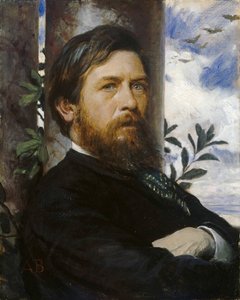
Arnoldas Böcklinas
1827 - 1901 , Šveicarija
Trumpa informacija apie kūrėją
- Artinis Stilius Ar Kryptis: Simbolizmas
- Artistus, Kurie Paveikė Šį Artistą:
- Schirmer
- Feuerbach
- Gimimo Data: 1827 m. gruodžio 16 d.
- Gimimo Vieta: Bazelis, Šveicarija
- Mirties Data: 1901 m. sausio 16 d.
- Tautybė: Šveicarių
- Visas Vardas Ir Pavardė: Arnold Böcklin
- Šį Artistą Įkvėlusios Menininkai Ar Kryptys:
- Hans Thoma
- Prerafelitai
- Žinomos Kūriniai:
- Mirusiųios salos
- Nimfa ir satiras
- Safona
- Mano portretas
Susiję straipsniai

Evocations of Place: A Historical Journey Through Landscape Art
Explore the rich history of landscape art with OriginalUniqueArt. Discover renowned artists, movements like Impressionism & tonalism, and expert guidance for collecting timeless pieces. Find your perfect serene escape today!

Džono Konsteblio Šedevrai: 25 Išskirtiniai Darbai Jūsų Interjerui | OriginalUniqueArt
Atraskite 25 įspūdingiausius Džono Konsteblio paveikslus! Romantizmo meistro gamtos vaizdai, Dedham Vale peizažai ir meno istorijos šedevrai. Meno reprodukcijos jūsų interjerui – OriginalUniqueArt.com

10 Romantinių Peizažų Simbolių: Tapybos Majestatės Viršūnės
Atraskite 10 legendinių romantinio peizažo kūrinių! Pasinerkite į Claude Lorrain, Caspar David Friedrich ir J.M.W. Turner genijaus pasaulį. Išmokite apie tapybos meistriškumą bei gamtos grožį. Aukščiausios kokybės meno reprodukcijos – OriginalUniqueArt.com. Tyrinėkite kolekciją!

Evocations of Place: A Historical Journey Through Landscape Art
Explore the rich history of landscape art with OriginalUniqueArt. Discover renowned artists, movements like Impressionism & Romanticism, and expert guidance for collecting timeless pieces. Find your perfect serene escape today!

Nature’s Sanctuary: Curating Enchanting Forest Artworks to Transform Your Home into a Serene Woodland Retreat
Transform your home into a serene woodland retreat with enchanting forest artworks. Discover museum-quality oil reproductions and custom landscape commissions designed to bring the peaceful beauty of nature indoors.
