

 Peržiūrėti realaus dydžio版
 Siųsti
 Dalintis
 Išsamiau
 Vadovas

 Atsisiųsti
 Panašūs eksponatai
 Rentgeno spindulių nuotrauka
 Diaporama
 Statistika
Karys
 Aliejus ant drobės
- Sieninis menas
- Symbolist Romanticism
 1896
1896- XIX amžius
 222.0 x 170.0 cm
 Kunsthaus Zürich
 Rodyti daugiau
Giclée / Meno spausdinimas
Muziejų lygio „giclée“ arba drobos spausdinimas: greita gamyba ir lankstios apdailos parinktys. ( Pirkti rankomis tapytą reprodukciją Perejti prie skaitmeninių vaizdų)




P118B €10

P118H €10

P118W €10

P438Z €10

P508JH €12

P508YH €12

P805H €10

P805Z €10

P919BZ €10

P919G €10

P919XJ €10

P959ZH €10

P968JZ €12

W106C €8

W218G €10

W218JH €8

W218Y €10

W307PJ €10

W316G €10

W316PJ €8

W316Y €10

W398PJ €8

W4111J €10

W500HY €15

W500JH €15

W692G €12

W849H €8

W940BG €15

W953PJ €8




Pasirinkite iš mūsų nustatytų dydžių, atitinkančių originalaus meno kūrinio proporcijas.

Įveskite jums reikiamą plotį ir aukštį, kad atvaizdas derėtų prie jūsų rėmo ar sienos. Spausdiną galima tik sumažinti, bet nepadidinti virš originalaus paveikslėlio dydžio, todėl keičiant proporcijas, dalis vaizdo prarandama. Prieš spausdinimą atsiųsime jums skaitmeninį maketą patvirtinimui. Šioje puslapio nuotraukoje matomas pjūvis nėra tikslus – jį rodo tik maketas.
Pristatymas visame pasaulyje () per 2 weeks, o ne įprastas 4/5 savaičių laikotarpis. (18 spalis)

Nemokamas greitasis pristatymas visame pasaulyje

Aukštos kokybės lininis drobė

Pilnas siuntimo draudimas

Muitinės mokesčių grąžinimo garantija

Tikro spalvų atitikimo garantija

100 dienų grąžinimo politika (tik esant įtaigoms)

100% pinigų grąžinimo garantija

Nuolaida dideliems užsakymams
 Stiklo variantas prieinamas tik pasirinkus dydį iki 110 cm

Karys
Giclée / Meno spausdinimas
Reprodukcijos dydis
-


Visų pasirinktų variantų kaina
€ 70
La Guerre: Eine düstere Vision von Tod und Verfall
Arnold Böcklin’s *La Guerre* (1896) stands as a chilling testament to Symbolism's preoccupation with mortality and the inescapable grip of time. More than just a depiction of conflict, it’s an immersive experience—a journey into a landscape scarred by decay and haunted by the specter of death itself. Painted swiftly in response to its predecessor, *Der Tod und das Mädchen*, this monumental oil on canvas captures a moment of profound unease, inviting contemplation about our place within the grand scheme of existence.
- Komposition und Darstellung: Das Gemälde zeigt eine zentrale Figur – einen Totenkopf –, der auf einem weißen Pferd durch eine verwüstete Landschaft gleitet. Um ihn herum bewegen sich menschliche Figuren und eine junge Frau, die versucht, ihm zu entkommen. Eine weitere Gestalt trägt eine Sichel und verkörpert den Prozess des Erntezeitens oder Gerichtsstrafen.
- Stil und Technik: Böcklin’s expressive style is characterized by großzügigen Pinselstrichen und einer starken Betonung von Bewegung und Emotion. Die Verwendung von Impasto-Technik verleiht der Oberfläche eine beeindruckende Tiefe und Textur, wodurch die düstere Atmosphäre des Gemäldes verstärkt wird.
- Farbenpalette und Beleuchtung: Eine überwiegend dunkle Farbpalette dominiert das Bild – tiefbraune und schwarze Schatten bilden den Hintergrund für Akzentfarben wie Rot und Weiß. Das dramatische Licht betont die Formen der Figuren und verstärkt das Gefühl von Spannung und Dramatik.
Symbolismus und Mythologie
Böcklin’s artistic vision was deeply rooted in Symbolist mythology and folklore. *La Guerre* ist Teil einer Reihe von Gemälden, die Themen wie Tod, Vergänglichkeit und menschliche Existenz erforschen. Die Figuren und Elemente im Bild sind bewusst symbolisch gewählt und erinnern an klassische Erzählungen und religiöse Vorstellungen – insbesondere an Geschichten über das Leben nach dem Tod.
- Die Bedeutung des Totenkopfes: Der zentrale Totenkopf repräsentiert nicht nur den Tod selbst, sondern auch die unvermeidliche Begegnung mit unserer eigenen Sterblichkeit. Er wird von einer jungen Frau begleitet, die versucht, ihm zu entkommen – ein Bild der Hoffnungslosigkeit und der Suche nach Erlösung.
- Die Sichel und ihre Funktion: Die Sichel symbolisiert den Prozess des Erntezeitens oder Gerichtsstrafen und erinnert an die Idee eines kosmischen Urteils. Sie unterstreicht die düstere Botschaft des Gemäldes über das unvermeidliche Ende aller Dinge.
Historischer Kontext und Einfluss
*La Guerre* entstand im Kontext der europäischen Symbolismusbewegung, die sich durch ihre Betonung von Emotionen und subjektiver Erfahrung gegenüber einer realistischen Darstellung auszeichnete. Böcklin wurde von Künstlern wie Edvard Munch und Gustave Moreau beeinflusst und gilt als einer der wichtigsten Vertreter dieser Bewegung. Sein Werk hatte einen großen Einfluss auf die Kunst und Literatur des frühen 20. Jahrhunderts und wird bis heute für seine düstere Schönheit und seine tiefgründige philosophische Aussage gefeiert.
- Die Rolle von Böcklin im Symbolismus: Arnold Böcklin war ein Schweizer Maler, der sich durch seine traumhafte und mythologische Kunst ausgezeichnet hatte. Er studierte bei Gustave Moreau in Paris und entwickelte einen einzigartigen Stil, der sowohl romantische Elemente als auch symbolistische Ideen vereinte.
- Nachwirkungen von *La Guerre*: Das Gemälde wurde vielfach analysiert und interpretiert und gilt als eines der wichtigsten Werke des Symbolismus. Es inspiriert weiterhin Künstler und Schriftsteller und wird für seine Fähigkeit gefeiert, tiefgreifende Fragen über das Leben und Sterben aufzuwerfen.
Eine hochwertige Reproduktion von *La Guerre* kann einen außergewöhnlichen Blickfang in jedem Wohnraum darstellen und eine Erinnerung an die düstere Schönheit der Symbolismuskunst sein lassen. Lassen Sie sich von dieser beeindruckenden Vision inspirieren!
问答 (or more naturally for a website heading): Klausimai ir atsakymai
Kuriam muziejui priklauso originalus kūrinys „Karys“?
Kūrinys „Karys“, autorius – Arnoldas Böcklinas rodomas Kunsthaus Zürich, Žūrichė, Šveicarija. Nuoroda į muziejų nurodo originalą, o ne reprodukciją.
Kokia „Karys“, autorius – Arnoldas Böcklinas švytėjimo (luminance) intensyvumas?
Įrašytas kūrinio „Karys“, autorius – Arnoldas Böcklinas šviesumas yra Švelnus šešėlis.
Ar „Karys“ bendroje veikla yra labiau šviesio kūrinys ar tamsus?
„Karys“, autorius – Arnoldas Böcklinas įrašytas kaip gilių šešėlių, turintis Švelnus šešėlis apšvietimo.
Autoriaus biografija
ankylas gyvenimas ir mokslas
Arnoldas Böcklinis, šveicarių simbolizmo dailininkas, gimė 1827 m. spalio 16 d. Bazely, Šveicarijoje. Jo tėvas, Christian Frederick Böcklin, kilęs iš senios Šafenhauzeno šeimos, užsiėmė šilko prekyba. Arnoldo motina, Ursula Lippe, taip pat kilusi iš to paties miesto. Dailininkas studijavo Diseldorfo akademijoje dirbdamas su Schirmeriu, tapdamas Anselm Feuerbach draugu. Böcklinio kūryba neatsiejama nuo Diseldorfo tapybos mokyklos.meninė karjera ir simbolizmas
Böcklinio meninė kelionė jį vedė per įvairius miestus, įskaitant Paryžių, kur jis dirbo Luvre muziejuje, ir Romą, kur jį įkvėpė tenక matiniai vaizdai. Jo kūrinys dažnai로 atskleidė alegoriškas ir mitologines figūras klasikinės architektūros aplinkoje, nagrinėjant mirties ir žmogiškosios būties prigimtį.- „Didysis parkas“, vienas jo ankstyviausių darbų, pristatė senovės mitologiją.
- „Nimfa ir satiras“ (1858) bei „Safona“ (1859) buvo išskirtiniai šio laikotarpio kūriniai.
- Böcklinio „Mano portretas, kai mirtis groja smuiku“ (1872) tapo jo unikalaus stiliaus pavyzdžiu.
palikimas ir įtaka
Böcklinis geriausiai žinomas dėl penkių savo versijų paveikslų „Mirusioji sala“ (1880–1886), kurie priminė Florencijos anglišką kapinę, kurioje buvo palaikyta jo dukra. Jo kūryba paveikė jaunesnius menininkus, tokius kaip Hans Thoma, ir įkvėpė keletą vėlyvo romantizmo kompozitorių.- Clement Greenbergas apibūdino Böcklinio darbą kaip „vieną iš to laikmečio paryškintų išraiškų“.
- Böcklinio stilius sutapė su prerafaelitais, pabrėžiant sapnų ir mistikos pasaulį.
muziejai ir kolekcijos
Böcklinio kūriniai galima rasti įvairiuose muziejuose, įskaitant:- Öffentliche Kunstsammlung (Bazelis, Šveicarija)
- Kunstmuseum Basel (Šveicarija)
- Museum Kunsthaus Zürich (Zürich, Šveicarija)
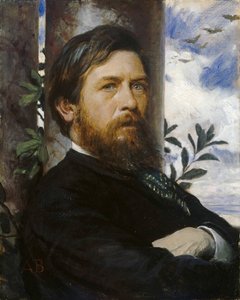
Arnoldas Böcklinas
1827 - 1901 , Šveicarija
Trumpa informacija apie kūrėją
- Artinis Stilius Ar Kryptis: Simbolizmas
- Artistus, Kurie Paveikė Šį Artistą:
- Schirmer
- Feuerbach
- Gimimo Data: 1827 m. gruodžio 16 d.
- Gimimo Vieta: Bazelis, Šveicarija
- Mirties Data: 1901 m. sausio 16 d.
- Tautybė: Šveicarių
- Visas Vardas Ir Pavardė: Arnold Böcklin
- Šį Artistą Įkvėlusios Menininkai Ar Kryptys:
- Hans Thoma
- Prerafelitai
- Žinomos Kūriniai:
- Mirusiųios salos
- Nimfa ir satiras
- Safona
- Mano portretas
Susiję straipsniai
„La Biennale di Venezia“ šedevrai: 25 įspūdingiausi meno kūriniai jūsų interjerui
Atraskite 25 įspūdingiausius meno kūrinius iš „La Biennale di Venezia“! Išsami istorija apie dailininkus, techniką ir spalvas. Įkvėpkite interjerui su OriginalUniqueArt.com – aukštos kokybės reprodukcijomis ir unikaliu dekoru.
Beyond Reality: The Dark, Dreamy Vibe of the Symbolist Movement
Dive into the dark, hypnotic world of Symbolism. Explore how dreamlike imagery and psychological depth redefined art history, paving the way for Surrealism. Discover how to curate this moody, avant-garde aesthetic for your modern space with expert insights.
John La Farge: Pioneering American Colorism & Japonisme's Influence
Explore the groundbreaking work of John La Farge, a pioneer of American colorism and stained glass. Discover his captivating Japonisme-inspired murals & lasting legacy in 19th-century art. Expert insights for collectors.
Roger de la Fresnaye: Cubism, Tradition & the Search for Order in Early 20th-Century French Painting
Explore the captivating world of Roger de la Fresnaye, a pivotal French Cubist painter. Discover his unique blend of tradition & modernity, influences, and lasting legacy with OriginalUniqueArt.
Águeda Ruiz de la Prada: A Study of Eclecticism & Emotional Resonance in Contemporary Spanish Painting
Discover the vibrant world of Ágatha Ruiz de la Prada, a leading figure in contemporary Spanish art. Explore her eclectic style, emotional depth & legacy – a must-read for discerning collectors.
