Art Nouveau
evestar (Alfonzas Muha)
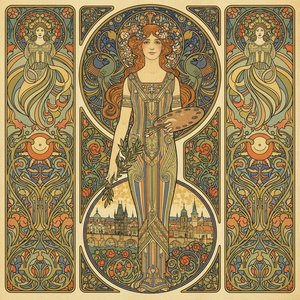
Alfonzas Muha (1860–1939) sukūrė evestar. Šis kūrinys priklaulo Art Nouveau kieruliui. Pagaminta naudojant Giclée Print.
- Giclée Print

 Rankinio darbo aliejinės imitacijos paveikslas
 Pasidalinti
 Dalintis
 Informacinė l lapelė


 Atsisiųsti
 Panašūs eksponatai
 Automatinė diorama
 问答

 Statistika
evestar, trumpai
- Pavadinimas
- evestar
- Autorius
- Alfonzas Muha (1860–1939)
- Dizainere/is gimęs
- Brnas, Čekija
- Mediumas
- Giclée Print
- Judėjimas
- Art Nouveau
- Laikotarpis
- 19th Century
- Tema
- woman figure, flowing dress, art nouveau, graceful pose, gold frame, allegorical art
Ką vaizduoja evestar?
Evostar: A Symphony of Art Nouveau Grace
Alphonse Mucha’s “Evostar,” painted in 1902, is more than just a depiction of a woman; it's an embodiment of the Art Nouveau movement at its zenith. This captivating artwork immediately draws the viewer into a world of flowing lines, organic forms, and a profound sense of movement – hallmarks of Mucha’s distinctive style. The image portrays a figure in a luxurious, billowing dress, arms outstretched as if caught mid-dance or gesture, radiating an aura of serene elegance and poised beauty. The gold frame surrounding the piece isn't merely decorative; it elevates the scene, suggesting a masterpiece worthy of display within a grand salon or private collection.
The Art Nouveau Vision
Mucha’s artistic journey began in Brno, Czech Republic, shaped by early exposure to music and a deep appreciation for nationalistic themes. His time at the Prague Academy of Fine Arts proved formative, though ultimately disillusioning, leading him to Paris in 1887 – a pivotal moment where he forged his own path. “Evostar” exemplifies this self-defined style perfectly. Influenced by artists like Pierre-Auguste Renoir and Gustave Moreau, Mucha masterfully blended classical ideals with a distinctly modern sensibility. The flowing lines of the dress, the delicate rendering of fabric, and the overall composition are all characteristic of Art Nouveau’s fascination with nature's curves and its rejection of rigid academic conventions. The piece speaks to a desire for beauty that transcends mere representation – it seeks to evoke an emotional response through form and color.
Symbolism and Narrative
The woman in “Evostar” embodies the idealized feminine figure so frequently depicted by Mucha. Her posture, with arms outstretched, suggests both grace and invitation, a timeless symbol of beauty and allure. While the precise narrative is open to interpretation, it aligns with Art Nouveau’s penchant for allegorical themes and romanticized depictions of women. The necklace she wears adds an element of opulence and sophistication, further enhancing her captivating presence. The color palette – dominated by golds, creams, and subtle greens – contributes significantly to the artwork's ethereal quality, evoking a sense of twilight or evening, hence the title “Evostar.”
Technical Mastery & Historical Context
Created in 1902, "Evostar" reflects Mucha’s refined technique. He was renowned for his meticulous attention to detail, particularly in rendering fabrics and textures. The layering of paint creates a luminous effect, capturing the play of light on the woman's dress with remarkable skill. This artwork emerged during a period of immense artistic innovation – the Art Nouveau movement was rapidly gaining momentum across Europe. Mucha’s success, largely due to his commissions for Sarah Bernhardt and his innovative poster designs, helped solidify Art Nouveau as a dominant aesthetic. Reproductions like this allow us to appreciate not only Mucha's genius but also the broader cultural context in which he worked, a world captivated by beauty, elegance, and the promise of a new artistic era.
evestar dididraudžios kokybės vaizdai
Viešoji domenė: suregalis mirė 1939 m.
Alfonzas Muha, evestar. Viešoji domenė.
Atsakimai į klausimus apie evestar
Kokia technika sukurta „evestar“ – Alfonzas Muha?
„evestar“ technika – Giclée Print.
Ką vaizduoja „evestar“ – Alfonzas Muha?
„evestar“ – Alfonzas Muha vaizdeletas: woman figure, flowing dress, art nouveau, graceful pose, gold frame, allegorical art, muchas style.
Ar „evestar“ yra viešosios teisės kūrinys?
„evestar“ – Alfonzas Muha yra yra viešosios erdvės dalis – jo autorinė teisė pasibaigusi. Šis statusas nustato, kaip galima reprodukcijaus šio kūrinio vaizdą.
Kas sukūrė „evestar“?
„evestar“ priskiriamas Alfonzas Muha.
Kokiam stiliui priklauso „evestar“?
Kūrinio „evestar“ – Alfonzas Muha stilius – Art Nouveau. Ši klasifikacija leidžia šį darbą įtraukti į bendrą susijusių menininkų ir kūrinių kontekstą.
Kokio Alfonzas Muha kūrybos etapo dalis yra „evestar“?
Alfonzas Muha kūrybos enceklopedijoje kūrinys „evestar“ priskiriamas Mature Period laikotarpiui. Šis etapas leidžia palyginti jį su kitais šio autoriaus kūriniais.
Kokia yra autorinės teisės situacijos priežastis kūriniam darbui „evestar“ – Alfonzas Muha?
„evestar“ – Alfonzas Muha yra yra viešosios erdvės dalis – jo autorinė teisė pasibaigusi. Autorinės teisės galioja nuo mirties metų, kai šis kūrėjas mirė 1939 m.
Kaip kūrinys „evestar“ dera su Alfonzas Muha temomis ir stiliumi?
„evestar“ priklauso Alfonzas Muha Art Nouveau kūrybai, kurios įrašytoms temoms priskiriamas renoir, moreau influences, czech national symbolism, bernhardt’s theatrical style, idealized feminine beauty, signature art nouveau work.
Ar „evestar“ yra būdingas tam, ką Alfonzas Muha paprastai kūrė?
„evestar“ vaizduoja woman figure, flowing dress, art nouveau, graceful pose, gold frame, allegorical art, muchas style, o įrašytos Alfonzas Muha temos yra renoir, moreau influences, czech national symbolism, bernhardt’s theatrical style, idealized feminine beauty, signature art nouveau work. Šių dviejų lyginimas parodo, kaip šis kūrinys susijęs su įprastais šio kūrybinio veiksmo objektais.
Apie šį menininką, Alfonzas Muha

1860–1939, Čekija
Alfonzas Muha
Ankstyvas gyvenimas ir išsilavinimas Alfonzas Marija Mucha (Alfonsas Mucha) gimė 1860 metų liepos 15 dieną Ivaničicėje, Moravijoje (dabartinėje Čekijos Respublikoje). Netrukus pasireiškė jo meninis talentas. Studijavo meno akademijoje Prahoje, tačiau nusivylęs tradiciniais metodais, 1887 metais persikėlė į Paryžių, siekdamas kurti savitu stiliumi. Šis sprendimas tapo lemtingu žingsniu jo kūrybiniame kelyje, atvėrusiu duris į naują meno erą – Art Nouveau.
Taip pat Alfonzas Muha darbai
 The Moon
 Nude
 The Apotheosis of the Slavs1926
 Stained-Glass Window in St. Vitus Cathedral
Esdai apie evestar
 French artworks of the 1880sFrench Impressionist masterpieces by Claude Monet, Pierre-Auguste Renoir, and Georges Seurat. Find museum-quality reproductions on Original…
 The Elegance of Art Nouveau: A Masterclass in Organic Forms, Sinuous Lines, and the Belle Époque AestheticExplore the exquisite world of Art Nouveau. From Alphonse Mucha’s flowing lines to the organic elegance of the Belle Époque, discover the h…
 Alphonse Mucha: A Comprehensive Exploration of Art Nouveau's Master of Decorative SymbolismExplore the life & art of Alphonse Mucha, master of Art Nouveau! Discover his iconic posters, stunning illustrations, and the monumental Sl…