Palma Giovane portretas

100 garsiausių Palma Giovane paveikių rinkinys: galerijos išboru

Atnaujinta spalis 2026 · pagal mūsų populiarumumo koeficientą (paieškos, lankytojai ir užsakymai kiekvienam kūriniui) · 161 Palma Giovane darbai mūsų kataloge

Trumpai tariant

Iš visų paliktų originalų kūrinių Palma Giovane garsiausias yra The Crucifixion of St Peter (1614), esantis Gallerie dell'Accademia di Venezia kolekcijoje, Venecija. Tiesiog už jų seka Pietà with Angels (1620) ir Paolo Veronese (1600). Mūsų kataloge yra 161 darbų autoriaus Palma Giovane; galerija išsaugojo 100 labiausiai pasaulyje žyminiausių kūrinių – kiekvienas jų pateikiamas su datos, muziejaus ir istorijos aprašymu.

1550 – 1628, Venecija Renaissance Daugiausia darbų: Bavarijos valstybinės paveikslų kolekcijos

Palma Giovane geriausios 10 paveikslų: galerijos pasirinkimas

1
The Crucifixion of St Peter (1614) aut. Palma Giovane

The Crucifixion of St Peter

1614 · Oil On Canvas · Gallerie dell'Accademia di Venezia, Venecija

Michelangelo Palma il Giovane’s “The Crucifixion of St Peter,” painted in 1614, is not merely a depiction of a pivotal moment in Christian history; it's a profound exploration of suffering, faith, and the raw emotion of martyrdom. This monumental canvas, measuring 170 x 135 cm, transports the viewer directly into the heart of the scene – a chaotic yet deeply moving tableau unfolding outdoors beneath a dramatic, stormy sky. Palma,…

2
Pietà with Angels (1620) aut. Palma Giovane

Pietà with Angels

1620 · Oil · Kunsthistorisches Museum, Viena

A heavy, limp body rests across the lap of the Virgin Mary. The pale skin of Christ contrasts against the deep red of her tunic and the dark blue of her mantle. Shadows swallow the background, pushing the figures forward into a sharp, theatrical light. Two large angels flank the upper scene, their faces etched with grief. Below, small cherubs support the weight of the limbs, one near the arm…

3
Paolo Veronese (1600) aut. Palma Giovane

Paolo Veronese

1600 · Oil · Galleria degli Uffizi, Florencija

A dark, shadow-filled void recedes behind the subject, stripping away the distractions of the physical world. This absence of background detail pushes the figure forward, creating a sudden sense of depth. The man emerges from this gloom, his presence anchored by a crisp white collar that catches the light. His gaze is direct, meeting the viewer with an unwavering eye contact that bridges the gap between the painted space and…

4
The Conversion of Saint Paul (1590) aut. Palma Giovane

The Conversion of Saint Paul

1590 · Oil · Museo del Prado, Madridas

The air thickens with sudden, celestial violence as the scene erupts in a chaotic swirl of motion. Saul, once a persecutor of the faithful, is caught in a moment of profound physical and spiritual disorientation. He is thrown from his horse, a heavy, muscular form tumbling toward the earth, while the animal recoils in a tangle of limbs and frantic energy. Above this earthly commotion, a brilliant, piercing light breaks…

5
The Crucifixion (1596) aut. Palma Giovane

The Crucifixion

1596 · Oil On Canvas · Metropolitano meno muziejus, Niujorkas

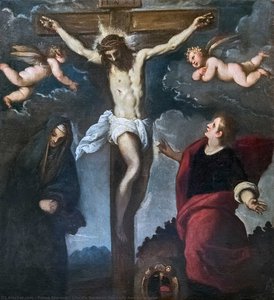
The composition reflects the transition from the High Renaissance to the burgeoning drama of the Baroque. The style is characterized by intense emotional weight and dynamic movement typical of the late Renaissance or Mannerist period. The texture appears smooth yet painterly, capturing the anatomical detail of Christ's torso and the heavy fabric of the mourning figures. Through the use of light as a narrative tool, the composition guides the eye…

6
Venus and Mars (1605) aut. Palma Giovane

Venus and Mars

1605 · Oil On Canvas · J. Paul Getty muziejus, Los Andželis

The oil on canvas work titled Venus and Mars presents a mythological encounter between the personification of love and the god of war. Painted by Palma il Giovane, the scene captures these lovers in a moment of intimate proximity. The figures of Venus and Mars respond to one another through anticipatory gestures, their bodies arranged in a way that suggests a shared, private space. A small Cupid occupies the lower…

7
The prophet Nathan admonishes King David (1600) aut. Palma Giovane

The prophet Nathan admonishes King David

1600 · Oil On Canvas · Kunsthistorisches Museum, Viena

The oil painting The prophet Nathan admonishes King David presents an emotionally charged biblical scene set within a shallow, stage-like space. The composition centers on two primary figures engaged in an intense interaction. On the left, King David is depicted sitting in a large, ornate golden throne. He wears a red velvet robe trimmed with thick white ermine fur and a prominent gold crown, his posture heavy and dejected with…

8
Portrait of a Sculptor (1605) aut. Palma Giovane

Portrait of a Sculptor

1605 · Oil On Canvas · Kunsthistorisches Museum, Viena

The room falls into a heavy, quiet stillness as we gaze upon an elderly man, his face etched with the deep lines of a life spent in focused labor. He sits in a three-quarter view, caught in a moment of profound introspection. A sharp, directional light enters from the upper left, carving his features out of the surrounding darkness. This intense chiaroscuro pulls his weathered forehead and greyish-white beard into…

9
Lamentation with angels (1612) aut. Palma Giovane

Lamentation with angels

1612 · Oil · Kunsthistorisches Museum, Viena

In this 1612 oil painting, we find ourselves drawn into the immediate, heavy atmosphere of the Lamentation. The composition centers on the pale, lifeless body of Christ, which lies horizontally across the lower half of the frame. There is a stillness here that feels almost physical, a quietude that contrasts with the intense emotional weight of the scene. To the left, a figure draped in deep red robes holds a…

10
Judith Placing the Head of Holofernes onto a Cloth Held by Another Female Figure, the Foreshortened Body of Holofernes Gushes with Blood from the Neck (1628) aut. Palma Giovane

Judith Placing the Head of Holofernes onto a Cloth Held by Another Female Figure, the Foreshortened Body of Holofernes Gushes with Blood from the Neck

1628 · Etching

In this etching print, we find ourselves witnessing a scene of profound, sudden movement. The composition centers on the aftermath of a decisive act: Judith is captured in the precise, heavy moment of placing the severed head of Holofernes onto a cloth. Another female figure assists, her hands steadying the fabric to catch the weight of the deed. There is a certain anatomical tension here, particularly in the foreshortened body…

Palma Giovane darba rinkinys tęsiamas, nuo 11 iki 100

11Portrait of Niccolo da Ponte (1491-1585), Doge of Venice (1580) aut. Palma GiovanePortrait of Niccolo da Ponte (1491-1585), Doge of Venice1580 · Kunsthistorisches Museum 12The Pope allows Otto to go to his father to negotiate peace (1582) aut. Palma GiovaneThe Pope allows Otto to go to his father to negotiate peace1582 · Dojų rūmai 13Pietá (1611) aut. Palma GiovanePietá1611 · Museo del Prado 14David with Goliath's Head (1590) aut. Palma GiovaneDavid with Goliath's Head1590 · Museo del Prado 15Salomé with the Head of John the Baptist (1599) aut. Palma GiovaneSalomé with the Head of John the Baptist1599 · Kunsthistorisches Museum 16Moses Brings the Tablets of the Law (1586) aut. Palma GiovaneMoses Brings the Tablets of the Law1586 · Bavarijos valstybinės paveikslų kolekcijos 17St Sebastian (1590) aut. Palma GiovaneSt Sebastian1590 · Ermitažas 18Dead Christ Supported by an Angel (1612) aut. Palma GiovaneDead Christ Supported by an Angel1612 · Kunsthistorisches Museum 19Adoration of the Shepherds (1575) aut. Palma GiovaneAdoration of the Shepherds1575 · Bavarijos valstybinės paveikslų kolekcijos 20Flagellation of Christ (1586) aut. Palma GiovaneFlagellation of Christ1586 · Bavarijos valstybinės paveikslų kolekcijos 21Christ calling Zacchaeus (1575) aut. Palma GiovaneChrist calling Zacchaeus1575 · Fitzwilliam Museum 22Elijah and the Angel (1575) aut. Palma GiovaneElijah and the Angel1575 · Fitzwilliam Museum 23Portrait of a Gentleman (1590) aut. Palma GiovanePortrait of a Gentleman1590 · Art Institute of Chicago 24Fighting soldiers (1569) aut. Palma GiovaneFighting soldiers1569 25soldiers on horseback (1569) aut. Palma Giovanesoldiers on horseback1569 26Soldiers on horseback (1569) aut. Palma GiovaneSoldiers on horseback1569 27supraporte: fighting soldiers (1569) aut. Palma Giovanesupraporte: fighting soldiers1569 28fighting soldiers (1569) aut. Palma Giovanefighting soldiers1569 29Battle - scene in landscape with town (1569) aut. Palma GiovaneBattle - scene in landscape with town1569 30soldiers on horseback (1569) aut. Palma Giovanesoldiers on horseback1569 31soldiers on horseback (1569) aut. Palma Giovanesoldiers on horseback1569 32six citizens after war scene (1569) aut. Palma Giovanesix citizens after war scene1569 33Gentlemen on horse - back (1569) aut. Palma GiovaneGentlemen on horse - back1569 34Victory of Francesco Bembo over Filippo Maria Visconti (1578) aut. Palma GiovaneVictory of Francesco Bembo over Filippo Maria Visconti1578 · Dojų rūmai 35The Descent of Manna (1575) aut. Palma GiovaneThe Descent of Manna1575 36Christ Deposed In The Sepulchre (1575) aut. Palma GiovaneChrist Deposed In The Sepulchre1575 37Crucifix Between Our Lady And Saint John (1575) aut. Palma GiovaneCrucifix Between Our Lady And Saint John1575 38The Paschal Lamb (1575) aut. Palma GiovaneThe Paschal Lamb1575 39St Lawrence Giving the Wealth to the Poor (1575) aut. Palma GiovaneSt Lawrence Giving the Wealth to the Poor1575 40Lamentation of Christ (1586) aut. Palma GiovaneLamentation of Christ1586 · Bavarijos valstybinės paveikslų kolekcijos 41Lamentation of Christ (1586) aut. Palma GiovaneLamentation of Christ1586 · Bavarijos valstybinės paveikslų kolekcijos 42Thetis on the Sea (1586) aut. Palma GiovaneThetis on the Sea1586 · Bavarijos valstybinės paveikslų kolekcijos 43Lamentation of Christ (1586) aut. Palma GiovaneLamentation of Christ1586 · Bavarijos valstybinės paveikslų kolekcijos 44Annunciation of Mary (1585) aut. Palma GiovaneAnnunciation of Mary1585 · Bavarijos valstybinės paveikslų kolekcijos 45Christ and the Samaritan Woman (1586) aut. Palma GiovaneChrist and the Samaritan Woman1586 · Bavarijos valstybinės paveikslų kolekcijos 46Saint Sebastian (1586) aut. Palma GiovaneSaint Sebastian1586 · Bavarijos valstybinės paveikslų kolekcijos 47Ecce homo (1586) aut. Palma GiovaneEcce homo1586 · Bavarijos valstybinės paveikslų kolekcijos 48The Expulsion of the Vices of the Church (1582) aut. Palma GiovaneThe Expulsion of the Vices of the Church1582 · Royal Collection 49Venus and Cupid (1590) aut. Palma GiovaneVenus and Cupid1590 · Royal Collection 50Prometheus Chained to the Caucasus (1589) aut. Palma GiovanePrometheus Chained to the Caucasus1589 · Royal Collection 51Massacre of the Inhabitants of Hippo (1593) aut. Palma GiovaneMassacre of the Inhabitants of Hippo1593 · Musée Fabre 52Scene from the History of Joseph (1587) aut. Palma GiovaneScene from the History of Joseph1587 · Isabella Stewart Gardner Museum 53Scene from the History of Joseph (1587) aut. Palma GiovaneScene from the History of Joseph1587 · Isabella Stewart Gardner Museum 54Judas Cyriacus (1593) aut. Palma GiovaneJudas Cyriacus1593 55Sant'elena Ritrova La Vera Croce (1593) aut. Palma GiovaneSant'elena Ritrova La Vera Croce1593 56L'imperatore Eraclio Riporta La Croce Al Calvario (1593) aut. Palma GiovaneL'imperatore Eraclio Riporta La Croce Al Calvario1593 57Pius II (1593) aut. Palma GiovanePius II1593 58Judith and Holofernes (1600) aut. Palma GiovaneJudith and Holofernes1600 59The Virgin and Child, Saint Luke and a Donor (1602) aut. Palma GiovaneThe Virgin and Child, Saint Luke and a Donor1602 · Royal Collection 60The Penitent Magdalene (1600) aut. Palma GiovaneThe Penitent Magdalene1600 · Royal Collection 61Return of the Prodigal Son (1595) aut. Palma GiovaneReturn of the Prodigal Son1595 · Gallerie dell'Accademia di Venezia 62The Virgin and Child with Saints and Angels (1620) aut. Palma GiovaneThe Virgin and Child with Saints and Angels1620 · National Gallery of Ireland 63Lamentation of Christ (1620) aut. Palma GiovaneLamentation of Christ1620 · Bavarijos valstybinės paveikslų kolekcijos 64Self Portrait (1614) aut. Palma GiovaneSelf Portrait1614 65Studies of an Arm, and of the Heads of an Old Man and Young Woman (1628) aut. Palma GiovaneStudies of an Arm, and of the Heads of an Old Man and Young Woman1628 66Seated Female Holding a Book, Two Heads of Bearded Men, Seated Male Nude, and Four Sketches for Christ Judging (recto); Studies for Cain Slaying Abel (verso) (1628) aut. Palma GiovaneSeated Female Holding a Book, Two Heads of Bearded Men, Seated Male Nude, and Four Sketches for Christ Judging (recto); Studies for Cain Slaying Abel (verso)1628 67Apostles at the Virgin's Tomb (1582) aut. Palma GiovaneApostles at the Virgin's Tomb1582 · Ermitažas 68Cain and Abel (1603) aut. Palma GiovaneCain and Abel1603 · Kunsthistorisches Museum 69Annunciation (1600) aut. Palma GiovaneAnnunciation1600 · Madonna dell'Orto 70Martirio Di San Giovanni Battista Tra San Lanfranco Beccari E San Liberio (1593) aut. Palma GiovaneMartirio Di San Giovanni Battista Tra San Lanfranco Beccari E San Liberio1593 71Washing of the Feet (1591) aut. Palma GiovaneWashing of the Feet1591 · San Giovanni in Bragora 72Lamentation (1620) aut. Palma GiovaneLamentation1620 · National Gallery of Art 73Joseph and Potiphar's Wife aut. Palma GiovaneJoseph and Potiphar's WifeStatens Museum For Kunst 74Allegory of the Victory over the League of Cambrai (detail) (1590) aut. Palma GiovaneAllegory of the Victory over the League of Cambrai (detail)1590 · Dojų rūmai 75The Dead Christ Supported by An Angel with Two Putti Each Supporting a Cero (1575) aut. Palma GiovaneThe Dead Christ Supported by An Angel with Two Putti Each Supporting a Cero1575 76The Paschal Lamb (1575) aut. Palma GiovaneThe Paschal Lamb1575 77Eucharist Worshipped By The Four Evangelists (1575) aut. Palma GiovaneEucharist Worshipped By The Four Evangelists1575 78Elia Cibato From angel (1575) aut. Palma GiovaneElia Cibato From angel1575 79The Parish Priest Da Ponte in front of the Virgin, Saint Mark, Saint Sylvester and Saint James (1575) aut. Palma GiovaneThe Parish Priest Da Ponte in front of the Virgin, Saint Mark, Saint Sylvester and Saint James1575 80Red Sea Passage (1575) aut. Palma GiovaneRed Sea Passage1575 81The Flagellation aut. Palma GiovaneThe FlagellationMuseo del Prado 82Papa Cleto (1593) aut. Palma GiovanePapa Cleto1593 83Elia nutrito dall'angelo (1593) aut. Palma GiovaneElia nutrito dall'angelo1593 84Lanfranco Beccari (1593) aut. Palma GiovaneLanfranco Beccari1593 85David riceve dal sacerdote Achimelec i pani offerti nel santuario (1593) aut. Palma GiovaneDavid riceve dal sacerdote Achimelec i pani offerti nel santuario1593 86Saint Helena (1593) aut. Palma GiovaneSaint Helena1593 87Il Serpente Di Bronzo (1593) aut. Palma GiovaneIl Serpente Di Bronzo1593 88Alexander III confirms the Crucifixes and gives them the rule (1593) aut. Palma GiovaneAlexander III confirms the Crucifixes and gives them the rule1593 89Pope San Cleto Founds the Order of the Crucifer - St. Cyril's Bishop of Jerusalem Reaffirms the Order (1593) aut. Palma GiovanePope San Cleto Founds the Order of the Crucifer - St. Cyril's Bishop of Jerusalem Reaffirms the Order1593 90David and Achimelech (1590) aut. Palma GiovaneDavid and Achimelech1590 · Santissimo Redentore 91The Pool (1592) aut. Palma GiovaneThe Pool1592 · Collezione Molinari Pradelli 92The Martyrdom of St Lawrence (1581) aut. Palma GiovaneThe Martyrdom of St Lawrence1581 · San Giacomo dall'Orio 93Sketch for An Entablature (1628) aut. Palma GiovaneSketch for An Entablature1628 94The Arrest of Christ, Christ and the Canaanite Woman, Seated Male Figures, and Head of a Child (1628) aut. Palma GiovaneThe Arrest of Christ, Christ and the Canaanite Woman, Seated Male Figures, and Head of a Child1628 95Studies of Horsemen and Study of a Figure for a Deposition (1628) aut. Palma GiovaneStudies of Horsemen and Study of a Figure for a Deposition1628 96Seated Female Holding a Book, Two Heads of Bearded Men, Seated Male Nude, and Four Sketches for Christ Judging (recto); Studies for Cain Slaying Abel (verso) (1628) aut. Palma GiovaneSeated Female Holding a Book, Two Heads of Bearded Men, Seated Male Nude, and Four Sketches for Christ Judging (recto); Studies for Cain Slaying Abel (verso)1628 97Sheet of Studies with St. Jerome, Seated at Right and Resting His Right Forearm on a Book, at Left An Ecclesiastical Figure Wearing a Cope and Miter, and at Bottom Two Putti (1628) aut. Palma GiovaneSheet of Studies with St. Jerome, Seated at Right and Resting His Right Forearm on a Book, at Left An Ecclesiastical Figure Wearing a Cope and Miter, and at Bottom Two Putti1628 98A Venetian Senator aut. Palma GiovaneA Venetian SenatorMuseo del Prado 99Amusements of the Prodigal Son (1595) aut. Palma GiovaneAmusements of the Prodigal Son1595 · Gallerie dell'Accademia di Venezia 100Christ as Teacher aut. Palma GiovaneChrist as TeacherBavarijos valstybinės paveikslų kolekcijos

žymios Palma Giovane tapiojamos, pagal laikotarpį

Temos, kurios domino Palma Giovane

Ketverios temos, dažniausiai pasikrausto originaluose, kiekvienos su savo puikiausiu pavyzdžiu.

Muziejai, kuriuose saugomi Palma Giovane originalūs darbai

8 muziejai, kuriuose saugoma daugiausia šioje pusėje esamų paveikslų.

Muzejaus Miestas Palma Giovane darbai Šiojo sąrašo paveikslai
Bavarijos valstybinės paveikslų kolekcijos, MiunchasBavarijos valstybinės paveikslų kolekcijos Miunchas 14 Moses Brings the Tablets of the Law, Adoration of the Shepherds, Flagellation of Christ
Kunsthistorisches Museum, VienaKunsthistorisches Museum Viena 8 Pietà with Angels, The prophet Nathan admonishes King David, Portrait of a Sculptor
Museo del Prado, MadridasMuseo del Prado Madridas 5 The Conversion of Saint Paul, Pietá, David with Goliath's Head
Royal Collection, LondonasRoyal Collection Londonas 5 The Expulsion of the Vices of the Church, Venus and Cupid, Prometheus Chained to the Caucasus
Dojų rūmai, VenecijaDojų rūmai Venecija 4 The Pope allows Otto to go to his father to negotiate peace, Victory of Francesco Bembo over Filippo Maria Visconti, Allegory of the Victory over the League of Cambrai (detail)
Gallerie dell'Accademia di Venezia, VenecijaGallerie dell'Accademia di Venezia Venecija 3 The Crucifixion of St Peter, Return of the Prodigal Son, Amusements of the Prodigal Son
Ermitažas, Šv. PeterburgasErmitažas Šv. Peterburgas 2 St Sebastian, Apostles at the Virgin's Tomb
Fitzwilliam MuseumFitzwilliam Museum 2 Christ calling Zacchaeus, Elijah and the Angel

Palma Giovane dešimtmetėms po dešimtmetės: originalus kūrinys, apibūdinantis kiekvieną iš jų

Darbai pagal dešimtmečius

Pasirinkite dešimtmetį, kad pamatytėte jį apibrėžusį originalą.

Kolekcjonerų klausimai apie Palma Giovane paveikslus

Kuriu darbu Palma Giovane yra labiausiai garsus?Atsakymas

The Crucifixion of St Peter (1614), Gallerie dell'Accademia di Venezia, Venecija. Toliau seka Pietà with Angels (1620) ir Paolo Veronese (1600).

Kokia buvo Palma Giovane amžius, kai buvo sukurtas The Crucifixion of St Peter?Atsakymas

64 metų amžiaus: The Crucifixion of St Peter sukurta 1614 m. Nr. Palma Giovane gimė 1550.

Kokie yra 10 garsiausių Palma Giovane paveikslų?Atsakymas

The Crucifixion of St Peter, Pietà with Angels, Paolo Veronese, The Conversion of Saint Paul, The Crucifixion, Venus and Mars, The prophet Nathan admonishes King David, Portrait of a Sculptor, Lamentation with angels ir Judith Placing the Head of Holofernes onto a Cloth Held by Another Female Figure, the Foreshortened Body of Holofernes Gushes with Blood from the Neck. Viršuje esančioje reitingo sąraše nurodyta kiekvieno kūrinio metis ir muziejus.

Kiek paveikslų paliko Palma Giovane?Atsakymas

Mūsų kataloge yra 161 Palma Giovane darbų, skirtų laikotarpiui nuo 1569 iki 1628.

Kuriuose muziejuose eksponuojami Palma Giovane šedevrai?Atsakymas

Daugiausia – Bavarijos valstybinės paveikslų kolekcijos (Miunchas), Kunsthistorisches Museum (Viena) ir Museo del Prado (Madridas). Viršuje esančiame muziejų sąraše yra visi jie.

Kuriomis metais Palma Giovane tapo savo garsiausius kūrinius?Atsakymas

1590s laikotarpiu: 27 iš 100 šioje pusėje esančių darbų buvo sukurtos tada, iš jų The Conversion of Saint Paul.

Kokie yra pirmasis ir paskutinis garsieji Palma Giovane originalūs darbai?Atsakymas

Šioje pusėje seniausias darbas yra Fighting soldiers (1569), o naujausias – Judith Placing the Head of Holofernes onto a Cloth Held by Another Female Figure, the Foreshortened Body of Holofernes Gushes with Blood from the Neck (1628).

Kurią temą Palma Giovane rinkosi dažniausiai?Atsakymas

Man (26), Woman (19) ir People (15) iš 100 šioje pusėje esamų darbų.

Kurią techniką Palma Giovane naudojo dažniausiai?Atsakymas

Oil On Canvas, iš 100 šios puslapio darbų – 36.

Kelią meno kryptį priklauso Palma Giovane?Atsakymas

Renaissance ir Baroque, judging by the originals on this page.

Kurių Palma Giovane darbai eksponuojami Bavarijos valstybinės paveikslų kolekcijos?Atsakymas

Moses Brings the Tablets of the Law, Adoration of the Shepherds ir Flagellation of Christ: Bavarijos valstybinės paveikslų kolekcijos, Miunchas kolekcijoje yra 13 šioje pusėje esančių darbų.

Palma Giovane: gyvenimas ir kūryba

Švyturi Jacopo Palma il Giovane palikime

Auksiniame Venecijos Renesanso švytėjime, laikotarpyje, apibūdinamame nepanašiu spalvų ir šviesos meistriškumu, atsirado paveikslautojas, kurio teptukas padėjo tiltą tarp Auksidžio Renesanso ir pradinės Baroko dramos. Jacopo Palma il Giovane, gimęs Iacopo Negretti apie 1548 metus, nebuvo tik didžiųjų meistrų paveikslautojas, bet ir gyvybiškai svarus ryšys Venecijos mokykloje. Kaip garsiojo Palma Vecchio pro внуkio, jis gimė meninės iškilmingumo linijoje, paveldėdamas gilią supratimą apie chromatinį turtingumą, kuris apibrėžė venecietiškąją tradicą. Jo gyvenimas ir kūryba atstoko sklandų perėjimą, įnešanį šviesią eleganciją iš jo protėvių į naują emocinio intensyvumo ir teatralinio didybės erą.

Palma meninio meistriškumo pamatai buvo užkrauti Venecijos dirbtuvėse, kurioje oro kvapas buvo prisunkotas Tizio ir Tintoreto palikimo. Nors istoriniai įrodymai leidžia manyti, kad jis galėjo tobulinti savo techniką studijuodamas kvap einstų Tizio spalvų paleteles, būtent Tintoreto dinamiška energija suformavo jo brandžią viziją. Po 1594 m. Tintoreto mirties, Palma il Giovane pakilo į iškilmingumo viršūnę, tapdamas dominuojančia menine jėga Venecijoje. Jis turėjo retą gebėjimą sujungti šiuos du skirtingus įtakos veiksnius: iš Tizio jis išgavo išmanų šviesos ir odos tonų valdymą; iš Tintoreto – judėjimo pojūtį, dramatišką chiaroscuro ir naratyvinį skubumą, kuris giliai rezonavo su Kontrarenciavimo religiniu azarto jausmu.

Naratyvo ir emocijų meistras

Palma il Giovane kūryba yra įrodymas jo gebėjimui transformuoti biblijinius ir mitologinius temas į prisivelgiančią žmogaus patirtį. Jo paveikslai retai būna statiški; jie pulsuoja gyvybės jėga, kuri žiūrovą įtraukia į dramos širdį. Ar tai būtų religinės męčiautojimo solemnybė, ar gyvas tavernos scenos chaosas, jo darbe šviesa naudojama kaip naratyvinis įrankis, vedantis akį per sudėtingas kompozicijas, kad rastų emocinį istorijos esmę. Jo meistriškumas ypač išraiškęs tokiuose darbuose kaip Šv. Aleksandrijos Kotrynos męcijimas, kur šešėlio ir spindesio sąveika sustiprina dieviško kovos pojūtį, bei Klaustotai prie Mergelės kapo, kuri per platų, energingą teptukų darbą užfiksuoja gili bendros gėle akimirką.

Be religinių užsakymų, Palma universalumas leido jam tyrinėti platų temų spektrą. Jo talentas įamžinti žmogaus dvasią galbūt intimiausiai matomas jo Savitraizyje, darbe, kuris atskleidžia sielingą introspekciją ir techninį meistriškumą, gebantį atvaizduoti subtilius išraiškos atspalvius. Net ir pasaulyje ?: more sekuliariose ar anekdotinėse scenose, tokiose kaip Nepralengto sūna pramavimų scena, jis išlaiko gyvą, ritminę kokybę, kuri švenčia venecietiško gyvenimo tekstūras ir spalvas. Šis gebėjimas svyrioti tarp gilaus ir žaismingo užtikrino jo aktualumą įvairiuose rėmėjų ratuose – nuo Venecijos bažnytinės valdžios iki Império dvarų Vidurio Rytų Europoje.
Istorinė reikšmė ir neišnyksnantis įtaka

Jacopo Palma il Giovane istorinė svarba išsiplėtė daug toliau už Venecijos Respublikos ribų. Jo įtaka plaukė į išorę, pasiekdama Bergamo ir imperatoriaus Rudolf II dvarą Pragoje, pažymėdamas jį kaip tarptautinio lygio menininką. Jis ne tiesiog atkartojo praeitį; jis ją evoliucionavo, paruošdamas pagrindą emociškesnėms ir dramatiškoms stiliams, kurie apibrėžtų XVII amžių. Mokinydamas būsimas kartas, įskaitant figūras, kurios vėliau tobulintų venecietiškojo estetinio vaizdo, jis užtikrino, kad jo kilmės tradicijos išliktų gyvos ir transformatyvios.

Šiandien mes atpažįstame Palma il Giovane kaip lūžio figūrą, kurio darbas tarnauja kaip tiltas tarp erų. Jo palikimas aptinkamas:

  • Stilių sinteze: sklandžiame Tizio spalvų spindesio ir Tintoreto dramatiško dinamizmo integracijoje.
  • Kontrarenciavimo menėjimi: naudojant galingus vaizdus, kad būtų perteikta religinė intensyvumas, kurio reikalavo Katalikų bažnyba gilių religinių pokyčių laikotarpiu.
  • Venecijos mokyklo tęstinumu: išlaikant Venecijos statusą kaip pasaulinio meno epicentro per jo plačius užsakymus ir pedagoginę įtaką.

Per savo išraiškingą teptuką ir meistrišką šviesos naudojimą, Palma il Giovane įamžino patį keičiančiosся pasaulio esmę, palikdamas kūrybinį turtą, kuris ir šiandien sužavė ir sujaudina šiuolaikinį stebėtoją.