Othon Friesz portretas

48 garsiausių Othon Friesz paveikių – kiekvienas yra unikalus

Atnaujinta spalis 2026 · pagal mūsų populiarumumo koeficientą (paieškos, lankytojai ir užsakymai kiekvienam kūriniui) · 48 Othon Friesz darbai mūsų kataloge

Trumpai tariant

Scene in a Parisian Brasserie (1906) yra viena矚 most žiūrėlių pritraukiančių Othon Friesz tapierių; originalas saugomas Museum Barberini, Potsdamas. Po to akmuo patenka į The Bathers of Andelys (1908) ir Interior (1914). Iš 48 Othon Friesz darbų mūsų kataloge šios 48 yra garsiausios – kiekvienas yra unikali originali dai̇lia, pateikta su jos metais, muziejumi ir priežastimi, kodėl ji išlieka per amžius.

1879 – 1949, Le Havre Daugiausia darbų: Statens Museum For Kunst

10 geriausių Othon Friesz paveikslų: galerijos akimais

7
Temptation (Adam and Eve) (1910) aut. Othon Friesz

Temptation (Adam and Eve)

1910 · Oil On Canvas · Ermitažas, Šv. Peterburgas

The oil on canvas titled Temptation (Adam and Eve) was painted by Othon Friesz in 1910. This work measures 73 x 60 cm. It captures a moment of profound weight through the figures of Adam and Eve. The scene is held within the permanent collection of the Hermitage Museum.

žinomi Othon Friesz paveikslai, nuo 11 iki 48 numerio

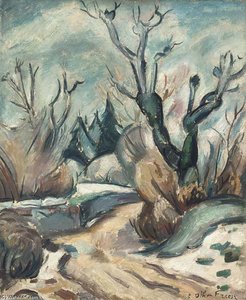
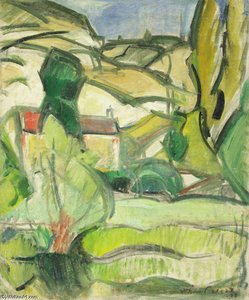
11Nude Reclining aut. Othon FrieszNude Reclining 12The Creek aut. Othon FrieszThe CreekMuseum of Art 13The Harbour in Honfleur (1907) aut. Othon FrieszThe Harbour in Honfleur1907 · National Museum of Art, Architecture and Design 14Flowers (Tulips and Daisies) (1910) aut. Othon FrieszFlowers (Tulips and Daisies)1910 · Ermitažas 15Vue du château Fallet (1907) aut. Othon FrieszVue du château Fallet1907 · Musée d'Unterlinden 16The Sunken Road in Winter (1913) aut. Othon FrieszThe Sunken Road in Winter1913 · Statens Museum For Kunst 17The Arbour in the Pine Wood (1914) aut. Othon FrieszThe Arbour in the Pine Wood1914 · Statens Museum For Kunst 18Still Life with Brioches (1916) aut. Othon FrieszStill Life with Brioches1916 · Statens Museum For Kunst 19Still Life with Apples (1915) aut. Othon FrieszStill Life with Apples1915 · Statens Museum For Kunst 20Terrace with Palms (1914) aut. Othon FrieszTerrace with Palms1914 · Statens Museum For Kunst 21The Cliff at Sainte Marguerite (1914) aut. Othon FrieszThe Cliff at Sainte Marguerite1914 · Statens Museum For Kunst 22The Peaches (1914) aut. Othon FrieszThe Peaches1914 · Statens Museum For Kunst 23Spring (1913) aut. Othon FrieszSpring1913 · Statens Museum For Kunst 24The Harbour of Le Havre (1921) aut. Othon FrieszThe Harbour of Le Havre1921 · Antverpio karališkasis gražiųjų menų muziejus 25Under the Fig (1922) aut. Othon FrieszUnder the Fig1922 · Statens Museum For Kunst 26The Mountain Coudon Seen from Cap Brun aut. Othon FrieszThe Mountain Coudon Seen from Cap BrunAntverpio karališkasis gražiųjų menų muziejus 27The ramparts of Saint-Malo aut. Othon FrieszThe ramparts of Saint-MaloMusée Toulouse-Lautrec 28Port aut. Othon FrieszPort 29The Jura aut. Othon FrieszThe Jura 30Landscape aut. Othon FrieszLandscape 31Port Of Toulon aut. Othon FrieszPort Of Toulon 32Baigneuses aut. Othon FrieszBaigneuses 33Flowers aut. Othon FrieszFlowers 34Construction Of Sheds At Istres aut. Othon FrieszConstruction Of Sheds At Istres 35Window On The Port Of Toulon aut. Othon FrieszWindow On The Port Of Toulon 36Bateau Et Coquillages aut. Othon FrieszBateau Et Coquillages 37Seated Woman aut. Othon FrieszSeated Woman 38Nature Morte aut. Othon FrieszNature Morte 39Landscape At Home aut. Othon FrieszLandscape At Home 40A Village Street aut. Othon FrieszA Village Street 41Landscape - aut. Othon FrieszLandscape - 42A Still Life With Flowers In A Vase aut. Othon FrieszA Still Life With Flowers In A Vase 43Drawings for ceramic plates aut. Othon FrieszDrawings for ceramic platesMuseu do Caramulo 44Landscape of La Ciotat (1907) aut. Othon FrieszLandscape of La Ciotat1907 · Centre Pompidou 45The Port of Anvers (1906) aut. Othon FrieszThe Port of Anvers1906 · La Boverie 46Autumn Work (1908) aut. Othon FrieszAutumn Work1908 · National Museum of Art, Architecture and Design 47Roofs and Cathedral in Rouen (1908) aut. Othon FrieszRoofs and Cathedral in Rouen1908 · Ermitažas 48Le Havre, Bassin du Roy (1906) aut. Othon FrieszLe Havre, Bassin du Roy1906

Temos, kurios domino Othon Friesz

Ketverios temos, dažniausiai pasikrausto originaluose, kiekvienos su savo puikiausiu pavyzdžiu.

Muziejai, kuriuose saugomi Othon Friesz originalūs darbai

8 muziejai, kuriuose saugoma daugiausia šioje pusėje esamų paveikslų.

Muzejaus Miestas Othon Friesz darbai Šiojo sąrašo paveikslai
Statens Museum For Kunst, KopenhagaStatens Museum For Kunst Kopenhaga 13 Interior, Mother's Love, The Lady on the Terrace
Ermitažas, Šv. PeterburgasErmitažas Šv. Peterburgas 3 Temptation (Adam and Eve), Flowers (Tulips and Daisies), Roofs and Cathedral in Rouen
National Museum of Art, Architecture and Design, OsloNational Museum of Art, Architecture and Design Oslo 2 The Harbour in Honfleur, Autumn Work
Antverpio karališkasis gražiųjų menų muziejus, AntverpysAntverpio karališkasis gražiųjų menų muziejus Antverpys 2 The Harbour of Le Havre, The Mountain Coudon Seen from Cap Brun
Museum Barberini, PotsdamasMuseum Barberini Potsdamas 1 Scene in a Parisian Brasserie
Musee du Petit Palais, GenevaMusee du Petit Palais Geneva 1 The Bathers of Andelys
Izraelio muziejus, JeruzalėIzraelio muziejus Jeruzalė 1 The Decorated Cruiser, Antwerp
Museum of Art, San DiegoMuseum of Art San Diego 1 The Creek

Othon Friesz per dešimtmečius: vieniškas originalas kiekvienam

Darbai pagal dešimtmečius

Pasirinkite dešimtmetį, kad pamatytėte jį apibrėžusį originalą.

Othon Friesz tapų klausimai galerijai

Koks yra garsiausias Othon Friesz kūrinys?Atsakymas

Scene in a Parisian Brasserie (1906), Museum Barberini, Potsdamas. Toliau seka The Bathers of Andelys (1908) ir Interior (1914).

Kuriuo amžiaus atσταση Othon Friesz sukūrė Scene in a Parisian Brasserie?Atsakymas

27 metų amžiaus: Scene in a Parisian Brasserie sukurta 1906 m. Nr. Othon Friesz gimė 1879.

Kurios Othon Friesz dešimt paveikslų yra garsiausi?Atsakymas

Scene in a Parisian Brasserie, The Bathers of Andelys, Interior, Mother's Love, The Lady on the Terrace, Female Nude, Temptation (Adam and Eve), The Decorated Cruiser, Antwerp, Le Havre Port ir Nude Lying in a Landscape. Viršuje esančioje reitingo sąraše nurodyta kiekvieno kūrinio metis ir muziejus.

Kiek žinoma Othon Friesz darbų?Atsakymas

Mūsų kataloge yra 48 Othon Friesz darbų, skirtų laikotarpiui nuo 1903 iki 1923.

Kur galima pamatyti garsiausių Othon Friesz originalų?Atsakymas

Daugiausia – Statens Museum For Kunst (Kopenhaga), Ermitažas (Šv. Peterburgas) ir National Museum of Art, Architecture and Design (Oslo). Viršuje esančiame muziejų sąraše yra visi jie.

Kuriuo laikotarpiu Othon Friesz sukūrė savo žymiausias paveikslus?Atsakymas

1910s laikotarpiu: 13 iš 48 šioje pusėje esančių darbų buvo sukurtos tada, iš jų Interior.

Kuris iš garsių Othon Friesz paveikslų yra pirmasis, o kuris – paskutinis?Atsakymas

Šioje pusėje seniausias darbas yra Le Havre Port (1903), o naujausias – Female Nude (1923).

Kokia temos Othon Friesz mėgavosi?Atsakymas

Flowers (2) ir Landscape (2) iš 48 šioje pusėje esamų darbų.

Kurius Othon Friesz originalius galėčiau pamatyti Statens Museum For Kunst?Atsakymas

Interior, Mother's Love ir The Lady on the Terrace: Statens Museum For Kunst, Kopenhaga kolekcijoje yra 13 šioje pusėje esančių darbų.

Othon Friesz: meno kūrinys – autoportretas

Émile Othon Friesz: Life and Art

Early Life and Education

  • Achille-Émile Othon Friesz was born in Le Havre, France, in 1879. He came from a family with artistic inclinations; his father was a marine painter.
  • Friesz initially pursued studies in shipbuilding before dedicating himself to painting around the age of 20.
  • He received formal training at the École des Beaux-Arts in Paris, studying under Gustave Moreau and Léon Bonnat.
  • During his time in Paris, he befriended other aspiring artists like Raoul Dufy, which would prove pivotal to his artistic development.

Fauvism and Early Career

  • Friesz became a key member of the Fauvist movement, alongside artists like Henri Matisse and André Derain. This group was known for its bold use of color and expressive brushwork.
  • His early works from this period, such as Paysage à la Ciotat (1907), demonstrate the Fauvist aesthetic – vibrant, non-naturalistic colors applied with energetic strokes.
  • He exhibited with the Salon d'Automne in 1905, the exhibition that famously launched the term “Fauves” (“wild beasts”) due to their radical style.

Artistic Development and Style

  • Around 1908-1909, Friesz began to move away from the intense colorism of Fauvism towards a more personal Post-Impressionist style.
  • His palette became softer, and his compositions more structured. He focused increasingly on landscapes, often depicting scenes in Normandy and along the French coast.
  • Les baigneuses des Andelys (1908) exemplifies this transition, showcasing a more balanced composition and nuanced color scheme.
  • He continued to paint figure paintings and still lifes throughout his career, but landscapes remained a central theme.

Major Works and Achievements

  • Le travail à l'automne (1907-1908): A large-scale painting showcasing his Fauvist period, depicting figures working in an autumnal landscape.
  • Roofs and cathedral in Rouen (1908): Demonstrates his exploration of urban landscapes and architectural subjects.
  • Paysage les jars (ca. 1920): A representative example of his later, more refined Post-Impressionist style.
  • Friesz exhibited widely throughout France and internationally during his lifetime.

Historical Significance and Legacy

  • Émile Othon Friesz played a significant role in the development of modern art, particularly through his involvement with Fauvism.
  • His later work demonstrates a successful transition from radical experimentation to a more contemplative and personal style.
  • He influenced a generation of painters, including Marthe Rakine, who was among his pupils.
  • Friesz’s paintings are held in major museum collections worldwide, including the Hermitage Museum (Saint Petersburg) and the Musée du Petit Palais (Geneva).
  • He died in Paris in 1949 and is buried in the Cimetière du Montparnasse.