Trumpai tariant
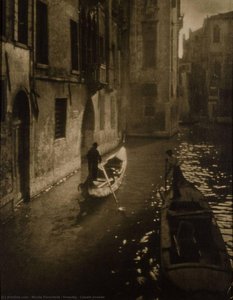
Iš visų originalų, kuriuos paliko Nicola Perscheid, garsiausias yra Venedig - Canale Grande (1929). Tiesiog už jų seka The Reaper (1901) ir Heimwärts (1901). Mūsų kataloge yra 5 darbų autoriaus Nicola Perscheid; galerija išsaugojo 5 labiausiai pasaulyje žyminiausių kūrinių – kiekvienas jų pateikiamas su datos, muziejaus ir istorijos aprašymu.
Nicola Perscheid geriausios 10 paveikslų: galerijos pasirinkimas
The Reaper
Nicola Perscheid's "The Reaper," painted in 1901, isn’t merely a depiction of rural labor; it’s a profound meditation on time, mortality, and the enduring connection between humanity and the land. This evocative monochrome image, now housed within the State Art Collections of Dresden, immediately draws the viewer into a world steeped in quiet intensity – a world where the rhythmic cycle of harvest is inextricably linked to the inevitable passage…
Heimwärts
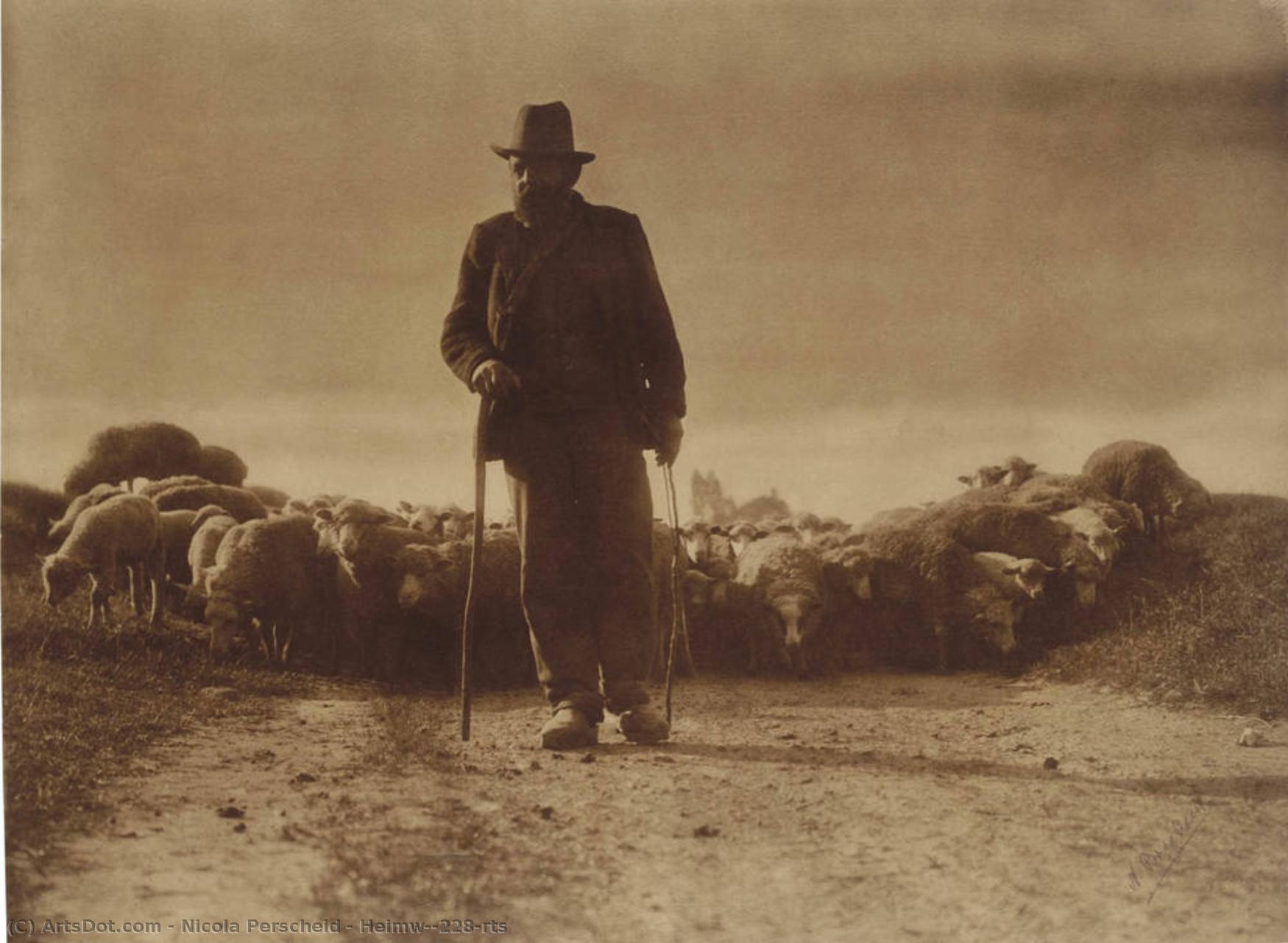
The photograph Heimwärts was captured by Nicola Perscheid in 1901. It presents a quiet study of rural life, focusing on the rhythmic movement of a shepherd and his flock. The scene is frozen in a sepia-toned stillness, a moment caught in the soft light of an overcast day.
Arnold Schönberg
The opening of Nicola Perscheid’s studio at Bellevuestraße 6a, right near the Choralion hall (Bellevuestraße 4) where the world premiere of Pierrot lunaire, op. 21 took place in October 1912, was a major event in the press: “A magnificent space in colossal dimensions! No skylight! Smooth, green walls […] On the opposite wall facing the courtyard is an enormous window slanted inwards almost as wide as the wall, of the…
Temos, kurios domino Nicola Perscheid
Ketverios temos, dažniausiai pasikrausto originaluose, kiekvienos su savo puikiausiu pavyzdžiu.
Landscape 2 darbai
Muziejai, kuriuose saugomi Nicola Perscheid originalūs darbai
2 muziejai, kuriuose saugoma daugiausia šioje pusėje esamų paveikslų.
| Muzejaus | Miestas | Nicola Perscheid darbai | Šiojo sąrašo paveikslai |
|---|---|---|---|
| Dresno | 2 | The Reaper, Heimwärts | |
| Viena | 1 | Arnold Schönberg |
Nicola Perscheid dešimtmetėms po dešimtmetės: originalus kūrinys, apibūdinantis kiekvieną iš jų
Darbai pagal dešimtmečius
Pasirinkite dešimtmetį, kad pamatytėte jį apibrėžusį originalą.
The Reaper
Nicola Perscheid's "The Reaper," painted in 1901, isn’t merely a depiction of rural labor; it’s a profound meditation on time, mortality, and the enduring connection between humanity and the land. This evocative monochrome image, now housed within the State Art Collections of Dresden, immediately draws the viewer into a world steeped in quiet intensity – a world where the rhythmic cycle of harvest is inextricably linked to the inevitable passage…
Arnold Schönberg
The opening of Nicola Perscheid’s studio at Bellevuestraße 6a, right near the Choralion hall (Bellevuestraße 4) where the world premiere of Pierrot lunaire, op. 21 took place in October 1912, was a major event in the press: “A magnificent space in colossal dimensions! No skylight! Smooth, green walls […] On the opposite wall facing the courtyard is an enormous window slanted inwards almost as wide as the wall, of the…
Kolekcjonerų klausimai apie Nicola Perscheid paveikslus
Kuriu darbu Nicola Perscheid yra labiausiai garsus?Atsakymas
Venedig - Canale Grande (1929). Toliausiai eina The Reaper (1901) ir Heimwärts (1901).
Kokia buvo Nicola Perscheid amžius, kai buvo sukurtas Venedig - Canale Grande?Atsakymas
65 metų amžiaus: Venedig - Canale Grande sukurta 1929 m. Nr. Nicola Perscheid gimė 1864.
Kiek paveikslų paliko Nicola Perscheid?Atsakymas
Mūsų kataloge yra 5 Nicola Perscheid darbų, skirtų laikotarpiui nuo 1901 iki 1929.
Kuriuose muziejuose eksponuojami Nicola Perscheid šedevrai?Atsakymas
Daugiausia – Staatliche Kunstsammlungen Dresden (Dresno) ir Arnold Schönberg Center (Viena). Viršuje esančiame muziejų sąraše yra visi jie.
Kuriomis metais Nicola Perscheid tapo savo garsiausius kūrinius?Atsakymas
1900s laikotarpiu: 2 iš 5 šioje pusėje esančių darbų buvo sukurtos tada, iš jų The Reaper.
Kokie yra pirmasis ir paskutinis garsieji Nicola Perscheid originalūs darbai?Atsakymas
Šioje pusėje seniausias darbas yra The Reaper (1901), o naujausias – Venedig - Canale Grande (1929).
Kurių Nicola Perscheid darbai eksponuojami Staatliche Kunstsammlungen Dresden?Atsakymas
The Reaper ir Heimwärts: Staatliche Kunstsammlungen Dresden, Dresno kolekcijoje yra 2 šioje pusėje esančių darbų.
Nicola Perscheid: gyvenimas ir kūryba
Nicola Perscheid: Pioneer of Artistic Portraiture and the Soft Focus Lens
Nicola Perscheid (3 December 1864 – 12 May 1930) stands as a singular figure in early 20th-century German photography, celebrated primarily for his masterful artistic portraits imbued with an ethereal quality achieved through innovative techniques. Born in Moselweiß near Koblenz, he embarked on a lifelong pursuit of visual storytelling, honing his craft across Europe – Saarbrücken, Trier, Colmar, Nice, Vienna and Budapest – demonstrating remarkable adaptability and dedication to his profession. His formative years instilled within him a deep appreciation for observation and meticulous detail, qualities that would subsequently define his artistic vision.- Early Life & Training: Perscheid’s formal education focused on classical studies, providing him with a foundational understanding of aesthetics and composition. However, it was his apprenticeship as a photographer under Wilhelm Schüle in Koblenz that truly ignited his passion for the medium and established him upon a path toward artistic expression.
- The Perscheid Lens: A Breakthrough in Portrait Photography: Perhaps Perscheid’s most enduring legacy rests on his invention of the “Perscheid lens,” a revolutionary soft focus apparatus specifically designed for large format portraiture. This ingenious device prioritized capturing subtle nuances of emotion and expression, rejecting the harsh realities of conventional photographic processes. It allowed photographers to achieve an unprecedented level of artistic control over image texture and tonal range.
Artistic Vision & Portrait Style
Perscheid’s approach to portraiture transcended mere documentation; he sought to convey the inner life of his subjects, prioritizing mood and atmosphere alongside precise likeness. Influenced by Impressionism and Symbolism – movements that championed subjective experience and evocative imagery – Perscheid skillfully employed lighting techniques and compositional choices to heighten emotional impact. His portraits are characterized by a contemplative stillness, reflecting a profound understanding of human psychology and an unwavering commitment to artistic integrity. He meticulously crafted images that captured not just appearance but also spirit.- Notable Works: Among his impressive oeuvre are captivating pieces such as ‘Dame Mit Japanischem Schirm’ (1925), where he expertly utilized platinum printing to produce a stunning black and white portrait brimming with texture and an otherworldly luminescence. Similarly, his depiction of Arnold Schönberg showcases the artist's ability to convey complex emotions through carefully considered framing and tonal gradation.
- Technique & Aesthetic Considerations: Perscheid’s dedication to artistic excellence extended beyond lens innovation; he embraced meticulous printing processes—particularly platinum printing—to maximize image depth and luminosity. This technique allowed him to achieve a remarkable level of tonal subtlety, mirroring the artist's desire to capture the essence of his subjects with profound sensitivity.