Luka Signorelli portretas

100 garsiausių Luka Signorelli paveikių rinkinys: galerijos išboru

Atnaujinta spalis 2026 · pagal mūsų populiarumumo koeficientą (paieškos, lankytojai ir užsakymai kiekvienam kūriniui) · 215 Luka Signorelli darbai mūsų kataloge

Trumpai tariant

Iš visų paliktų originalų kūrinių Luka Signorelli garsiausias yra Portreto senoliui (1492), esantis Staatliche Museen zu Berlin kolekcijoje, Berlinas. Tiesiog už jų seka St Augustine Altarpiece (left wing) (1498) ir Christ and the Doubting Thomas (1477). Mūsų kataloge yra 215 darbų autoriaus Luka Signorelli; galerija išsaugojo 100 labiausiai pasaulyje žyminiausių kūrinių – kiekvienas jų pateikiamas su datos, muziejaus ir istorijos aprašymu.

1450 – 1523, Kortona Renesansas Daugiausia darbų: Santa Casa bazilika

Luka Signorelli geriausios 10 paveikslų: galerijos pasirinkimas

1
Portreto senoliui (1492) aut. Luka Signorelli

Portreto senoliui

1492 · Aliejus ant drobės · Staatliche Museen zu Berlin, Berlinas

Pasaulio Šedį – Luca Signorelli „Vyro Portretas“ Šis portretas, sukurtas 1492 metais dailiojo meno meistrui Lukui Signorelli, yra ne tik įspūdingo meno kūrinio fragmentas; tai akimirka, užšifruota istorijoje ir simbolizme. Tai vyresnio žmogaus atvaizdas, išliekęs laikams, kuriame susiduriama su žmogaus egzistencijos klausimais, autoriteto įvairovėmis ir Renesanso Italijos savybėmis. Portretas pasižymi didžiausia dėmesio atstumu vyresniojo žmogaus veido detalėms, jo išraiškingam žvilgsniui bei sudėtingai apranga. Štai šie elementai kartu su užplūdu istorinių…

2
St Augustine Altarpiece (left wing) (1498) aut. Luka Signorelli

St Augustine Altarpiece (left wing)

1498 · Oil On Canvas · Staatliche Museen zu Berlin, Berlinas

The left wing of Luca Signorelli's “St Augustine Altarpiece,” completed in 1498 for the Bichi Chapel within the church of Sant’Agostino in Siena, is more than just a beautiful painting; it’s a profound meditation on faith, charity, and the intertwined destinies of earthly and divine figures. Measuring a modest 146 x 76 centimeters, this panel offers an intimate glimpse into the artistic sensibilities of a master navigating the complexities of…

3
Christ and the Doubting Thomas (1477) aut. Luka Signorelli

Christ and the Doubting Thomas

1477 · Fresco · Santa Casa bazilika, Loreto Marches

Within the Loreto basilica, Signorelli’s 1482 fresco, Christ and the Doubting Thomas, captures a heavy, singular instant. We witness Thomas Aquinas reaching out to touch the wounds of Jesus Christ, a gesture bridging skepticism and faith. There is a tension in the air, a meeting of the physical and the spiritual as the apostle seeks tangible proof. The composition draws the eye toward the interaction of hands, where the vulnerability…

4
Madonna and Child (1505) aut. Luka Signorelli

Madonna and Child

1505 · Acrylic On Canvas · Metropolitano meno muziejus, Niujorkas

Luca Signorelli’s 1505 “Madonna and Child” is more than just a religious painting; it’s a profound meditation on motherhood, faith, and the enduring power of human connection. Born in Cortona, Italy, around 1441-1445, Signorelli was a pivotal figure in the late Renaissance, renowned for his meticulous draftsmanship and his ability to seamlessly blend classical ideals with deeply felt emotion. This particular work, gifted to his daughter, offers a rare glimpse…

5
The Hell (1502) aut. Luka Signorelli

The Hell

1502 · Fresco

The Hell is a fresco by Luca Signorelli. Painted in 1502, this work captures a vision of the underworld. It occupies a space of profound movement and spiritual weight. The scene is populated by a multitude of figures, specifically a vast assembly of demons and angels. These entities occupy the air and the ground in a state of constant, restless interaction.

6
The Last Judgment (The right part of the composition - The Damned Consigned to Hell) (1502) aut. Luka Signorelli

The Last Judgment (The right part of the composition - The Damned Consigned to Hell)

1502 · Fresco

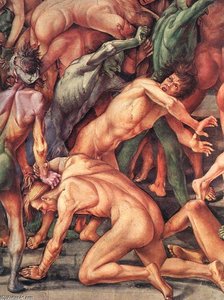
The painting depicts a crowded, chaotic scene of divine retribution set against a structured architectural backdrop. In the center, a figure of Jesus Christ is positioned, surrounded by a gathering of angels and demons. The composition is divided by the movement of various figures, some ascending and others descending. To the right, the focus shifts toward the damned, as humans are shown being cast into a dark, subterranean space. Figures…

7
The Last Judgment (The right part of the composition - The Damned Consigned to Hell; the left part of the composition - The Blessed Taken into Paradise) (1502) aut. Luka Signorelli

The Last Judgment (The right part of the composition - The Damned Consigned to Hell; the left part of the composition - The Blessed Taken into Paradise)

1502 · Fresco

The fresco presents a bifurcated view of the afterlife, divided by a central archway. On the left side, the composition depicts the blessed being led into Paradise. These figures move toward a celestial realm, characterized by a sense of upward motion and light. On the right side, the scene shifts to the damned being consigned to Hell. This section contains a convoluted mass of human forms, many of them naked,…

8
The Holy Family (1492) aut. Luka Signorelli

The Holy Family

1492 · Oil On Panel · National Gallery, Londonas

In this 1492 oil on panel, the Virgin Mary cradles the Christ Child within a tight, pyramidal composition. Behind them, Saint Joseph is positioned to complete the group, creating a sense of enclosure and quietude. The figures emerge from a dark, undifferentiated background, a technique that utilizes chiaroscuro to push the subjects toward the viewer. Light enters from the upper left, catching the soft skin of the infant and the…

9
Man on a Ladder (1504) aut. Luka Signorelli

Man on a Ladder

1504 · Oil On Panel · National Gallery, Londonas

The world holds its breath as a single figure climbs. A man, caught in mid-motion, pulls himself upward along a wooden ladder that cuts vertically through the frame. He leans forward, his body tensed with the physical effort of the ascent. His face, seen in profile, carries a look of deep focus, perhaps even a hint of strain, as he navigates the rungs. A bright red tunic, trimmed in white,…

10
Figures in a Landscape: Two Nude Youths (1490) aut. Luka Signorelli

Figures in a Landscape: Two Nude Youths

1490 · Tempera On Panel · Toledo meno muziejus, Toledo

The sun hangs suspended in a hazy sky, casting a diffused light over a rugged, rocky landscape. Two young men exist in this stillness, their bodies rendered with a sculptural weight that feels immediate and tangible. One youth stands with his back turned, a large piece of light blue drapery caught in a moment of movement as he holds it up, partially veiling his head and upper back. His musculature…

Luka Signorelli darba rinkinys tęsiamas, nuo 11 iki 100

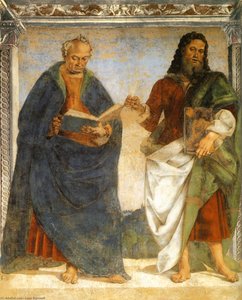
11The Adoration of the Magi (1508) aut. Luka SignorelliThe Adoration of the Magi1508 · Yale University Art Gallery 12Margarita Magdalėna (1504) aut. Luka SignorelliMargarita Magdalėna1504 · Museo dell'Opera del Duomo 13The Martyrdom of Saint Catherine of Alexandria (1490) aut. Luka SignorelliThe Martyrdom of Saint Catherine of Alexandria1490 14Lamentation over the Dead Christ (1489) aut. Luka SignorelliLamentation over the Dead Christ1489 · Pollok House 15Christ in the House of Simon the Pharisee (1498) aut. Luka SignorelliChrist in the House of Simon the Pharisee1498 · National Gallery of Ireland 16The Annunciation (1493) aut. Luka SignorelliThe Annunciation1493 · Philadelphia Museum of Art 17The Archangel Gabriel (1490) aut. Luka SignorelliThe Archangel Gabriel1490 · Walters Art Museum 18Fifteen Characters (1490) aut. Luka SignorelliFifteen Characters1490 19The Penitent St. Jerome in Ecstasy (1500) aut. Luka SignorelliThe Penitent St. Jerome in Ecstasy1500 20Apocalypse (1499) aut. Luka SignorelliApocalypse1499 21The Resurrected Christ Appearing to His Disciples (1514) aut. Luka SignorelliThe Resurrected Christ Appearing to His Disciples1514 · Detroito meno institutas 22The Resurrected Christ Appearing to St. Magdalene (1514) aut. Luka SignorelliThe Resurrected Christ Appearing to St. Magdalene1514 · Detroito meno institutas 23Martyrs and Saint Virgins (1502) aut. Luka SignorelliMartyrs and Saint Virgins1502 24Prophet holding a Scroll (1523) aut. Luka SignorelliProphet holding a Scroll1523 · Strasburgos gražiųjų rūšų muziejus 25Madonna of the milk in glory (1475) aut. Luka SignorelliMadonna of the milk in glory1475 · Pinacoteca di Brera 26The Apostles Peter and John the Evangelist (1477) aut. Luka SignorelliThe Apostles Peter and John the Evangelist1477 · Santa Casa bazilika 27Lamentation over the Dead Christ with Angels and Saints (1516) aut. Luka SignorelliLamentation over the Dead Christ with Angels and Saints1516 28Figures in a Landscape: Man, Woman and Child (1490) aut. Luka SignorelliFigures in a Landscape: Man, Woman and Child1490 · Toledo meno muziejus 29St Augustine Altarpiece (right wing) (1498) aut. Luka SignorelliSt Augustine Altarpiece (right wing)1498 · Staatliche Museen zu Berlin 30Madonna and Child with Saints and Angels (1510) aut. Luka SignorelliMadonna and Child with Saints and Angels1510 31View of the Sacristy of St John (1477) aut. Luka SignorelliView of the Sacristy of St John1477 · Santa Casa bazilika 32Life of St Benedict, Scene 28: Benedict Recognizes and Receives Totila (1499) aut. Luka SignorelliLife of St Benedict, Scene 28: Benedict Recognizes and Receives Totila1499 33Virgin and Child with Sts Jerome and Bernard of Clairvaux (1492) aut. Luka SignorelliVirgin and Child with Sts Jerome and Bernard of Clairvaux1492 · Galleria Corsini 34Virgin and Child with Sts Michael, Vincent of Saragozza, Margaret of Cortona and Mark (1512) aut. Luka SignorelliVirgin and Child with Sts Michael, Vincent of Saragozza, Margaret of Cortona and Mark1512 35The Great Cloister (1497) aut. Luka SignorelliThe Great Cloister1497 36View of the Vaulting of the Sacristy of St John (1477) aut. Luka SignorelliView of the Vaulting of the Sacristy of St John1477 · Santa Casa bazilika 37Pair of Apostles in Dispute (1482) aut. Luka SignorelliPair of Apostles in Dispute1482 38Pair of Apostles in Dispute (1482) aut. Luka SignorelliPair of Apostles in Dispute1482 39The Flagellation (1480) aut. Luka SignorelliThe Flagellation1480 40Pair of Apostles in Dispute (1477) aut. Luka SignorelliPair of Apostles in Dispute1477 · Santa Casa bazilika 41View of the Chapel of San Brizio (1499) aut. Luka SignorelliView of the Chapel of San Brizio1499 42The Crucifixion (1500) aut. Luka SignorelliThe Crucifixion1500 43Doctors of the Church (1499) aut. Luka SignorelliDoctors of the Church1499 44The Elect (detail) (1499) aut. Luka SignorelliThe Elect (detail)1499 45The Damned (detail) (8) (1499) aut. Luka SignorelliThe Damned (detail) (8)1499 46Apocalypse (detail) (1499) aut. Luka SignorelliApocalypse (detail)1499 47Apocalypse (detail) (1499) aut. Luka SignorelliApocalypse (detail)1499 48The Damned (detail) (1499) aut. Luka SignorelliThe Damned (detail)1499 49Sermon and Deeds of the Antichrist (detail) (1499) aut. Luka SignorelliSermon and Deeds of the Antichrist (detail)1499 50Apocalypse (detail) (1499) aut. Luka SignorelliApocalypse (detail)1499 51Resurrection of the Flesh (detail) (10) (1499) aut. Luka SignorelliResurrection of the Flesh (detail) (10)1499 52The Elect Being Called to Paradise (1499) aut. Luka SignorelliThe Elect Being Called to Paradise1499 53Resurrection of the Flesh (detail) (1499) aut. Luka SignorelliResurrection of the Flesh (detail)1499 54Apocalypse (detail) (1499) aut. Luka SignorelliApocalypse (detail)1499 55Apocalypse (detail) (1499) aut. Luka SignorelliApocalypse (detail)1499 56Sermon and Deeds of the Antichrist (detail) (1499) aut. Luka SignorelliSermon and Deeds of the Antichrist (detail)1499 57Dante and Virgil Entering Purgatory (1499) aut. Luka SignorelliDante and Virgil Entering Purgatory1499 58The Virgins (1499) aut. Luka SignorelliThe Virgins1499 59The Damned (detail) (1499) aut. Luka SignorelliThe Damned (detail)1499 60Dante Alighieri (1499) aut. Luka SignorelliDante Alighieri1499 61The Damned Being Plunged into Hell (detail) (1499) aut. Luka SignorelliThe Damned Being Plunged into Hell (detail)1499 62The Angel Arrives in Purgatory (1499) aut. Luka SignorelliThe Angel Arrives in Purgatory1499 63Sermon and Deeds of the Antichrist (detail) (8) (1499) aut. Luka SignorelliSermon and Deeds of the Antichrist (detail) (8)1499 64Empedocles (1499) aut. Luka SignorelliEmpedocles1499 65The Damned (detail) (1499) aut. Luka SignorelliThe Damned (detail)1499 66Cappellina dei Corpi Santi (1499) aut. Luka SignorelliCappellina dei Corpi Santi1499 67The Elect (detail) (1499) aut. Luka SignorelliThe Elect (detail)1499 68Allegory of Fecundity and Abundance (1500) aut. Luka SignorelliAllegory of Fecundity and Abundance1500 69Marriage of the Virgin (1491) aut. Luka SignorelliMarriage of the Virgin1491 · National Gallery of Art 70Sermon and Deeds of the Antichrist (detail) (10) (1499) aut. Luka SignorelliSermon and Deeds of the Antichrist (detail) (10)1499 71Self-Portrait with Niccolò d'Angeli Franceschi (1500) aut. Luka SignorelliSelf-Portrait with Niccolò d'Angeli Franceschi1500 · Museo dell'Opera del Duomo 72Scenes from the Lives of Joachim and Anne (1490) aut. Luka SignorelliScenes from the Lives of Joachim and Anne1490 73The Birth of the Virgin (1490) aut. Luka SignorelliThe Birth of the Virgin1490 74Decoration (detail) (1499) aut. Luka SignorelliDecoration (detail)1499 75Resurrection of the Flesh (detail) (1499) aut. Luka SignorelliResurrection of the Flesh (detail)1499 76Lamentation over the Dead Christ with Sts Faustinus and Parentius (1499) aut. Luka SignorelliLamentation over the Dead Christ with Sts Faustinus and Parentius1499 77Fresco fragment (1499) aut. Luka SignorelliFresco fragment1499 78Resurrection of the Flesh (detail) (1499) aut. Luka SignorelliResurrection of the Flesh (detail)1499 79Ceiling Frescoes in the Chapel of San Brizio (1499) aut. Luka SignorelliCeiling Frescoes in the Chapel of San Brizio1499 80Sermon and Deeds of the Antichrist (detail) (1499) aut. Luka SignorelliSermon and Deeds of the Antichrist (detail)1499 81The Damned (detail) (1499) aut. Luka SignorelliThe Damned (detail)1499 82The Damned Being Plunged into Hell (detail) (1499) aut. Luka SignorelliThe Damned Being Plunged into Hell (detail)1499 83Sallust (1499) aut. Luka SignorelliSallust1499 84Claudian (1499) aut. Luka SignorelliClaudian1499 85The Damned (detail) (9) (1499) aut. Luka SignorelliThe Damned (detail) (9)1499 86Life of St Benedict, Scene 27: Benedict Benedict Discovers Totila's Deceit (1499) aut. Luka SignorelliLife of St Benedict, Scene 27: Benedict Benedict Discovers Totila's Deceit1499 87The Holy Family with Saint (1490) aut. Luka SignorelliThe Holy Family with Saint1490 88The Assumption of the Virgin with Saints Michael and Benedict (1493) aut. Luka SignorelliThe Assumption of the Virgin with Saints Michael and Benedict1493 · Metropolitano meno muziejus 89Saint James the Greater with a Living and a Dead Pilgrim (1508) aut. Luka SignorelliSaint James the Greater with a Living and a Dead Pilgrim1508 · Szépművészeti Múzeum 90Self-portrait of Luca Signorelli (left) (1503) aut. Luka SignorelliSelf-portrait of Luca Signorelli (left)1503 91Self-portrait with Vitelozzo Vitelli (1503) aut. Luka SignorelliSelf-portrait with Vitelozzo Vitelli1503 92Frescoes in the Chapel of San Brizio (1502) aut. Luka SignorelliFrescoes in the Chapel of San Brizio1502 93The Triumph of Chastity - Love Disarmed and Bound (1509) aut. Luka SignorelliThe Triumph of Chastity - Love Disarmed and Bound1509 · National Gallery 94The Poet Virgil (1504) aut. Luka SignorelliThe Poet Virgil1504 95Resurrection of the Dead (1502) aut. Luka SignorelliResurrection of the Dead1502 96The last judgement, fresk, Orvieto cat (1502) aut. Luka SignorelliThe last judgement, fresk, Orvieto cat1502 97The Prayer in the Garden. (1502) aut. Luka SignorelliThe Prayer in the Garden.1502 · Museo Diocesano 98The Capture of Christ (1502) aut. Luka SignorelliThe Capture of Christ1502 · Museo Diocesano 99Lamentation over the Dead Christ (detail) (1502) aut. Luka SignorelliLamentation over the Dead Christ (detail)1502 · Museo Diocesano 100The Last Supper (1502) aut. Luka SignorelliThe Last Supper1502 · Museo Diocesano

žymios Luka Signorelli tapiojamos, pagal laikotarpį

Temos, kurios domino Luka Signorelli

Ketverios temos, dažniausiai pasikrausto originaluose, kiekvienos su savo puikiausiu pavyzdžiu.

Muziejai, kuriuose saugomi Luka Signorelli originalūs darbai

8 muziejai, kuriuose saugoma daugiausia šioje pusėje esamų paveikslų.

Muzejaus Miestas Luka Signorelli darbai Šiojo sąrašo paveikslai
Santa Casa bazilika, Loreto MarchesSanta Casa bazilika Loreto Marches 7 Christ and the Doubting Thomas, The Apostles Peter and John the Evangelist, View of the Sacristy of St John
Museo Diocesano, KortonaMuseo Diocesano Kortona 10 The Prayer in the Garden., The Capture of Christ, Lamentation over the Dead Christ (detail)
National Gallery, LondonasNational Gallery Londonas 9 The Holy Family, Man on a Ladder, The Triumph of Chastity - Love Disarmed and Bound
Staatliche Museen zu Berlin, BerlinasStaatliche Museen zu Berlin Berlinas 4 Portreto senoliui, St Augustine Altarpiece (left wing), St Augustine Altarpiece (right wing)
Metropolitano meno muziejus, NiujorkasMetropolitano meno muziejus Niujorkas 2 Madonna and Child, The Assumption of the Virgin with Saints Michael and Benedict
Toledo meno muziejus, ToledoToledo meno muziejus Toledo 2 Figures in a Landscape: Two Nude Youths, Figures in a Landscape: Man, Woman and Child
Museo dell'Opera del Duomo, OrvietoMuseo dell'Opera del Duomo Orvieto 2 Margarita Magdalėna, Self-Portrait with Niccolò d'Angeli Franceschi
Detroito meno institutas, DetroitasDetroito meno institutas Detroitas 2 The Resurrected Christ Appearing to His Disciples, The Resurrected Christ Appearing to St. Magdalene

Luka Signorelli dešimtmetėms po dešimtmetės: originalus kūrinys, apibūdinantis kiekvieną iš jų

Darbai pagal dešimtmečius

Pasirinkite dešimtmetį, kad pamatytėte jį apibrėžusį originalą.

Kolekcjonerų klausimai apie Luka Signorelli paveikslus

Kuriu darbu Luka Signorelli yra labiausiai garsus?Atsakymas

Portreto senoliui (1492), Staatliche Museen zu Berlin, Berlinas. Toliau seka St Augustine Altarpiece (left wing) (1498) ir Christ and the Doubting Thomas (1477).

Kokia buvo Luka Signorelli amžius, kai buvo sukurtas Portreto senoliui?Atsakymas

42 metų amžiaus: Portreto senoliui sukurta 1492 m. Nr. Luka Signorelli gimė 1450.

Kokie yra 10 garsiausių Luka Signorelli paveikslų?Atsakymas

Portreto senoliui, St Augustine Altarpiece (left wing), Christ and the Doubting Thomas, Madonna and Child, The Hell, The Last Judgment (The right part of the composition - The Damned Consigned to Hell), The Last Judgment (The right part of the composition - The Damned Consigned to Hell; the left part of the composition - The Blessed Taken into Paradise), The Holy Family, Man on a Ladder ir Figures in a Landscape: Two Nude Youths. Viršuje esančioje reitingo sąraše nurodyta kiekvieno kūrinio metis ir muziejus.

Kiek paveikslų paliko Luka Signorelli?Atsakymas

Mūsų kataloge yra 215 Luka Signorelli darbų, skirtų laikotarpiui nuo 1475 iki 1523.

Kuriuose muziejuose eksponuojami Luka Signorelli šedevrai?Atsakymas

Daugiausia – Santa Casa bazilika (Loreto Marches), Museo Diocesano (Kortona) ir National Gallery (Londonas). Viršuje esančiame muziejų sąraše yra visi jie.

Kuriomis metais Luka Signorelli tapo savo garsiausius kūrinius?Atsakymas

1490s laikotarpiu: 60 iš 100 šioje pusėje esančių darbų buvo sukurtos tada, iš jų Portreto senoliui.

Kokie yra pirmasis ir paskutinis garsieji Luka Signorelli originalūs darbai?Atsakymas

Šioje pusėje seniausias darbas yra Madonna of the milk in glory (1475), o naujausias – Prophet holding a Scroll (1523).

Kurią temą Luka Signorelli rinkosi dažniausiai?Atsakymas

Religious (15), People (13) ir Saints (8) iš 100 šioje pusėje esamų darbų.

Kurią techniką Luka Signorelli naudojo dažniausiai?Atsakymas

Fresco, iš 100 šios puslapio darbų – 12.

Kelią meno kryptį priklauso Luka Signorelli?Atsakymas

Renesansas, judging by the originals on this page.

Kurių Luka Signorelli darbai eksponuojami Santa Casa bazilika?Atsakymas

Christ and the Doubting Thomas, The Apostles Peter and John the Evangelist ir View of the Sacristy of St John: Santa Casa bazilika, Loreto Marches kolekcijoje yra 5 šioje pusėje esančių darbų.

Luka Signorelli: gyvenimas ir kūryba

Ankstyvasis gyvenimas, šeima ir mokymasis

Toskanos Cortona tapo meninės lemties Luka Signorelli gimimo vieta. Gimęs kaip Luca d'Egidio di Ventura, jis atsirado laiko nežinomybės eroje, tikriausiai tarp 1441 ir 1445 metų. Jo jaunystės horizontus apibrėžo Italijos renesanso humanizmo sūpūrimai, nors konkrečios formatyvios metų detalės laiko praleidimui išlieka daliai užkadituotos.

Perugia suteikė pirmąjį tikrą susipažinkimą su jo meninėmis tendencijomis. Būtent čia pradėjo kristalizearis jo ankstyvieji meno įspūdžiai, kai jis pradėjo gilinti to laiko vizualinę kalbą. Šis atrankos ir pažinimo laikotarpis paruošė pagrindus oficialiam mokymuisi, kuris vėliau apibrėžė jo techninį meistriškumą. Istorinių šaltinių pagal pagal yra, kad į profesionalų menininkų pasaulį jį įvedė šeimo ryšiai. Motinos brolis, Lazzaro Vasari, padėjo jam užimti mokinio vietą Piero della Francesca dirbtuvėse. Šis ryšys tiesiogiai padėjo jį vieno iš svarbiausių to laikotarpio veikėjų įtakos ratu, o šis mokymasis įtvirtino jo kūrybinį vystymąsi griežtose perspektyvos ir formos principuose.

Kūrybinis kelias ir kelionės

Pradiniai kūrybinės karjeros metai pasižymi nuolatiniu juduliu per Italijos vidurioji dalies meno centrus. 1472 metais jis dirba Areco, o vėliau, 1474 m., jo veikla persikelia į Città di Castello. Šie ankstyvieji užsakimai užtikrina jo žinomumą Toskanijos ir Umbrijos kraštuotvėje, kur jis pradeda kurti savo meninį palikimą. Prieš pabaigą 1470-mečiui, jo veiklos horizontai išsisiia, ir tarp 1478–1484 metų Luka Signorelli kūria Florencijoje, Sienoje bei Romoje. Būtent šiuo romos laikotarpiu jis prisideda prie Sistine Chapel dekoravimo, nors konkreti dalis, kurią jis tapė, šiandien prarasta istorijos amžinybėje.

Įlietuvus į ketvirtąjį gyvenimo dešimtmetį, nuolatinis judėjimas tarp skirtingų miestų-valstijų pradeda slėpėti. Jis grįžta į savo gimtąją Kortoną, kur apsimazgoja iki paskutinių gyvenimo metų. Nors pagrindinė gyvenimo vieta lieka tai pačioje Kortono, jis vis tiek keliauja vykdyti įvairius meninius užsakymus, taip išlaikant savo profesionalią įtaką ir žinomumą, net kai jo gyvenimo šerdis lieka tvirtai įtvirtinta gimtame mieste.

  • 1472 m.: Tapyba Areco mieste
  • 1474 m.: Tapyba Città di Castello mieste
  • 1478–1484 m.: Darbas Florencijoje, Sienoje ir Romoje

Technika ir meninis stilius

Žmogaus kūnas yra pagrindinė Luka Signorelli vizualinės kalbos esmė. Jis neapsiriboja paprasta vaizdavimu, nes yra sužavėtas fizinio kūno ir jo gebėjimo judėti, kurį stengiasi perteikšti savo darbuose. Jo figūros pasižymi tvirtu fiziškumu, kuris perteikiamas per realistišką vaizdavimą, akcentuojantį anatominę tikslumą. Šis dėmesio fokusas į kūdinį yra skatinkamas dinamiška energija, kuri atgaivina jo kompozicijas ir prieštarauja statiškiems praėties tradicijų modeliams. Jis ne tik sukuria figūras erdvėje, bet ir sujungia jas į vientisną visatą per išskirtingą linijinės perspektyvos meistriškumą.

Techninė vykdymo kokybė jo kūryboje yra neatsiejama nuo puiklaus piešimo įgūdžių. Luka Signorelli žinomas dėl išskirtinio gebėjimo piešti, o šis talentas leidžia jam meistriškai valdyti sudėtingas erdvines konstrukcijas. Tai ypač akivaizdu naudojant inovatyvią perspektatyvą (foreshortening) – techniką, kuri žiūrovą įtraukia į scenos gylį. Manipuliuodamas galūnių ir torso polinkčiais į erdvę, jis sukuria triausiamenės apimties pojūtį, kuris atrodo skambių ir realus. Šviesa ir šešėliai dirba kartu su šiais struktūriniais elementais. Per chiaroscuro meistriškumą jis išskalbuoja savo𝙈 subjectų raumenų struktūrą, naudodamas didelio kontrasto modeliavimą, kad perteikiamų žmogaus kūno svorį ir įtampą.

Žymūs šedevrai ir darbai

Luka Signorelli ambicijos mastas pasiekia savo aukštumą Orvieto katedroje. Čia, tarp 1499 ir 1503 metų, jis sukūrė monumentalias „Paskutinio teismo“ freskas, kurios apipasakoja apokalipsės įžvaldą su tokia dramatiška intensyvumu, kuri apibrėžia jo kūrybinį brandą. Pačios Orvieto freskų milžomiškas dydis reikalauauja ypatingo pas maîtrisei pasiteikimo pasakojimo ir erdvės valdymui, žymėdamas aukštąkinį jo karjeros kaip monumentalų religinių scenų tapo.

Jo kūrybos įtaka pasiekė ir galingiausių šeimų privačias kolekcijas – pavyzdžiu, kai jis padovanojo „Panės mokyklą“ Lorencu de’ Medici. Šis darbas akcentuoja jo gebėjimą meistriškai interpretuoti klasikinę tematiką kartu su neįtikėtinu techniniu įgūdžiu. Verslyje 1502–1505 metais jis savo dėmės į savo kūrybą sukrito „Prikryždinimo“ scena su Šv. Marija Magdalena, darbu, kuri perteikia ypatingą kompozicinę įtampą. 1507 metais jis sukūrė Šv. Medardo poliptiką – darbą, saugomą Arcevia, Italijoje, esančiame San Medardo muziejuje, kuris yra puikus žmogaus kūno vaizdavimo detalumo ir natūralizmo pavyzdys.

  • „Paskutinis teismas“ (1499–1503)
  • Šv. Medardo poliptikas (1507)
  • „Prikryždinimas su Šv. Marija Magdalena“ (apie 1502–1505)

Palikimas ir įtaka

Luka Signorelli atėjimas į Italijos renesansą paliko neištrinamas pėdomis veiksmo kelią, kuriuo vėliau žingsniavo visas Vakarų meno tradicijos. Jo techninis tikslumas, o ypač meistriškas perspektyvos ir skliautinio vaizdavimo (foreshortening) naudojimas, tapo tiksliais vadovais anatominiam tikslumui ir erdviniam gyljui, kurie apibrėžė tą epochą. Menininkai, sekeusi jo pėdomis, įprispirto griežtą piešimo metodiką, tolimą nuo plokščios viduramžių tradicijų, link Stenki į tvirtą, fizinę realybę. Šis perspektyvos požiūrio perversmas iš esmės pakeitė tai, kaip žmogaus figūra užima erdvę paviršiuje.

Jo įtampa pulsuoja per didžiulias Orvieto katedros freskas, kuriose apokalipsės vaizdinimai reikalauja dėmesio per sudėtingą judesį ir struktūrinį aiškumą. Šie darbai, kartu su jo detaliais žmogaus figūros studijomis, nustatė pasakojimo intensyvumo standartą. Gebėjimas perteikti žmogaus kūną judesyje padėjo užtikrinti tiltą tarp ankstyvojo renesanso ir dar sudėtingesnių, dinamiškų aukštojo renesanso kompozicijų. Šiandien jo buvimas jautiamas tyliuose įvairių muziejų ir katedrų salose visoje Italijoje, kur išlikę jo šedevrai neštai Toskanos ir Umbrijos regionų istoriją.

  • „Paskutinis teismas“ (1499–1503)
  • „Šv. Medardo poliptikas“ (1507)
  • „Nužudymas“ (1507)