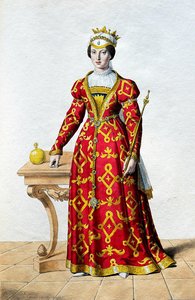
Josefas Kriehuberis portretas

Josefas Kriehuberis tapiai: 100 garsiausi πίναšiai, galerijos akimis

Atnaujinta lapkritis 2026 · pagal mūsų populiarumumo koeficientą (paieškos, lankytojai ir užsakymai kiekvienam kūriniui) · 134 Josefas Kriehuberis darbai mūsų kataloge

Trumpai tariant

Galerijos akimais, garsiausias Josefas Kriehuberis paveikslas yra Karoline Auguste. Fanny Elssler, Austrian ballerina (1830) ir Prince Friedrich of Schwarzenberg (1847) užbaia trio, kurį atpažįsta kiekvienas ž)/\ Iš 134 Josefas Kriehuberis darbų mūsų kataloge, galerija žemiau pristato 100 garsiausius – kiekvienas yra originalus, su nurodytu metais, muziejumi bei unikaliu aprašymu.

1800 – 1876, Viena Biedermeier Daugiausia darbų: National Portrait Gallery of Sweden

10 geriausių galerijos Josefas Kriehuberis paveikslų

1
Karoline Auguste aut. Josefas Kriehuberis

Karoline Auguste

Lithograph

In this portrait of Karoline Auguste, we encounter a formal depiction of a woman whose attire and crown suggest a position of significant status. Josef Kriehuber, an Austrian lithographer and painter, captured the subject with a focus on the dignity inherent in her pose. The work presents a quiet, composed presence, emphasizing the details of her clothing and the subtle features of her face. It is a study of character…

2
Fanny Elssler, Austrian ballerina (1830) aut. Josefas Kriehuberis

Fanny Elssler, Austrian ballerina

1830 · Lithography

The lithograph captures a moment of stillness in a life of movement. Fanny Elssler sits in a three-quarter view, her gaze drifting slightly away from the viewer toward an unseen point. She is an Austrian ballerina, frozen in a monochromatic world of silver and charcoal. Her posture is upright, a column of poise that suggests the quiet discipline behind the public spectacle of dance. The light is diffused, washing over…

3
Prince Friedrich of Schwarzenberg (1847) aut. Josefas Kriehuberis

Prince Friedrich of Schwarzenberg

1847 · Lithograph · Metropolitano meno muziejus, Niujorkas

This striking portrait captures Prince Friedrich of Schwarzenberg in the charged atmosphere of 1847. The subject is presented not merely as an individual, but as an embodiment of military bearing and societal importance during a pivotal era in European history. Clad in the formal accoutrements of his station—the crisp lines of his uniform, the authoritative gleam of the sword held at hand—he commands attention. The monochrome quality of the piece…

4
Josef Lanner, Austrian Composer (1825) aut. Josefas Kriehuberis

Josef Lanner, Austrian Composer

1825 · Lithograph

This monochrome portrait, titled Josef Lanner, Austrian Composer, was created by the artist Josef Kriehuber. The work depicts the Austrian composer Josef Lanner in a bust-length composition. The subject is presented as a gentleman of the era, shown from the chest up and facing slightly toward the viewer's left. The image is rendered in grayscale, utilizing varying shades of gray to define the form of the figure against a simple,…

5
Anton Bernhard Fürstenau, German flutist and composer (1830) aut. Josefas Kriehuberis

Anton Bernhard Fürstenau, German flutist and composer

1830 · Engraving

This monochrome engraving presents a bust-length portrait of Johann Baptist Forster, identified as the First Royal Magistrate of Saxony. The subject is positioned centrally against a dark, undifferentiated background, which focuses attention on the facial features and the formal attire. The composition follows a Neoclassical structure, emphasizing a realistic depiction of the man's physical presence. Light originates from above and slightly in front, casting highlights onto the forehead and the…

6
Ernst and Eduard Eichhorn, violin prodigies (1831) aut. Josefas Kriehuberis

Ernst and Eduard Eichhorn, violin prodigies

1831 · Lithograph

Josef Kriehuber produced Ernst and Eduard Eichhorn, violin prodigies, a black and white lithograph portrait. The work dates to about 1831. It captures the likeness of the two young musicians, Ernst and Eduard Eichhorn, who are identified as violin prodigies.

7
Karl von Rothkirch-Panthen, Bohemian-Austrian politician (1828) aut. Josefas Kriehuberis

Karl von Rothkirch-Panthen, Bohemian-Austrian politician

1828 · Lithography

The gaze of Karl von Rothkirch-Panthen, Bohemian-Austrian politician, meets the viewer through this striking lithograph. Josef Kriehuber captures the man in a moment of quiet dignity, presenting a figure of significant social and political weight. This portrait offers a window into the life of a man who navigated the complex corridors of power, eventually serving as a member of the Chamber of Deputies of the Imperial Council of Austria. Even…

8
Joseph Böhm, Hungarian Violinist and a director of the Vienna Conservatory (1830) aut. Josefas Kriehuberis

Joseph Böhm, Hungarian Violinist and a director of the Vienna Conservatory

1830 · Lithograph

This lithograph, titled "Joseph Böhm, Hungarian Violinist and a director of the Vienna Conservatory" by Josef Kriehuber, depicts the subject in a formal bust-length view. The portrait captures Joseph Böhm, a Hungarian violinist who held the position of professor at the Vienna Conservatory from 1819 to 1848. The image is rendered in a monochrome grayscale palette, utilizing fine lines to define the contours of the subject's face and attire. He…

9
Bulcs (1828) aut. Josefas Kriehuberis

Bulcs

1828 · Lithograph

A man stands centered against a muted, mountainous landscape, his gaze fixed and stern. He is a figure of history, or perhaps a memory of one, draped in the heavy textures of a warrior's attire. The light falls evenly across his face, revealing the fine, etched lines of his features and the sharp edges of his weaponry. He holds an axe, a bow, and arrows, tools of a life defined…

10
Ferdinand III (1828) aut. Josefas Kriehuberis

Ferdinand III

1828 · Lithograph

This portrait of Ferdinand III, executed by Josef Kriehuber, offers a quiet study of authority from the early nineteenth century. Created in 1828, the work captures the subject in a moment of formal repose. Kriehuber focuses on the dignity of the sitter, presenting him in full regal attire that signals his high status. The portrait provides a clear, direct encounter with a figure of historical significance.

Josefas Kriehuberis tapiai, rangos nuo 11 iki 100

11Vladislav II (1828) aut. Josefas KriehuberisVladislav II1828 12Leopold I (1828) aut. Josefas KriehuberisLeopold I1828 13Joseph II (1828) aut. Josefas KriehuberisJoseph II1828 14Karl VI (1828) aut. Josefas KriehuberisKarl VI1828 15Koloman (1828) aut. Josefas KriehuberisKoloman1828 16Ferdinand I of Austria (1828) aut. Josefas KriehuberisFerdinand I of Austria1828 17Taksony (1828) aut. Josefas KriehuberisTaksony1828 18Lehel (1828) aut. Josefas KriehuberisLehel1828 19Bela III (1828) aut. Josefas KriehuberisBela III1828 20Ludwig I (1828) aut. Josefas KriehuberisLudwig I1828 21Geza (1828) aut. Josefas KriehuberisGeza1828 22Franz II (1828) aut. Josefas KriehuberisFranz II1828 23Johann Zapolya (1828) aut. Josefas KriehuberisJohann Zapolya1828 24Keve, legendary Hungarian military leader (1828) aut. Josefas KriehuberisKeve, legendary Hungarian military leader1828 25Geza I (1828) aut. Josefas KriehuberisGeza I1828 26Austrian Family, The Mother (1827) aut. Josefas KriehuberisAustrian Family, The Mother1827 27Austrian Family, the Father (1827) aut. Josefas KriehuberisAustrian Family, the Father1827 28Stephan V (1828) aut. Josefas KriehuberisStephan V1828 29Ladislaus IV (1828) aut. Josefas KriehuberisLadislaus IV1828 30Stephan II (1828) aut. Josefas KriehuberisStephan II1828 31Matthias Corvinus (1828) aut. Josefas KriehuberisMatthias Corvinus1828 32Ladislaus (1828) aut. Josefas KriehuberisLadislaus1828 33Austrian Family, The Son (1827) aut. Josefas KriehuberisAustrian Family, The Son1827 34Stephan IV (1828) aut. Josefas KriehuberisStephan IV1828 35Emmerich (1828) aut. Josefas KriehuberisEmmerich1828 36Stephan III (1828) aut. Josefas KriehuberisStephan III1828 37Ladislaus V (1828) aut. Josefas KriehuberisLadislaus V1828 38Ladislaus III (1828) aut. Josefas KriehuberisLadislaus III1828 39Karl I (1828) aut. Josefas KriehuberisKarl I1828 40Austrian Family, The Daughters (1827) aut. Josefas KriehuberisAustrian Family, The Daughters1827 41Ladislaus II (1828) aut. Josefas KriehuberisLadislaus II1828 42Andreas II (c.1177-1235), King on Hungary from 1205 to 1235 (1828) aut. Josefas KriehuberisAndreas II (c.1177-1235), King on Hungary from 1205 to 12351828 43Keme, legendary Hungarian military leader (1828) aut. Josefas KriehuberisKeme, legendary Hungarian military leader1828 44Attila, King of the Huns (1828) aut. Josefas KriehuberisAttila, King of the Huns1828 45Wenzel III (1828) aut. Josefas KriehuberisWenzel III1828 46Sabolch, legendary Hungarian military leader (1828) aut. Josefas KriehuberisSabolch, legendary Hungarian military leader1828 47Kadicha, legendary Hungarian military leader (1828) aut. Josefas KriehuberisKadicha, legendary Hungarian military leader1828 48Andreas I (c.1015-1060), King on Hungary from 1046 to 1060 (1828) aut. Josefas KriehuberisAndreas I (c.1015-1060), King on Hungary from 1046 to 10601828 49Wladislaw I (1828) aut. Josefas KriehuberisWladislaw I1828 50Elizabeth of Luxembourg (1828) aut. Josefas KriehuberisElizabeth of Luxembourg1828 51Samuel Aba (1828) aut. Josefas KriehuberisSamuel Aba1828 52Buda, legendary Hungarian military leader, namesake of Budapest (1828) aut. Josefas KriehuberisBuda, legendary Hungarian military leader, namesake of Budapest1828 53Andreas III (c.1265-1301), King on Hungary from 1290 to 1301 (1828) aut. Josefas KriehuberisAndreas III (c.1265-1301), King on Hungary from 1290 to 13011828 54Maria I (1828) aut. Josefas KriehuberisMaria I1828 55Arpad, Grand Prince of the Hungarians (1828) aut. Josefas KriehuberisArpad, Grand Prince of the Hungarians1828 56Karl Gustav Löwenhielm (1790-1858), count, lieutenant general, governor, married to 1. countess Gustava Charlotta Jacobina Aurora Gyldenstolpe 2. countess Natalie Alexandra von Buxhoeweden (1836) aut. Josefas KriehuberisKarl Gustav Löwenhielm (1790-1858), count, lieutenant general, governor, married to 1. countess Gustava Charlotta Jacobina Aurora Gyldenstolpe 2. countess Natalie Alexandra von Buxhoeweden1836 · National Portrait Gallery of Sweden 57Natalie Alexandra von Buxhoeweden (1814-1867), countess, maid of honour of Alexandra Fjodorovna of Russia, married to count Karl Gustav Löwenhielm (1839) aut. Josefas KriehuberisNatalie Alexandra von Buxhoeweden (1814-1867), countess, maid of honour of Alexandra Fjodorovna of Russia, married to count Karl Gustav Löwenhielm1839 · National Portrait Gallery of Sweden 58Josef Zinner Forstmeister, Matthias Zinner Hofjäger, Ferdinand Zinner Hofjäger (1835) aut. Josefas KriehuberisJosef Zinner Forstmeister, Matthias Zinner Hofjäger, Ferdinand Zinner Hofjäger1835 59Robert Schumann, Austrian Composer (1839) aut. Josefas KriehuberisRobert Schumann, Austrian Composer1839 60Christoph Graf Cavriani with his son Franz (1836) aut. Josefas KriehuberisChristoph Graf Cavriani with his son Franz1836 61Karl Josef Lipinsky, Polish music composer and virtuoso violinist (1837) aut. Josefas KriehuberisKarl Josef Lipinsky, Polish music composer and virtuoso violinist1837 62Countess Ludmilla Csaky, née Lazansky Von Bukowa with her son Ladislaus Csaky Graf Von Körösszegh U. Adorjan, politician (1839) aut. Josefas KriehuberisCountess Ludmilla Csaky, née Lazansky Von Bukowa with her son Ladislaus Csaky Graf Von Körösszegh U. Adorjan, politician1839 63Le Comte Guillaume Isidore De Montbel (1836) aut. Josefas KriehuberisLe Comte Guillaume Isidore De Montbel1836 64Children (1836) aut. Josefas KriehuberisChildren1836 65Gentleman in riding costume (1838) aut. Josefas KriehuberisGentleman in riding costume1838 66A Morning with Liszt (Hungarian Composer) (1846) aut. Josefas KriehuberisA Morning with Liszt (Hungarian Composer)1846 67Giorgio Ronconi, Italian Baritone (1840) aut. Josefas KriehuberisGiorgio Ronconi, Italian Baritone1840 68Thomas Lederer, Doctor and homeopath (1846) aut. Josefas KriehuberisThomas Lederer, Doctor and homeopath1846 69Filippo Coletti, Italian Baritone (1841) aut. Josefas KriehuberisFilippo Coletti, Italian Baritone1841 70Aloius Rubana, civil servant and councilor (1841) aut. Josefas KriehuberisAloius Rubana, civil servant and councilor1841 71Aloisia Eleonore Schönburg-Hartstein With children (1841) aut. Josefas KriehuberisAloisia Eleonore Schönburg-Hartstein With children1841 72Maria, née Czernin, and her daughter Wilhelmine Kinsky. Countess. (1844) aut. Josefas KriehuberisMaria, née Czernin, and her daughter Wilhelmine Kinsky. Countess.1844 73The Counts Jaromir, Rudolf, Herrmann and Humbert Czernin (1847) aut. Josefas KriehuberisThe Counts Jaromir, Rudolf, Herrmann and Humbert Czernin1847 74Eduard Woyna (1840) aut. Josefas KriehuberisEduard Woyna1840 75Franz Schubert, Austrian Composer (Posthumous Lithography) (1846) aut. Josefas KriehuberisFranz Schubert, Austrian Composer (Posthumous Lithography)1846 76Count Georg Esterházy Von Galántha (1840) aut. Josefas KriehuberisCount Georg Esterházy Von Galántha1840 77The Archdukes Franz Joseph, Ferdinand Max and Carl Ludwig (1844) aut. Josefas KriehuberisThe Archdukes Franz Joseph, Ferdinand Max and Carl Ludwig1844 78Portrait of Emperor Franz Joseph I at 23 Years of Age (1853) aut. Josefas KriehuberisPortrait of Emperor Franz Joseph I at 23 Years of Age1853 79Baron Heinrich von Hess, Austrian General (Field Marshal) (1854) aut. Josefas KriehuberisBaron Heinrich von Hess, Austrian General (Field Marshal)1854 80Brothers Kleins (1849) aut. Josefas KriehuberisBrothers Kleins1849 81Baron Carl von Ghega, Austrian railway engineer (1851) aut. Josefas KriehuberisBaron Carl von Ghega, Austrian railway engineer1851 82Antonie Countess Batthyany, bourn Zichy. Wife of Ludwig Graf Batthyany (1849) aut. Josefas KriehuberisAntonie Countess Batthyany, bourn Zichy. Wife of Ludwig Graf Batthyany1849 83Josef Kriehuber, Austrian Lithographer and Artist (Self-Portrait) (1852) aut. Josefas KriehuberisJosef Kriehuber, Austrian Lithographer and Artist (Self-Portrait)1852 84Karl Von Giskra, Austrian Politician (1861) aut. Josefas KriehuberisKarl Von Giskra, Austrian Politician1861 85Ludwig Gabillon, German actor of the Burgtheater and theatre director (1860) aut. Josefas KriehuberisLudwig Gabillon, German actor of the Burgtheater and theatre director1860 86Josef Unger, Austrian jurist and statesman (1861) aut. Josefas KriehuberisJosef Unger, Austrian jurist and statesman1861 87Franz Joseph I of Austria, Emperor of Austria (1860) aut. Josefas KriehuberisFranz Joseph I of Austria, Emperor of Austria1860 88Max Von Gomperz, Austrian industrialist and banker (1860) aut. Josefas KriehuberisMax Von Gomperz, Austrian industrialist and banker1860 89Josef Kriehuber, Austrian Lithographer (Self-portrait) (1860) aut. Josefas KriehuberisJosef Kriehuber, Austrian Lithographer (Self-portrait)1860 90Gabriele Saaint-Genois, b. Countess Stolberg with her daughter Anna (1858) aut. Josefas KriehuberisGabriele Saaint-Genois, b. Countess Stolberg with her daughter Anna1858 91Sir Julius Benedict, German-born composer and conductor (1861) aut. Josefas KriehuberisSir Julius Benedict, German-born composer and conductor1861 92Duchess Elisabeth of Bavaria, Empress of Austria (Sisi / Sissi) (1863) aut. Josefas KriehuberisDuchess Elisabeth of Bavaria, Empress of Austria (Sisi / Sissi)1863 93August Förster, German actor and theatre director (1863) aut. Josefas KriehuberisAugust Förster, German actor and theatre director1863 94Johann Emanuel Veith, Bohemian, Roman Catholic preacher (1860) aut. Josefas KriehuberisJohann Emanuel Veith, Bohemian, Roman Catholic preacher1860 95Portrait of a young woman with a rose (1859) aut. Josefas KriehuberisPortrait of a young woman with a rose1859 96Empress Elisabeth of Austria with her children Rudolf and Gisela (1858) aut. Josefas KriehuberisEmpress Elisabeth of Austria with her children Rudolf and Gisela1858 97Portrait of a gentleman with a top hat (1863) aut. Josefas KriehuberisPortrait of a gentleman with a top hat1863 98Portrait of a lady in a blue dress (1856) aut. Josefas KriehuberisPortrait of a lady in a blue dress1856 99Portrait of a country lady in a brown dress (1862) aut. Josefas KriehuberisPortrait of a country lady in a brown dress1862 100Vuk Karadžić, Serbian philologist, linguist and one of the most important reformers of the modern Serbian language (1865) aut. Josefas KriehuberisVuk Karadžić, Serbian philologist, linguist and one of the most important reformers of the modern Serbian language1865

žymios Josefas Kriehuberis tapiojamos, pagal laikotarpį

Temos, kurios domino Josefas Kriehuberis

Ketverios temos, dažniausiai pasikrausto originaluose, kiekvienos su savo puikiausiu pavyzdžiu.

Muziejai, kuriuose saugomi Josefas Kriehuberis originalūs darbai

2 muziejai, kuriuose saugoma daugiausia šioje pusėje esamų paveikslų.

Muzejaus Miestas Josefas Kriehuberis darbai Šiojo sąrašo paveikslai
National Portrait Gallery of Sweden, SträngnäsNational Portrait Gallery of Sweden Strängnäs 2 Karl Gustav Löwenhielm (1790-1858), count, lieutenant general, governor, married to 1. countess Gustava Charlotta Jacobina Aurora Gyldenstolpe 2. countess Natalie Alexandra von Buxhoeweden, Natalie Alexandra von Buxhoeweden (1814-1867), countess, maid of honour of Alexandra Fjodorovna of Russia, married to count Karl Gustav Löwenhielm
Metropolitano meno muziejus, NiujorkasMetropolitano meno muziejus Niujorkas 1 Prince Friedrich of Schwarzenberg

Josefas Kriehuberis, po vieno ikoninio paveikslio kiekvienam dešimtmenės laikotarpiui

Darbai pagal dešimtmečius

Pasirinkite dešimtmetį, kad pamatytėte jį apibrėžusį originalą.

Josefas Kriehuberis tapyiniai: galerijos atsakymai

Kuris Josefas Kriehuberis paveikslas yra pats garsiausias iš visų?Atsakymas

Karoline Auguste. Toliausiai eina Fanny Elssler, Austrian ballerina (1830) ir Prince Friedrich of Schwarzenberg (1847).

Kuriose yra 10 geriausių Josefas Kriehuberis paveikslų?Atsakymas

Karoline Auguste, Fanny Elssler, Austrian ballerina, Prince Friedrich of Schwarzenberg, Josef Lanner, Austrian Composer, Anton Bernhard Fürstenau, German flutist and composer, Ernst and Eduard Eichhorn, violin prodigies, Karl von Rothkirch-Panthen, Bohemian-Austrian politician, Joseph Böhm, Hungarian Violinist and a director of the Vienna Conservatory, Bulcs ir Ferdinand III. Viršuje esančioje reitingo sąraše nurodyta kiekvieno kūrinio metis ir muziejus.

Kiek kūrinių sukūrė Josefas Kriehuberis?Atsakymas

Mūsų kataloge yra 134 Josefas Kriehuberis darbų, skirtų laikotarpiui nuo 1825 iki 1865.

Kur kabinami garsiausi Josefas Kriehuberis originalūs darbai?Atsakymas

Daugiausia – National Portrait Gallery of Sweden (Strängnäs) ir Metropolitano meno muziejus (Niujorkas). Viršuje esančiame muziejų sąraše yra visi jie.

Kada Josefas Kriehuberis sukūrė savo garsiausias paveikslus?Atsakymas

1820s laikotarpiu: 49 iš 100 šioje pusėje esančių darbų buvo sukurtos tada, iš jų Josef Lanner, Austrian Composer.

Kokie yra ankstyviausi ir vėliausi garsieji Josefas Kriehuberis kūriniai?Atsakymas

Šioje pusėje seniausias darbas yra Josef Lanner, Austrian Composer (1825), o naujausias – Vuk Karadžić, Serbian philologist, linguist and one of the most important reformers of the modern Serbian language (1865).

Kurią temą Josefas Kriehuberis kūrė dažniausiai?Atsakymas

Man (62), Portrait (31) ir Crown (25) iš 100 šioje pusėje esamų darbų.

Kurią techniką Josefas Kriehuberis naudojo dažniausiai?Atsakymas

Lithograph, iš 100 šios puslapio darbų – 56.

Su kokiu kierliu siejama Josefas Kriehuberis?Atsakymas

Biedermeier, vadovaujantis šios puslapio originalais kūriniais.

Kurių Josefas Kriehuberis originalų turi National Portrait Gallery of Sweden?Atsakymas

Karl Gustav Löwenhielm (1790-1858), count, lieutenant general, governor, married to 1. countess Gustava Charlotta Jacobina Aurora Gyldenstolpe 2. countess Natalie Alexandra von Buxhoeweden ir Natalie Alexandra von Buxhoeweden (1814-1867), countess, maid of honour of Alexandra Fjodorovna of Russia, married to count Karl Gustav Löwenhielm: National Portrait Gallery of Sweden, Strängnäs kolekcijoje yra 2 šioje pusėje esančių darbų.

Josefas Kriehuberis: menininkas

Vienos Chronikonis: Jozefo Kriehuberio Gyvenimas ir Menas

Gimęs Vienoje 1800 metų gruodžio 14 dieną, Jozevas Kriehuberis užima unikalų poziciją Austrijos meno istorijoje. Jis nesiekė didelių istorinių naratyvų ar mitologinių alegorijų; vietoj to, jo meninė vizija buvo sutelkta į kasdienio gyvenimo intymias detales, todėl jis tapo neprivalomo 19-ojo amžiaus Vienos visuomenės kronikieriumi per klestėjantį litografijos metodą. Kriehuberio kelionė prasidėjo su formaliais mokymais Vienos akademijoje pas Hubertą Maurerį, tačiau būtent jo prisijungimas prie litografijos išties apibrėžė jo karjerą ir palikimą. Ši novatoriška technika leido gana greitai ir pigiai atkurti vaizdus, demokratizuojant portretinę tapybą ir padarant ją prieinamesnę platesnei auditorijai nei bet kada anksčiau – auditorijai, kuriai Kriehuberis tarnavo nuosekliai. Jis ne tik atkurdavo panašumus; jis kūrė vizualius statuso, asmenybės ir pačios epochos dvasios įrašus.

Biedermejerio Portretistas: Langas Į Epocho

Kriehuberio meninis tobulėjimas klestėjo Biedermejerio laikotarpiu (maždaug 1815–1848 m.). Ši era, gimusi Napoleono sukilimų pėdsakais, skatino susitelkti į buitinį gyvenimą, paprastumą ir kasdienybę. Šios vertybės giliai atsiliepė Kriehuberio jautrumui. Nors jis iš pradžių tyrinėjo kraštovaizdžio litografiją, portretinė tapyba buvo ta sritis, kur jo talentas tikrai sužydėjo. Jis tapo nepaprastai produktyvus, per savo karjerą sukūręs daugiau nei 3000 litografijų – stebinantis skaičius, kalbantis tiek apie jo įgūdžius, tiek ir apie didelį jo darbų paklausą. Jo klientai apėmė visą Vienos visuomenės spektrą: aristokratiją, vyriausybės pareigūnus, žymias asmenybes ir tuos, kurie tiesiog ieškojo amžino savo ar savo artimųjų įvaizdžio. Kriehuberio portretai nebuvo idealizuotos fantazijos; tai buvo nuostabiai tikslūs vaizdai, perteikiantys charakterį ir socialinę padėtį. Jis turėjo nepaprastą gebėjimą užfiksuoti ne tik fizinį panašumą, bet ir savo subjektų vidinį gyvenimą, todėl kiekvienas portretas tapo unikaliu psichologiniu tyrimu. Jo kruopštus dėmesys detalėms, kartu su subtiliu supratimu apie žmogaus išraišką, leido jam kurti portretus, kurie atrodė intymūs ir atskleidžiantys.

Už Panašumo: Vienos Kultūrinio Kraštovaizdžio Dokumentavimas

Nors garsėjo dėl savo portretų, Kriehuberio meninė vizija apėmė daugiau nei tik individualų vaizdavimą. Jis pripažino dokumentuoti patį miesto kraštovaizdį, ypač gyvybingą Vienos Prater parko atmosferą. Jo litografijos, kuriose pavaizduotos Prater scenos, suteikia vertingų įžvalgų apie 19-ojo amžiaus Vienos gyvenimą ir kultūrą. Tai nebuvo tik gražūs vaizdai; tai buvo visuomenės atsipalaidavimo akimirkos, atskleidžiančios detales apie madą, socialinę sąveiką ir to meto rekreacinius įpročius. Per šiuos tyrimus Kriehuberis virto vizualiniu istoriku, išsaugodamas ateities kartoms greitai besikeičiančio miesto vaizdus ir garsus. Jis užfiksavo Prater energiją ir susijaudinimą, parodydamas jo įvairias atrakcijas ir žmones, kurie plūdo jomis mėgautis. Šis atsidavimas užfiksuoti Vienos esmę įtvirtino jo vietą kaip svarbų Austrijos visuomenės stebėtoją.

Palikimas Ir Pripažinimas: Ilgalaikis Įspūdis

Kriehuberio įtaka apėjo ribas, susijusias su jo produktyviu darbu. Jis dirbo prestižinėje Theresianum akademijoje Vienoje, ugdydamas būsimų menininkų kartas ir perduodamas savo techninę patirtį. 1860 metais jis sulaukė reikšmingo pripažinimo gavęs Pranciškaus Juozapo ordiną, pripažindamas jo indėlį į Austrijos meną. Tačiau fotografijos atsiradimas jo gyvenimo pabaigoje sukūrė iššūkį jo profesijai. Kadangi fotografinis portretas tapo labiau prieinamas ir pigesnis, litografinių portretų paklausa sumažėjo, todėl vėlesniais metais jis susidūrė su finansiniais sunkumais. Nepaisant to, Kriehuberis tęsė darbą iki savo mirties 1876 metų gegužės 30 dieną, palikęs nepaprastą kūrinių rinkinį, kuris ir šiandien žavi ir informuoja mus. Jo palikimas slypi ne tik dideliame portretų skaičiuje, kuriuos jis sukūrė, bet ir jų istoriniame reikšmingume kaip vizualiniame įraše apie 19-ojo amžiaus Vidurio Europos visuomenę. Jo darbų rinkiniai saugomi Alberto muziejuje ir Austrijos nacionalinėje bibliotekoje, užtikrinant, kad jo menas bus vertinamas dar daugelį kartų. Jo darbas išlieka stebėjimo galios įrodymu ir nuolatinis žmogaus dvasios grožis.

Įtakos Ir Meninis Stilius

Nustatyti konkrečias Kriehuberio meno įtakas yra sudėtinga; jis nesekė aiškiai atpažįstamo meistro ar griežtos stilistinės mokyklos. Tačiau jo atsidavimas realizmui sutampa su platesnėmis to meto meno tendencijomis, atspindinčiomis augantį norą tiksliai vaizduoti meną. Jis buvo šiuolaikinis kitų portretininkų, tačiau išsiskyrė dideliu savo darbų kiekiu ir nuoseklumu, taip pat litografijos meistriškumu. Jo stilių apibūdina kruopštos detalės, tikslus braižymas ir gebėjimas perteikti tiek fizinį panašumą, tiek psichologinį gilumą. Jis nesidomėjo dideliais gestais ar dramatiškomis kompozicijomis; vietoj to, jis sutelkė dėmesį į subtilias išraiškos ir asmenybės niuansus. Šis santūrus požiūris, kartu su jo techniniu įgūdžiu, padarė jo portretus labai paklausius tarp tų, kurie ieškojo pagardaus, tačiau tiesa atspindinčio savo vaizdo.
  • Techninis Meistriškumas: Kriehuberio litografijos patirtis leido jam pasiekti nepaprastą detalumą ir toninį diapazoną.
  • Realizmas Ir Tikslumas: Jo portretai žinomi dėl savo tikslaus subjektų vaizdavimo.
  • Psichologinis Įžvalgumas: Jis užfiksavo ne tik fizinį panašumą, bet ir tų, kuriuos jis atvaizdavo, vidinę charakterį.