Guariento Di Arpo portretas

13 garsiausių Guariento Di Arpo paveikių rinkinys: galerijos išboru

Atnaujinta lapkritis 2026 · pagal mūsų populiarumumo koeficientą (paieškos, lankytojai ir užsakymai kiekvienam kūriniui) · 13 Guariento Di Arpo darbai mūsų kataloge

Trumpai tariant

Iš visų paliktų originalų kūrinių Guariento Di Arpo garsiausias yra Madonna of Humility (1345), esantis J. Paul Getty muziejus kolekcijoje, Los Andželis. Tiesiog už jų seka The Virgin and Blessing Child Enthroned with a Donor (1360) ir Christ on the Cross (1360). Mūsų kataloge yra 13 darbų autoriaus Guariento Di Arpo; galerija išsaugojo 13 labiausiai pasaulyje žyminiausių kūrinių – kiekvienas jų pateikiamas su datos, muziejaus ir istorijos aprašymu.

1310 – 1370, Piove di Sacco Gothic Daugiausia darbų: Harvard Art Museums

Guariento Di Arpo geriausios 10 paveikslų: galerijos pasirinkimas

1
Madonna of Humility (1345) aut. Guariento Di Arpo

Madonna of Humility

1345 · Tempera On Panel · J. Paul Getty muziejus, Los Andželis

The Madonna of Humility is a sacred panel painting by Guariento di Arpo. Created during the 1340s, the work captures a quiet moment of maternal divinity. The Virgin Mary sits upon the ground, cradling the Christ Child within a composition defined by a sense of stillness and devotion. This intimate scene is framed by a pointed-arch tabernacle, a structure that directs the eye toward the figures held in a golden…

2
The Virgin and Blessing Child Enthroned with a Donor (1360) aut. Guariento Di Arpo

The Virgin and Blessing Child Enthroned with a Donor

1360 · Tempera On Panel · Gemäldegalerie, Berlynas

Guariento di Arpo, working in the fourteenth century, occupied a unique position in the transition from the Middle Ages to the early Renaissance. This tempera on wood panel reflects a sophisticated marriage of styles. It combines the volumetric weight and spatial awareness characteristic of the Florentine school with the linear elegance and ornamental splendor of the Venetian Gothic tradition. The composition is centered and symmetrical, anchored by an elaborate architectural…

3
Christ on the Cross (1360) aut. Guariento Di Arpo

Christ on the Cross

1360 · Tempera On Panel · Harvard Art Museums, Kembrižas

This late Gothic religious painting, executed in 1360, depicts the Crucifixion of Christ upon a highly ornate, gilded cruciform panel. The composition is centered on the figure of Christ, whose body is stretched across a dark wooden cross. His head leans to his right with eyes closed in death, and a subtle halo surrounds his head. The figure is rendered with anatomical attention, featuring a pale, luminous skin tone that…

4
Virgin and Child Enthroned (1355) aut. Guariento Di Arpo

Virgin and Child Enthroned

1355 · Tempera On Panel · Courtauld Gallery, Londonas

The Virgin and Child Enthroned emerges from the shadows of the mid-fourteenth century, a sacred vision captured in 1355. In this panel, Guariento di Arpo presents a moment of profound stillness. The figures of the Virgin Mary and the Christ Child occupy a central, symmetrical space, held within the graceful lines of an arched panel. There is a sense of quiet authority in their presence, as if the viewer has…

Guariento Di Arpo darba rinkinys tęsiamas, nuo 11 iki 13

Temos, kurios domino Guariento Di Arpo

Ketverios temos, dažniausiai pasikrausto originaluose, kiekvienos su savo puikiausiu pavyzdžiu.

Muziejai, kuriuose saugomi Guariento Di Arpo originalūs darbai

7 muziejai, kuriuose saugoma daugiausia šioje pusėje esamų paveikslų.

Muzejaus Miestas Guariento Di Arpo darbai Šiojo sąrašo paveikslai
Harvard Art Museums, KembrižasHarvard Art Museums Kembrižas 2 Christ on the Cross, Armed Angel (Principatus)
J. Paul Getty muziejus, Los AndželisJ. Paul Getty muziejus Los Andželis 1 Madonna of Humility
Gemäldegalerie, BerlynasGemäldegalerie Berlynas 1 The Virgin and Blessing Child Enthroned with a Donor
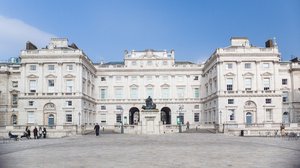
Courtauld Gallery, LondonasCourtauld Gallery Londonas 1 Virgin and Child Enthroned
Metropolitano meno muziejus, NiujorkasMetropolitano meno muziejus Niujorkas 1 Madonna and Child
Korero muziejus, VenecijaKorero muziejus Venecija 1 San Michele Arcangelo combatte contro Satana
Collezione Vittorio Cini, VenecijaCollezione Vittorio Cini Venecija 1 Ascension of Christ

Guariento Di Arpo dešimtmetėms po dešimtmetės: originalus kūrinys, apibūdinantis kiekvieną iš jų

Darbai pagal dešimtmečius

Pasirinkite dešimtmetį, kad pamatytėte jį apibrėžusį originalą.

Kolekcjonerų klausimai apie Guariento Di Arpo paveikslus

Kuriu darbu Guariento Di Arpo yra labiausiai garsus?Atsakymas

Madonna of Humility (1345), J. Paul Getty muziejus, Los Andželis. Toliau seka The Virgin and Blessing Child Enthroned with a Donor (1360) ir Christ on the Cross (1360).

Kokia buvo Guariento Di Arpo amžius, kai buvo sukurtas Madonna of Humility?Atsakymas

35 metų amžiaus: Madonna of Humility sukurta 1345 m. Nr. Guariento Di Arpo gimė 1310.

Kokie yra 10 garsiausių Guariento Di Arpo paveikslų?Atsakymas

Madonna of Humility, The Virgin and Blessing Child Enthroned with a Donor, Christ on the Cross, Virgin and Child Enthroned, Madonna and Child, San Michele Arcangelo combatte contro Satana, Armed Angel (Principatus), Archangel, Angel ir Angel. Viršuje esančioje reitingo sąraše nurodyta kiekvieno kūrinio metis ir muziejus.

Kiek paveikslų paliko Guariento Di Arpo?Atsakymas

Mūsų kataloge yra 13 Guariento Di Arpo darbų, skirtų laikotarpiui nuo 1345 iki 1360.

Kuriuose muziejuose eksponuojami Guariento Di Arpo šedevrai?Atsakymas

Daugiausia – Harvard Art Museums (Kembrižas), J. Paul Getty muziejus (Los Andželis) ir Gemäldegalerie (Berlynas). Viršuje esančiame muziejų sąraše yra visi jie.

Kuriomis metais Guariento Di Arpo tapo savo garsiausius kūrinius?Atsakymas

1350s laikotarpiu: 2 iš 13 šioje pusėje esančių darbų buvo sukurtos tada, iš jų Virgin and Child Enthroned.

Kokie yra pirmasis ir paskutinis garsieji Guariento Di Arpo originalūs darbai?Atsakymas

Šioje pusėje seniausias darbas yra Madonna of Humility (1345), o naujausias – The Virgin and Blessing Child Enthroned with a Donor (1360).

Kurią temą Guariento Di Arpo rinkosi dažniausiai?Atsakymas

Woman (4), Child (4) ir Gold background (3) iš 13 šioje pusėje esamų darbų.

Kurią techniką Guariento Di Arpo naudojo dažniausiai?Atsakymas

Tempera On Panel, iš 13 šios puslapio darbų – 5.

Kelią meno kryptį priklauso Guariento Di Arpo?Atsakymas

Gothic, vadovaujantis šios puslapio originalais kūriniais.

Kurių Guariento Di Arpo darbai eksponuojami Harvard Art Museums?Atsakymas

Christ on the Cross ir Armed Angel (Principatus): Harvard Art Museums, Kembrižas kolekcijoje yra 2 šioje pusėje esančių darbų.

Guariento Di Arpo: gyvenimas ir kūryba

The Master of Padua: The Life and Legacy of Guariento di Arpo

In the vibrant, intellectual atmosphere of fourteenth-century Padua, a transformative artistic voice emerged that would forever alter the trajectory of Venetian painting. Guariento di Arpo (c. 1310–1370) stands as a monumental figure of the Trecento, acting as the essential bridge between the grounded, volumetric realism of Florence and the ethereal, ornamental splendor of the Venetian Gothic tradition. Born into a city flourishing with humanist ideals and Byzantine echoes, Guariento did not merely inherit a style; he synthesized two worlds. His career was defined by an extraordinary ability to marry the structural innovations of the early Renaissance with the decorative grace that would become the hallmark of the Veneto region.

The foundations of Guariento’s genius were laid in the workshops of his contemporaries, where the shadows of masters like Giotto di Bondone and Giovanni Pisano loomed large. From Giotto, Guariento absorbed the revolutionary language of spatial perspective and weight, learning how to imbue figures with a sense of physical presence and psychological depth. Yet, he did not become a mere imitator of the Florentine school. Instead, he infused this new naturalism with a uniquely Venetian sensibility—a penchant for linear elegance and a luminous, almost spiritual abstraction derived from Byzantine influences. This delicate balance allowed his work to possess both a tangible human emotion and a transcendent, heavenly beauty.

A Legacy in Fresco and Panel

Guariento’s most profound contributions to the history of art are etched into the very walls of Padua. His magnum opus remains the breathtaking cycle of frescoes within the choir of the Church of San Bernardino. Commissioned in 1338, these monumental depictions of the life of St. Augustine serve as a masterclass in narrative storytelling. Through these works, one can witness his mastery of volumetric modeling, where figures seem to occupy real space, yet they are draped in a stylistic grace that prevents them from feeling heavy or earthbound. Though much of this cycle was tragically scarred by the bombardments of 1944, the surviving fragments continue to whisper of a lost era of Paduan splendor.

Beyond the expansive reach of his frescoes, Guariento’s skill as a panel painter brought intimacy to the altarpieces of the era. His ability to command precious materials like gold leaf and tempera is evident in several surviving masterpieces held in the world's most prestigious collections:

Historical Significance and the Venetian Horizon

As his reputation ascended, so too did his influence beyond the borders of Padua. In 1365, the prestige of the Venetian Republic itself beckoned him to the Palazzo Ducale. Tasked with painting a representation of the Coronation of the Virgin, Guariento left an indelible mark on the heart of Venice. In a remarkable twist of art history, his work was only rediscovered in the modern era, hidden beneath the layers of Tintoretto’s later masterpiece, Paradise, during conservation efforts in 1903. This discovery underscored the profound depth of his contribution to the Venetian aesthetic.

Ultimately, the significance of Guariento di Arpo lies in his role as a stylistic pioneer. He was the artist who successfully navigated the transition from the rigid, symbolic forms of the Middle Ages to the more human-centric, three-dimensional reality of the early Renaissance. By weaving together the structural logic of Florence and the decorative lyricism of the Veneto, he provided the blueprint for generations of Venetian painters to follow, ensuring that his name would remain forever entwined with the golden age of Italian art.