Francesco Guardi portretas

Francesco Guardi tapiai: 100 garsiausi πίναšiai, galerijos akimis

Atnaujinta spalis 2026 · pagal mūsų populiarumumo koeficientą (paieškos, lankytojai ir užsakymai kiekvienam kūriniui) · 439 Francesco Guardi darbai mūsų kataloge

Trumpai tariant

Galerijos akimais, garsiausias Francesco Guardi tapas yra Santa Maria della Salute (1760), kurio originalas eksponuojamas Metropolitano meno muziejus, Niujorkas. LE PALAIS DES DOGES DE VENISE VU DU BASSIN DE SAN MARCO ir The Doge's Palace and the Molo užbaia trio, kurį atpažįsta kiekvienas ž)/\ Iš 439 Francesco Guardi darbų mūsų kataloge, galerija žemiau pristato 100 garsiausius – kiekvienas yra originalus, su nurodytu metais, muziejumi bei unikaliu aprašymu.

1712 – 1793, Venecija Rococo Daugiausia darbų: Metropolitano meno muziejus

10 geriausių galerijos Francesco Guardi paveikslų

1
Santa Maria della Salute (1760) aut. Francesco Guardi

Santa Maria della Salute

1760 · Painting · Metropolitano meno muziejus, Niujorkas

Santa Maria della Salute: A Venetian Masterpiece Francesco Guardi’s “Santa Maria della Salute” transcends mere depiction; it embodies the very soul of Venice at the cusp of its golden age, capturing an ethereal beauty that continues to inspire awe centuries later. Painted in 1760, this monumental veduta—a panoramic cityscape view—represents not just a building but a profound meditation on faith and resilience amidst turbulent times. Guardi’s masterful use of sfumato,…

2
LE PALAIS DES DOGES DE VENISE VU DU BASSIN DE SAN MARCO aut. Francesco Guardi

LE PALAIS DES DOGES DE VENISE VU DU BASSIN DE SAN MARCO

Oil On Canvas · Liuvro muziejus, Paryžius

In the heart of the eighteenth century, as the sun began its slow descent over the fading grandeur of the Venetian Republic, Francesco Lazzaro Guardi captured a moment that transcends mere geography. Le Palais des Doges de Venise Vu Du Bassin De San Marco is not simply a panoramic view of architectural splendor; it is an evocative embodiment of a city caught in a beautiful, melancholic transition. Through his masterful…

3
The Doge's Palace and the Molo aut. Francesco Guardi

The Doge's Palace and the Molo

Oil · National Gallery, Londonas

The painting The Doge's Palace and the Molo by Francesco Lazzaro Guardi is a beautiful representation of Venice, Italy with its iconic buildings and waterways. The scene features several boats floating on the water near the shore, including a large boat in the foreground and smaller ones scattered throughout the image. There are also numerous people visible in the painting, some standing or walking along the shoreline, while others can…

4
Venice The Arsenal (1755) aut. Francesco Guardi

Venice The Arsenal

1755 · Oil On Canvas · National Gallery, Londonas

We are looking at Venice The Arsenal, an oil on canvas painting by Francesco Guardi. This work was executed between 1755 and 1760, a period during which the artist was active in Venice. Guardi, who lived from 1712 to 1793, captured the specific atmosphere of the city during the mid-eighteenth century.

5
LE COURONNEMENT DU DOGE DE VENISE SUR L'ESCALIER DES GEANTS AU PALAIS DUCAL DE VENISE aut. Francesco Guardi

LE COURONNEMENT DU DOGE DE VENISE SUR L'ESCALIER DES GEANTS AU PALAIS DUCAL DE VENISE

Acrylic On Canvas · Liuvro muziejus, Paryžius

A Venetian Twilight: Exploring Francesco Guardi’s “Le Couronnement du Doge” Francesco Lazzaro Guardi (1712-1793), born into a family steeped in artistic tradition on October 5, 1712, stands as a poignant figure at the close of the illustrious Venetian School. His life mirrored the fading grandeur of Venice itself—a city once a vibrant hub of commerce and culture, slowly yielding to political decline and economic hardship. Guardi wasn’t merely a painter;…

6
Tobias and the Angel (1754) aut. Francesco Guardi

Tobias and the Angel

1754 · Oil · Cleveland Museum of Art, Klevlandas

This evocative oil painting depicts the biblical scene of Tobias and the Angel through a dramatic chiaroscuro effect, where light is emphasized against a dark, turbulent landscape. The composition is asymmetrical, creating a sense of movement and tension as the figures are positioned on the right and center-left. An angel, characterized by large, sweeping wings, leans over a large stone block and points toward Tobias. Tobias is seated near a…

7
Capriccio with the Archway of the Torre dell'Orologio (1780) aut. Francesco Guardi

Capriccio with the Archway of the Torre dell'Orologio

1780 · Oil On Canvas · Wallace Collection, Londonas

To gaze upon this Capriccio with the Archway of the Torre dell'Orologio is to step directly into a sun-drenched moment of Venetian history, a scene imbued with the gentle rhythm of daily life. Francesco Lazzaro Guardi, master chronicler of a fading era, has gifted us more than just a painting; he offers an atmospheric memory. The composition unfolds like a beloved postcard from a bygone age, capturing the vibrant pulse…

9
Allegory of Abundance (1747) aut. Francesco Guardi

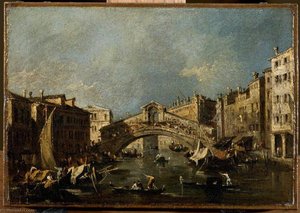
Allegory of Abundance

1747 · Oil · John and Mable Ringling Museum of Art, Sarazota

This mid-18th century allegorical oil painting presents a personification of abundance set within a romanticized landscape. The composition is vertically oriented, centering on a female figure positioned in the foreground and midground, slightly off-center to the left. She is depicted holding sheaves of wheat, a symbol of fertility and harvest. The scene is set against a backdrop featuring a receding shoreline and a distant horizon where the sea meets the…

10
Abraham Welcoming the Three Angels (1754) aut. Francesco Guardi

Abraham Welcoming the Three Angels

1754 · Oil · Cleveland Museum of Art, Klevlandas

The scene unfolds in Abraham Welcoming the Three Angels, a work that captures a profound biblical moment through the hand of Francesco Guardi. Created in 1754, this oil painting brings a sacred narrative to life, centering on the intimate encounter between a patriarch and the divine. The air seems to hold its breath as the figures gather, caught in a moment of profound recognition and hospitality.

Francesco Guardi tapiai, rangos nuo 11 iki 100

11The Angels Appearing to Abraham (1754) aut. Francesco GuardiThe Angels Appearing to Abraham1754 · Cleveland Museum of Art 12Godfrey of Boulogne Summons His Chiefs to Council (1755) aut. Francesco GuardiGodfrey of Boulogne Summons His Chiefs to Council1755 · Norton Simon muziejus 13The diplomatic convent (1753) aut. Francesco GuardiThe diplomatic convent1753 · Ca' Rezzonico – XVIII amžiaus Venecijos muziejus 14View of the Riva degli Schiavoni and the Piazzetta (1760) aut. Francesco GuardiView of the Riva degli Schiavoni and the Piazzetta1760 · Isabella Stewart Gardner Museum 15Venice The Grand Canal with Palazzo Pesaro (1755) aut. Francesco GuardiVenice The Grand Canal with Palazzo Pesaro1755 16Venice The Piazzetta di San Marco (1760) aut. Francesco GuardiVenice The Piazzetta di San Marco1760 17The Feast of the Ascension (1770) aut. Francesco GuardiThe Feast of the Ascension1770 18A View near Venice ( ) (1775) aut. Francesco GuardiA View near Venice ( )1775 · National Gallery 19A Caprice with Ruins on the Seashore (1775) aut. Francesco GuardiA Caprice with Ruins on the Seashore1775 · National Gallery 20An Architectural Caprice (1770) aut. Francesco GuardiAn Architectural Caprice1770 21The Piazza San Marco, Venice (1775) aut. Francesco GuardiThe Piazza San Marco, Venice1775 · Škotijos Nacionalinė galerija 22San Giorgio Maggiore, Venice (1770) aut. Francesco GuardiSan Giorgio Maggiore, Venice1770 · Škotijos Nacionalinė galerija 23Villa del Timpano Arcuato at Paese (1782) aut. Francesco GuardiVilla del Timpano Arcuato at Paese1782 · National Gallery 24Capriccio with an Island, a Tower, and Houses (701) aut. Francesco GuardiCapriccio with an Island, a Tower, and Houses701 25Capriccio with the Courtyard of the Doge's Palace (1770) aut. Francesco GuardiCapriccio with the Courtyard of the Doge's Palace1770 · Wallace Collection 26Pope Pius VI blessing the Crowd at Campo SS Giovanni e Paolo, Venice (1782) aut. Francesco GuardiPope Pius VI blessing the Crowd at Campo SS Giovanni e Paolo, Venice1782 · The Ashmolean Museum of Art And Archaeology 27Fantastic Landscape (1765) aut. Francesco GuardiFantastic Landscape1765 · Metropolitano meno muziejus 28The Lagoon from the Fondamenta Nuove aut. Francesco GuardiThe Lagoon from the Fondamenta Nuove 29Fantastic Landscape (1765) aut. Francesco GuardiFantastic Landscape1765 · Metropolitano meno muziejus 30A Regatta on the Grand Canal, Venice (1785) aut. Francesco GuardiA Regatta on the Grand Canal, Venice1785 · The Barber Institute of Fine Arts 31Capriccio: The Lagoon (1782) aut. Francesco GuardiCapriccio: The Lagoon1782 · Art Institute of Chicago 32Venice the Dogana with Santa Maria della Salute (1770) aut. Francesco GuardiVenice the Dogana with Santa Maria della Salute1770 · Wallace Collection 33L'EGLISE SAN GIORGIO MAGGIORE A VENISE aut. Francesco GuardiL'EGLISE SAN GIORGIO MAGGIORE A VENISELiuvro muziejus 34Venice San Giorgio Maggiore with the Giudecca (1770) aut. Francesco GuardiVenice San Giorgio Maggiore with the Giudecca1770 · Wallace Collection 35The lock at Dolo on the Brenta: Capriccio (1780) aut. Francesco GuardiThe lock at Dolo on the Brenta: Capriccio1780 · Nacionalinė Viktorijos galerija 36View of the Island of Sant'Elena, Venice (1780) aut. Francesco GuardiView of the Island of Sant'Elena, Venice1780 37LE DEPART DU BUCENTAURE VERS LE LIDO DE VENISE, LE JOUR DE L'ASCENSION aut. Francesco GuardiLE DEPART DU BUCENTAURE VERS LE LIDO DE VENISE, LE JOUR DE L'ASCENSIONLiuvro muziejus 38View through an Archway (1767) aut. Francesco GuardiView through an Archway1767 · Bavarijos valstybinės paveikslų kolekcijos 39Venice the Dogana with the Giudecca (1770) aut. Francesco GuardiVenice the Dogana with the Giudecca1770 · Wallace Collection 40Rio dei Mendicanti aut. Francesco GuardiRio dei Mendicanti 41An Architectural Caprice (1774) aut. Francesco GuardiAn Architectural Caprice1774 · National Gallery 42An architectural capriccio (1750) aut. Francesco GuardiAn architectural capriccio1750 · Art Gallery of South Australia 43Piazza San Marco (1768) aut. Francesco GuardiPiazza San Marco1768 · Metropolitano meno muziejus 44LE PONT DU RIALTO A VENISE aut. Francesco GuardiLE PONT DU RIALTO A VENISELiuvro muziejus 45Venetian Capriccio: View of a Square and a Palace (1750) aut. Francesco GuardiVenetian Capriccio: View of a Square and a Palace1750 · Ermitažas 46Venice, the Church of Santa Lucia on the Grand Canal (1755) aut. Francesco GuardiVenice, the Church of Santa Lucia on the Grand Canal1755 · English Heritage 47The Canale Grande in Venice, with San Simeone Piccolo (1730) aut. Francesco GuardiThe Canale Grande in Venice, with San Simeone Piccolo1730 48Triumphal Arch in Venice (1737) aut. Francesco GuardiTriumphal Arch in Venice1737 · Antverpio karališkasis gražiųjų menų muziejus 49Palace-ruins venus at the beach (1737) aut. Francesco GuardiPalace-ruins venus at the beach1737 50Views at the Canale Grande in Venice (1737) aut. Francesco GuardiViews at the Canale Grande in Venice1737 51Caprice, with Ruined Arch and Fishermen's Houses (1750) aut. Francesco GuardiCaprice, with Ruined Arch and Fishermen's Houses1750 · Musée Cognacq-Jay 52St. Mark's Square in Venice with View towards Campanile and Doge's Palace (1752) aut. Francesco GuardiSt. Mark's Square in Venice with View towards Campanile and Doge's Palace1752 · Bavarijos valstybinės paveikslų kolekcijos 53Piazzetta with View of Santa Maria della Salute (1752) aut. Francesco GuardiPiazzetta with View of Santa Maria della Salute1752 · Bavarijos valstybinės paveikslų kolekcijos 54View of San Simeone Piccolo in Venice (1750) aut. Francesco GuardiView of San Simeone Piccolo in Venice1750 · Musée Des Beaux 55The Guidecca in Venice (1750) aut. Francesco GuardiThe Guidecca in Venice1750 · Musée Des Beaux 56Allegory of Hope (1747) aut. Francesco GuardiAllegory of Hope1747 · John and Mable Ringling Museum of Art 57Lagoon Landscape (1750) aut. Francesco GuardiLagoon Landscape1750 · Städel Museum 58A View of the Molo and the Riva degli Schiavone in Venice (1750) aut. Francesco GuardiA View of the Molo and the Riva degli Schiavone in Venice1750 · Yale University Art Gallery 59Capriccio of a Ruined Arch (1750) aut. Francesco GuardiCapriccio of a Ruined Arch1750 60Bucintoro-festen i Venedig (1750) aut. Francesco GuardiBucintoro-festen i Venedig1750 · Statens Museum For Kunst 61Cloister in Venice (1750) aut. Francesco GuardiCloister in Venice1750 · Accademia Carrara 62Fantastic Landscape (1750) aut. Francesco GuardiFantastic Landscape1750 · Metropolitano meno muziejus 63Capriccio with Venetian Themes (1750) aut. Francesco GuardiCapriccio with Venetian Themes1750 64Capriccio (1750) aut. Francesco GuardiCapriccio1750 65Capriccio (1750) aut. Francesco GuardiCapriccio1750 66Capriccio (1750) aut. Francesco GuardiCapriccio1750 67Ruins with Staffage (1750) aut. Francesco GuardiRuins with Staffage1750 · Museum Kunsthaus Heylshof 68The Arsenal, Venice (1750) aut. Francesco GuardiThe Arsenal, Venice1750 · Walters Art Museum 69A View on the Grand Canal with the Rialto Bridge (1754) aut. Francesco GuardiA View on the Grand Canal with the Rialto Bridge1754 70Piazzetta of S. Marco, Venice (1750) aut. Francesco GuardiPiazzetta of S. Marco, Venice1750 · Gemäldegalerie 71Erminia and the Shepherds (1755) aut. Francesco GuardiErminia and the Shepherds1755 · National Gallery of Art 72LE DOGE DE VENISE ASSISTE AUX FETES DU JEUDI GRAS SUR LA PIAZZETTA aut. Francesco GuardiLE DOGE DE VENISE ASSISTE AUX FETES DU JEUDI GRAS SUR LA PIAZZETTALiuvro muziejus 73Il ridotto (detail) (1750) aut. Francesco GuardiIl ridotto (detail)1750 74View of Saint Mark's Square, in Venice (1760) aut. Francesco GuardiView of Saint Mark's Square, in Venice1760 · Musée Cognacq-Jay 75Grand Canal near San Geremia (1760) aut. Francesco GuardiGrand Canal near San Geremia1760 · Bavarijos valstybinės paveikslų kolekcijos 76The Entrance of the Canal Grande with the Santa Maria della Salu (1765) aut. Francesco GuardiThe Entrance of the Canal Grande with the Santa Maria della Salu1765 · Museum Boijmans Van Beuningen 77The Piazzetta Towards Isola San Giorgio (1760) aut. Francesco GuardiThe Piazzetta Towards Isola San Giorgio1760 78Ancient Ruins with Two Figures (1760) aut. Francesco GuardiAncient Ruins with Two Figures1760 79View of the island of San Cristoforo di Murano (1764) aut. Francesco GuardiView of the island of San Cristoforo di Murano1764 · Musée Cognacq-Jay 80Main Salon in the Ridotto, Venice (1765) aut. Francesco GuardiMain Salon in the Ridotto, Venice1765 · Rhode Island School of Design Museum of Art 81Landscape-Capriccio (1765) aut. Francesco GuardiLandscape-Capriccio1765 · Museum Boijmans Van Beuningen 82Figure Studies (1765) aut. Francesco GuardiFigure Studies1765 · Metropolitano meno muziejus 83Caprice with Ruins of an Arch and a Villa in the Background, Fantasy View (1765) aut. Francesco GuardiCaprice with Ruins of an Arch and a Villa in the Background, Fantasy View1765 · David Owsley Museum of Art Ball State University 84The Entrance of the Canal Grande with the Santa Maria della Salute (1765) aut. Francesco GuardiThe Entrance of the Canal Grande with the Santa Maria della Salute1765 · Museum Boijmans Van Beuningen 85Capriccio (1780) aut. Francesco GuardiCapriccio1780 · Metropolitano meno muziejus 86The Grand Canal above the Rialto (1760) aut. Francesco GuardiThe Grand Canal above the Rialto1760 · Metropolitano meno muziejus 87View of the Giudecca Canal and the Zattere (1757) aut. Francesco GuardiView of the Giudecca Canal and the Zattere1757 · Thyssen-Bornemisza muziejus 88View of San Giorgio Maggiore (1760) aut. Francesco GuardiView of San Giorgio Maggiore1760 · Kelvingrove Art Gallery and Museum 89View over the Giudecca Canal to the northwest with the Zattere (1765) aut. Francesco GuardiView over the Giudecca Canal to the northwest with the Zattere1765 · Gemäldegalerie 90The Doge at the Basilica of La Salute (1760) aut. Francesco GuardiThe Doge at the Basilica of La Salute1760 91Audience Granted by the Doge (1760) aut. Francesco GuardiAudience Granted by the Doge1760 92The Bacino di San Marco with the Molo and the Doge's Palace, Venice (1760) aut. Francesco GuardiThe Bacino di San Marco with the Molo and the Doge's Palace, Venice1760 93The Bacino di San Marco with the Churches of San Giorgio Maggiore and Santa Maria della Salute, Venice (1760) aut. Francesco GuardiThe Bacino di San Marco with the Churches of San Giorgio Maggiore and Santa Maria della Salute, Venice1760 94Landscape – Capriccio (1780) aut. Francesco GuardiLandscape – Capriccio1780 · Courtauld Gallery 95The Island of San Michele, Venice (1774) aut. Francesco GuardiThe Island of San Michele, Venice1774 · Metropolitano meno muziejus 96A view of the Grand Canal, Venice, with the church of Santa Maria della Salute (1770) aut. Francesco GuardiA view of the Grand Canal, Venice, with the church of Santa Maria della Salute1770 97View of the Piazzetta Looking toward San Giorgio Maggiore, Venice (1770) aut. Francesco GuardiView of the Piazzetta Looking toward San Giorgio Maggiore, Venice1770 · Wadsworth Atheneum 98The Torre dell’Orologio in Piazza San Marco (1775) aut. Francesco GuardiThe Torre dell’Orologio in Piazza San Marco1775 · Bavarijos valstybinės paveikslų kolekcijos 99View of the Canale della Giudecca, Venice (1770) aut. Francesco GuardiView of the Canale della Giudecca, Venice1770 · Museum Boijmans Van Beuningen 100Regatta at the Rialto Bridge (1770) aut. Francesco GuardiRegatta at the Rialto Bridge1770 · Houston meno muziejus

žymios Francesco Guardi tapiojamos, pagal laikotarpį

Temos, kurios domino Francesco Guardi

Ketverios temos, dažniausiai pasikrausto originaluose, kiekvienos su savo puikiausiu pavyzdžiu.

Muziejai, kuriuose saugomi Francesco Guardi originalūs darbai

8 muziejai, kuriuose saugoma daugiausia šioje pusėje esamų paveikslų.

Muzejaus Miestas Francesco Guardi darbai Šiojo sąrašo paveikslai
Metropolitano meno muziejus, NiujorkasMetropolitano meno muziejus Niujorkas 15 Santa Maria della Salute, Fantastic Landscape, Fantastic Landscape
National Gallery, LondonasNational Gallery Londonas 23 The Doge's Palace and the Molo, Venice The Arsenal, A View near Venice ( )
Liuvro muziejus, ParyžiusLiuvro muziejus Paryžius 12 LE PALAIS DES DOGES DE VENISE VU DU BASSIN DE SAN MARCO, LE COURONNEMENT DU DOGE DE VENISE SUR L'ESCALIER DES GEANTS AU PALAIS DUCAL DE VENISE, L'EGLISE SAN GIORGIO MAGGIORE A VENISE
Bavarijos valstybinės paveikslų kolekcijos, MiunchasBavarijos valstybinės paveikslų kolekcijos Miunchas 10 View through an Archway, St. Mark's Square in Venice with View towards Campanile and Doge's Palace, Piazzetta with View of Santa Maria della Salute
Wallace Collection, LondonasWallace Collection Londonas 9 Capriccio with the Archway of the Torre dell'Orologio, Capriccio with the Courtyard of the Doge's Palace, Venice the Dogana with Santa Maria della Salute
Museum Boijmans Van Beuningen, RoterdamasMuseum Boijmans Van Beuningen Roterdamas 6 The Entrance of the Canal Grande with the Santa Maria della Salu, Landscape-Capriccio, The Entrance of the Canal Grande with the Santa Maria della Salute
Musée Cognacq-Jay, ParisMusée Cognacq-Jay Paris 8 Caprice, with Ruined Arch and Fishermen's Houses, View of Saint Mark's Square, in Venice, View of the island of San Cristoforo di Murano
Cleveland Museum of Art, KlevlandasCleveland Museum of Art Klevlandas 6 Tobias and the Angel, Abraham Welcoming the Three Angels, The Angels Appearing to Abraham

Francesco Guardi, po vieno ikoninio paveikslio kiekvienam dešimtmenės laikotarpiui

Darbai pagal dešimtmečius

Pasirinkite dešimtmetį, kad pamatytėte jį apibrėžusį originalą.

Francesco Guardi tapyiniai: galerijos atsakymai

Kuris Francesco Guardi paveikslas yra pats garsiausias iš visų?Atsakymas

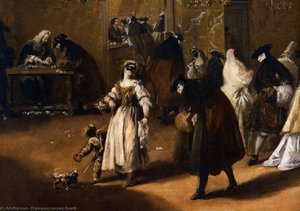
Santa Maria della Salute (1760), Metropolitano meno muziejus, Niujorkas. Toliau seka LE PALAIS DES DOGES DE VENISE VU DU BASSIN DE SAN MARCO ir The Doge's Palace and the Molo.

Kiek metų buvo Francesco Guardi, kai sukūrė Santa Maria della Salute?Atsakymas

48 metų amžiaus: Santa Maria della Salute sukurta 1760 m. Nr. Francesco Guardi gimė 1712.

Kuriose yra 10 geriausių Francesco Guardi paveikslų?Atsakymas

Santa Maria della Salute, LE PALAIS DES DOGES DE VENISE VU DU BASSIN DE SAN MARCO, The Doge's Palace and the Molo, Venice The Arsenal, LE COURONNEMENT DU DOGE DE VENISE SUR L'ESCALIER DES GEANTS AU PALAIS DUCAL DE VENISE, Tobias and the Angel, Capriccio with the Archway of the Torre dell'Orologio, ecstasy of two monks; Allegorie des Glaubens und der Liebe, Allegory of Abundance ir Abraham Welcoming the Three Angels. Viršuje esančioje reitingo sąraše nurodyta kiekvieno kūrinio metis ir muziejus.

Kiek kūrinių sukūrė Francesco Guardi?Atsakymas

Mūsų kataloge yra 439 Francesco Guardi darbų, skirtų laikotarpiui nuo 1730 iki 1785.

Kur kabinami garsiausi Francesco Guardi originalūs darbai?Atsakymas

Daugiausia – Metropolitano meno muziejus (Niujorkas), National Gallery (Londonas) ir Liuvro muziejus (Paryžius). Viršuje esančiame muziejų sąraše yra visi jie.

Kada Francesco Guardi sukūrė savo garsiausias paveikslus?Atsakymas

1750s laikotarpiu: 32 iš 100 šioje pusėje esančių darbų buvo sukurtos tada, iš jų Venice The Arsenal.

Kokie yra ankstyviausi ir vėliausi garsieji Francesco Guardi kūriniai?Atsakymas

Šioje pusėje seniausias darbas yra The Canale Grande in Venice, with San Simeone Piccolo (1730), o naujausias – A Regatta on the Grand Canal, Venice (1785).

Kurią temą Francesco Guardi kūrė dažniausiai?Atsakymas

Architecture (21), Sky (15) ir Venice (10) iš 100 šioje pusėje esamų darbų.

Kurią techniką Francesco Guardi naudojo dažniausiai?Atsakymas

Oil On Canvas, iš 100 šios puslapio darbų – 32.

Su kokiu kierliu siejama Francesco Guardi?Atsakymas

Rococo, vadovaujantis šios puslapio originalais kūriniais.

Kurių Francesco Guardi originalų turi Metropolitano meno muziejus?Atsakymas

Santa Maria della Salute, Fantastic Landscape ir Fantastic Landscape: Metropolitano meno muziejus, Niujorkas kolekcijoje yra 9 šioje pusėje esančių darbų.

Francesco Guardi: menininkas

Venecietiškas Sutemų Laikas: Francesco Guardi Gyvenimas ir Kūryba

Francesco Lazzaro Guardi, gimęs spalio 5 dieną 1712 metais Venecijoje, šeimoje, pasižyminčioje giliomis meno tradicijomis, stovi kaip liūdnas personažas garsiosios Venecijos mokyklos pabaigoje. Jo gyvenimas atspindėjo paties Venecijos miesto nykstantį didingumą – miestą, kadaise gyvybingą prekybos ir kultūros centrą, lėtai pasiduodantį politinei krizei ir ekonominiams sunkumams. Guardi nebuvo tik tapytojas; jis buvo šios sutemų epochos kronikininkas, užfiksuojantis jos atmosferinį grožį ir slypinčią melancholiją unikaliu jautrumu, kuris vėliau giliai rezonuos su impresionistais. Guardi šeimos dirbtuvės, įsteigtos jo tėvo Domenico, buvo triukšmingas meno kūrybos centras, kur Francesco iš pradžių bendradarbiavo su savo vyresniuoju broliu Gian Antonio religinių paveikslų srityje. Ši ankstyva partnerystė suteikė tvirtą technikos pagrindą, tačiau po Gian Antonio mirties 1760 metais Francesco tikrai rado savo balsą, kreipdamasis į *vedutas* – žavingus miesto vaizdus, už kuriuos jis buvo garsėjęs.

Nuo Bendradarbiavimo Iki Individualios Vizijos

Pradžioje Guardi darbuose ryškiai atsispindėjo Canaletto, nesugirdomo Venecijos *vedutų* meistro įtaka. Abu menininkai kruopščiai fiksavo miesto kanalus, rūmus ir judrias aikštes. Tačiau, nors Canaletto pirmenybę teikė topografiniam tikslumui, Guardi palaipsniui ėjo linką ekspresyvesnio ir vaizdingesnio požiūrio. Jam nerūpėjo fotografinis realizmas; vietoj to, jis siekė perteikti Venecijos *jausmą* – jos spindintį šviesą, atmosferinį rūką ir nesamumo pojūtį, kuris persmelkė jos grožį. Šis poslinkis matomas jo laisvesniuose potepiais, pasižyminčiuose energingais brūkšniais ir laisvai įsivaizduotomis architektūros detalėmis. Jo dangus ypač išsiskyrė, dažnai kupini dramatiškų debesų formacijų, užuominomis apie artėjančius pokyčius. Šis nukrypimas nuo griežto atvaizdavimo nebuvo Canaletto įgūdžių paneigimas, o veikiau evoliucija link asmeniškai ir emociškai rezonuojančio stiliaus. Šeimos palikimas vaidino reikšmingą vaidmenį; jo sesers Maria Cecilios santuoka su Giovanni Battista Tiepolo dar labiau susiejo jį su pirmaujančiais to meto meno ratais, skatinant turtingą idėjų ir įtakų mainus.

Džentilės Feštės Ir *Pittura di Tocco*

Didžiausias Guardi pasiekimas 1763 metais buvo užsakymas nutapyti *Džentilės Feštės*, dvylikos monumentalių drobelių seriją, švenčiančią Alvise IV Mocenigo išrinkimo ceremonijas. Šie paveikslai nebuvo tik dokumentiniai įrašai; tai buvo didingi teatraliniai spektakliai, kupini figūrų ir ryškių detalių. Jie parodė Guardi kompozicijos meistriškumą ir gebėjimą užfiksuoti Venecijos pilietinio gyvenimo energiją ir pompastiškumą. Būtent šiuo laikotarpiu visiškai suklostėsi jo firminis stilius – žinomas kaip *pittura di tocco* (potepų tapyba). Ši technika apima dažų tepimą smulkiais, nutrūkstančiais potepiais, sukuriant švytintį paviršių, kuris atrodė vibruojantis nuo šviesos ir judėjimo. Efektas nebuvo tikslaus detaliavimo, o veikiau formos ir atmosferos įspūdingas vaizdavimas. Šis novatoriškas požiūris atskyrė jį nuo jo bendraamžių ir pranašavo meno revoliucijas, kurios prasidės Prancūzijoje dešimtmečiais vėliau.

Atmosferos Palikimas Ir Įtaka

Francesco Guardi mirė Campiello de la Madonna Cannaregio rajone, Venecijoje, sausio 1 dieną 1793 metais, palikęs kūrybos lobyną, kuris ir šiandien žavi publiką. Jo paveikslai nebuvo tik miesto vaizdai; tai buvo nuotaikos įspūdis – nostalgija už praėjusios epochos ir grožio trapumo suvokimas. Skirtingai nuo Canaletto, kuris dažnai pristatydavo Veneciją ryškioje šviesoje, Guardi dažnai atvaizdavo miestą apsuptą sutemų arba po debesuotu dangumi, pabrėždamas jo melancholišką žavesį. Šis atmosferinis bruož ypač patiko prancūzų impresionistams, tokiems kaip Claude Monet ir Edgar Degas, kurie savo darbuose atrado artimą dvasią – menininką, kuris pirmenybę teikė jausmams ir pojūčiui, o ne griežtam atvaizdavimui. Guardi įtaka matoma jų pačių tyrinėjimuose šviesos, spalvos ir atmosferos srityje.

Atsirandantis Guardi: Tvarus Įspūdis

Nepasiekęs tokio paties garso kaip Canaletto savo gyvenimo laikotarpiu, Francesco Guardi reputacija nuolat augo per amžius. Šiandien jis pripažįstamas kaip svarbi figūra Venecijos mene – meistras, kuris sujungė klasikinę tradiciją ir modernų jautrumą. Jo paveikslai yra branginami dėl unikalaus realizmo ir vaizduotės derinio, įspūdingos atmosferos ir liūdno miesto pavaizdavimo ant pokyčių slenksčio. Jo kūrybos tyrinėjimas siūlo ne tik žvilgsnį į XVIII amžiaus Veneciją, bet ir vertingą meno galią užfiksuoti vietos esmę ir laiką – bei rezonuoti su žiūrovais per kartas.
  • Pagrindinės datos: Spalio 5, 1712 m.: Gimimas; Sausio 1, 1793 m.: Mirtis.
  • Stilius: *Veduta*, *Pittura di tocco* (potepų tapyba).
  • Įtakos: Canaletto, Venecijos mokyklos tradicijos.