


1


Atnaujinta spalis 2026 · pagal mūsų populiarumumo koeficientą (paieškos, lankytojai ir užsakymai kiekvienam kūriniui) · 61 Filippo De Pisis darbai mūsų kataloge
Trumpai tariant
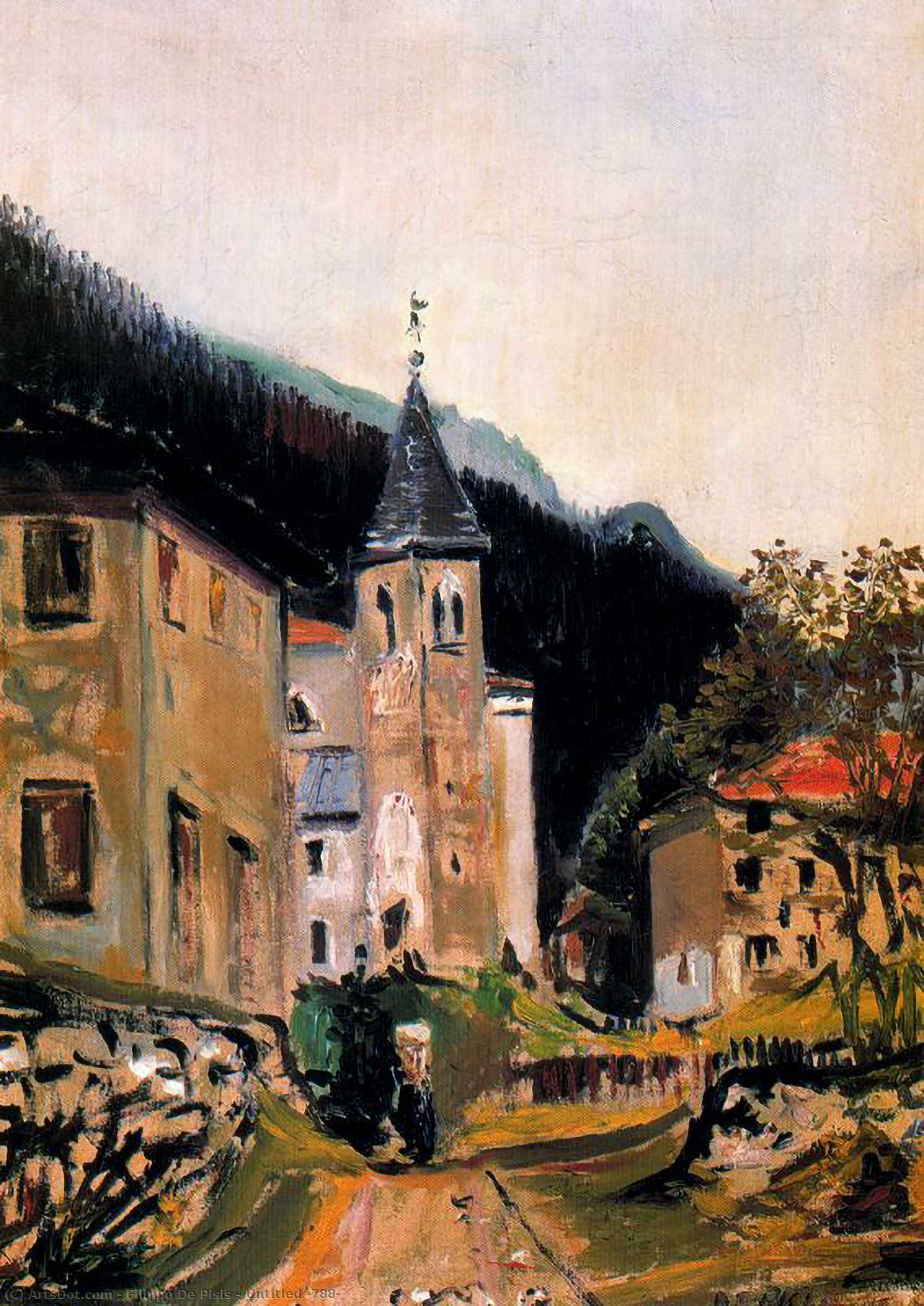
Galerijos akimais, garsiausias Filippo De Pisis paveikslas yra Untitled (839). Untitled (529) ir Untitled (788) užbaia trio, kurį atpažįsta kiekvienas ž)/\ Iš 61 Filippo De Pisis darbų mūsų kataloge, galerija žemiau pristato 60 garsiausius – kiekvienas yra originalus, su nurodytu metais, muziejumi bei unikaliu aprašymu.



In the quiet intimacy of Filippo de Pisis’s Still Life with Mushrooms, we are invited into a world where the mundane is elevated to the level of poetry. Created in 1934, this exquisite composition serves as a masterclass in the art of the fleeting moment. The painting captures a scattered collection of mushrooms, their organic forms resting with a delicate randomness across the canvas. Some lie solitary on the ground,…


 Untitled (742)
12
 Untitled (997)
13
 Untitled (864)
14
 Untitled (599)
15
 Untitled (858)
16
 Untitled (904)
17
 Untitled (822)
18
 Untitled (929)
19
 Untitled (798)
20
 Untitled (125)
21
 Untitled (464)
22
 Untitled (124)
23
 Untitled (525)
24
 Untitled (401)
25
 Untitled (191)
26
 Untitled (702)
27
 Untitled (662)
28
 Still Life with Shell1930
29
 Strawberries. Still Life1939 · Galleria d'Arte Moderna Achille Forti
30
 Untitled (347)
31
 Untitled (132)
32
 Untitled (309)
33
 Untitled (553)
34
 Untitled (436)
35
 Untitled (160)
36
 Untitled (492)
37
 Untitled (217)
38
 Untitled (802)
39
 Untitled (211)
40
 Untitled (818)
41
 Untitled (762)
42
 Untitled (776)
43
 Untitled (704)
44
 Untitled (432)
45
 Untitled (391)
46
 Untitled (853)
47
 Untitled (353)
48
 Untitled (668)
49
 Untitled (167)
50
 Untitled (851)
51
 Untitled (957)
52
 Untitled (238)
53
 Untitled (739)
54
 Untitled (551)
55
 Untitled (406)
56
 Untitled (468)
57
 Untitled (220)
58
 Untitled (461)
59
 Untitled (567)
60
 Untitled (976)
Ketverios temos, dažniausiai pasikrausto originaluose, kiekvienos su savo puikiausiu pavyzdžiu.
2 muziejai, kuriuose saugoma daugiausia šioje pusėje esamų paveikslų.
| Muzejaus | Miestas | Filippo De Pisis darbai | Šiojo sąrašo paveikslai |
|---|---|---|---|
 Galleria d'Arte Moderna Achille Forti |
Verona | 2 | Still life with Mushrooms, Strawberries. Still Life |
 Art Gallery of New South Wales |
Sidnėjus | 1 | Flowers |
1930–1939 laikotarpis buvo pakankamas Filippo De Pisis: galerija peržvelgia juos metus po metus, vienas po kito pateikdama garsius originalus kūrybos darbus.
Pasirinkite metus, kad pamatytumėte originalus darbus.

In the quiet intimacy of Filippo de Pisis’s Still Life with Mushrooms, we are invited into a world where the mundane is elevated to the level of poetry. Created in 1934, this exquisite composition serves as a masterclass in the art of the fleeting moment. The painting captures a scattered collection of mushrooms, their organic forms resting with a delicate randomness across the canvas. Some lie solitary on the ground,…

Untitled (839). Toliausiai eina Untitled (529) ir Untitled (788).
Untitled (839), Untitled (529), Untitled (788), Flowers, Untitled (620), Untitled (313), Still life with Mushrooms, Untitled (805), Untitled (699) ir Untitled (586). Viršuje esančioje reitingo sąraše nurodyta kiekvieno kūrinio metis ir muziejus.
Mūsų kataloge yra 61 Filippo De Pisis darbų, skirtų laikotarpiui nuo 1930 iki 1939.
Daugiausia – Galleria d'Arte Moderna Achille Forti (Verona) ir Art Gallery of New South Wales (Sidnėjus). Viršuje esančiame muziejų sąraše yra visi jie.
Šioje pusėje seniausias darbas yra Still Life with Shell (1930), o naujausias – Strawberries. Still Life (1939).
Still life (6), Italian art (6) ir Flowers (2) iš 60 šioje pusėje esamų darbų.
Impressionism ir Post-impressionism, judging by the originals on this page.
Still life with Mushrooms ir Strawberries. Still Life: Galleria d'Arte Moderna Achille Forti, Verona kolekcijoje yra 2 šioje pusėje esančių darbų.
Born Luigi Filippo Tibertelli in the historic Italian city of Ferrara, Filippo De Pisis was an artist who refused to be confined by a single medium. To understand his canvas, one must first understand his soul as a poet; he viewed the world through a lens of literary sensitivity, where every shadow and light flicker held a narrative weight. His early years in Italy were marked by a profound intellectual curiosity, studying literature and philosophy in Bologna. It was here that he encountered the haunting, dreamlike visions of Giorgio De Chirico, an encounter that would plant the seeds of Metaphysical influence within his burgeoning style. This duality—the precision of a scholar and the wandering eye of a flâneur—defined his approach to art, allowing him to capture not just the physical reality of a subject, but its emotional resonance.
His journey was one of constant movement across the great cultural capitals of Europe. Moving to Rome in 1919 and later settling in Paris in 1925, De Pisis immersed himself in the vibrant, avant-garde pulse of the interwar period. In Paris, his brushwork began to shed its more rigid, metaphysical origins, absorbing the light and movement of French Impressionism. He moved within the same circles as Georges Braque and André Derain, and his style evolved into something uniquely his own: a technique often described as pittura a zancapi mosca—a "fly-wing" style of painting characterized by rapid, fragmented, and nervous brushstrokes. This method allowed him to achieve an airy, almost mirage-like quality, where objects seemed to vibrate with life before dissolving back into the atmosphere.
The heart of De Pisis’s oeuvre lies in his ability to find the eternal within the ephemeral. He possessed a singular talent for elevating the mundane—a simple arrangement of mushrooms, a bowl of strawberries, or a vase of foxgloves—into profound meditations on existence. His still lifes are never merely static arrangements; they are imbued with what he called "pathetic pleasure-pain," a bittersweet recognition of beauty's fleeting nature. Through muted pastel hues and a masterful command of Venetian light, he created compositions where the boundaries between objects and their surroundings blur, suggesting a deep, spiritual interconnectedness between all things.
His fascination with Venice provided much of his most luminous subject matter. The city’s architectural grandeur and its misty, maritime atmosphere served as the perfect stage for his expressive explorations. Whether depicting the rhythmic movement of a seascape or the quiet intimacy of a street scene, De Pisis utilized a broken brushstroke technique that captured the very essence of light hitting water or stone. This period of his work represents a pinnacle of Italian Post-Impressionism, where the artist’s technical skill met an almost obsessive devotion to capturing the "secret spirit" of the moment.
Despite the disruptions of World War II and his eventual return to Italy, De Pisis never lost the cosmopolitan spirit that had defined his youth. His life was famously eccentric, marked by a dandyish lifestyle and an insatiable appetite for the beauty found in the smallest details—even claiming that a discarded feather on a street could spark a masterpiece. This radical openness to the world ensured that his work remained perpetually fresh, avoiding the stagnation that often plagues established masters.
Today, the significance of Filippo De Pisis rests in his unique position as a bridge between the structured metaphysical movements of the early 20th century and the more spontaneous, emotive expressions of later decades. His legacy is found in:
He remains a celebrated figure in the annals of Italian art, remembered not just as a painter of scenes, but as a chronicler of the ephemeral soul.
