Charles Le Brun portretas

100 garsiausių Charles Le Brun paveikių rinkinys: galerijos išboru

Atnaujinta spalis 2026 · pagal mūsų populiarumumo koeficientą (paieškos, lankytojai ir užsakymai kiekvienam kūriniui) · 232 Charles Le Brun darbai mūsų kataloge

Trumpai tariant

Iš visų paliktų originalų kūrinių Charles Le Brun garsiausias yra Apotheosis of Louis XIV (1600), esantis Szépművészeti Múzeum kolekcijoje, Budapeštas. Tiesiog už jų seka Louis XIV, King of France ir Louis XIV Visiting the Gobelins Factory (1673). Mūsų kataloge yra 232 darbų autoriaus Charles Le Brun; galerija išsaugojo 100 labiausiai pasaulyje žyminiausių kūrinių – kiekvienas jų pateikiamas su datos, muziejaus ir istorijos aprašymu.

1619 – 1690, Paryžius Baroque Daugiausia darbų: Liuvro muziejus

Charles Le Brun geriausios 10 paveikslų: galerijos pasirinkimas

1
Apotheosis of Louis XIV (1600) aut. Charles Le Brun

Apotheosis of Louis XIV

1600 · Oil On Canvas · Szépművészeti Múzeum, Budapeštas

Apotheosis of Louis XIV: A Triumph of Baroque Grandeur The painting “Apotheosis of Louis XIV,” executed by Charles Le Brun in 1677, stands as an unparalleled testament to the artistic fervor and opulent ambition of the French Baroque period. Measuring 109.5 x 78.3 cm, this monumental oil on canvas transcends mere depiction; it aspires to elevate Louis XIV—the Sun King—to divine status, embodying the very essence of royal authority and…

2
Louis XIV, King of France aut. Charles Le Brun

Louis XIV, King of France

Pastel · Liuvro muziejus, Paryžius

The artwork depicts Louis XIV, King of France, positioned as the central figure within a composition. He is shown in regal attire, standing amidst a group of people whose identities are obscured by the artist's choice to leave them faceless. The background features a serene landscape, characterized by a meandering river and mountains rising in the distance under a sky filled with clouds. The scene is rendered in pastel on…

3
Louis XIV Visiting the Gobelins Factory (1673) aut. Charles Le Brun

Louis XIV Visiting the Gobelins Factory

1673 · Chalk · Château de Versailles, Versalio

Louis XIV Visiting the Gobelins Factory is an artwork by Charles Le Brun. This monumental depiction of the King of France captures a royal visit to the prestigious art institution. The scene focuses on Louis XIV at the Gobelins factory, a moment where the monarch moves through the space of production. It is a study of court life caught in a single, heavy breath.

4
Expressions of the Passions of the Soul (1670) aut. Charles Le Brun

Expressions of the Passions of the Soul

1670 · Acrylic On Canvas · Liuvro muziejus, Paryžius

Charles Le Brun’s “Expressions of the Passions of the Soul,” created around 1670, stands as a testament to Baroque artistry and psychological depth. More than just a depiction of a man's face, it’s an embodiment of raw emotion—a visceral portrayal of rage captured with meticulous detail and masterful chiaroscuro techniques.

5
The Repentant Magdalen (1655) aut. Charles Le Brun

The Repentant Magdalen

1655 · Oil On Canvas · Liuvro muziejus, Paryžius

Charles Le Brun’s “The Repentant Magdalen,” painted in 1655, is more than just a portrait; it's a profound meditation on human fallibility, spiritual yearning, and the arduous path to redemption. Housed within the hallowed halls of the Louvre Museum in Paris, this oil-on-canvas masterpiece immediately draws the viewer into a world of intense emotion and carefully constructed symbolism. Le Brun, a pivotal figure in 17th-century French art, masterfully employs his…

6
Pietà (1643) aut. Charles Le Brun

Pietà

1643 · Oil On Canvas · Liuvro muziejus, Paryžius

In the hallowed stillness of the Musée du Louvre, there exists a canvas that does more than merely depict a biblical event; it captures the very essence of human grief. Charles Le Brun’s Pietà, painted in 1643, is a monumental achievement of the Baroque era, serving as a profound meditation on sorrow, faith, and the weight of mortality. Originally commissioned for the Sainte-Chapelle in Paris—a sanctuary dedicated to the relics…

7
Hercules (detail) (1658) aut. Charles Le Brun

Hercules (detail)

1658 · Acrylic On Canvas · Château de Vaux-le-Vicomte, Vaux-le-Vicomte

Charles Le Brun’s “Hercules (detail)” is not merely a depiction of a mythological hero; it's an immersive experience, a vibrant tableau vivant that transports the viewer to the heart of 17th-century French courtly life. Painted in 1658, this exquisite work embodies the height of Baroque artistry – a potent blend of classical ideals, dramatic dynamism, and opulent detail. It’s a testament to Le Brun's mastery as both a painter and…

8
Apotheose of Louis XIV (1677) aut. Charles Le Brun

Apotheose of Louis XIV

1677 · Oil On Canvas · Szépművészeti Múzeum, Budapeštas

Charles Le Brun’s “Apotheose of Louis XIV,” painted in 1677, isn't merely a portrait; it’s a meticulously crafted declaration of royal authority, a visual embodiment of the Sun King’s absolute power. Commissioned during a pivotal moment in French history – following the scandalous arrest of his predecessor, Nicolas Fouquet – this monumental work served as both a celebration of Louis XIV and a strategic assertion of the monarchy's legitimacy. Le…

9
Martyrdom of St John the Evangelist at Porta Latina (1641) aut. Charles Le Brun

Martyrdom of St John the Evangelist at Porta Latina

1641 · Acrylic On Canvas · Saint-Nicolas du Chardonnet, Paris

Charles Le Brun’s “Martyrdom of St. John the Evangelist at Porta Latina,” painted in 1641, isn’t merely a historical depiction; it’s a visceral plunge into suffering and faith. This monumental canvas, currently residing within the serene walls of the Saint-Nicolas du Chardonnet in Paris, pulsates with an intensity rarely found in Baroque art. Measuring a commanding 282 x 224 centimeters, the painting immediately overwhelms the viewer with its scale and…

10
The Resurrection of Jesus Christ (1675) aut. Charles Le Brun

The Resurrection of Jesus Christ

1675 · Oil On Canvas · Lyon grožio mokslų muziejus, Liona

The canvas erupts from a heavy, shadowed base into a vertical ascent of white and gold. Christ rises, his body an athletic silhouette cutting through the darkness of the tomb. He moves upward, driven by a divine momentum that pulls the eye toward the heavens. Around him, the air seems to churn with the weight of billowing drapery and swirling clouds. The light does not merely illuminate; it emanates from…

Charles Le Brun darba rinkinys tęsiamas, nuo 11 iki 100

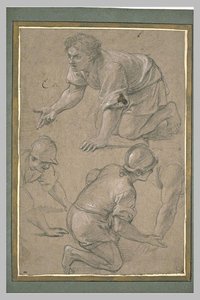
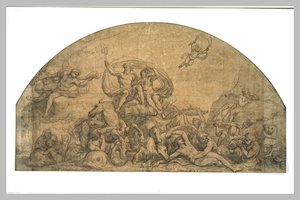
11The Repentant Magdalen (detail) (1655) aut. Charles Le BrunThe Repentant Magdalen (detail)1655 · Liuvro muziejus 12The Triumph of Faith (1658) aut. Charles Le BrunThe Triumph of Faith1658 · Château de Vaux-le-Vicomte 13Portrait of the Sculptor Nicolas Le Brun (1635) aut. Charles Le BrunPortrait of the Sculptor Nicolas Le Brun1635 · Residenzgalerie 14Louis XIV Visiting the Gobelins Factory aut. Charles Le BrunLouis XIV Visiting the Gobelins FactoryLiuvro muziejus 15Daedalus and Icarus (1645) aut. Charles Le BrunDaedalus and Icarus1645 · Ermitažas 16Hercules Liberates Hesione (1653) aut. Charles Le BrunHercules Liberates Hesione1653 · Staatliche Kunsthalle Karlsruhe 17The Holy Family in Egypt (1660) aut. Charles Le BrunThe Holy Family in Egypt1660 · Minneapolis Institute of Art 18Louis XIV. presenting his sceptre and helmet to Jesus Christ (1674) aut. Charles Le BrunLouis XIV. presenting his sceptre and helmet to Jesus Christ1674 · Lyon grožio mokslų muziejus 19Christ on the cross surrounded by angels (1600) aut. Charles Le BrunChrist on the cross surrounded by angels1600 · Groeningemuseum 20The Presentation of Christ in the Temple (1645) aut. Charles Le BrunThe Presentation of Christ in the Temple1645 · Detroito meno institutas 21The Road to Calvary (1600) aut. Charles Le BrunThe Road to Calvary1600 · Houston meno muziejus 22The Death of Cato of Utica (1646) aut. Charles Le BrunThe Death of Cato of Utica1646 23Hercules Vanquishing Diomedes (1640) aut. Charles Le BrunHercules Vanquishing Diomedes1640 · Nottingham Castle Museum And Art Gallery 24The Crucifixion of Saint Andrew (1647) aut. Charles Le BrunThe Crucifixion of Saint Andrew1647 25Allegorical Female Figure with Two Putti (1640) aut. Charles Le BrunAllegorical Female Figure with Two Putti1640 26Bust of an Elderly Woman (1654) aut. Charles Le BrunBust of an Elderly Woman1654 · Bavarijos valstybinės paveikslų kolekcijos 27Allegory of Strength (1654) aut. Charles Le BrunAllegory of Strength1654 · Bavarijos valstybinės paveikslų kolekcijos 28Genius Holding a Shield (1654) aut. Charles Le BrunGenius Holding a Shield1654 · Bavarijos valstybinės paveikslų kolekcijos 29Genius Holding a Shield (1654) aut. Charles Le BrunGenius Holding a Shield1654 · Bavarijos valstybinės paveikslų kolekcijos 30Christ in the Desert Served by Angels (1653) aut. Charles Le BrunChrist in the Desert Served by Angels1653 31The Descent of the Holy Spirit (1656) aut. Charles Le BrunThe Descent of the Holy Spirit1656 32The Striking of the Rock (1650) aut. Charles Le BrunThe Striking of the Rock1650 33The Crucifix with Angels (1650) aut. Charles Le BrunThe Crucifix with Angels1650 34Door of the Unicorn (1659) aut. Charles Le BrunDoor of the Unicorn1659 35The Tomb of Seneca (1650) aut. Charles Le BrunThe Tomb of Seneca1650 36Saint John the Evangelist at Patmos (1656) aut. Charles Le BrunSaint John the Evangelist at Patmos1656 · Grand Trianon 37The Fall of the Rebel Angels (1650) aut. Charles Le BrunThe Fall of the Rebel Angels1650 · Opera House 38Presumed Portrait of the Artist Presenting That of a Military Officer (1650) aut. Charles Le BrunPresumed Portrait of the Artist Presenting That of a Military Officer1650 · Opera House 39The Fall of the Rebel Angels (1650) aut. Charles Le BrunThe Fall of the Rebel Angels1650 · Opera House 40Christ in the Garden of Olives (1659) aut. Charles Le BrunChrist in the Garden of Olives1659 41Portrait of Louis XIV (1650) aut. Charles Le BrunPortrait of Louis XIV1650 · la Cour D'or 42The Brazen Serpent (1649) aut. Charles Le BrunThe Brazen Serpent1649 43Venus Clipping Cupid’s Wings (1655) aut. Charles Le BrunVenus Clipping Cupid’s Wings1655 · Museo de Arte de Ponce 44Judgement of Paris (1650) aut. Charles Le BrunJudgement of Paris1650 · Kubos nacionalinis grožio menų muziejus 45La Lapidation de saint Étienne by Charles Le Brun (1651) aut. Charles Le BrunLa Lapidation de saint Étienne by Charles Le Brun1651 46Hercules Slaying the Centaurs (1660) aut. Charles Le BrunHercules Slaying the Centaurs1660 · Kanados Nacionalinė galerija 47Apotheosis of Luis XIV. (1660) aut. Charles Le BrunApotheosis of Luis XIV.1660 · Slovak National Gallery 48Mary Magdalene (1654) aut. Charles Le BrunMary Magdalene1654 · Bavarijos valstybinės paveikslų kolekcijos 49John at Patmos (1654) aut. Charles Le BrunJohn at Patmos1654 · Bavarijos valstybinės paveikslų kolekcijos 50Portrait of the painter Louis Testelin (1650) aut. Charles Le BrunPortrait of the painter Louis Testelin1650 51The Martyrdom of St. Andrew (1646) aut. Charles Le BrunThe Martyrdom of St. Andrew1646 · J. Paul Getty muziejus 52Portrait of Nicolas Fouquet (1615-1680) (1650) aut. Charles Le BrunPortrait of Nicolas Fouquet (1615-1680)1650 53Saint Jean l'évangéliste à Patmos (1658) aut. Charles Le BrunSaint Jean l'évangéliste à Patmos1658 · Musée Fabre 54Mars and Venus (1650) aut. Charles Le BrunMars and Venus1650 55Water or The Triumph of Neptune and Amphitrite (1662) aut. Charles Le BrunWater or The Triumph of Neptune and Amphitrite1662 56Figures and Decorative Motifs (1665) aut. Charles Le BrunFigures and Decorative Motifs1665 57Air (1664) aut. Charles Le BrunAir1664 58Figures and Decorative Motifs (1671) aut. Charles Le BrunFigures and Decorative Motifs1671 59Autumn (1662) aut. Charles Le BrunAutumn1662 60Mars and Venus (1674) aut. Charles Le BrunMars and Venus1674 61The Battle of Arbelles (1673) aut. Charles Le BrunThe Battle of Arbelles1673 62Battle of the Granicus (1673) aut. Charles Le BrunBattle of the Granicus1673 63Night or Diane (1662) aut. Charles Le BrunNight or Diane1662 64Evening (1662) aut. Charles Le BrunEvening1662 65The Massacre of the Innocents (1665) aut. Charles Le BrunThe Massacre of the Innocents1665 · Dulwich Picture Gallery 66Assumption of the Virgin (1670) aut. Charles Le BrunAssumption of the Virgin1670 · Muzeum Palacu Króla Jana Iii w Wilanowie 67The Gardener Children: Winter (1675) aut. Charles Le BrunThe Gardener Children: Winter1675 68Funerary Effigy of Henriette Sélincart (1680) aut. Charles Le BrunFunerary Effigy of Henriette Sélincart1680 · Musée des Beaux-Arts 69The King governs by himself, 1661 (1681) aut. Charles Le BrunThe King governs by himself, 16611681 · Château de Versailles 70Order restored in the Kingdom's finances (1681) aut. Charles Le BrunOrder restored in the Kingdom's finances1681 · Château de Versailles 71capture the citadel (1681) aut. Charles Le Bruncapture the citadel1681 · Château de Versailles 72Descent from the Cross (1679) aut. Charles Le BrunDescent from the Cross1679 · Musée des Beaux-Arts 73The Adoration of the Shepherds (1689) aut. Charles Le BrunThe Adoration of the Shepherds1689 74Christ carrying His cross (1688) aut. Charles Le BrunChrist carrying His cross1688 75Musée Ingres-Bourdelle - Allégorie à la gloire de Louis XIV - Charles Le Brun (1690) aut. Charles Le BrunMusée Ingres-Bourdelle - Allégorie à la gloire de Louis XIV - Charles Le Brun1690 · Musėju Ingreso–Bordelo muziejus 76Landscape (1784) aut. Charles Le BrunLandscape1784 · Statens Museum For Kunst 77Tapestry - “Fire” or “The Forges of Vulcan” (1600) aut. Charles Le BrunTapestry - “Fire” or “The Forges of Vulcan”1600 · Medeiros e Almeida Museum 78La repas de Chimon aut. Charles Le BrunLa repas de Chimon 79Alexander and Porus (1665) aut. Charles Le BrunAlexander and Porus1665 · Liuvro muziejus 80Portrait of Turenne (1665) aut. Charles Le BrunPortrait of Turenne1665 · Château de Versailles 81The Conquest of Franche-Comté (1674) aut. Charles Le BrunThe Conquest of Franche-Comté1674 · Château de Versailles 82Allegory: Sculpture Working on the King's Bust aut. Charles Le BrunAllegory: Sculpture Working on the King's BustLiuvro muziejus 83Chancellor Séguier at the Entry of Louis XIV into Paris in 1660 aut. Charles Le BrunChancellor Séguier at the Entry of Louis XIV into Paris in 1660 84Portrait of Senator Ya.F. Dolgoruky aut. Charles Le BrunPortrait of Senator Ya.F. DolgorukyErmitažas 85The Family of Darius before Alexander (1660) aut. Charles Le BrunThe Family of Darius before Alexander1660 · Château de Versailles 86The Resolution of Louis XIV to Make War on the Dutch Republic (1671) aut. Charles Le BrunThe Resolution of Louis XIV to Make War on the Dutch Republic1671 · Musée des Beaux-Arts 87Louis XIV 1 aut. Charles Le BrunLouis XIV 1 88The Descent from the Cross aut. Charles Le BrunThe Descent from the CrossShipley Art Gallery 89The Holy Family aut. Charles Le BrunThe Holy FamilyFitzwilliam Museum 90Le passage du Rhin aut. Charles Le BrunLe passage du Rhin 91Le baptême de saint Eustache aut. Charles Le BrunLe baptême de saint Eustache 92Trois hommes à genoux aut. Charles Le BrunTrois hommes à genoux 93Christ en Croix aut. Charles Le BrunChrist en Croix 94Alexandre et Porus ou La Défaite de Porus aut. Charles Le BrunAlexandre et Porus ou La Défaite de Porus 95Un fleuve; une tête de femme aut. Charles Le BrunUn fleuve; une tête de femme 96Soldat casqué, à mi-corps aut. Charles Le BrunSoldat casqué, à mi-corps 97Fragment de bataille aut. Charles Le BrunFragment de bataille 98Homme drapé prosterné. Jeune homme à mi-corps, les bras en avant aut. Charles Le BrunHomme drapé prosterné. Jeune homme à mi-corps, les bras en avant 99Neptune et Amphitrite ou Le Réveil des eaux aut. Charles Le BrunNeptune et Amphitrite ou Le Réveil des eaux 100Equestrian Portrait of Louis XIV of France aut. Charles Le BrunEquestrian Portrait of Louis XIV of France

žymios Charles Le Brun tapiojamos, pagal laikotarpį

Temos, kurios domino Charles Le Brun

Ketverios temos, dažniausiai pasikrausto originaluose, kiekvienos su savo puikiausiu pavyzdžiu.

Muziejai, kuriuose saugomi Charles Le Brun originalūs darbai

8 muziejai, kuriuose saugoma daugiausia šioje pusėje esamų paveikslų.

Muzejaus Miestas Charles Le Brun darbai Šiojo sąrašo paveikslai
Liuvro muziejus, ParyžiusLiuvro muziejus Paryžius 12 Louis XIV, King of France, Expressions of the Passions of the Soul, The Repentant Magdalen
Château de Versailles, VersalioChâteau de Versailles Versalio 7 Louis XIV Visiting the Gobelins Factory, The King governs by himself, 1661, Order restored in the Kingdom's finances
Bavarijos valstybinės paveikslų kolekcijos, MiunchasBavarijos valstybinės paveikslų kolekcijos Miunchas 6 Bust of an Elderly Woman, Allegory of Strength, Genius Holding a Shield
Opera House, VersaillesOpera House Versailles 3 The Fall of the Rebel Angels, Presumed Portrait of the Artist Presenting That of a Military Officer, The Fall of the Rebel Angels
Szépművészeti Múzeum, BudapeštasSzépművészeti Múzeum Budapeštas 2 Apotheosis of Louis XIV, Apotheose of Louis XIV
Château de Vaux-le-Vicomte, Vaux-le-VicomteChâteau de Vaux-le-Vicomte Vaux-le-Vicomte 2 Hercules (detail), The Triumph of Faith
Lyon grožio mokslų muziejus, LionaLyon grožio mokslų muziejus Liona 2 The Resurrection of Jesus Christ, Louis XIV. presenting his sceptre and helmet to Jesus Christ
Ermitažas, Šv. PeterburgasErmitažas Šv. Peterburgas 2 Daedalus and Icarus, Portrait of Senator Ya.F. Dolgoruky

Charles Le Brun dešimtmetėms po dešimtmetės: originalus kūrinys, apibūdinantis kiekvieną iš jų

Darbai pagal dešimtmečius

Pasirinkite dešimtmetį, kad pamatytėte jį apibrėžusį originalą.

Kolekcjonerų klausimai apie Charles Le Brun paveikslus

Kuriu darbu Charles Le Brun yra labiausiai garsus?Atsakymas

Apotheosis of Louis XIV (1600), Szépművészeti Múzeum, Budapeštas. Toliau seka Louis XIV, King of France ir Louis XIV Visiting the Gobelins Factory (1673).

Kokie yra 10 garsiausių Charles Le Brun paveikslų?Atsakymas

Apotheosis of Louis XIV, Louis XIV, King of France, Louis XIV Visiting the Gobelins Factory, Expressions of the Passions of the Soul, The Repentant Magdalen, Pietà, Hercules (detail), Apotheose of Louis XIV, Martyrdom of St John the Evangelist at Porta Latina ir The Resurrection of Jesus Christ. Viršuje esančioje reitingo sąraše nurodyta kiekvieno kūrinio metis ir muziejus.

Kiek paveikslų paliko Charles Le Brun?Atsakymas

Mūsų kataloge yra 232 Charles Le Brun darbų, skirtų laikotarpiui nuo 1635 iki 1690.

Kuriuose muziejuose eksponuojami Charles Le Brun šedevrai?Atsakymas

Daugiausia – Liuvro muziejus (Paryžius), Château de Versailles (Versalio) ir Bavarijos valstybinės paveikslų kolekcijos (Miunchas). Viršuje esančiame muziejų sąraše yra visi jie.

Kuriomis metais Charles Le Brun tapo savo garsiausius kūrinius?Atsakymas

1650s laikotarpiu: 30 iš 100 šioje pusėje esančių darbų buvo sukurtos tada, iš jų The Repentant Magdalen.

Kokie yra pirmasis ir paskutinis garsieji Charles Le Brun originalūs darbai?Atsakymas

Šioje pusėje seniausias darbas yra Portrait of the Sculptor Nicolas Le Brun (1635), o naujausias – Musée Ingres-Bourdelle - Allégorie à la gloire de Louis XIV - Charles Le Brun (1690).

Kurią temą Charles Le Brun rinkosi dažniausiai?Atsakymas

Man (24), Drapery (24) ir Clouds (23) iš 100 šioje pusėje esamų darbų.

Kurią techniką Charles Le Brun naudojo dažniausiai?Atsakymas

Oil On Canvas, iš 100 šios puslapio darbų – 39.

Kelią meno kryptį priklauso Charles Le Brun?Atsakymas

Baroque, vadovaujantis šios puslapio originalais kūriniais.

Kurių Charles Le Brun darbai eksponuojami Liuvro muziejus?Atsakymas

Louis XIV, King of France, Expressions of the Passions of the Soul ir The Repentant Magdalen: Liuvro muziejus, Paryžius kolekcijoje yra 8 šioje pusėje esančių darbų.

Charles Le Brun: gyvenimas ir kūryba

Ankstyvas gyvenimas ir mokymasis

  • Gimė: Paryžiuje, Prancūzijoje (1619)
  • Pakrikštytas: 1619 metų vasario 24 dieną
  • Mirė: 1690 metų vasario 12 dieną Paryžiuje, Prancūzijos Karalystėje
  • Charles Le Brun anksti parodė meninius talentus. Sulaukęs vienuolikos metų jis įstojo į Simon Vouet studiją, esant kanclerio Séguier globai.
  • Jis toliau mokėsi pas François Perrier ir gavo ankstyvuosius užsakymus iš kardinolo Richelieu, pademonstruodamas didelį įgūdį net penkiolikos metų amžiaus.
  • Lemingas laikotarpis jo plėtrai buvo ketverių metų vievėjimas Romoje (1642–1646), kur jis dirbo Nicolas Poussin vadovavimu. Ši patirtis giliai formavo jo meninį stilių ir teorinį meno supratimą.
  • Šiuo metu Le Brun studijavo senovės Romos skulptūras ir kopijavo Rapaelio darbus, įsisavinant įtakas iš klasikinio antikumo ir šiuolaikinių italų meistrų.

Meninis tobulėjimas ir stilius

  • Grįžęs į Paryžių 1646 metais, Le Brun greitai sulaukė pripažinimo ir globos. Jo ankstyvasis stilius atspindėjo Vouet ir Poussin įtaką, tačiau jis palaipsniui sukūrė asmenišką požiūrį.
  • Le Bruno meninė evoliucija apėmė atsisakymą nuo griežto prisilaikymo prie klasikos modelių link dinamiškesnio ir ekspresyvesnio baroko stiliaus.
  • Jis išgarsėjo dideliais istoriniais paveikslais, portretais ir dekoratyviniais darbais, dažnai pasižyminčiais dramatiška kompozicija, sodriomis spalvomis ir kruopščia detalėmis.
  • Reikšminga darbų serija, vaizduojanti Aleksandro Didžiojo istoriją, parodė jo gebėjimą derinti istorinį pasakojimą su meniškumu.

Pagrindiniai pasiekimai ir karališkoji tarnyba

  • Le Bruno karjera pasiekė aukštumą Liudviko XIV valdymo metais, kuris 1664 metais paskyrė jį Karaliaus pirmuoju tapytoju. Ši pozicija suteikė jam didžiulę įtaką prancūzų menui.
  • Jis vaidino svarbų vaidmenį dekoruojant Versalio rūmus, sukuriant ikoniškus darbus, tokius kaip Ambasadorių laiptai, Veidrodžių salė ir Taikos ir Karo kambariai. Šie projektai įtvirtino jo reputaciją kaip meistro dailininkas ir dizaineris.
  • Le Brun taip pat buvo atsakingas už daugelio statulų projektavimą Versalio soduose, pademonstruodamas savo universalumą įvairiose meno disciplinose.
  • Jis įkūrė Karališkąją tapybos ir skulptūros akademiją (Royal Academy of Painting and Sculpture) 1648 metais, įtvirtindamas savo poziciją kaip prancūzų meno pasaulio lyderis. Daugelį metų jis buvo jos direktoriumi.

Palikimas ir istorinė reikšmė

  • Charles Le Bruno įtaka prancūzų menui buvo didelė. Jo darbai padėjo apibrėžti baroko stilių Prancūzijoje ir įtvirtino jį kaip vieną svarbiausių savo laikmečio menininkų.
  • Kaip teoretikas, jis pabrėžė intelektualinio įsitraukimo svarbą, o ne tik vizualinį patrauklumą, formuodamas meno švietimą ištisoms kartoms.
  • Jo dekoratyvinės schemos Versalyje nustatė standartus karališkiesiems rūmams visoje Europoje.
  • Le Bruno palikimas apima ne tik jo individualius darbus; jis vaidino gyvybiškai svarbų vaidmenį įsteigdamas ir reklamuodamas prancūzų meną tarptautinėje scenoje.

Išsami analizė

  • Baroko meistras: Le Bruno darbai yra puikus baroko stiliaus pavyzdys, pasižymintis dramatiškumu, emocijų intensyvumu ir didingu mastu. Jo kompozicijos dažnai kupinos judesio ir energijos, o spalvos – sodrios ir ryškios.
  • Portretų meistriškumas: Le Brun sukūrė daugybę įsimintinų portretų, kuriuose pavyko perteikti modelių charakterį ir statusą. Jo portretai pasižymi tikslumu, elegancija ir psichologiniu gilumu.
  • Teorinis darbas: Le Brunas nebuvo tik praktikuojantis menininkas, bet ir įtakingas meno teoretikas. Jo rašiniai apie tapybą ir skulptūrą turėjo didelės įtakos prancūzų meno švietimui ir estetikai.
  • Versalio rūmų puošyba: Le Bruno darbai Versalyje yra vieni iš svarbiausių baroko meno pavyzdžių Europoje. Jo dekoratyvinės schemos atspindi Liudviko XIV pomėgį prabangai, didingumui ir politinei simbolikai.
  • Akademijos įkūrimas: Karališkosios tapybos ir skulptūros akademijos įkūrimas buvo svarbus žingsnis prancūzų meno organizavime ir profesionalizavime. Le Brunas, kaip jos direktorius, turėjo didelės įtakos akademinio meno plėtrai Prancūzijoje.