Aršilė Gorkis portretas

Aršilė Gorkis tapiai: 97 garsiausi πίναšiai, galerijos akimis

Atnaujinta lapkritis 2026 · pagal mūsų populiarumumo koeficientą (paieškos, lankytojai ir užsakymai kiekvienam kūriniui) · 104 Aršilė Gorkis darbai mūsų kataloge

Trumpai tariant

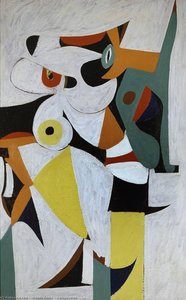
Galerijos akimais, garsiausias Aršilė Gorkis tapas yra Kepenys yra gaidžio šukos (1944), kurio originalas eksponuojamas Buffalo AKG Art Museum, Buffalo. Vieno Meto Žydovinys (1944) ir Garden in Sochi (1943) užbaia trio, kurį atpažįsta kiekvienas ž)/\ Iš 104 Aršilė Gorkis darbų mūsų kataloge, galerija žemiau pristato 97 garsiausius – kiekvienas yra originalus, su nurodytu metais, muziejumi bei unikaliu aprašymu.

1904 – 1948, Korgam Abstract expressionism Daugiausia darbų: Art Institute of Chicago

10 geriausių galerijos Aršilė Gorkis paveikslų

1
Kepenys yra gaidžio šukos (1944) aut. Aršilė Gorkis

Kepenys yra gaidžio šukos

1944 · Aliejus ant drobės · Buffalo AKG Art Museum, Buffalo

Abstraktinės ekspresionizmo šedevras: Aršilės Gorkio „Kepenys – gaidžio šukos“ Aršilės Gorkio paveikslas „Kepenys – gaidžio šukos“, sukurtas 1944 metais, yra neabejotinai vienas svarbiausių abstraktinės ekspresionizmo kūrinių. Šis monumentalus darbas atspindi perėjimo laikmetį Amerikos meno istorijoje, kai menininkai ėmėsi tyrinėti naujas formas ir išraiškos būdus, palikdami už nugaros tradicinio realizmo ribas. Gorkio tapyba – tai ne tik spalvų ir linijų derinys; tai gili emocija, įamžinta drobėje, atspindinti asmenines tragedijas ir kūrybinį…

2
Vieno Meto Žydovinys (1944) aut. Aršilė Gorkis

Vieno Meto Žydovinys

1944 · Guašas

Arshile Gorky: "One Year the Milkweed" – Šios Dramos Simfonija „One Year the Milkweed“ – Aršilo Gorkio 1944 metų kūrinys, yra ne tik paveiksliškas fragmentas, bet ir emocijos, traumaų bei transformacijos simfonija. Šis darbas, atspindi post-war Amerikos abstrakčių ekspresionistų burtų virto tašku, kurioje Gorkys ištrydė savo unikalų žymę. Pagalvokite apie tai – po pasaulio karą, po visiško chaoso ir destrukcijos, artistas norėjo išgauti iš žmogaus sielos esmės tikrąją širdį, atspindėdamos…

3
Garden in Sochi (1943) aut. Aršilė Gorkis

Garden in Sochi

1943 · Oil On Canvas

The artwork, titled Garden in Sochi by Arshile Gorky, is an abstract composition characterized by fluid, biomorphic shapes. These rounded, flowing forms—resembling plants, bodies, or cellular structures—are layered and interwoven across the canvas, creating a sense of depth through overlapping rather than traditional perspective. The shapes appear to float within a space, with some forms emerging from and receding into the background. The composition lacks a single focal point, encouraging…

4
The Plough and the Song (1947) aut. Aršilė Gorkis

The Plough and the Song

1947 · Oil On Canvas

In the vast, swirling landscape of Abstract Expressionism, few works resonate with as much raw, biographical intensity as Arshile Gorky’s The Plough and the Song. Created in 1947, this monumental masterpiece serves as a bridge between the structured logic of Cubism and the fluid, emotive depths of Surrealism. At first glance, the canvas presents a complex web of biomorphic shapes and delicate, organic lines that seem to pulse with an…

5
The Plough and the Song (1946) aut. Aršilė Gorkis

The Plough and the Song

1946 · Oil On Canvas · Art Institute of Chicago, Čikagos

The Plough and the Song is an artwork by Arshile Gorky, dated 1947. The artist, born in Dilkaya, Turkey, in 1904, produced this work during a period of significant creative intensity. Gorky's life and artistic development were marked by a transition from his origins in the Ottoman Empire to the burgeoning New York art scene, a movement that would eventually lead to his death in 1948.

6
The Artist with His Mother (1936) aut. Aršilė Gorkis

The Artist with His Mother

1936 · Oil On Canvas · Whitney Amerikos meno muziejus, Niujorkas

Introduction to Arshile Gorky Arshile Gorky, born Vosdanik Adoian in 1904, was an Armenian-American painter who played a crucial role in the development of Abstract Expressionism. His life was marked by tragedy and loss, which deeply influenced his art. In 1915, at the age of 11, Gorky witnessed the Armenian Genocide, losing many family members and friends. This traumatic experience left a lasting impact on him, shaping his artistic vision…

8
Self-Portrait (1927) aut. Aršilė Gorkis

Self-Portrait

1927 · Oil On Canvas · Art Institute of Chicago, Čikagos

In this 1927 self-portrait, we encounter a man caught in a moment of profound introspection. The subject is positioned slightly off-center, his bust-length form emerging from a background that refuses to settle into a defined space. There is a certain heaviness to his gaze, a directness that meets the viewer without the comfort of a smile. The palette is restrained, leaning into the shadows with deep blues, blacks, and ochre,…

9
Untitled (1944) aut. Aršilė Gorkis

Untitled

1944 · Pencil

Created in 1944, this work by Arshile Gorky presents a complex arrangement of shapes, colors, and lines. The composition is characterized by an intricate layering of elements that create a sense of movement across the surface. Within the abstract expressionist style, the piece features several distorted or abstracted human figures. These figures are interspersed with other objects, including a chair, which provides a grounding element amidst the fluid forms. The…

10
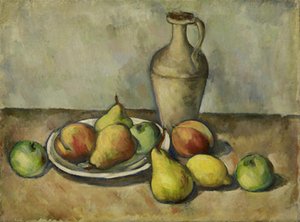
Pears, Peaches, and Pitcher (1927) aut. Aršilė Gorkis

Pears, Peaches, and Pitcher

1927 · Oil

In this 1927 composition, we find ourselves in the early, formative years of Arshile Gorky's practice. The scene is a modest arrangement of fruit resting upon a table, anchored by a singular pitcher. There is a certain stillness here, a moment of domesticity captured before the artist's later, more fluid abstractions took hold. The arrangement is deliberate yet feels unforced, as if the objects were simply left in place during…

Aršilė Gorkis tapiai, rangos nuo 11 iki 97

11Park Street Church (1924) aut. Aršilė GorkisPark Street Church1924 12Bound in Sleep (Composition No. 6) (1925) aut. Aršilė GorkisBound in Sleep (Composition No. 6)1925 13Organization (1936) aut. Aršilė GorkisOrganization1936 14Garden in Sochi (1941) aut. Aršilė GorkisGarden in Sochi1941 15Nude (1946) aut. Aršilė GorkisNude1946 16The Barber (Composition No. 5) (1933) aut. Aršilė GorkisThe Barber (Composition No. 5)1933 17The Artists's Mother (1936) aut. Aršilė GorkisThe Artists's Mother1936 18Charred Beloved II (1946) aut. Aršilė GorkisCharred Beloved II1946 · Kanados Nacionalinė galerija 19Charred Beloved II (1946) aut. Aršilė GorkisCharred Beloved II1946 20Still Life (1926) aut. Aršilė GorkisStill Life1926 · Izraelio muziejus 21Water of the Flowery Mill aut. Aršilė GorkisWater of the Flowery Mill 22After Xhorkum (1941) aut. Aršilė GorkisAfter Xhorkum1941 · Art Institute of Chicago 23Untitled (561) aut. Aršilė GorkisUntitled (561) 24The Artist and His Mother (1942) aut. Aršilė GorkisThe Artist and His Mother1942 25The Antique Cast (1926) aut. Aršilė GorkisThe Antique Cast1926 · San Francisco modernio meno muziejus 26Still Life of Flowers (1928) aut. Aršilė GorkisStill Life of Flowers1928 · Smithsonian American Art Museum 27Composition: Horse and Figures (1928) aut. Aršilė GorkisComposition: Horse and Figures1928 · MOMA - Moderniosios menų muziejus 28Portrait of a Woman (1928) aut. Aršilė GorkisPortrait of a Woman1928 29Staten Island (1927) aut. Aršilė GorkisStaten Island1927 30Self-Portrait at the Age of Nine (1928) aut. Aršilė GorkisSelf-Portrait at the Age of Nine1928 31Portrait of Azadoohi (Liberty Miller) (1926) aut. Aršilė GorkisPortrait of Azadoohi (Liberty Miller)1926 32Still Life with Skull (1927) aut. Aršilė GorkisStill Life with Skull1927 33Aztec Father ( ) (Man's Head) (1925) aut. Aršilė GorkisAztec Father ( ) (Man's Head)1925 34Portrait of a Young Man (1927) aut. Aršilė GorkisPortrait of a Young Man1927 35Landscape (1933) aut. Aršilė GorkisLandscape1933 36Untitled (Cubist Figure) (1930) aut. Aršilė GorkisUntitled (Cubist Figure)1930 37Mannikin (1931) aut. Aršilė GorkisMannikin1931 38Nighttime, Enigma and Nostalgia (1932) aut. Aršilė GorkisNighttime, Enigma and Nostalgia1932 39Portrait of Master Bill (1929) aut. Aršilė GorkisPortrait of Master Bill1929 40Still Life (Red and Yellow) (1930) aut. Aršilė GorkisStill Life (Red and Yellow)1930 41Blue Figure in a Chair (1931) aut. Aršilė GorkisBlue Figure in a Chair1931 42Untitled (Self-Portrait) (1929) aut. Aršilė GorkisUntitled (Self-Portrait)1929 43The Raven (Composition No. 3) (1931) aut. Aršilė GorkisThe Raven (Composition No. 3)1931 44Composition (1937) aut. Aršilė GorkisComposition1937 · Houston meno muziejus 45Tracking Down Guiltless Doves (1936) aut. Aršilė GorkisTracking Down Guiltless Doves1936 46Still Life (Composition No. 7) (1936) aut. Aršilė GorkisStill Life (Composition No. 7)1936 47Untitled (Abstract Landscape) (1934) aut. Aršilė GorkisUntitled (Abstract Landscape)1934 48Woman with Necklace Marquette (1936) aut. Aršilė GorkisWoman with Necklace Marquette1936 49Leonora Portnoff (1935) aut. Aršilė GorkisLeonora Portnoff1935 50Portrait of Akabi (1936) aut. Aršilė GorkisPortrait of Akabi1936 51Enigmatic Combat (1937) aut. Aršilė GorkisEnigmatic Combat1937 · San Francisco modernio meno muziejus 52Night-time, Enigma, and Nostalgia (1934) aut. Aršilė GorkisNight-time, Enigma, and Nostalgia1934 53Painting (1937) aut. Aršilė GorkisPainting1937 54Self-Portrait (1937) aut. Aršilė GorkisSelf-Portrait1937 55Portrait (Head) (1938) aut. Aršilė GorkisPortrait (Head)1938 56Child of an Idumean Night (Composition No. 4) (1936) aut. Aršilė GorkisChild of an Idumean Night (Composition No. 4)1936 57Portrait of Akabi (1937) aut. Aršilė GorkisPortrait of Akabi1937 58Personnage (Composition No. 2) (1936) aut. Aršilė GorkisPersonnage (Composition No. 2)1936 59Portrait of Myself and My Imaginary Wife (1934) aut. Aršilė GorkisPortrait of Myself and My Imaginary Wife1934 60Argula (1939) aut. Aršilė GorkisArgula1939 61Garden in Sochi (1941) aut. Aršilė GorkisGarden in Sochi1941 62Composition (1940) aut. Aršilė GorkisComposition1940 63Waterfall (1943) aut. Aršilė GorkisWaterfall1943 64The Beginning (1947) aut. Aršilė GorkisThe Beginning1947 · Izraelio muziejus 65Virginia Landscape (1944) aut. Aršilė GorkisVirginia Landscape1944 · Cincinnati Art Museum 66Good Hope Road II. Pastoral (1945) aut. Aršilė GorkisGood Hope Road II. Pastoral1945 · Thyssen-Bornemisza muziejus 67Last Painting (The Black Monk) (1948) aut. Aršilė GorkisLast Painting (The Black Monk)1948 · Thyssen-Bornemisza muziejus 68Good Afternoon, Mrs. Lincoln (1944) aut. Aršilė GorkisGood Afternoon, Mrs. Lincoln1944 69Good Hope Road (1945) aut. Aršilė GorkisGood Hope Road1945 70Landscape (1944) aut. Aršilė GorkisLandscape1944 71Untitled (1946) aut. Aršilė GorkisUntitled1946 72The Leaf of the Artichoke is an Owl (1944) aut. Aršilė GorkisThe Leaf of the Artichoke is an Owl1944 73Untitled (1948) aut. Aršilė GorkisUntitled1948 74The Limit (1947) aut. Aršilė GorkisThe Limit1947 75From a High Place II (1946) aut. Aršilė GorkisFrom a High Place II1946 76The Betrothal II (1947) aut. Aršilė GorkisThe Betrothal II1947 77Fireplace in Virginia (1946) aut. Aršilė GorkisFireplace in Virginia1946 78Golden Brown Painting (1944) aut. Aršilė GorkisGolden Brown Painting1944 · Mildred Lane Kemper Art Museum 79How My Mother's Embroidered Apron Unfolds in My Life (1944) aut. Aršilė GorkisHow My Mother's Embroidered Apron Unfolds in My Life1944 · Art Museum 80Agony (1947) aut. Aršilė GorkisAgony1947 · MOMA - Moderniosios menų muziejus 81Soft Night (1947) aut. Aršilė GorkisSoft Night1947 82Battle at Sunset with the God of Maize (Composition No. 1) (1936) aut. Aršilė GorkisBattle at Sunset with the God of Maize (Composition No. 1)1936 83Vale of the Armenians (1944) aut. Aršilė GorkisVale of the Armenians1944 · Centro de Arte Moderna Gulbenkian 84Composition (1940) aut. Aršilė GorkisComposition1940 85Untitled aut. Aršilė GorkisUntitled 86Moma aut. Aršilė GorkisMomaMOMA - Moderniosios menų muziejus 87Untitled (180) aut. Aršilė GorkisUntitled (180) 88The Observer aut. Aršilė GorkisThe Observer 89Dark Green Painting aut. Aršilė GorkisDark Green Painting 90Untitled (712) aut. Aršilė GorkisUntitled (712) 91Portrait of Vartoost aut. Aršilė GorkisPortrait of Vartoost 92Mechanics of Flying aut. Aršilė GorkisMechanics of Flying 93Still Life of Flower aut. Aršilė GorkisStill Life of Flower 94Summation aut. Aršilė GorkisSummation 95Portrait of Vartoosh (1934) aut. Aršilė GorkisPortrait of Vartoosh1934 96Diary of a Seducer aut. Aršilė GorkisDiary of a Seducer 97Portrait of Ahko (1937) aut. Aršilė GorkisPortrait of Ahko1937

žymios Aršilė Gorkis tapiojamos, pagal laikotarpį

Temos, kurios domino Aršilė Gorkis

Ketverios temos, dažniausiai pasikrausto originaluose, kiekvienos su savo puikiausiu pavyzdžiu.

Muziejai, kuriuose saugomi Aršilė Gorkis originalūs darbai

8 muziejai, kuriuose saugoma daugiausia šioje pusėje esamų paveikslų.

Muzejaus Miestas Aršilė Gorkis darbai Šiojo sąrašo paveikslai
Art Institute of Chicago, ČikagosArt Institute of Chicago Čikagos 3 The Plough and the Song, Self-Portrait, After Xhorkum
MOMA - Moderniosios menų muziejus, NiujorkasMOMA - Moderniosios menų muziejus Niujorkas 3 Composition: Horse and Figures, Agony, Moma
Izraelio muziejus, JeruzalėIzraelio muziejus Jeruzalė 2 Still Life, The Beginning
San Francisco modernio meno muziejus, San FranciscoSan Francisco modernio meno muziejus San Francisco 2 The Antique Cast, Enigmatic Combat
Thyssen-Bornemisza muziejus, MadridasThyssen-Bornemisza muziejus Madridas 2 Good Hope Road II. Pastoral, Last Painting (The Black Monk)
Buffalo AKG Art Museum, BuffaloBuffalo AKG Art Museum Buffalo 1 Kepenys yra gaidžio šukos
Whitney Amerikos meno muziejus, NiujorkasWhitney Amerikos meno muziejus Niujorkas 1 The Artist with His Mother
Hirshhorn Museum and Sculpture Garden, VašingtonasHirshhorn Museum and Sculpture Garden Vašingtonas 1 Vandens Užgaurai

Aršilė Gorkis, po vieno ikoninio paveikslio kiekvienam dešimtmenės laikotarpiui

Darbai pagal dešimtmečius

Pasirinkite dešimtmetį, kad pamatytėte jį apibrėžusį originalą.

Aršilė Gorkis tapyiniai: galerijos atsakymai

Kuris Aršilė Gorkis paveikslas yra pats garsiausias iš visų?Atsakymas

Kepenys yra gaidžio šukos (1944), Buffalo AKG Art Museum, Buffalo. Toliau seka Vieno Meto Žydovinys (1944) ir Garden in Sochi (1943).

Kiek metų buvo Aršilė Gorkis, kai sukūrė Kepenys yra gaidžio šukos?Atsakymas

40 metų amžiaus: Kepenys yra gaidžio šukos sukurta 1944 m. Nr. Aršilė Gorkis gimė 1904.

Kuriose yra 10 geriausių Aršilė Gorkis paveikslų?Atsakymas

Kepenys yra gaidžio šukos, Vieno Meto Žydovinys, Garden in Sochi, The Plough and the Song, The Plough and the Song, The Artist with His Mother, Vandens Užgaurai, Self-Portrait, Untitled ir Pears, Peaches, and Pitcher. Viršuje esančioje reitingo sąraše nurodyta kiekvieno kūrinio metis ir muziejus.

Kiek kūrinių sukūrė Aršilė Gorkis?Atsakymas

Mūsų kataloge yra 104 Aršilė Gorkis darbų, skirtų laikotarpiui nuo 1924 iki 1948.

Kur kabinami garsiausi Aršilė Gorkis originalūs darbai?Atsakymas

Daugiausia – Art Institute of Chicago (Čikagos), MOMA - Moderniosios menų muziejus (Niujorkas) ir Izraelio muziejus (Jeruzalė). Viršuje esančiame muziejų sąraše yra visi jie.

Kada Aršilė Gorkis sukūrė savo garsiausias paveikslus?Atsakymas

1940s laikotarpiu: 36 iš 97 šioje pusėje esančių darbų buvo sukurtos tada, iš jų Kepenys yra gaidžio šukos.

Kokie yra ankstyviausi ir vėliausi garsieji Aršilė Gorkis kūriniai?Atsakymas

Šioje pusėje seniausias darbas yra Park Street Church (1924), o naujausias – Last Painting (The Black Monk) (1948).

Kurią temą Aršilė Gorkis kūrė dažniausiai?Atsakymas

Portraits (9), Organic shapes (6) ir Famous people (6) iš 97 šioje pusėje esamų darbų.

Kurią techniką Aršilė Gorkis naudojo dažniausiai?Atsakymas

Oil On Canvas, iš 97 šios puslapio darbų – 11.

Su kokiu kierliu siejama Aršilė Gorkis?Atsakymas

Abstract expressionism, vadovaujantis šios puslapio originalais kūriniais.

Kurių Aršilė Gorkis originalų turi Art Institute of Chicago?Atsakymas

The Plough and the Song, Self-Portrait ir After Xhorkum: Art Institute of Chicago, Čikagos kolekcijoje yra 3 šioje pusėje esančių darbų.

Aršilė Gorkis: menininkas

The Life and Identity of Arshile Gorky

Arshile Gorky was born Vostanik Manoug Adoian on April 15, 1904, in Khorgom, Van, Ottoman Empire (now Turkey). His early existence was tied to a name and a place that he would eventually leave behind. As he moved through his life, he began to construct a new persona, a process of reinvention that involved shedding his original identity. He chose the name Arshile, a derivation of Achilles, the Achaean hero of the Iliad, and paired it with the surname Gorky.

This shift from Vostanik Manoug Adoian to Arshile Gorky was more than a simple change of labels. It was a way to distance himself from his origins and align his life with a different history. He toyed with various spellings and names, sometimes looking toward Greek mythology or even the names of Russian writers, seeking a sense of belonging that felt more aligned with his aspirations as a painter. This constant reshaping of himself became a fundamental part of how he moved through the world.

Artistic Training and Early Years

The transition from factory work to the studio was driven by a quiet dissatisfaction with the repetitive labor of the industrial setting. Seeking a different path, he enrolled in classes at the New England School of Art. His practice was not confined to the classroom; he spent much of his time at the Museums of Fine Arts, Boston, studying the old masters. These hours spent observing the techniques of those who came before him helped shape his early understanding of form and light.

His early paintings show the influence of Impressionism and Post-Impressionism. He worked with a subdued palette, using thick, layered brushstrokes to build texture. In these formative years, his subjects were the people closest to him. He used friends, family, and his own likeness as models, turning the familiar into something more introspective. One such early work, a self-portrait from about 1923–24, uses gestural marks to define the features of the face, focusing on the bridge of the nose and the weight of a collar.

Artistic Evolution and Style

His early years were spent working through the structures of Cubism and Post-Impressionism. These early experiments often took the form of dense, architectonic compositions where interlocking planes created a sense of weight and order. As his hand moved, these rigid scaffolds began to give way to something more fluid. He moved toward a lyrical visual language, using thick, layered brushstrokes and gestural marks to build up the surface. These marks often traced the edges of floating organic forms that seemed to breathe within the frame.

This shift brought him into the realms of Surrealism, Automatism, and Biomorphic art. The controlled geometry of his earlier work dissolved into indeterminate landscapes. He used thin washes of pigment and drips to create shapes that felt both anatomical and entirely abstract. These forms often suggest something biological or cellular, drifting through spaces that feel heavy with memory. His later approach, which moved away from recognizable subjects, helped define the direction of Abstract Expressionism.

Key Works and Artistic Achievements

Gorky’s brushwork often traces the edges of memory. In The Artist with His Mother, he uses a childhood photograph as a starting point, turning a personal likeness into something more fluid. This tendency to pull from the past is evident in the Nighttime, Enigma, and Nostalgia series, created between 1930 and 1934. These works move away from strict representation, leaning into semi-abstract structures that combine geometric scaffolds with hand-drawn contours.

By 1944, his language had shifted toward the biomorphic. The Liver is the Cock's Comb uses swirling lines and ambiguous spaces to suggest a festive, yet unsettling, gathering. It is a work of high energy, where figures dissolve into dynamic poses rather than remaining fully formed. Similarly, Waterfall, painted in 1943, uses fluid lines and pale blues to explore the subconscious. It functions as a personal exploration of trauma and memory, using washes of color to suggest the movement of water without literal depiction.

His later output continued this exploration of form and feeling. In 1947, he produced The Betrothal II, a work that maintains the tension between organic shapes and psychological intensity. His ability to translate internal states into these indeterminate landscapes helped define a new way of seeing in American painting.

Professional Collaborations and Circles

In 1935, Gorky signed a three-year contract with the Guild Art Gallery. This period marked a significant shift in his professional standing. He was among the first artists to be employed by the Works Progress Administration Federal Art Project that same year. Through this program, his path crossed with several figures who would become central to the American art scene. He worked alongside Alice Neel, Lee Krasner, Jackson Pollock, and Mark Rothko.

His presence in these circles helped bridge the gap between different eras of thought. He acted as a link between the European Surrealist painters and the emerging American Abstract Expressionist movement. This connection helped translate the ideas of the old world into the new language being developed in the United States. His work sat at the intersection of these shifting styles, connecting the subconscious explorations of the Surrealists with the gestural freedom of the Abstract Expressionists.

Later Years and Death

The final years of Gorky's life were marked by a sudden and heavy loss. In 1946, a studio fire destroyed many of his paintings, erasing a significant portion of his physical output. This loss occurred even as his visual language continued to shift toward more fluid, organic forms. He was working through the mid-1940s, producing works like The Betrothal II in 1947, which reflected the ongoing tension between his structured past and a more gestural, spontaneous future.

His life ended abruptly following an automobile accident. The crash resulted in a broken neck, leading to his death on July 21, 1948, in Sherman, Connecticut, U.S. He was 44 years old. The suddenness of the accident left his trajectory toward abstraction unfinished, cutting short a period of intense creative development.

Legacy and Lasting Influence

The weight of Gorky's influence on Abstract Expressionism remains heavy. He acted as a bridge, connecting the Surrealist painters of Europe to the emerging American movement. His ability to translate memory and trauma into a new visual language helped set the stage for those who followed. The way he used fluid lines and organic, biomorphic shapes offered a way to speak through abstraction that felt deeply personal rather than purely formal.

His work shows how much can be pulled from a difficult past. By turning the pain of displacement and loss into layered, gestural marks, he proved that art could function as a way to process the subconscious. This approach helped shift the focus of American painting toward a more emotional, internal landscape. His presence in the mid-century art scene helped define a period where the act of painting itself became a way to explore identity and existence.

Where to See His Works Today

To see the physical traces of his hand, one might travel to Washington, D.C. His paintings are held within the National Gallery of Art and also reside in the Kreeger Museum. These collections offer a way to observe the way he layered pigment and the specific, gestural marks left on the canvas.

In other parts of the world, his presence remains in significant collections. The Centro de Arte Moderna Gulbenkian in Lisbon holds his works, and the Buffalo AKG Art Museum is the place to find The Liver is the Cock's Comb, a work from 1944. Seeing these pieces in person allows for a closer look at the fluid lines and the way colors bleed into one another.