A Botanical Legacy: Where Science Meets the Sublime
To step into the Department of Plant Sciences at Cambridge University is to enter a sanctuary where the rigorous precision of scientific inquiry dissolves into the profound beauty of the natural world. It is a place where the meticulous study of flora transcends mere biology, becoming an intimate dialogue between the observer and the earth. Since its foundational roots in 1209, this venerable institution has served as a bridge between eras, preserving a visual heritage that captures the very essence of life’s intricate patterns. For the art lover and the collector alike, the Department offers more than just academic data; it provides a window into a centuries-old tradition of botanical appreciation, where every specimen and sketch tells a story of discovery, evolution, and aesthetic wonder.
The true soul of the collection resides within its extraordinary archives, most notably the sprawling Herbarium. Here, over 50,000 type specimens lie in silent, preserved perfection, acting as a physical timeline of taxonomic history. These are not merely dried plants but irreplaceable artifacts that illuminate the evolution of human knowledge. Intertwined with this scientific rigor is the profound legacy of Charles Darwin and his mentor, John Stevens Henslow. The presence of the Darwin Collection brings a palpable sense of historical gravity to the halls, offering a glimpse into the formative observations that reshaped our understanding of life on Earth. For those drawn to the intersection of history and naturalism, these collections represent a rare opportunity to witness the tangible fingerprints of scientific revolution.
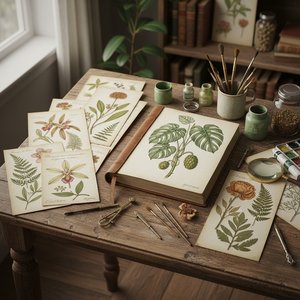
Beyond the specimens, the Department boasts an unparalleled assemblage of botanical artwork that serves as a masterclass in both technique and observation. The walls hold a breathtaking array of visual records, ranging from the delicate, translucent washes of Enlightenment-era watercolors to the bold, vibrant lithographs of the Victorian age. These works are much more than illustrations; they are triumphs of artistic skill, capturing the subtle textures of petals and the architectural strength of stems with an accuracy that satisfies the scientist and moves the artist. For interior designers seeking to evoke a sense of timeless elegance and organic sophistication, these botanical aesthetics offer a profound source of inspiration, embodying a harmony between natural truth and artistic grace.
The setting itself—a historic architectural gem nestled within the storied landscape of Cambridge University—complements the collection’s grandeur. The building’s enduring character reflects the institution's commitment to tradition and scholarly pursuit, providing a dignified backdrop for the cutting-edge research occurring within its walls. Throughout its history, the Department has become a crucible for interdisciplinary magic, hosting notable exhibitions that challenge the boundaries between art and science. These curated moments foster a unique dialogue, proving that the lens of creativity can illuminate the most fundamental questions of ecology and conservation. It is this unwavering dedication to both the discovery of truth and the celebration of beauty that makes the Department of Plant Sciences a singular destination for anyone moved by the enduring splendor of the natural world.