Wilhelm Sonmans의 초상화

세상에 단 하나뿐인, 가장 유명한 Wilhelm Sonmans 작품 29선

10월 2026 업데이트 · 인기 점수 기준 순위 (각 작품의 검색, 방문 및 주문 수) · 29점의 Wilhelm Sonmans 작품 (당사 카탈로그 기준)

요약하자면

Dervorguilla of Galloway (d.1290), Lady of Balliol (1670)은(는) Wilhelm Sonmans의 작품 중 가장 많은 시선을 사로잡는 회화이며, 원작은 옥스퍼드에 위치한 보들리언 도서관에 소장되어 있습니다. 그다음 시선은 John de Balliol (d.1269) (1670)와 Richard Wightwick (1547 –1629) (1670)로 향합니다. 우리 카탈로그에 수록된 Wilhelm Sonmans의 작품 29점 중, 가장 유명한 29점을 소개합니다. 각 작품은 제작 연도, 소장 박물관, 그리고 시대를 초월해 사랑받는 이유와 함께 독창적인 원작으로 제시됩니다.

1650 – 1708 Baroque 최다 소장처: 보들리언 도서관

갤러리의 시선으로 선정한 Wilhelm Sonmans의 명작 Top 10

1
Dervorguilla of Galloway (d.1290), Lady of Balliol (1670) 의 Wilhelm Sonmans

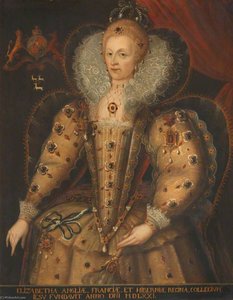
Dervorguilla of Galloway (d.1290), Lady of Balliol

1670 · Oil On Canvas · 보들리언 도서관, 옥스퍼드

The room feels heavy with the weight of centuries as the woman sits, her hands clasped in a quiet, steady gesture of composure. She wears a white veil that catches the light, framing a face that carries the gravity of her station. This is Dervorguilla of Galloway, a figure of substance from a vanished age, captured here in the soft, luminous glazes that define the Baroque style. Around her, the…

2
John de Balliol (d.1269) (1670) 의 Wilhelm Sonmans

John de Balliol (d.1269)

1670 · Oil On Canvas · 보들리언 도서관, 옥스퍼드

The portrait depicts John de Balliol, a man who held the title of King of Scotland from 1292 to 1306. He is positioned in a standing posture, clad in a suit of metal armor. A helmet and a sword are visible as part of his attire. The subject is situated near a structure composed of brick, which resembles a castle wall. Two other figures occupy the periphery of the composition;…

3
Richard Wightwick (1547 –1629) (1670) 의 Wilhelm Sonmans

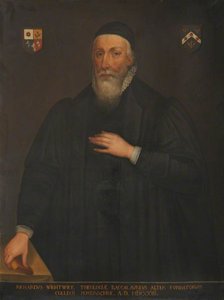
Richard Wightwick (1547 –1629)

1670 · Oil On Canvas · 보들리언 도서관, 옥스퍼드

In this portrait, we encounter Richard Wightwick, a man whose life was deeply intertwined with the foundations of Pembroke College, Oxford. He is presented as an elderly figure, his presence defined by a long, white beard that flows over a dark robe. There is a quiet gravity in his gaze, suggesting a life spent in study and religious devotion. He holds a book in his left hand, a gesture that…

4
William of Waynflete (1398–1486) (1670) 의 Wilhelm Sonmans

William of Waynflete (1398–1486)

1670 · Oil On Canvas · 보들리언 도서관, 옥스퍼드

The figure of William of Waynflete commands the space, his presence heavy and dignified within the frame. He sits as a man of immense ecclesiastical weight, his gaze steady and serious, reflecting a life spent navigating the corridors of power and prayer. Light spills from the upper left, washing over the intricate folds of his robes and catching the metallic glint of his insignia. This illumination does more than reveal…

5
Walter de Stapledon (1261–1326) (1670) 의 Wilhelm Sonmans

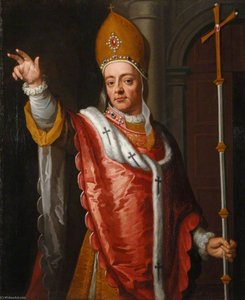
Walter de Stapledon (1261–1326)

1670 · Oil On Canvas · 보들리언 도서관, 옥스퍼드

A figure of ecclesiastical power occupies the center of this oil on canvas portrait. Dressed in heavy, layered robes, the subject is presented in a frontal pose that demands immediate recognition of his status. The lighting is directional, carving deep shadows into the folds of the fabric and defining the contours of a face marked by gravity. A prominent mitre sits atop the head, while a crosier is held as…

6
Richard Fleming (d.1431) (1670) 의 Wilhelm Sonmans

Richard Fleming (d.1431)

1670 · Oil On Canvas · 보들리언 도서관, 옥스퍼드

The portrait of Richard Fleming (d.1431) emerges from the canvas as a presence that commands the space it occupies. Created by Wilhelm Sonmans, this oil on canvas work captures the likeness of the subject with a focused intensity. The figure of Richard Fleming (d.1431) remains fixed in a moment of quiet dignity, his presence felt through the careful application of pigment that defines his form. It is a work that…

Wilhelm Sonmans의 유명 작품, 11~29번

Wilhelm Sonmans의 시선을 사로잡은 주제들

이 오리지널 작품들에서 가장 자주 등장하는 네 가지 주제와 그 정수를 보여주는 대표작들.

Wilhelm Sonmans의 원작을 소장하고 있는 미술관

이 페이지에 있는 작품을 가장 많이 소장하고 있는 5개의 미술관

소장 미술관 도시 Wilhelm Sonmans의 작품 이 목록의 작품들
보들리언 도서관, 옥스퍼드보들리언 도서관 옥스퍼드 20 Dervorguilla of Galloway (d.1290), Lady of Balliol, John de Balliol (d.1269), Richard Wightwick (1547 –1629)
Wadham College, 옥스퍼드Wadham College 옥스퍼드 3 Mrs Alice George (1582 –1691), Dorothy Wadham (1534–1618), Nicholas Wadham (1532–1609)
The Library And Museum of Freemasonry, LondonThe Library And Museum of Freemasonry London 1 William Talman (c.1650–1719)
Oriel College, 옥스퍼드Oriel College 옥스퍼드 1 John Hudson, Librarian and Principal of St Mary's Hall
National Trust, 요크National Trust 요크 1 Portrait of an Unknown Virtuoso Holding a Drawing over a Plinth with the Relief of a River God

수십 년에 걸친 Wilhelm Sonmans의 작품: 각 시대의 유일무이한 원화

연대별 작품 수

그 시대를 정의하는 오리지널 작품을 만나보려면 연대를 선택하세요.

Wilhelm Sonmans의 작품: 갤러리에 문의하기

Wilhelm Sonmans의 가장 대표적인 작품은 무엇인가요?정답 확인하기

Dervorguilla of Galloway (d.1290), Lady of Balliol (1670), 보들리언 도서관, 옥스퍼드. 다음은 John de Balliol (d.1269) (1670)와 Richard Wightwick (1547 –1629) (1670)입니다.

Wilhelm Sonmans 작가는 몇 세에 Dervorguilla of Galloway (d.1290), Lady of Balliol을(를) 제작했을까요?정답 확인하기

20세: Dervorguilla of Galloway (d.1290), Lady of Balliol은(는) 1670년 작품이며, Wilhelm Sonmans은(는) 1650년에 태어났습니다.

Wilhelm Sonmans의 작품 중 가장 유명한 10가지 명작은 무엇인가요?정답 확인하기

Dervorguilla of Galloway (d.1290), Lady of Balliol, John de Balliol (d.1269), Richard Wightwick (1547 –1629), William of Waynflete (1398–1486), Walter de Stapledon (1261–1326), Richard Fleming (d.1431), Thomas Tesdale (1547–1610), Nicholas Wadham (1532–1609), Dorothy Wadham (1534–1618) 및 Richard Fox (1448 –1528). 위 순위는 각 작품의 제작 연도와 소장 박물관을 나타냅니다.

Wilhelm Sonmans의 작품은 몇 점인가요?정답 확인하기

저희 카탈로그에는 1670년부터 1705년 사이의 Wilhelm Sonmans 작가의 작품 29점이 수록되어 있습니다.

가장 유명한 Wilhelm Sonmans의 원작은 어디에서 볼 수 있나요?정답 확인하기

대부분 보들리언 도서관 (옥스퍼드), Wadham College (옥스퍼드) 및 The Library And Museum of Freemasonry (London)에 소장되어 있습니다. 위의 박물관 목록에서 전체 목록을 확인하실 수 있습니다.

Wilhelm Sonmans의 가장 유명한 작품들은 어느 시기에 제작되었나요?정답 확인하기

1670s 동안: 이 페이지의 총 29점의 작품 중 17점이 해당 시기에 제작되었으며, 그중 Dervorguilla of Galloway (d.1290), Lady of Balliol점입니다.

Wilhelm Sonmans의 유명 작품 중 가장 먼저 그려진 작품과 가장 나중에 그려진 작품은 무엇인가요?정답 확인하기

이 페이지에서 가장 오래된 작품은 Dervorguilla of Galloway (d.1290), Lady of Balliol (1670)이며, 가장 최근 작품은 Welbore Ellis (1651–1734), Bishop of Meath (1705)입니다.

Wilhelm Sonmans 작가는 어떤 주제를 주로 다루었나요?정답 확인하기

이 페이지의 29점의 작품에 걸쳐 있는 Portrait (3), Religious figure (3) 및 People (2)

Wilhelm Sonmans 작가가 가장 많이 사용한 재료는 무엇인가요?정답 확인하기

이 페이지의 총 29점의 작품 중 6점의 Oil On Canvas

Wilhelm Sonmans의 작품은 어떤 미술 사조에 속하나요?정답 확인하기

이 페이지의 원작들을 기준으로 볼 때, Baroque

보들리언 도서관에서 어떤 Wilhelm Sonmans의 원화를 볼 수 있나요?정답 확인하기

Dervorguilla of Galloway (d.1290), Lady of Balliol, John de Balliol (d.1269) 및 Richard Wightwick (1547 –1629): 보들리언 도서관, 옥스퍼드은(는) 이 페이지에 있는 작품 중 20점을 소장하고 있습니다.

Wilhelm Sonmans: 작가의 초상화

The Baroque Visionary: The Life and Legacy of Wilhelm Sonmans

In the grand, sweeping tapestry of European art history, certain names flicker with a particular, haunting brilliance, even if they remain tucked within the shadows of more famous contemporaries. Wilhelm Sonmans (1650–1708) is such a figure—a painter whose work serves as a profound window into the spiritual and dramatic essence of the Baroque era. Born in Cologne, Germany, Sonmans emerged from an age defined by movement, light, and intense emotionality. While much of his early life remains shrouded in the mists of time, his artistic journey is anchored by his formative apprenticeship under Johann Baptist Lingwerde, a distinguished painter in Düsseldorf. This period of rigorous training provided the foundation for a career defined by technical mastery and an uncanny ability to breathe life into both the human countenance and the natural landscape.

The stylistic DNA of Sonmans’ work is a sophisticated dialogue between the masters who preceded him. Through his lineage of training, he absorbed the dramatic chiaroscuro—the interplay of deep shadow and brilliant light—that defined the Dutch master Rembrandt, alongside the muscular dynamism and fluid energy characteristic of Rubens. This synthesis allowed Sonmans to develop a technique that was uniquely his own: a method of applying glazes to achieve luminous, skin-like surfaces and an atmospheric depth that seems to pull the viewer into the canvas. His brushwork, while precise enough to capture the intricate textures of ecclesiastical vestments, never lost the rhythmic vitality required to convey the spiritual fervor of the seventeenth century.

Mastery of Portraiture and the Sacred Landscape

Sonmans found his greatest acclaim in the realms of portraiture and religious iconography, where he could utilize his command of symbolism to communicate power and piety. His portraits of the nobility and high-ranking clergy were more than mere likenesses; they were carefully constructed narratives of authority and grace. A preeminent example is his 1705 depiction of Bishop Welbore Ellis. In this work, Sonmans achieves a level of neoclassical realism that borders on the transcendent, using rich textures and symbolic elements to underscore the subject's ecclesiastical importance. The painting stands as a testament to his ability to marry the physical reality of a sitter with the metaphysical weight of their office.

Beyond the structured confines of the portrait studio, Sonmans possessed a deeply contemplative relationship with the natural world. His landscapes, particularly those capturing the serene and mist-laden valleys of the Rhine, reveal an artist seeking the divine within the earthly. These works are characterized by:

  • Atmospheric Depth: A masterful use of light to create a sense of infinite distance and seasonal mood.
  • Spiritual Quietude: Landscapes that function as sites of meditation rather than mere topographical records.
  • Technical Precision: The delicate rendering of foliage, water, and sky through sophisticated glazing techniques.

A Lasting Influence on the Düsseldorf School

The historical significance of Wilhelm Sonmans extends far beyond the frames of his individual masterpieces. He was a pivotal figure in the cultural evolution of Düsseldorf, helping to transform the city into a vital hub for Baroque art production. By establishing a workshop that functioned as a crucible for talent, he ensured that the stylistic innovations of his apprenticeship—the blend of German precision and Flemish energy—would be disseminated to a new generation of artists. His legacy is not merely found in museums across Cologne, Düsseldorf, and Munich, but in the very fabric of the regional artistic identity he helped weave. Through his devotion to capturing the interplay of light, shadow, and soul, Sonmans remains an essential voice for those seeking to understand the profound spiritual landscape of the Baroque period.