요시토시의 초상화

The 100 Most Famous 요시토시 Paintings, Each One of a Kind

10월 2026 업데이트 · 인기 점수 기준 순위 (각 작품의 검색, 방문 및 주문 수) · 1,344점의 요시토시 작품 (당사 카탈로그 기준)

In short

Kingio Hideaki From Kaidai Hyaku Senso is the 요시토시 painting that draws the most eyes. After it, the eye goes to 아사쿠사와 and 다이묘들을 접견하는 도쿠가와 이에미츠 (1875). Among the 1,344 works of 요시토시 in our catalog, these 100 are the most famous, each a unique original presented with its year, its museum and the reason it endures.

1839 – 1892, 에도 우키요에 최다 소장처: 미니애폴리스 미술관

Top 10 paintings by 요시토시, through the gallery's eye

2
아사쿠사와 의 요시토시

아사쿠사와

목판화

츠키오카 요시토시의 1882년 작품, ‘아사쿠사’는 단순한 거리 풍경이 아닙니다. 급격한 변화를 맞이하던 일본 사회의 불안과 희망, 그리고 궁극적으로는 쇠퇴하는 아름다움을 포착한, 깊은 의미와 감동을 담고 있는 한 폭입니다. 요시토시는 우키요에 전통의 마지막 거장으로, 그의 작품은 섬세한 디테일과 인간 본성에 대한 깊은 이해를 통해 단순한 그림을 넘어 시대를 초월하는 예술적 진술로 승화시켰습니다.

3
다이묘들을 접견하는 도쿠가와 이에미츠 (1875) 의 요시토시

다이묘들을 접견하는 도쿠가와 이에미츠

1875 · 목판화 · 로스앤젤레스 카운티 미술관, 로스앤젤레스

1875년에 제작된 츠키오카 요시토시의 "도쿠가와 이에미츠의 영주 알현"은 단순한 시각적 재현을 넘어, 봉건 제도의 황혼기와 근대화의 여명이 교차하던 일본의 결정적인 순간에 서린 불안과 열망을 온몸으로 구현하고 있습니다. 채색 목판화로 완성된 이 작품은 우키요에 예술의 정점을 보여주며, 비할 데 없는 세밀함과 격식 및 엄숙한 명상이 깃든 분위기를 포춘하게 담아냅니다. 이는 단순한 왕실 의례의 묘사를 넘어, 에도 시대 일본의 문화적 영혼을 들여다볼 수 있는 하나의 창과 같습니다.

4
Okuko Hikozaemon Protects The Tokugawa Shogun From The Spear Of Goro Matabei Mototsugu 의 요시토시

Okuko Hikozaemon Protects The Tokugawa Shogun From The Spear Of Goro Matabei Mototsugu

Acrylic On Canvas

Dynamic Depiction of Heroism and Mythology This captivating artwork vividly captures a dramatic moment of heroism and mythic confrontation, set against a dark, nocturnal backdrop illuminated by a crescent moon. The scene is filled with intense action, depicting legendary warriors engaged in a fierce battle that embodies themes of bravery, conflict, and divine justice. The central figures, clad in detailed armor and traditional garments, evoke a sense of movement and…

5
Moon Over The Waters At Daimotsu Bay 의 요시토시

Moon Over The Waters At Daimotsu Bay

Woodblock Print

Moon Over The Waters At Daimotsu Bay is a significant woodblock print by the Japanese artist Yoshitoshi. This work belongs to his celebrated series, One Hundred Aspects of the Moon, also known as Tsuki hyakkei. Published between 1885 and 1892, the series represents a profound period in the artist's career, capturing a unique intersection of traditional aesthetics and the shifting social landscape of the Meiji era.

6
전장으로 돌격하는 우에스기 켄신 뉴도 테루토라 (1883) 의 요시토시

전장으로 돌격하는 우에스기 켄신 뉴도 테루토라

1883 · 아크릴 물감 · 로스앤젤레스 카운티 미술관, 로스앤젤레스

1883년에 제작된 츠키오카 요시토시의 “우에스기 켄신 뉴도 테루토라, 전투를 향해 질주하다”는 단순한 묘사를 넘어섭니다. 이 작품은 봉건 통치에서 근대화로 나아가는 일본의 결정적인 전환기 속에서 나타난 불안과 열망을 고스란히 담아내고 있습니다. 이 기념비적인 목판화는 단순히 군사적 위용을 기록한 것이 아니라, 당대의 심리적 풍경을 웅변하는 상징들로 가득 채워진 정교하게 설계된 하나의 장면입니다.

7
Komori No Godan 의 요시토시

Komori No Godan

Woodblock Print

Tsukioka Yoshitoshi’s “Komori No Godan” – literally “Six Bats Under the Umbrella” – is more than just a captivating image; it's a poignant meditation on mortality, protection, and the enduring spirit of Japanese folklore. Executed in stark monochrome with the meticulous precision characteristic of Ukiyo-e woodblock prints, this artwork transports the viewer to a world steeped in layered meaning and evocative atmosphere. Created during a period of immense social change…

8
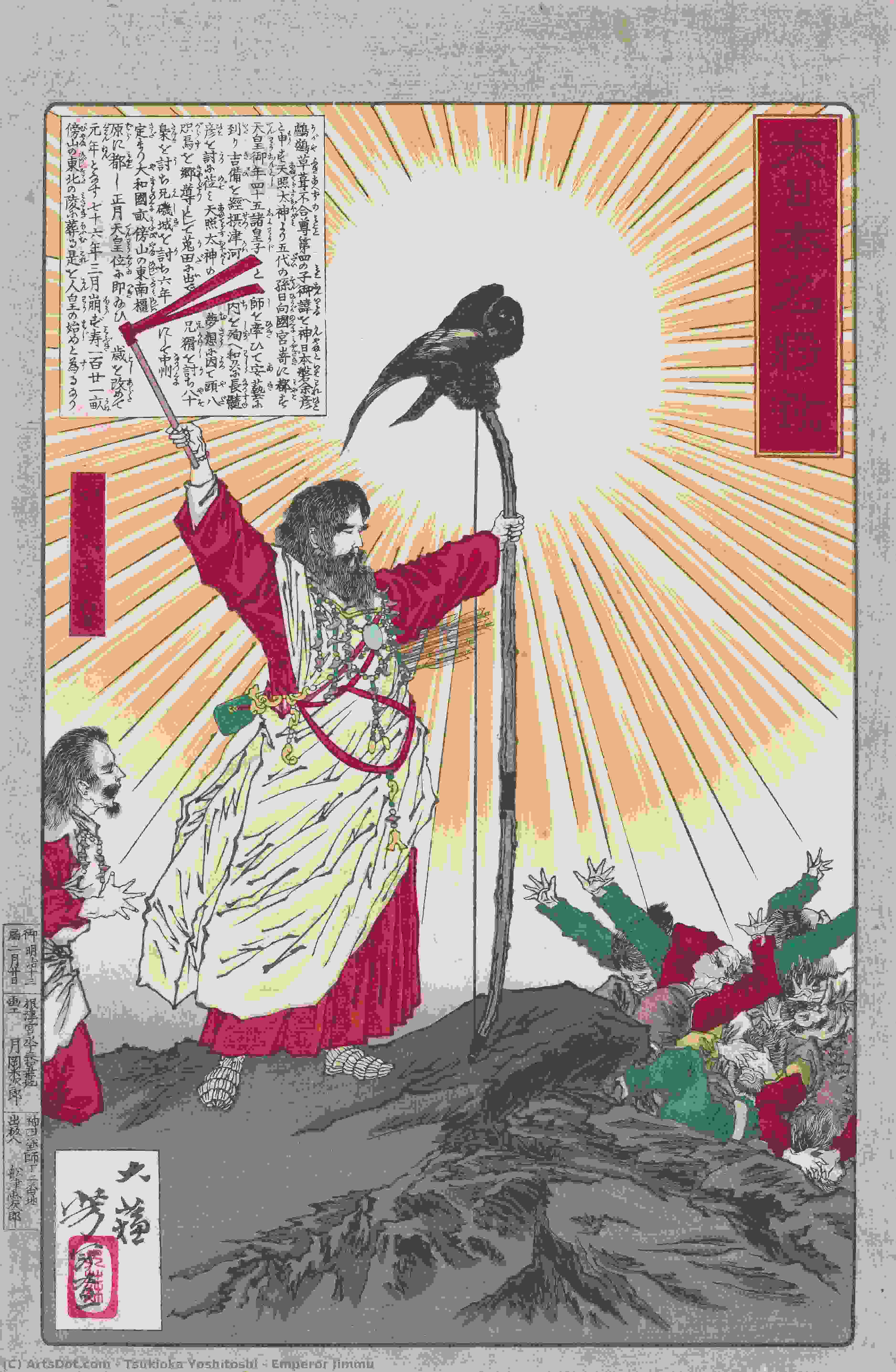
Emperor Jimmu 의 요시토시

Emperor Jimmu

Acrylic On Canvas

Tsukioka Yoshitoshi, a luminary of Japan’s Edo period (1603-1868), transcends mere artistic representation; he crafts narratives that breathe life into history. “Emperor Jimmu,” showcased as a meticulously crafted oil reproduction on AllPaintingsStore.com, isn’t simply a depiction of legend—it's an embodiment of Japan’s enduring spirit and Yoshitoshi’s unparalleled artistic vision.

9
사단부의 밤의 궁궐에서의 악에 대한 위협 의 요시토시

사단부의 밤의 궁궐에서의 악에 대한 위협

캔버스에 아크릴 물감

이 그림은 메이지 시대의 급격한 근대화와 사회적 격변 속에서 일본 예술가들이 새로운 지향점을 모색하던 시기를 반영합니다. 요시토시는 전통적인 우키요에 서양 미술 기법을 접목하여 당시 미술계의 흐름과 변화를 이끌었습니다. 특히 그의 “피끓는 인쇄술” 스타일은 극악한 폭력과 감동적인 스토리텔링으로 관객에게 깊은 인상을 남겼습니다.

10
식당 의 요시토시

식당

캔버스에 아크릴 물감

츠키오카 요시토시의 “레스토랑”: 에도 시대의 일상과 예술적 혁신 츠키오카 요시토시는 일본 미술사에서 마지막 거장으로 기억되는 우타가와 쿠니요시 후예입니다. 그의 작품 “레스토랑”은 단순한 그림 이상의 의미를 지니며, 에도 시대의 도시 생활과 예술가의 뛰어난 기량을 담아낸 우키요에 장르의 대표작입니다. 이 작품은 두 명의 여성들이 활기찬 레스토랑 앞을 지나가는 모습을 보여주는데, 요시토시는 화려한 건축적 표현과 역동적인 인물 묘사를 통해 관객에게 에도 시대의 도시 풍경과 문화를 생생하게 전달합니다. 레스토랑은 단순한 식사 공간이 아니라 당시…

요시토시's famous paintings, numbers 11 to 100

11Woman With Iris 의 요시토시Woman With Iris 12The Moon And The Abandoned Old Woman 의 요시토시The Moon And The Abandoned Old Woman 13Miyamoto Musashi 의 요시토시Miyamoto Musashi 14Great Generals of the East and West (1874) 의 요시토시Great Generals of the East and West1874 · 미니애폴리스 미술관 15Great Generals of the East and West (1874) 의 요시토시Great Generals of the East and West1874 · 미니애폴리스 미술관 16January: Celebrating the New Year (1860) 의 요시토시January: Celebrating the New Year1860 · 로스앤젤레스 카운티 미술관 17Ghost (1883) 의 요시토시Ghost1883 · 미니애폴리스 미술관 18Kiyohime changing into a serpent at Hidaka River, from the series New Forms of Thirty-six Ghosts (1890) 의 요시토시Kiyohime changing into a serpent at Hidaka River, from the series New Forms of Thirty-six Ghosts1890 · 스미소니언 국립 아시아 미술관 19The Spirit of the Deceased Yūgao Entwined in Moonflower Vines, based on the print “The Lady of the Evening Faces,” from the series One Hundred Aspects of the Moon (Tsuki hyakushi: Genji Yūgao no maki) (1892) 의 요시토시The Spirit of the Deceased Yūgao Entwined in Moonflower Vines, based on the print “The Lady of the Evening Faces,” from the series One Hundred Aspects of the Moon (Tsuki hyakushi: Genji Yūgao no maki)1892 · 메트로폴리탄 미술관 20Murasaki Shikibu at Ishiyamadera Temple, based on the print “The Moon at Ishiyama,” from the series One Hundred Aspects of the Moon (Tsuki hyakushi: Ishiyama no tsuki) (1892) 의 요시토시Murasaki Shikibu at Ishiyamadera Temple, based on the print “The Moon at Ishiyama,” from the series One Hundred Aspects of the Moon (Tsuki hyakushi: Ishiyama no tsuki)1892 · 메트로폴리탄 미술관 21Sumidagawa- Koji Of Umewaka 의 요시토시Sumidagawa- Koji Of Umewaka 22Comic Picture 의 요시토시Comic Picture 23Hikoshichi Carries A Demon 의 요시토시Hikoshichi Carries A Demon 24The Great Thieves Of Japan Compared 의 요시토시The Great Thieves Of Japan Compared 25A young woman from Kansei period playing with her cat (1888) 의 요시토시A young woman from Kansei period playing with her cat1888 26Murasaki Shikibu at Ishiyamadera Temple, based on the print “The Moon at Ishiyama,” from the series One Hundred Aspects of the Moon (Tsuki hyakushi: Ishiyama no tsuki) (1892) 의 요시토시Murasaki Shikibu at Ishiyamadera Temple, based on the print “The Moon at Ishiyama,” from the series One Hundred Aspects of the Moon (Tsuki hyakushi: Ishiyama no tsuki)1892 27Inaba Mountain Moon 의 요시토시Inaba Mountain Moon 28Moon Above The Sea At Daimotsu Bay 의 요시토시Moon Above The Sea At Daimotsu Bay 29Mt. Yoshino At Midnight 의 요시토시Mt. Yoshino At Midnight 30Susanoo No Mikoto 의 요시토시Susanoo No Mikoto 31The Takisoba Restaurant At Otowa 의 요시토시The Takisoba Restaurant At Otowa 32Oda... Nobunaga 의 요시토시Oda... Nobunaga 33Coast Of Kiyomi 의 요시토시Coast Of Kiyomi 34Mirror Of The Famous Generals 의 요시토시Mirror Of The Famous Generals 35Sanada Saemon-no-jô Yukimura 의 요시토시Sanada Saemon-no-jô Yukimura 36Female Warrior Hangaku Gozen 의 요시토시Female Warrior Hangaku Gozen 37Moon At Kuruwa 의 요시토시Moon At Kuruwa 38The Underwater Fight 의 요시토시The Underwater Fight 39Koi Swimming Beneath Wisteria 의 요시토시Koi Swimming Beneath Wisteria 40Demon Triptych 의 요시토시Demon Triptych 41Konkai 의 요시토시Konkai 42Death Stone Of Nasu Moor 의 요시토시Death Stone Of Nasu Moor 43Ôishi Kuranosuke Yoshio 의 요시토시Ôishi Kuranosuke Yoshio 44Yoshitsune And Benkei 의 요시토시Yoshitsune And Benkei 45Shizu Peak Moon 의 요시토시Shizu Peak Moon 46The Great Battle At Okehazama 의 요시토시The Great Battle At Okehazama 47Akashi Gidayu And Tiger 의 요시토시Akashi Gidayu And Tiger 48Taira no Kiyomori sees the skulls of his victims 의 요시토시Taira no Kiyomori sees the skulls of his victims 49Princess Kaguya 의 요시토시Princess Kaguya 50Inamura Promontory Moon 의 요시토시Inamura Promontory Moon 51아리아와라노 유키히라 의 요시토시아리아와라노 유키히라 52Maisaka (1863) 의 요시토시Maisaka1863 53A scene of Journey to the West (1864) 의 요시토시A scene of Journey to the West1864 54Onogawa (1865) 의 요시토시Onogawa1865 55Japanese war in Kagoshima (1879) 의 요시토시Japanese war in Kagoshima1879 56Warrior (General Yamanaka Shikanasake) (1884) 의 요시토시Warrior (General Yamanaka Shikanasake)1884 57Looking refined - a court lady of the Kyowa era (1888) 의 요시토시Looking refined - a court lady of the Kyowa era1888 58벤케이와 파도 의 요시토시벤케이와 파도 59Clam Digging 의 요시토시Clam Digging미니애폴리스 미술관 60Sagami Jirô And Taira No Masakado 의 요시토시Sagami Jirô And Taira No Masakado 61Taira No Kiyomori Holding Back The Sun 의 요시토시Taira No Kiyomori Holding Back The Sun 62Tze Lu 의 요시토시Tze Lu 63Looking Indecisive 의 요시토시Looking Indecisive 64Katada Bay Moon 의 요시토시Katada Bay Moon 65Takatoki Tengu 의 요시토시Takatoki Tengu 66Poem By Hitotose 의 요시토시Poem By Hitotose 67Tsuki No Monogurui 의 요시토시Tsuki No Monogurui 68The Moon's Four Strings 의 요시토시The Moon's Four Strings 69Yugao From The Tale Of Genji 의 요시토시Yugao From The Tale Of Genji 70Hitotose 의 요시토시Hitotose 71The Hag 의 요시토시The Hag 7236 Ghosts 의 요시토시36 Ghosts 73The Moon And The Helm Of A Boat 의 요시토시The Moon And The Helm Of A Boat 74Kinoshita Tokichiro 의 요시토시Kinoshita Tokichiro 75Kabuki Actor - 의 요시토시Kabuki Actor - 76Gojo Bridge Moon 의 요시토시Gojo Bridge Moon 77Yukugawa Sanpei Munenori 의 요시토시Yukugawa Sanpei Munenori 78Moon At Mt Chi-ming 의 요시토시Moon At Mt Chi-ming 79Uesugi Kenshin 의 요시토시Uesugi Kenshin 80Waiting Since The Crescent Moon 의 요시토시Waiting Since The Crescent Moon 81Relaxed 의 요시토시Relaxed 82The Moon At Takakura 의 요시토시The Moon At Takakura 83Dawn Moon At Mt. Tobisu 의 요시토시Dawn Moon At Mt. Tobisu 84Near Komakata A Cuckoo Calls 의 요시토시Near Komakata A Cuckoo Calls 85Matsuo Basho 의 요시토시Matsuo Basho 86Mountain Moon After Rain - Tokimune 의 요시토시Mountain Moon After Rain - Tokimune 87Moon And The Heavenly River 의 요시토시Moon And The Heavenly River 88Kityama Moon 의 요시토시Kityama Moon 89Moonlight On The Snow 의 요시토시Moonlight On The Snow 90The Chapter From The Tale Of Genji 의 요시토시The Chapter From The Tale Of Genji 91Taira No Tomomori 의 요시토시Taira No Tomomori 92Namauo Chojiro 의 요시토시Namauo Chojiro 93Hirade Iki 의 요시토시Hirade Iki 94Hara 의 요시토시Hara 95Chinese Beauty In The Moonlight 의 요시토시Chinese Beauty In The Moonlight 96Chinzai Hachiro Minamoto No Tametomo 의 요시토시Chinzai Hachiro Minamoto No Tametomo 97The Wife Of Tokugawa Keiki 의 요시토시The Wife Of Tokugawa Keiki 98Hyoshit Rinchu Kills The Officer Riku Neat The Temple Of The Mountain 의 요시토시Hyoshit Rinchu Kills The Officer Riku Neat The Temple Of The Mountain 99House Wife Of The Bunsei Era 의 요시토시House Wife Of The Bunsei Era 100Moon And Helm Of A Boat 의 요시토시Moon And Helm Of A Boat

요시토시's famous paintings, period by period

The subjects that held 요시토시's eye

The four subjects that come back most often in these originals, each with its finest example.

The museums that keep 요시토시's originals

이 페이지에 있는 작품을 가장 많이 소장하고 있는 4개의 미술관

소장 미술관 도시 요시토시의 작품 이 목록의 작품들
미니애폴리스 미술관, 미니애폴리스미니애폴리스 미술관 미니애폴리스 4 Great Generals of the East and West, Great Generals of the East and West, Ghost
로스앤젤레스 카운티 미술관, 로스앤젤레스로스앤젤레스 카운티 미술관 로스앤젤레스 3 다이묘들을 접견하는 도쿠가와 이에미츠, 전장으로 돌격하는 우에스기 켄신 뉴도 테루토라, January: Celebrating the New Year
메트로폴리탄 미술관, 뉴욕메트로폴리탄 미술관 뉴욕 2 The Spirit of the Deceased Yūgao Entwined in Moonflower Vines, based on the print “The Lady of the Evening Faces,” from the series One Hundred Aspects of the Moon (Tsuki hyakushi: Genji Yūgao no maki), Murasaki Shikibu at Ishiyamadera Temple, based on the print “The Moon at Ishiyama,” from the series One Hundred Aspects of the Moon (Tsuki hyakushi: Ishiyama no tsuki)
스미소니언 국립 아시아 미술관, 워싱턴 D.C.스미소니언 국립 아시아 미술관 워싱턴 D.C. 1 Kiyohime changing into a serpent at Hidaka River, from the series New Forms of Thirty-six Ghosts

요시토시 across the decades: one unique original for each

연대별 작품 수

Pick a decade to see the original that defines it.

요시토시's paintings: questions for the gallery

What is the single most famous work of 요시토시?Reveal the answer

Kingio Hideaki From Kaidai Hyaku Senso. 아사쿠사와 and 다이묘들을 접견하는 도쿠가와 이에미츠 (1875) come next.

Which ten paintings by 요시토시 are the most famous?Reveal the answer

Kingio Hideaki From Kaidai Hyaku Senso, 아사쿠사와, 다이묘들을 접견하는 도쿠가와 이에미츠, Okuko Hikozaemon Protects The Tokugawa Shogun From The Spear Of Goro Matabei Mototsugu, Moon Over The Waters At Daimotsu Bay, 전장으로 돌격하는 우에스기 켄신 뉴도 테루토라, Komori No Godan, Emperor Jimmu, 사단부의 밤의 궁궐에서의 악에 대한 위협 및 식당. The ranking above gives each one's year and museum.

How many works by 요시토시 are known?Reveal the answer

Our catalog holds 1,344 works by 요시토시, dated from 1860 to 1892.

Where can the most famous 요시토시 originals be seen?Reveal the answer

Mostly in 미니애폴리스 미술관 (미니애폴리스), 로스앤젤레스 카운티 미술관 (로스앤젤레스) 및 메트로폴리탄 미술관 (뉴욕). The museum table above lists them all.

During which period did 요시토시 create the best-known paintings?Reveal the answer

In 1880s: 5 of the 100 works on this page were made then, 전장으로 돌격하는 우에스기 켄신 뉴도 테루토라 among them.

Which famous 요시토시 painting is the earliest, and which the latest?Reveal the answer

On this page, the earliest is January: Celebrating the New Year (1860) and the latest The Spirit of the Deceased Yūgao Entwined in Moonflower Vines, based on the print “The Lady of the Evening Faces,” from the series One Hundred Aspects of the Moon (Tsuki hyakushi: Genji Yūgao no maki) (1892).

What subjects did 요시토시 favour?Reveal the answer

Japanese art (17), Traditional japan (16) 및 Warrior (11), across the 100 works on this page.

What materials did 요시토시 paint with most?Reveal the answer

Woodblock Print, for 9 of the 100 works on this page.

Which movement does the work of 요시토시 belong to?Reveal the answer

우키요에, judging by the originals on this page.

What 요시토시 originals can I see at the 미니애폴리스 미술관?Reveal the answer

Great Generals of the East and West, Great Generals of the East and West 및 Ghost: the 미니애폴리스 미술관, 미니애폴리스 holds 4 of the works on this page.

Where can I order a hand-painted 요시토시 reproduction?Reveal the answer

Yes, as a reproduction: the original stays in its museum, but any painting on this page can be painted by hand for you, made to order one at a time, from the painting's own page.

요시토시: a portrait of the artist

츠키오카 요시토시의 삶과 정체성

1839년 4월 30일, 오와리야 요네지로라는 이름으로 태어난 그는 훗날 츠키오카 요시토시라는 이름으로 세상에 알려지게 될 인물로, 격변하는 시대의 한복판에 발을 내디뎠습니다. 오늘날 도쿄로 알려진 옛 에도의 신바시 지역에서 성장한 그의 삶은 정체성의 변화와 궤를 같이했습니다. 그는 타이소 요시토시라는 이름을 사용하기도 했습니다. 그는 에도 시대의 종말과 메이지 시대의 시작을 온몸으로 통과하며, 급격한 근대화와 서구 문명의 유입으로 인해 일본 사회의 근간이 통째로 재편되던 격동의 시기를 살았습니다.

일본 판화가로서 그의 예술 여정은 주변 세계가 사진과 같은 새로운 기술을 향해 나아가는 가운데, 자신의 공예가 지닌 전통을 지켜내기 위한 끊임없는 투쟁으로 정의됩니다. 그는 구시대의 방식과 새로운 시대의 흐름 사이에서 발생하는 팽팽한 긴장감에 주목하며 깊은 사명감을 가지고 작업에 임했습니다. 이 혼란스러운 시대적 배경은 단순히 그의 예술을 위한 배경에 머물지 않았습니다. 그것은 심오한 사회적 변화의 시기에 인간의 조건과 본질을 포착해내는 그의 시각과 예술적 통찰력을 형성한 근원적인 환경이었습니다.

그의 생애는 53세라는 다소 갑작스러운 순간에 막을 내렸습니다. 1892년 6월 9일, 뇌출혈로 세상을 떠난 그는 자신의 조국이 겪어온 변화무쌍한 풍경을 기록한 방대한 예술적 유산을 남겼습니다. 그의 작품 속에는 일상의 고요한 순간부터 역사적 전설이 지닌 강렬한 드라마에 이르기까지, 시대의 숨결이 고스란히 담겨 있습니다.

유년 시절과 가문, 그리고 예술적 수련

옛 에도의 신바시 지역에서 오와리야 요네지로라는 이름으로 태어난 소년은 훗날 츠키오카 요시토시라는 이름으로 불리게 될 운명을 품고 사회적 야망이 깃든 가정에서 성장했습니다. 그의 아버지는 상업적 성공을 통해 사무라이 신분을 획득한 부유한 상인이었으며, 덕분에 그는 비교적 안정적인 삶의 기반 위에서 유년기를 보낼 수 있었습니다. 그러나 가문의 구조는 일찍이 변화를 맞이했습니다. 세 살 무렵, 그는 아들이 없던 약제사 삼촌의 집으로 거처를 옮기게 되었는데, 이러한 환경의 변화는 훗날 그의 예술적 성장에 있어 결정적인 토대가 되었습니다.

다섯 살 무렵부터 그는 예술에 대한 뚜렷한 관심을 보이기 시작했습니다. 어린 시절을 삼촌으로부터 예술적 가르침을 받으며 보낸 그는, 무언가를 창조해내는 행위 자체에서 삶의 목적을 발견했습니다. 이러한 초기 교육은 그가 전통 예술의 길을 걷게 되는 견고한 밑거름이 되었습니다. 1850년, 11세의 나이로 그는 거장 우타가와 쿠니요시의 문하에 들어가 엄격한 도제 생활을 시작했습니다. 이 시기에 스승으로부터 '요시토시'라는 이름을 부여받으며, 그는 비로소 우타가와 학파의 일원으로서 공식적인 예술가의 길에 들어서게 되었습니다.

기법과 예술적 스타일

츠키오카 요시토시의 손끝은 변화하는 일본의 정수를 포착해내는 정교한 움직임으로 가득 차 있었습니다. 그는 새로운 판화 기법을 도입한 선구자로서, 더욱 섬세한 디테일과 강렬한 색채를 구현하기 위해 끊임없이 탐구했습니다. 그의 작품 세계는 일본의 전통적인 미학을 바탕으로 메이지 시대에 유입된 서구적 영향력을 유연하게 조화시킨 것이 특징입니다. 이러한 융합은 역사적 뿌리를 잃지 않으면서도 놀라울 정도로 현대적인 느낌을 주는 복합적인 구도를 탄생시켰습니다. 특히 그는 움직임을 묘사하는 데 탁월한 재능을 지니고 있어, 정지된 목판화 한 점이 마치 찰나의 역동적인 순간을 포착한 듯한 생동감을 불어넣었습니다.

그의 예술적 소재는 역사적 사건과 신화적 세계 사이를 자유롭게 넘나들었습니다. 전설적인 무사를 묘사할 때는 인물의 심리적 깊이까지 담아냈고, 초자연적인 존재를 그릴 때는 경이로울 정도의 사실주의를 보여주었습니다. 이처럼 깊은 감정을 전달하는 능력은 그의 예술적 스타일의 핵심이었습니다. 고요한 명상의 순간을 그리든, 격렬한 투쟁의 장면을 묘사하든, 그의 판화는 관객의 마음을 울리는 묵직한 감정의 무게를 담고 있었습니다. 그는 단순히 시각적인 장식에 머물지 않았습니다. 대신 선명한 색채와 날카로운 선을 사용하여 관람객을 판화 속 서사 안으로 깊숙이 끌어들였습니다.

  • 잉어 위의 사이토 오니와카마루 (1839–1892)
  • 오케하자마 전투 (1866)
  • 키요모리의 죽음 (1883)

주요 작품과 유명 연작

츠키오카 요시토시의 예술 세계는 그가 살았던 시대의 무겁고 불안정한 공기를 그대로 투영하곤 했습니다. 1866년, 그는 흔히 '피의 판화'라 불리는 무잔에(Muzan-e) 시리즈를 선보였습니다. 이 작품들은 극적인 폭력과 죽음을 가감 없이 묘사하며, 당시 사회의 혼란과 그의 삶을 관통했던 개인적인 비극을 날카롭게 반영했습니다. 그는 이러한 어두운 주제에 머물지 않고, 츠조쿠 사이유키(Tsūzoku saiyūki), 즉 현대판 서유기와 같은 서사 중심의 주제로 시선을 넓히기도 했습니다. 또한 와칸 햐쿠 모노가타리(Wakan hyaku monogatari), 즉 중국과 일본의 백 가지 이야기를 통해 민속과 전설의 세계를 탐구하며 예술적 지평을 확장했습니다.

세월이 흐르며 그의 예술적 관심사는 더욱 사색적이고 다채로운 주제로 옮겨갔습니다. 1885년에서 1892년 사이, 그는 달의 다양한 측면을 조명한 달의 백 가지 모습 연작에 몰두했습니다. 말년에는 1888년의 여성의 32가지 모습과 1889년에서 1892년 사이의 36신령의 새로운 형태를 통해, 초자연적인 존재와 인간의 형상을 심리적 깊이와 함께 다루는 탁월한 능력을 보여주었습니다.

유산과 영속적인 영향력

츠키오카 요시토시의 예술적 여정은 에도 시대의 황혼기와 메이지 시대의 여명기를 잇는 거대한 가교와도 같았습니다. 그는 오래된 사회 구조가 해체되고 서구의 영향력이 일본인의 삶을 재편하기 시작한 격변의 시대를 온몸으로 통과하며 살았습니다. 수많은 예술가가 이 급격한 변화의 소용돌이 속에서 자신의 자리를 찾지 못해 방황할 때, 그는 오히려 이 양식의 가장 위대한 혁신가 중 한 명으로 인정받았습니다. 전통적인 목판화가 사진과 석판술이라는 새로운 기술의 도전에 직면했음에도 불구하고, 변화하는 세상에 맞춰 자신의 공예를 끊임없이 적응시켜 온 그의 능력은 그를 시대의 흐름 속에서도 여전히 빛나는 존재로 만들었습니다.

예술계에서 그의 위상은 탁월한 기술력과 유구한 예술적 계보를 통해 더욱 공고해졌습니다. 그는 스승인 우타가와 쿠니요시의 가르침을 단순히 계승하는 데 그치지 않고, 그 가르침을 새로운 방향으로 확장시킨 가장 중요한 제자로 오늘날까지 기억되고 있습니다. 1885년에 이르러 그는 도쿄 최고의 우키요에 화가로 꼽히며 그 명성을 부정할 수 없는 수준으로 끌어올렸습니다. 그는 단순히 우타가와 학파의 전통을 따르는 추종자가 아니었습니다. 그는 전통을 확장하고, 대상에 심오한 심리적 깊이를 불어넣음으로써 우키요에라는 장르가 저물어가는 황혼의 시기를 정의하는 데 결정적인 역할을 했습니다.

  • 무샤 부루이 (전사 판화)
  • 달의 백 가지 모습
  • 새로운 형태의 36신 (36귀신)

요시토시의 작품 1344점 전체 보기 →