


1


10월 2026 업데이트 · 인기 점수 기준 순위 (각 작품의 검색, 방문 및 주문 수) · 25점의 제임스 길 작품 (당사 카탈로그 기준)
요약하자면
Marilyn monroe (2)은(는) 제임스 길의 작품 중 가장 많은 관심을 받는 회화입니다. 그다음 시선은 Secrets revealed와 Brush Stroke Painting 21 (2001)로 향합니다. 우리 카탈로그에 수록된 제임스 길의 작품 25점 중, 가장 유명한 25점을 소개합니다. 각 작품은 제작 연도, 소장 박물관, 그리고 시대를 초월해 사랑받는 이유와 함께 독창적인 원작으로 제시됩니다.


There is a profound sense of immediacy in this work. It feels as though the act of painting is still happening, caught in a moment of perpetual becoming. The composition avoids the comfort of a recognizable subject, choosing instead to explore the tension between order and chaos. The black shapes do not merely sit upon the surface; they seem to push against the white space, creating a visual dialogue that…


The painting presents a profile view of a woman's face set against a background of varied shapes and patterns. Her hair is rendered in distinct segments of blue, green, yellow, red, and orange. These colors follow the contours of her locks, creating a multi-colored texture that contrasts with the skin tones of her face. The application of paint includes visible layers that suggest the use of makeup on the subject.…


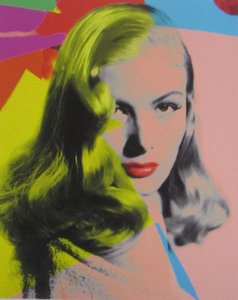 Veronica lake yellow
12
 Metamage Liz (Elilzabeth Taylor)
13
 John lennon state
14
 Scottsdale
15
 Marilyn monroe (3)
16
 Triple marilyn acrylic
17
 Passionate repeat
18
 At the party
19
 Portraitstudy
20
 Marilyn monroe
21
 Behind the shadow
22
 Frida
23
 Young beatles beautiful magic siebdruck
24
 Light my fire siebdruck
25
 Lipstick Marilyn Study II
이 오리지널 작품들에서 가장 자주 등장하는 네 가지 주제와 그 정수를 보여주는 대표작들.
이 페이지에 있는 작품을 가장 많이 소장하고 있는 1개의 미술관
| 소장 미술관 | 도시 | 제임스 길의 작품 | 이 목록의 작품들 |
|---|---|---|---|
 Boca Raton Museum of Art |
보카라톤 | 1 | Brush Stroke Painting 21 |
여기에 표시된 모든 제임스 길의 원작은 2001년도 작품으로, 유명도 순으로 나열되어 있습니다.
연도를 선택하여 원작을 확인해 보세요.
There is a profound sense of immediacy in this work. It feels as though the act of painting is still happening, caught in a moment of perpetual becoming. The composition avoids the comfort of a recognizable subject, choosing instead to explore the tension between order and chaos. The black shapes do not merely sit upon the surface; they seem to push against the white space, creating a visual dialogue that…
Marilyn monroe (2). 다음은 Secrets revealed와(과) Brush Stroke Painting 21 (2001)입니다.
Marilyn monroe (2), Secrets revealed, Brush Stroke Painting 21, Judy garland, Paul newman, Judy garland fuchsia, Picassos eye, Grace profile, John wayne 및 Paul hamburg. 위 순위는 각 작품의 제작 연도와 소장 박물관을 나타냅니다.
저희 카탈로그에는 제임스 길의 작품 25점이 있습니다.
대부분 Boca Raton Museum of Art (보카라톤)에 소장되어 있습니다. 위의 박물관 목록에서 전체 목록을 확인하실 수 있습니다.
이 페이지의 25점의 작품에 걸쳐 있는 Mountains (4), Portrait (3) 및 Judy garland (2)
이 페이지의 총 25점의 작품 중 2점의 Painting
이 페이지의 원작들을 기준으로 볼 때, Pop art
Born in 1934 in Truth or Consequences, New Mexico, though formative years were spent in the Texan landscapes of Tahoka and San Angelo, James Francis Gill emerged as a pivotal figure within the burgeoning Pop Art movement. His story is one of early artistic inclination nurtured by his mother, an interior decorator with an entrepreneurial spirit, alongside youthful dreams of a different kind – those of a rodeo cowboy. This blend of practicality and imagination would later inform his unique approach to artmaking. Even during his military service in the United States Marines (1953-1956), Gill’s creative drive found expression as a draftsman designing posters, honing technical skills that would prove invaluable. His formal education at San Angelo College and later the University of Texas at Austin, initially focused on architecture before shifting decisively towards art, laid the groundwork for his distinctive visual language. It was a foundation built not just on artistic principles but also on an understanding of structure and design.
The year 1962 marked a turning point. Gill’s relocation to Los Angeles, armed with a portfolio including the striking “Women in Cars,” led him directly to Felix Landau Gallery, initiating a relationship that would propel his career forward. However, it was the acquisition of his *Marilyn Triptych* by the Museum of Modern Art in November of the same year – a gift from John and Dominique de Menil – that catapulted Gill into international recognition. This work wasn’t merely a portrait; it was a complex commentary on celebrity culture, capturing the multifaceted persona of Marilyn Monroe with a boldness and emotional depth rarely seen in early Pop Art. The triptych's impact resonated deeply within the art world, solidifying his position alongside contemporaries like Warhol and Lichtenstein. Early recognition continued with exhibitions featuring “Laughing Women in Car and Close-Up” alongside works by masters such as Picasso and Odilon Redon. Yet, Gill’s artistic trajectory wouldn’t remain confined to glamorous portraits. By 1965, a shift began, influenced by the escalating turmoil of the Vietnam War and broader social unrest. His teaching position at the University of Idaho became a crucible for darker themes, manifesting in a series of anti-war paintings depicting civil and military leaders caught in moments of moral ambiguity – figures, as playwright William Inge described them, “caught in some nefarious act.” This culminated in *The Machines*, a powerful work that fused media coverage of the war with visceral depictions of combat, exposing the dehumanizing aspects of conflict. Gill distinguished himself through his unique blend of expressionistic techniques and the meticulous use of graphite pencil, imbuing his works with an emotional resonance often absent in the more detached aesthetic of other Pop artists.
Gill’s artistic voice continued to gain international traction. Participation in “São Paulo 9 - Environment United States” in 1967, alongside Warhol and Hopper, underscored his growing prominence on the global stage. A commission from Time Magazine to create a quadriptych portrait of Alexander Solzhenitsyn – charting the author's transformation from political prisoner to celebrated dissident – further demonstrated his ability to tackle complex socio-political themes with nuance and power. Despite this peak in recognition during the 1970s, Gill made a surprising decision: he retreated from the art scene for approximately three decades. This wasn’t an abandonment of creativity but rather a period of quiet reflection and exploration. Around 30 years later, he re-emerged with innovative techniques involving inkjet printing and gel mediums, creating vibrant and textured works that built upon his earlier explorations while embracing new possibilities. These weren't simply a return to form; they were a reinvention, demonstrating an artist unwilling to rest on past laurels.
James Gill’s rediscovery reaffirmed his importance as a significant American artist. His later work continued to grapple with themes of political imprisonment, social commentary, and the human condition, solidifying his legacy as an artist who consistently challenged conventions. He is recognized not just as a Pop Art pioneer but as an artist whose emotionally charged style set him apart from many of his contemporaries. Gill’s willingness to address controversial topics like the Vietnam War elevated his work beyond superficial critiques of consumer culture, adding layers of socio-political depth and intellectual rigor. The combination of expressionistic techniques with graphite pencil – and later, innovative printing methods – created a distinctive visual language that continues to resonate with audiences today. His art is a testament to the power of individual vision and the enduring relevance of social commentary. Gill’s influence extends beyond his own creations; he inspires artists to engage critically with the world around them, using their work as a platform for dialogue and change.


