Frederick Sommer: A Desert Visionary
Frederick Sommer (1905 – 1999) stands as a singular figure in American photography and
visual art, recognized for his hauntingly beautiful desert landscapes and his pioneering exploration of photographic techniques. Born in Cornell University where he met
Frances Elisabeth Watson—whom he married in 1928—Sommer’s life was marked by intellectual curiosity and artistic dedication, culminating in the establishment of the Center for Creative Photography at Arizona State University alongside
Ansel Adams,
Harry Callahan,
Wynn Bullock, and
Aaron Siskind. This collaborative endeavor cemented his legacy as a champion of experimental photography and fostered a vibrant community of artists committed to pushing creative boundaries.
- Early Life & Tuberculosis Diagnosis:
Sommer’s artistic journey began unexpectedly in 1931 when he was diagnosed with tuberculosis. Seeking solace and expression amidst illness, he turned to photography as a medium—a decision that profoundly shaped his artistic vision. This formative experience instilled within him a sensitivity to vulnerability and resilience, themes that would permeate much of his subsequent work.
- The Advent of Photography & Influences:
Photography’s transformative power captivated Sommer, leading him to acquire an 8×10 Century Universal Camera in 1938. Inspired by the monumental landscapes of Ansel Adams—particularly Yosemite Valley’s El Capitan and Half Dome—Sommer embarked on a quest to capture the grandeur and subtle complexities of the American desert. His artistic sensibilities were further enriched by collaborations with luminaries like Max Ernst, Aaron Siskind, Richard Nickel, and Minor White, who shared his fascination for exploring unconventional photographic approaches.
Desert Landscapes & Surreal Composition
Sommer’s photographs are characterized by an arresting stillness—a deliberate rejection of conventional compositional strategies. Rather than striving for dramatic vistas or theatrical lighting effects, he favored horizonless landscapes and jarred subjects—techniques that demanded meticulous observation and a profound understanding of
visual perception. As Robert C. Morgan eloquently described, Sommer's images “were sommer’s seemingly infinite desert landscapes, some of which he referred to as 'constellations.'" These compositions weren’t merely representations of the natural world; they functioned as meditations on solitude, contemplation, and the sublime—reflecting a deep engagement with existential themes.
- Innovative Techniques & Collage Exploration:
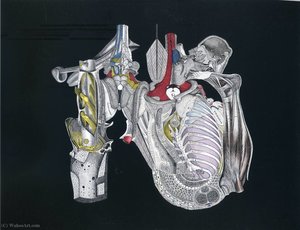
Sommer relentlessly pursued new methods of artistic expression, experimenting with cliché-verre negatives and pushing the boundaries of photographic printing. Notably, he transitioned to collage in his final years—creating intricate assemblages based on anatomical illustrations—a stylistic choice that underscored his enduring interest in exploring visual metaphors and conveying complex ideas.
- Institutional Recognition & Legacy:
His contribution to photography was formally acknowledged through the founding of the Center for Creative Photography, a testament to his unwavering belief in collaborative artistic endeavors. Sommer’s archive—containing extensive photographic negatives and correspondence—became an invaluable resource for scholars and artists alike, furthering the dissemination of experimental photographic practices.
Musical Score Drawings & Artistic Dialogue
Beyond his monumental desert landscapes, Sommer produced a series of drawings inspired by musical scores—a practice that reveals his artistic sensitivity to rhythm, texture, and visual harmony. These compositions weren’t intended as literal transcriptions of music; instead, they functioned as symbolic representations of emotional states and intellectual concepts—demonstrating Sommer's ability to translate abstract ideas into tangible forms.
- Notable Collaborations & Artistic Influences:
Sommer’s artistic journey intersected with the careers of influential figures such as Ansel Adams, Harry Callahan, Wynn Bullock, and Aaron Siskind, fostering a dynamic exchange of ideas and techniques. His work continues to inspire artists today—serving as a reminder that true innovation arises from embracing unconventional approaches and engaging in meaningful dialogue across disciplines.
Concluding Reflections: A Master’s Enduring Vision
Frederick Sommer passed away in 1999, leaving behind an extraordinary
artistic legacy. His photographs—particularly his desert landscapes—remain among the most evocative and intellectually stimulating images of the twentieth century—a testament to his unwavering commitment to artistic exploration and his profound understanding of the
human condition. Today’s reproductions of Sommer's work continue to captivate audiences worldwide—affirming his enduring influence on
American art history.