


1

웃는 기사 (The Laughing Cavalier)
17세기 네덜란드 황금시대의 거장 프란스 할스가 남긴 걸작, ‘웃음의 기사’는 단순한 초상화를 넘어선 깊은 감동과 이야기를 선사합니다. 런던 월리스 컬렉션에 소장된 이 작품은 오늘날까지도 수많은 예술가와 애호가들에게 영감을 불어넣으며, 바로크 시대 미술의 정수를 보여주는 대표적인 예시로 손꼽힙니다.

10월 2026 업데이트 · 인기 점수 기준 순위 (각 작품의 검색, 방문 및 주문 수) · 428점의 프란스 할스 작품 (당사 카탈로그 기준)
In short
Of all the originals 프란스 할스 left, the most famous is 웃는 기사 (The Laughing Cavalier) (1624), in the collection of the 월리스 컬렉션, 런던. Close behind it come gypsy girl and Malle Babbe (1633). Our catalog holds 428 works by 프란스 할스; the gallery has kept the 100 the world admires most, each shown with its date, its museum and its story.
17세기 네덜란드 황금시대의 거장 프란스 할스가 남긴 걸작, ‘웃음의 기사’는 단순한 초상화를 넘어선 깊은 감동과 이야기를 선사합니다. 런던 월리스 컬렉션에 소장된 이 작품은 오늘날까지도 수많은 예술가와 애호가들에게 영감을 불어넣으며, 바로크 시대 미술의 정수를 보여주는 대표적인 예시로 손꼽힙니다.

The gypsy girl is a work by the Dutch Golden Age painter Frans Hals. Executed between 1628 and 1630, this half-length portrait presents a young woman in a manner characteristic of the tronie genre. Rather than a formal commissioned portrait, the work functions as a study of facial expression and unusual costume.

In the vast tapestry of the Dutch Golden Age, few portraits capture the raw, unbridled spirit of humanity quite like Frans Hals’s Malle Babbe. This masterpiece serves as more than just a likeness; it is a window into the vibrant, often gritty, and deeply expressive soul of seventeenth-century Haarlem. The subject, famously known as "Malle Babbe" (Mad Babbe), is presented not with the stiff, aristocratic poise typical of formal portraiture,…

In the grand tapestry of the Dutch Golden Age, few threads shimmer with as much spontaneous energy as Frans Hals’s 1633 masterpiece, The Meagre Company. To gaze upon this work is to step directly into a bustling seventeenth-century Haarlem, where the air feels thick with the quiet confidence of the merchant elite. Unlike the static, posed portraits that often define the era, this painting captures an exquisite instantaneity—a fleeting breath…

Introduction to the Painting Frans Hals's Marriage Portrait of Isaac Massa and Beatrix van der Laen is a remarkable painting that showcases the artist's mastery of portraiture. Painted around 1622, this oil on canvas work measures 140 x 167 cm and is currently housed in the Rijksmuseum in Amsterdam. Background and Historical Significance The painting depicts Isaac Massa, a wealthy Dutch merchant, and his bride Beatrix van der Laen on…

To stand before Frans Hals I’s "Portrait of a Woman" is to encounter a moment suspended in time, a direct confrontation with a spirit that has endured since 1650. In an era when Antwerp and Haarlem pulsed with the nervous energy of religious and political transformation, this masterpiece emerged not merely as a record of a face, but as a profound exploration of human dignity. The subject, seated in a…

The scene depicts six men seated around a table, dressed in the formal attire of the period. Each figure possesses a distinct personality, conveyed through Hals' masterful use of light and shadow. Notice the subtle variations in their expressions – some are engaged in animated conversation, others appear contemplative, while still others maintain a dignified reserve. This isn’t merely a group portrait; it’s a tableau vivant, a fleeting moment frozen…

Introduction to the Artist and Painting Frans Hals, a prominent Dutch Golden Age painter, is renowned for his innovative techniques and evocative portraits. Among his notable works is 'Paulus Verschuur', an oil on canvas masterpiece measuring 119 x 97 cm. This painting is housed in the esteemed Metropolitan Museum of Art in New York, United States. Historical Context and Significance Created during the 17th century, 'Paulus Verschuur' embodies the dynamic…

Frans Hals’s 1645 portrait of Willem Coenraetsz Coymans isn't merely a likeness; it’s a vibrant snapshot of a man, imbued with confidence and the subtle nuances of his social standing. Painted during the height of the Dutch Golden Age, this work transcends the conventions of formal portraiture, offering an intimate glimpse into the life of a Haarlem citizen. Hals masterfully captures not just physical appearance but also the very essence…

In the heart of the Dutch Golden Age, amidst the burgeoning mercantile prosperity of Haarlem, Frans Hals I captured more than just faces; he captured the very essence of human vitality. His masterpiece, Portrait of a Man (17), completed around 1622, serves as a profound window into an era defined by both immense wealth and deep psychological introspection. The subject, often identified as the affluent merchant Isaac Massa, does not…
 The Merry Drinker1628
12
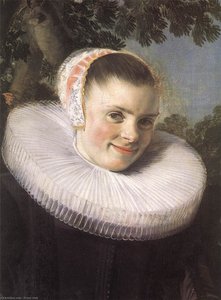 Married Couple in a Garden (detail)1622 · 국립 미술관
13
 Portrait of a Man1654 · 부다페스트 미술관
14
 Laughing Child1620 · Mauritshuis
15
 Portrait of a Man Holding a Skull1611 · Barber Institute of Fine Arts
16
 Malle Babbe1635 · 메트로폴리탄 미술관
17
 Portrait of a Man (29)1650 · 에르미타주 박물관
18
 Married Couple in a Garden (detail)1622 · 국립 미술관
19
 Family Group in a Landscape1648 · 국립 미술관
20
 Portrait of a Man (15)1640 · 월라프 리하르츠 박물관
21
 The Drinker1626 · 마르모탄 모네 미술관
22
 The Meagre Company (detail)1633 · 국립 미술관
23
 Boy with a Skull1628
24
 Family Group in a Landscape (detail)1648 · 테시엔-본헤르메스 미술관
25
 Jasper Schade1645 · 프라하 국립 미술관
26
 Portrait of a Man1654 · 부다페스트 미술관
27
 Portrait of Sara Andriesdr. Hessix1626 · 캘러스투 셀베키안 박물관
28
 Portrait of a Woman1648 · 루브르 박물관
29
 Young Man with a Skull (Vanitas)1626 · 국립 미술관
30
 René Descartes1649 · Statens Museum For Kunst
31
 Regents of the Old Men's Almshouse (detail)1664 · Frans Halsmuseum
32
 Shrovetide Revellers1615 · 메트로폴리탄 미술관
33
 Banquet of the Officers of the St Hadrian Civic Guard Company1627 · Frans Halsmuseum
34
 Cornelia Claesdr Vooght1631 · Frans Halsmuseum
35
 Portrait of a man1640 · The Kremer Collection
36
 Willem Croes (detail)1662 · 알테 피나코텍
37
 Buffoon Playing a Lute1623 · 루브르 박물관
38
 Portrait of a Man1660 · 프릭 컬렉션
39
 The Meagre Company (detail)1633 · 국립 미술관
40
 Regentesses of the Old Men's Almshouse (detail)1664 · 프란스 할스 미술관
41
 Portrait of a Young Man Holding a Glove1650 · 에르미타주 박물관
42
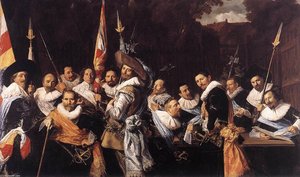 성 아드리아누스 시빅 가디언 장교 및 병장들1633 · Frans Halsmuseum
43
 Portrait of a Woman (11)1640 · Museum voor Schone Kunsten
44
 Catharina Hooft with her Nurse1619 · 슈타틸리체 무제엔
45
 Michiel de Wael1628 · Taft Museum of Art
46
 Portrait of a Man1660 · National Gallery of Denmark
47
 Portrait of a Seated Woman1660 · Christ Church
48
 Portrait of a Man (12)1634 · 부다페스트 미술관
49
 Portrait of Frans Hals1648 · 인디애나폴리스 미술관
50
 Portrait of a Man1660 · 보스턴 미술관
51
 Paulus Verschuur1643 · 메트로폴리탄 미술관
52
 Portrait of a Bearded Man with a Ruff1625 · 메트로폴리탄 미술관
53
 The Merry Drinker1628 · 국립 미술관
54
 The Meagre Company (detail)1633 · 국립 미술관
55
 Frans Hals1650 · 메트로폴리탄 미술관
56
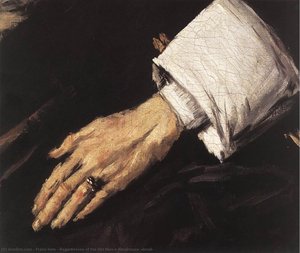 Regentesses of the Old Men's Almshouse (detail)1664 · Frans Halsmuseum
57
 Peeckelhaering (detail)1628 · 카셀 주립 미술관
58
 The Jolly Drinker
59
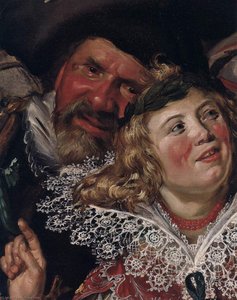 Shrovetide Revellers (detail)1615 · 메트로폴리탄 미술관
60
 Peeckelhaering1628 · 카셀 주립 미술관
61
 Malle Babbe (detail)1633 · 슈타틸리체 무제엔
62
 Malle Babbe1633 · 슈타틸리체 무제엔
63
 Portrait of a Man (10)Statens Museum For Kunst
64
 Portrait of a Man (13)1650 · 메트로폴리탄 미술관
65
 The Fisher Boy1630 · 콘칭크릴 뮤지엄 브로네 쿠흐텐
66
 Portrait of an Elderly Man1627 · 프릭 컬렉션
67
 Singing Boy with a Flute1623 · 슈타틸리체 무제엔
68
 The merry drinker Sun국립 미술관
69
 Mulatto (so-called)1628 · Museum der bildenden Künste
70
 Portrait of a Man6Collection Six
71
 A Young Man in a Large Hat1628 · 국립 미술관
72
 the laughing cavalier1624 · 월리스 컬렉션
73
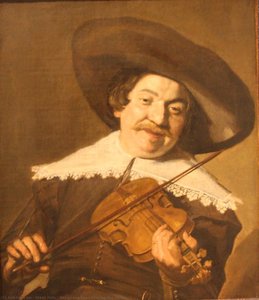 Daniel van Aken Playing the Violin1640 · 국립 미술관
74
 Portrait of Rene Descartes1649 · 루브르 박물관
75
 Portrait of Conradus Viëtor1644 · The Leiden Collection
76
 Portrait of a Man1630 · 로열 컬렉션
77
 Portrait of Hendrik Swalmius1639 · 디트로이트 미술관
78
 Portrait of a Woman1639 · 국립 미술관
79
 Portrait of an artist1644 · 시카고 미술관
80
 Jonker Ramp and his Sweetheart1623 · 메트로폴리탄 미술관
81
 Boy with a Lute1625 · 메트로폴리탄 미술관
82
 Pieter Cornelisz van der Morsch1616 · 카네기 미술관
83
 Nicolaes Woutersz van der Meer1631 · Frans Halsmuseum
84
 Portrait of a man called Johannes Saeckma1635 · Museum Boijmans Van Beuningen
85
 Portrait of a Woman1649 · 빈 미술사 박물관
86
 Feyntje van Steenkiste1635 · 국립 미술관
87
 Portrait of a man1663 · Kunsthaus Zürich
88
 F. Portrait of a man, before1660
89
 Portrait of a Boy facing Left1620 · 필라델피아 미술관
90
 Adriaen van Ostade1648 · 국립 미술관
91
 Portrait of Tieleman Roosterman1634 · 국립미술관
92
 Portrait of a Boy1620 · 필라델피아 미술관
93
 Portrait of a young woman1660 · 테시엔-본헤르메스 미술관
94
 Banquet in a Park1600 · Bode Museum
95
 Herrenporträt1606
96
 Head of a Boy Facing Left1620 · Museum Mayer van den Bergh
97
 Portrait of a General1620 · National Museum of Art, Architecture and Design
98
 Fragment of a young boy1621 · 국립미술관
99
 Portrait of a lady with a landscape background1618
100
 Portrait of a Woman1638 · 슈테델 미술관
The four subjects that come back most often in these originals, each with its finest example.
이 페이지에 있는 작품을 가장 많이 소장하고 있는 8개의 미술관
| 소장 미술관 | 도시 | 프란스 할스의 작품 | 이 목록의 작품들 |
|---|---|---|---|
 메트로폴리탄 미술관 |
뉴욕 | 21 | Portrait of a Woman, Paulus Verschuur, Malle Babbe |
 국립 미술관 |
암스테르담 | 22 | The Meagre Company (detail), Marriage Portrait of Isaac Massa and Beatrix van der Laen, Married Couple in a Garden (detail) |
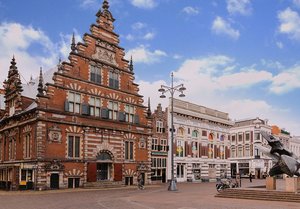 Frans Halsmuseum |
하렌 | 12 | Regents of the Old Men's Almshouse (detail), Banquet of the Officers of the St Hadrian Civic Guard Company, Cornelia Claesdr Vooght |
 슈타틸리체 무제엔 |
베를린 | 7 | Catharina Hooft with her Nurse, Malle Babbe (detail), Malle Babbe |
 국립 미술관 |
워싱턴 | 10 | Willem Coenraetsz Coymans, A Young Man in a Large Hat, Adriaen van Ostade |
 국립 미술관 |
런던 | 8 | Family Group in a Landscape, Young Man with a Skull (Vanitas), Portrait of a Woman |
 부다페스트 미술관 |
부다페스트 | 5 | Portrait of a Man, Portrait of a Man, Portrait of a Man (12) |
 루브르 박물관 |
파리 | 4 | Portrait of a Woman, Buffoon Playing a Lute, Portrait of Rene Descartes |
Pick a decade to see the original that defines it.


In the quiet, contemplative depths of the Dutch Golden Age, few images command the viewer's attention with such visceral intensity as Frans Hals I’s “Portrait of a Man Holding a Skull.” Painted in 1611, this masterpiece serves as much more than a mere likeness of a gentleman; it is a profound, psychological encounter that bridges the gap between the living and the eternal. The subject, an impeccably dressed man adorned…
17세기 네덜란드 황금시대의 거장 프란스 할스가 남긴 걸작, ‘웃음의 기사’는 단순한 초상화를 넘어선 깊은 감동과 이야기를 선사합니다. 런던 월리스 컬렉션에 소장된 이 작품은 오늘날까지도 수많은 예술가와 애호가들에게 영감을 불어넣으며, 바로크 시대 미술의 정수를 보여주는 대표적인 예시로 손꼽힙니다.
In the vast tapestry of the Dutch Golden Age, few portraits capture the raw, unbridled spirit of humanity quite like Frans Hals’s Malle Babbe. This masterpiece serves as more than just a likeness; it is a window into the vibrant, often gritty, and deeply expressive soul of seventeenth-century Haarlem. The subject, famously known as "Malle Babbe" (Mad Babbe), is presented not with the stiff, aristocratic poise typical of formal portraiture,…
The scene depicts six men seated around a table, dressed in the formal attire of the period. Each figure possesses a distinct personality, conveyed through Hals' masterful use of light and shadow. Notice the subtle variations in their expressions – some are engaged in animated conversation, others appear contemplative, while still others maintain a dignified reserve. This isn’t merely a group portrait; it’s a tableau vivant, a fleeting moment frozen…
To stand before Frans Hals I’s "Portrait of a Woman" is to encounter a moment suspended in time, a direct confrontation with a spirit that has endured since 1650. In an era when Antwerp and Haarlem pulsed with the nervous energy of religious and political transformation, this masterpiece emerged not merely as a record of a face, but as a profound exploration of human dignity. The subject, seated in a…

Frans Hals’ “Regents of the Old Men’s Almshouse (detail)” isn’t merely a portrait; it’s a carefully constructed tableau of civic responsibility, quiet contemplation, and the subtle drama inherent in human interaction. Painted in 1664, this intimate study – a fragment pulled from a larger composition – offers an unparalleled window into the social fabric of Haarlem during the Dutch Golden Age. Hals, renowned for his ability to capture fleeting moments…
웃는 기사 (The Laughing Cavalier) (1624), 월리스 컬렉션, 런던. gypsy girl and Malle Babbe (1633) come next.
44 years old: 웃는 기사 (The Laughing Cavalier) dates from 1624, and 프란스 할스 was born in 1580.
웃는 기사 (The Laughing Cavalier), gypsy girl, Malle Babbe, The Meagre Company (detail), Marriage Portrait of Isaac Massa and Beatrix van der Laen, Portrait of a Woman, Regents of the St Elizabeth Hospital of Haarlem, Paulus Verschuur, Willem Coenraetsz Coymans 및 Portrait of a Man (17). The ranking above gives each one's year and museum.
Our catalog holds 428 works by 프란스 할스, dated from 1600 to 1664.
Mostly in 메트로폴리탄 미술관 (뉴욕), 국립 미술관 (암스테르담) 및 Frans Halsmuseum (하렌). The museum table above lists them all.
In 1620s: 30 of the 100 works on this page were made then, 웃는 기사 (The Laughing Cavalier) among them.
On this page, the earliest is Banquet in a Park (1600) and the latest Regents of the Old Men's Almshouse (detail) (1664).
Portraiture (43), Portrait (27) 및 17th century (21), across the 100 works on this page.
Oil On Canvas, for 69 of the 100 works on this page.
Dutch golden age 및 바로크 회화, judging by the originals on this page.
Portrait of a Woman, Paulus Verschuur 및 Malle Babbe: the 메트로폴리탄 미술관, 뉴욕 holds 11 of the works on this page.
Yes, as a reproduction: the original stays in its museum, but any painting on this page can be painted by hand for you, made to order one at a time, from the painting's own page.
16세기 말, 유럽은 격변의 시기를 겪고 있었다. 종교 개혁의 소용돌이 속에서 예술가들은 새로운 시대의 정신을 담아내기 위해 노력했다. 벨기에 안트베르펜에서 태어난 프란스 할스 1세(Frans Hals I)는 이러한 변화의 물결 속에서 등장한 네덜란드 황금시대의 대표적인 화가 중 한 명이다. 그의 삶은 다소 베일에 가려져 있지만, 혁신적인 초상화와 풍경화를 통해 당대 사회의 역동성과 인간 내면의 깊이를 탐구하며 미술사에 뚜렷한 발자취를 남겼다.
할스의 어린 시절에 대한 자세한 기록은 희박하다. 안트베르펜에서 초기 예술 교육을 받았다고 추정되지만, 종교적 박해와 정치적 불안으로 인해 가족과 함께 네덜란드의 하를렘으로 이주하게 된다. 1610년, 그는 하를렘의 성 루카 길드에 가입하며 본격적인 화가로서의 활동을 시작한다. 당시 하를렘은 활기찬 상업 도시였으며, 할스는 이곳에서 다양한 계층의 사람들을 만나 초상화를 그리기 시작했다.
할스의 그림은 섬세한 묘사보다는 자유롭고 즉흥적인 표현이 특징이다. 그는 동시대 화가들과 달리 느슨하고 역동적인 붓터치를 사용하여 인물의 개성과 생동감을 포착했다. 그의 초상화는 단순한 외모의 재현을 넘어, 모델의 심리 상태와 삶의 에너지를 담아내는 듯하다. 특히 빛과 그림자의 대비를 활용하여 입체감과 깊이를 더하고, 인물의 표정과 제스처를 통해 강렬한 인상을 남겼다.
할스는 수많은 초상화를 남겼지만, 그중에서도 웃는 기사(1624)는 그의 대표작으로 꼽힌다. 이 작품은 인물의 활기찬 표정과 화려한 의상을 통해 당대 귀족 사회의 풍요로운 분위기를 보여준다. 또한 마르 바베(c. 1633-1635)는 노인의 주름과 표정을 섬세하게 표현하여 인간의 삶과 고뇌를 담아낸 작품으로 평가받는다. 하를렘 노인 자선단 초상화(1664)는 단체 초상화에서도 그의 뛰어난 기량을 보여주는 대표적인 예시이다.
뿐만 아니라, 그는 일상생활을 묘사한 풍경화도 많이 제작했는데, 이를 통해 네덜란드 사회의 다양한 모습을 생생하게 담아냈다. 이러한 작품들은 당시 사람들의 삶과 문화를 이해하는 데 중요한 자료가 되고 있다.
할스의 직접적인 영향력을 파악하기는 어렵지만, 그는 독창적인 화풍을 통해 후대 예술가들에게 큰 영감을 주었다. 특히 아드리안 브루워와 요하네스 베르메르 등 네덜란드 황금시대의 다른 화가들에게 영향을 미쳤다고 알려져 있다. 그의 인물 표현 기법은 이후 초상화 미술 발전에 중요한 토대가 되었으며, 빛과 그림자를 활용한 표현 방식은 인상주의 화가들에게도 영감을 주었다.
프란스 할스 1세는 네덜란드 황금시대 회화 발전에 중요한 기여를 했다. 그의 작품은 당시 네덜란드의 번영과 개인주의 정신을 반영하며, 엄격한 형식에서 벗어나 자연스럽고 생동감 넘치는 표현 방식을 추구했다. 오늘날 그의 그림은 전 세계 주요 미술관에 소장되어 있으며, 특히 하를렘의 프란스 할스 박물관에는 그의 작품이 가장 많이 전시되어 있다. 그의 예술적 업적은 시대를 초월하여 많은 사람들에게 감동과 영감을 주고 있다.


