Robert Smithson의 초상화

Robert Smithson 회화: 갤러리의 시선으로 선별한 가장 유명한 작품 4선

11월 2026 업데이트 · 인기 점수 기준 순위 (각 작품의 검색, 방문 및 주문 수) · 6점의 Robert Smithson 작품 (당사 카탈로그 기준)

요약하자면

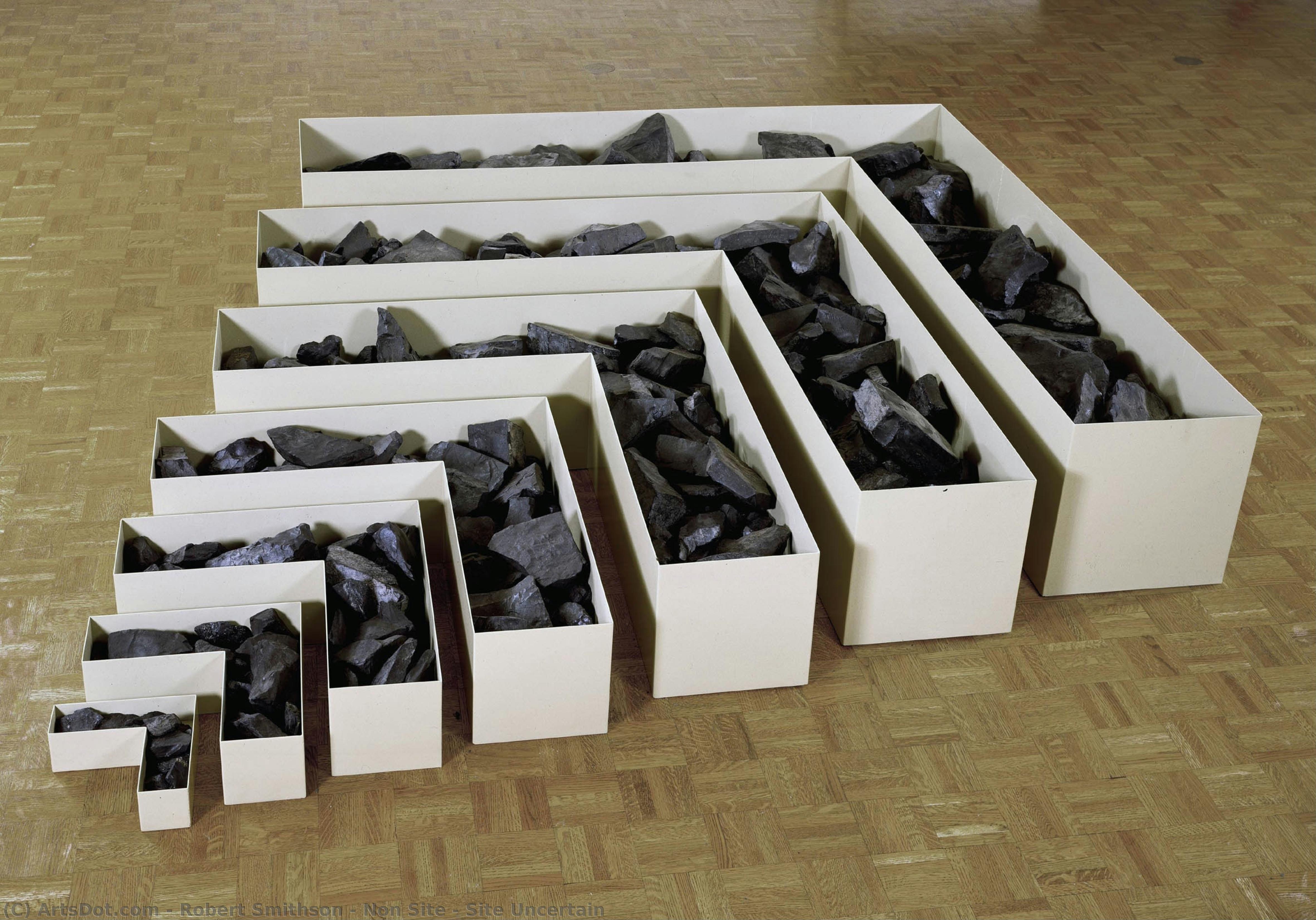
갤러리가 선정한 Robert Smithson의 가장 유명한 작품은 Non Site - Site Uncertain이며, 원작은 디트로이트의 디트로이트 미술관에 전시되어 있습니다. Three-Sided Vortex (1966)와 Ruin of Map of Hipparchus (100 B.C.) in Oswego Lake Quadrangle (1954 55) (1967)가 더해져 누구나 한눈에 알아볼 수 있는 완벽한 트리오를 완성합니다. Robert Smithson의 작품 6점 중, 갤러리는 가장 유명한 4점을 아래와 같이 소개합니다. 각 작품은 제작 연도, 소장 미술관 및 작품의 특징을 포함한 독창적인 원작입니다.

1938 – 1973, Passaic 최다 소장처: 디트로이트 미술관

갤러리 베스트 10 Robert Smithson 작품

Robert Smithson의 원작을 소장하고 있는 미술관

이 페이지에 있는 작품을 가장 많이 소장하고 있는 2개의 미술관

소장 미술관 도시 Robert Smithson의 작품 이 목록의 작품들
디트로이트 미술관, 디트로이트디트로이트 미술관 디트로이트 1 Non Site - Site Uncertain
Chrysler Museum of Art, 노퍽Chrysler Museum of Art 노퍽 1 Three-Sided Vortex

Robert Smithson, 매년 선보이는 대표작

5년 동안, 1966년부터 1970년까지, Robert Smithson의 연대기적 경력을 이 페이지에서 확인해 보세요. 가장 유명한 원작들을 통해 연도별로 정리된 짧은 여정을 만나보실 수 있습니다.

연도별 작품 수

연도를 선택하여 원작을 확인해 보세요.

Robert Smithson의 작품: 갤러리의 해답

Robert Smithson의 작품 중 가장 유명한 작품은 무엇인가요?정답 확인하기

Non Site - Site Uncertain, 디트로이트 미술관, 디트로이트. 다음은 Three-Sided Vortex (1966)와 Ruin of Map of Hipparchus (100 B.C.) in Oswego Lake Quadrangle (1954 55) (1967)입니다.

Robert Smithson의 작품은 몇 점인가요?정답 확인하기

저희 카탈로그에는 1966년부터 1970년 사이의 Robert Smithson 작가의 작품 6점이 수록되어 있습니다.

Robert Smithson의 가장 유명한 원작들은 어디에 전시되어 있을까요?정답 확인하기

대부분 디트로이트 미술관 (디트로이트) 및 Chrysler Museum of Art (노퍽)에 소장되어 있습니다. 위의 박물관 목록에서 전체 목록을 확인하실 수 있습니다.

Robert Smithson의 초기 및 후기 대표작은 무엇인가요?정답 확인하기

이 페이지에서 가장 오래된 작품은 Three-Sided Vortex (1966)이며, 가장 최근 작품은 Torn Photograph from the 2nd Stop (Rubble) (2nd Mountain of Six Stops on a Section) from Artists Photographs (1970)입니다.

Robert Smithson: 작가

Early Life and Artistic Beginnings

  • Born: January 2, 1938, in Passaic, New Jersey
  • Early years spent in Rutherford and Clifton, New Jersey
  • Studied painting and drawing at the Art Students League of New York (1955-1956)
  • Early artwork explored collage influenced by homoerotic themes, science fiction, and pop art. Primarily identified as a painter during this period.
  • Influenced by William Carlos Williams, who was his pediatrician.

The Shift to Minimalism and Conceptual Art

  • After a three-year break from the art world, emerged in 1964 as a proponent of the minimalist movement.
  • Abandoned figurative work, focusing on glass sheet and neon lighting tubes exploring visual refraction and mirroring.
  • Developed interest in entropy (the second law of thermodynamics) – decay, renewal, chaos, order, non-sites, and earthworks. Saw entropy not as a disadvantage but as a form of transformation.
  • Associated with minimalist artists like Nancy Holt (his wife), Robert Morris, and Sol LeWitt.
  • Became a critic for *Arts Magazine* and *Artforum*, gaining recognition as a writer before his art.

Land Art and Earthworks: Spiral Jetty and Beyond

  • Fascination with industrial areas in New Jersey led to the development of "Non-Sites" – sculptures incorporating earth and rocks from specific locations, often combined with mirrors or glass.
  • Spiral Jetty (1970): His most famous work, a massive coil of basalt rock extending into the Great Salt Lake in Utah. A key example of land art, exploring themes of entropy, time, and geological processes.
  • Explored temporary sculptures using mirrors in the Yucatan Peninsula, documented in "Incidents of Mirror-Travel in the Yucatan."
  • Recovered 18th- and 19th-century conceptions of landscape architecture, influencing his later earthwork explorations.

Theoretical Writings and Landscape Perspectives

  • Wrote extensively on art theory, including "A Heap of Language," exploring how writing could become an artwork.
  • Examined Frederick Law Olmsted's design for Central Park in New York City, recovering issues of site specificity, human intervention, and the picturesque landscape.
  • His writings demonstrate a deep engagement with history, philosophy, geology, and cultural theory.

Legacy and Historical Significance

  • Died: July 20, 1973, in Tucson, Arizona (due to a heart attack while hiking).
  • Considered a pivotal figure in Land Art and Earthworks movements.
  • His work expanded the definition of art, blurring boundaries between sculpture, landscape, and natural processes.
  • Influenced generations of artists with his conceptual approach, exploration of entropy, and engagement with geological time scales.
  • The Holt/Smithson Foundation continues to preserve and promote his legacy.
