


1


11월 2026 업데이트 · 인기 점수 기준 순위 (각 작품의 검색, 방문 및 주문 수) · 35점의 Pieter Wouwerman 작품 (당사 카탈로그 기준)
요약하자면
Pieter Wouwerman가 남긴 모든 원작 중 가장 유명한 작품은 Luxembourg의 Villa Vauban에 소장된 Forest with staffage figures (1642)입니다. 그 뒤를 이어 Dice-Playing Soldiers in Front of an Inn (1652)와 Officer on Horseback (1660)가 뒤를 잇습니다. Pieter Wouwerman의 작품 35점을 보유하고 있습니다. 갤러리는 세계가 가장 찬사하는 31점을 엄선하여 각 작품의 제작 연도, 소장 미술관 및 작품에 담긴 이야기를 함께 소개합니다.


 View of Paris seen from the Place Dauphine1660 · Statens Museum For Kunst
12
 Frederik Hendrik at the surrender of Maastricht, 22 August 16321650 · 국립 미술관
13
 Hunting party on horseback with servants and dogs1661 · Staatliche Kunsthalle Karlsruhe
14
 Beach Scene with Fisher Woman1668 · Gemäldegalerie Alte Meister im Schloss Wilhelmshöhe
15
 View of Paris with the tower and porch of Nesle, in the backgroud the Pont Neuf and la Place Dauphine1664
16
 Landscape with a dapple grey horse1667 · Museum Boijmans Van Beuningen
17
 The storming of Coevorden, December 30, 16721672 · 국립 미술관
18
 Horsemarket in Delft1670 · Het Prinsenhof
19
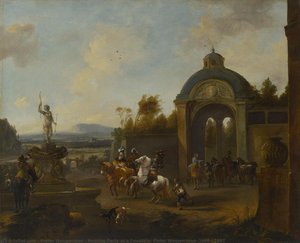 Hunting Party at a Fountain, Pieter Wouwerman, 1660 - 16821682 · 국립 미술관
20
 Cavalry Skirmish with Foot Soldiers안트베르펜 왕립 미술관
21
 Departure for hunting바르샤바 국립 박물관
22
 The watering place
23
 Landscape with a genre scene바르샤바 국립 박물관
24
 Setting Off On A Falcon Hunt
25
 The stableFitzwilliam Museum
26
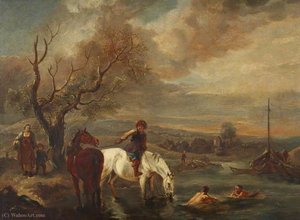 Country Scene with a Man on Horseback and Bathers
27
 Landscape with resting travellers
28
 Cavalry Men by a Suttler's Tent
29
 Dune landscape with figures클리블랜드 미술관
30
 Encampment beside an Ale HouseFitzwilliam Museum
31
 사슴 사냥에르미타주 박물관
이 오리지널 작품들에서 가장 자주 등장하는 네 가지 주제와 그 정수를 보여주는 대표작들.
이 페이지에 있는 작품을 가장 많이 소장하고 있는 8개의 미술관
| 소장 미술관 | 도시 | Pieter Wouwerman의 작품 | 이 목록의 작품들 |
|---|---|---|---|
 바르샤바 국립 박물관 |
바르샤바 | 3 | Groom and horses, Departure for hunting, Landscape with a genre scene |
 국립 미술관 |
암스테르담 | 3 | Frederik Hendrik at the surrender of Maastricht, 22 August 1632, The storming of Coevorden, December 30, 1672, Hunting Party at a Fountain, Pieter Wouwerman, 1660 - 1682 |
 Staatliche Kunsthalle Karlsruhe |
카를스루에 | 2 | The Collision, Hunting party on horseback with servants and dogs |
 에르미타주 박물관 |
상트페테르부르크 | 2 | Horses in the Pasture, 사슴 사냥 |
 Gemäldegalerie Alte Meister im Schloss Wilhelmshöhe |
카셀 | 2 | Landscape with horsemen at a blacksmith, Beach Scene with Fisher Woman |
 Fitzwilliam Museum |
2 | The stable, Encampment beside an Ale House | |
 Villa Vauban |
Luxembourg | 1 | Forest with staffage figures |
 바이에른 주립 회화 컬렉션 |
뮌헨 | 1 | Dice-Playing Soldiers in Front of an Inn |
그 시대를 정의하는 오리지널 작품을 만나보려면 연대를 선택하세요.

Forest with staffage figures (1642), Villa Vauban, Luxembourg. 다음은 Dice-Playing Soldiers in Front of an Inn (1652)와 Officer on Horseback (1660)입니다.
19세: Forest with staffage figures은(는) 1642년 작품이며, Pieter Wouwerman은(는) 1623년에 태어났습니다.
Forest with staffage figures, Dice-Playing Soldiers in Front of an Inn, Officer on Horseback, The Combat, The Collision, Groom and horses, Army Camp, Horses in the Pasture, Landscape with horsemen at a blacksmith 및 Sandhills with Figure. 위 순위는 각 작품의 제작 연도와 소장 박물관을 나타냅니다.
저희 카탈로그에는 1642년부터 1682년 사이의 Pieter Wouwerman 작가의 작품 35점이 수록되어 있습니다.
대부분 바르샤바 국립 박물관 (바르샤바), 국립 미술관 (암스테르담) 및 Staatliche Kunsthalle Karlsruhe (카를스루에)에 소장되어 있습니다. 위의 박물관 목록에서 전체 목록을 확인하실 수 있습니다.
1660s 동안: 이 페이지의 총 31점의 작품 중 7점이 해당 시기에 제작되었으며, 그중 Officer on Horseback점입니다.
이 페이지에서 가장 오래된 작품은 Forest with staffage figures (1642)이며, 가장 최근 작품은 Hunting Party at a Fountain, Pieter Wouwerman, 1660 - 1682 (1682)입니다.
Groom and horses, Departure for hunting 및 Landscape with a genre scene: 바르샤바 국립 박물관, 바르샤바은(는) 이 페이지에 있는 작품 중 3점을 소장하고 있습니다.