필립 퍼얼스타인의 초상화

필립 퍼얼스타인 회화: 갤러리의 시선으로 선별한 가장 유명한 작품 34선

11월 2026 업데이트 · 인기 점수 기준 순위 (각 작품의 검색, 방문 및 주문 수) · 36점의 필립 퍼얼스타인 작품 (당사 카탈로그 기준)

요약하자면

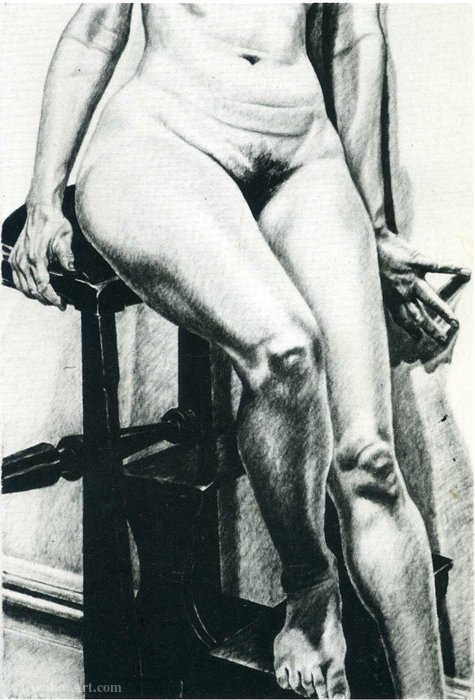
갤러리가 선정한 필립 퍼얼스타인의 가장 유명한 작품은 Seated Model (1966)이며, 원작은 뉴욕의 메트로폴리탄 미술관에 전시되어 있습니다. Seated Model (1966)와 Portrait of Beth Levine (Lady with Red Bow) (1985)가 더해져 누구나 한눈에 알아볼 수 있는 완벽한 트리오를 완성합니다. 필립 퍼얼스타인의 작품 36점 중, 갤러리는 가장 유명한 34점을 아래와 같이 소개합니다. 각 작품은 제작 연도, 소장 미술관 및 작품의 특징을 포함한 독창적인 원작입니다.

1924 – 2022, 피츠버그 Contemporary realism 최다 소장처: 메트로폴리탄 미술관

갤러리 베스트 10 필립 퍼얼스타인 작품

11위부터 34위까지의 필립 퍼얼스타인 작품

필립 퍼얼스타인의 시선을 사로잡은 주제들

이 오리지널 작품들에서 가장 자주 등장하는 네 가지 주제와 그 정수를 보여주는 대표작들.

필립 퍼얼스타인의 원작을 소장하고 있는 미술관

이 페이지에 있는 작품을 가장 많이 소장하고 있는 3개의 미술관

소장 미술관 도시 필립 퍼얼스타인의 작품 이 목록의 작품들
메트로폴리탄 미술관, 뉴욕메트로폴리탄 미술관 뉴욕 2 Seated Model, Female Model on Eames Stool
존 앤 메이블 링링 미술관, 사라소타존 앤 메이블 링링 미술관 사라소타 1 Female Model on Ladder
톨레도 미술관, 톨레도톨레도 미술관 톨레도 1 Two Female Models in Bamboo Chairs with Mirror

필립 퍼얼스타인, 10년마다 탄생한 대표작 한 점

연대별 작품 수

그 시대를 정의하는 오리지널 작품을 만나보려면 연대를 선택하세요.

필립 퍼얼스타인의 작품: 갤러리의 해답

필립 퍼얼스타인의 작품 중 가장 유명한 작품은 무엇인가요?정답 확인하기

Seated Model (1966), 메트로폴리탄 미술관, 뉴욕. 다음은 Seated Model (1966)와 Portrait of Beth Levine (Lady with Red Bow) (1985)입니다.

필립 퍼얼스타인이(가) Seated Model을(를) 완성했을 당시의 나이는 몇 살이었나요?정답 확인하기

42세: Seated Model은(는) 1966년 작품이며, 필립 퍼얼스타인은(는) 1924년에 태어났습니다.

필립 퍼얼스타인의 대표작 10점은 무엇인가요?정답 확인하기

Seated Model, Seated Model, Portrait of Beth Levine (Lady with Red Bow), Untitled (685), Untitled (336), Untitled (995), Untitled (218), Untitled (309), Untitled (642) 및 Superman. 위 순위는 각 작품의 제작 연도와 소장 박물관을 나타냅니다.

필립 퍼얼스타인의 작품은 몇 점인가요?정답 확인하기

저희 카탈로그에는 1952년부터 2002년 사이의 필립 퍼얼스타인 작가의 작품 36점이 수록되어 있습니다.

필립 퍼얼스타인의 가장 유명한 원작들은 어디에 전시되어 있을까요?정답 확인하기

대부분 메트로폴리탄 미술관 (뉴욕), 존 앤 메이블 링링 미술관 (사라소타) 및 톨레도 미술관 (톨레도)에 소장되어 있습니다. 위의 박물관 목록에서 전체 목록을 확인하실 수 있습니다.

필립 퍼얼스타인의 가장 유명한 작품들은 언제 제작되었나요?정답 확인하기

1970s 동안: 이 페이지의 총 34점의 작품 중 6점이 해당 시기에 제작되었으며, 그중 Female Model on Ladder점입니다.

필립 퍼얼스타인의 초기 및 후기 대표작은 무엇인가요?정답 확인하기

이 페이지에서 가장 오래된 작품은 Superman (1952)이며, 가장 최근 작품은 Sir Brian Edward Urquhart (2002)입니다.

필립 퍼얼스타인 작가가 가장 자주 다룬 주제는 무엇인가요?정답 확인하기

이 페이지의 34점의 작품에 걸쳐 있는 Portraiture (2), Mirror image (2) 및 Domestic setting (2)

필립 퍼얼스타인은(는) 어떤 미술 사조에 속해 있나요?정답 확인하기

이 페이지의 원작들을 기준으로 볼 때, Contemporary realism

메트로폴리탄 미술관이(가) 소장하고 있는 필립 퍼얼스타인의 원작은 무엇인가요?정답 확인하기

Seated Model 및 Female Model on Eames Stool: 메트로폴리탄 미술관, 뉴욕은(는) 이 페이지에 있는 작품 중 2점을 소장하고 있습니다.

필립 퍼얼스타인: 작가

Early Life and Artistic Beginnings

Philip Pearlstein was born on May 24, 1924, in Pittsburgh, Pennsylvania, to David and Libby Kalser Pearlstein—a family rooted in the Depression era where his father sold chickens and eggs to sustain their household. From a young age, his parents fostered his passion for art by enrolling him in Saturday morning classes at Carnegie Museum of Art, an experience that profoundly shaped his artistic sensibilities. This early exposure instilled within him a meticulous observation of detail and form—qualities that would become hallmarks of his distinctive style. Notably, he was awarded first and third prizes in Scholastic Magazine’s 14th National High School Art Exhibition in 1942, securing recognition for his talent at an impressionable age. Two of his paintings won a national competition sponsored by Scholastic Magazine, and were reproduced in color in Life magazine—a testament to the burgeoning interest in realist art during this period.

Formal Education and Wartime Influences

In 1942, he enrolled at Carnegie Institute of Technology’s Art School, where he honed his skills under influential instructors Robert Lepper, Balcomb Green and Samuel Rosenberg. He produced two portraits of his parents now held by the Carnegie Museum of Art—a poignant reflection on familial bonds and a demonstration of early artistic prowess. However, his academic pursuits were interrupted in 1942 when he was drafted into the U.S. Army during World War II. Initially assigned to the Training Aids Unit at Camp Blanding, Florida, Pearlstein’s role involved producing charts, weapon assembly diagrams and signs—tasks that unexpectedly introduced him to printmaking and the screenprinting process. Subsequently stationed in Italy during the war effort, he immersed himself in Renaissance art, visiting Rome, Florence, Venice and Milan—a formative journey that instilled within him a deep appreciation for classical artistic traditions. He also undertook numerous drawings depicting life in the army, capturing the everyday realities of wartime service with unflinching honesty.

Collaboration with Andy Warhol and Early Artistic Style

During his time in Italy, Pearlstein encountered Andy Warhol—a fellow student at Carnegie Institute who was immediately drawn to Pearlstein’s notoriety stemming from Life magazine's feature on him. Together they rented a barn as a summer studio in 1947—a pivotal moment that cemented their artistic partnership and fostered an environment of experimentation and intellectual exchange. Warhol’s influence would become increasingly significant throughout Pearlstein’s career, shaping his aesthetic sensibilities and contributing to the development of his distinctive visual language. In 1950, they moved to New York City, sharing a cramped eighth-floor walkup apartment on St. Mark's Place at Avenue A—a humble beginning for two artists destined to become icons of American art. Warhol was hired immediately illustrating department store catalogs and Pearlstein was hired by Czech designer Ladislav Sutnar mainly doing industrial catalog work.

Academic Career and Recognition

In April 1950, Pearlstein married Dorothy Cantor—with Warhol in the wedding party—establishing a stable domestic life alongside his artistic endeavors. He enrolled in NYU’s Institute of Fine Arts program pursuing his Master’s degree with his thesis on Francis Picabia evaluating cubism, abstract art, dada and surrealism—graduating in 1955. His thesis demonstrated an understanding of the broader artistic landscape of the era and solidified his scholarly credentials. Following graduation he was hired by Life magazine to do page layouts and was awarded a Fulbright Hays fellowship enabling him to return to Italy for a year where he painted a series of landscapes. From 1959 to 1963, Pearlstein served as an instructor at Pratt Institute in Brooklyn NY and subsequently spent a year as a visiting critic at Yale University in New Haven CT. Finally from 1963 to 1988 he was professor and distinguished professor emeritus at Brooklyn College NY.

Mature Artistic Style and Legacy

Pearlstein’s artistic style evolved dramatically throughout his career—beginning with expressive landscape paintings characterized by meticulous detail and a clinical observation of form—he transitioned to figurative realism, notably exploring nude couples based upon his drawings. His groundbreaking approach challenged the prevailing trends of abstraction in the 1960s and 70s—demonstrating that figurative art could regain prominence as a vital artistic expression. Critics lauded Pearlstein’s work for its uncompromising honesty and its ability to capture the essence of human experience—particularly through his iconic studio scenes depicting nude models bathed in stark light—a technique he termed “the mass and weight of the body” emphasized in the unstudied character of pose. His influence extended far beyond his own lifetime, inspiring generations of artists and cementing his place as one of America’s foremost realist painters. He has been recognized in several museum exhibitions among which are: Philip Pearlstein: a Retrospective at Milwaukee Art Museum, which travelled to The Brooklyn Museum, NY, Pennsylvania Academy of Fine Arts, Philadelphia PA, and Toledo Museum, Toledo, OH, 1983-84; The Abstract Landscapes and Other Early Works on Paper, Butler Institute of American Art, Youngstown, OH, 1992; Philip Pearlstein Retrospective Exhibition: Works on Paper 1959-1994, University of Pittsburgh, Frick Fine Arts Building, 1995-96; Philip Pearlstein: World War II Paintings, Carnegie Museum of Art, Pittsburgh, PA, 1998-99; An Economy of Specific Bodies and Particular Objects: Philip Pearlstein Drawings, Frye Art Museum, Seattle, WA, 2005; Philip Pearlstein, The Dispassionate Body, Tweed Museum of Art, Duluth, MN, which travelled to the Michener Art Museum, Doylestown, PA, 2006-08; Philip Pearlstein: Objectifications, Montclair Art Museum, Montclair, NJ, 2008-9; Philip Pearlstein: Recent Works, Lyme Academy College of Fine Arts, Old Lyme, CT, 2009; Philip Pearlstein's People, Places, Things, Museum of Fine Arts, St Petersburg, FL, 2013; Philip Pearlstein: Six Paintings, Six Decades, National Academy of Art, New York, NY, 2014; Pearlstein | Warhol | Cantor : From Pittsburgh to New York ,The Andy Warhol Museum, Pittsburgh, PA, 2015; Philip Pearlstein: Seventy-Five Years of Painting, Susquehanna Art Museum, Harrisburg, PA, 2017 among others.