


1


11월 2026 업데이트 · 인기 점수 기준 순위 (각 작품의 검색, 방문 및 주문 수) · 60점의 Peter Jacob Horemans 작품 (당사 카탈로그 기준)
요약하자면
Peter Jacob Horemans가 남긴 모든 원작 중 가장 유명한 작품은 뮌헨의 바이에른 주립 회화 컬렉션에 소장된 Portrait of Frau Heigl (1738)입니다. 그 뒤를 이어 Kitchen Still Life with Coffee Drinker (1765)와 Musical Still Life with Horn Player (1765)가 뒤를 잇습니다. Peter Jacob Horemans의 작품 60점을 보유하고 있습니다. 갤러리는 세계가 가장 찬사하는 58점을 엄선하여 각 작품의 제작 연도, 소장 미술관 및 작품에 담긴 이야기를 함께 소개합니다.


 The Smoker1764 · 바이에른 주립 회화 컬렉션
12
 Hunting Still Life with Hunter1765 · 바이에른 주립 회화 컬렉션
13
 Hunting Still Life with Hunter1765 · 바이에른 주립 회화 컬렉션
14
 Kitchen Interior with Beer Drinker1765 · 바이에른 주립 회화 컬렉션
15
 Kitchen Still Life with Female Figure Counting Money and Parrot1760 · 바이에른 주립 회화 컬렉션
16
 Still Life with Violinist1763 · 바이에른 주립 회화 컬렉션
17
 The Tailor's Workshop1759
18
 Still life with a distinguished gentleman1762 · 바이에른 주립 회화 컬렉션
19
 Fruit still life with a female figure drinking wine1764 · 바이에른 주립 회화 컬렉션
20
 Kitchen still life with female figure and parrot (An allegory of feeling)1760 · 바이에른 주립 회화 컬렉션
21
 Shoemakers-shop1759
22
 Still Life with Female Figure1770 · 바이에른 주립 회화 컬렉션
23
 Kitchen Still Life with Female Figure and Parrot1771 · 바이에른 주립 회화 컬렉션
24
 Court Musician Felix Reiner with Bassoon1774 · 바이에른 주립 회화 컬렉션
25
 Court Musician with Violin (Johann Georg Holzbogen)1774 · 바이에른 주립 회화 컬렉션
26
 Still Life "The Treasurer"1773 · 바이에른 주립 회화 컬렉션
27
 Kitchen Still Life with Female Figure and Parrot1771 · 바이에른 주립 회화 컬렉션
28
 Portrait of District Administrator Josef Heigl1768 · 바이에른 주립 회화 컬렉션
29
 Spring (Johanna de Lasence Having Coffee in the Garden)1767 · 바이에른 주립 회화 컬렉션
30
 Self-portrait in the artist's atelier1766 · 바이에른 주립 회화 컬렉션
31
 Bildnis eines Silberdieners1772 · 바이에른 주립 회화 컬렉션
32
 Portrait of court sculptor Roman Anton Boos (1730-1810) in his studio next to a bust of elector Maximilian III1766 · 바이에른 주립 회화 컬렉션
33
 Hunting a wild boar1773 · 바르샤바 국립 박물관
34
 Hunting with falcons1773 · 바르샤바 국립 박물관
35
 Picnic in the park1776 · Lenbachhaus
36
 Concert in the garden1776 · Lenbachhaus
37
 Still Life with Plucked Chicken1764 · 바이에른 주립 회화 컬렉션
38
 Still Life with Pork Knuckle and Squirrel1765 · 바이에른 주립 회화 컬렉션
39
 Still Life with Dead Partridge1764 · 바이에른 주립 회화 컬렉션
40
 Still Life with Fish1765 · 바이에른 주립 회화 컬렉션
41
 Still Life with Pork Knuckle and Parrot1765 · 바이에른 주립 회화 컬렉션
42
 Still Life with Fruit1765 · 바이에른 주립 회화 컬렉션
43
 Still Life with Dead Lamb1765 · 바이에른 주립 회화 컬렉션
44
 Still Life with Dead Hare1764 · 바이에른 주립 회화 컬렉션
45
 Still Life with Fruit1765 · 바이에른 주립 회화 컬렉션
46
 Still Life with Kitchen Utensils and Plucked Chicken1765 · 바이에른 주립 회화 컬렉션
47
 Still Life with Kitchen Utensils and Dead Partridge1765 · 바이에른 주립 회화 컬렉션
48
 Still Life with Lobster1765 · 바이에른 주립 회화 컬렉션
49
 Still Life with Lobster1766 · 바이에른 주립 회화 컬렉션
50
 Still Life with Grapes and Apples1768 · 바이에른 주립 회화 컬렉션
51
 Fruit Still Life1770 · 바이에른 주립 회화 컬렉션
52
 Still Life with Crabs1766 · 바이에른 주립 회화 컬렉션
53
 Fruit Still Life1768 · 바이에른 주립 회화 컬렉션
54
 Fruit Snack1770 · 바이에른 주립 회화 컬렉션
55
 Still Life with Fruit and Dead Birds1771 · 바이에른 주립 회화 컬렉션
56
 Still Life with Fruit and Dead Birds1771 · 바이에른 주립 회화 컬렉션
57
 A Musical Gathering at the Court of the Elector Karl Albrecht of Bavaria1730 · 메트로폴리탄 미술관
58
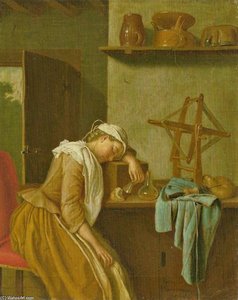 Schlafendes Küchenmädchen바이에른 주립 회화 컬렉션
이 페이지에 있는 작품을 가장 많이 소장하고 있는 4개의 미술관
| 소장 미술관 | 도시 | Peter Jacob Horemans의 작품 | 이 목록의 작품들 |
|---|---|---|---|
 바이에른 주립 회화 컬렉션 |
뮌헨 | 51 | Portrait of Frau Heigl, Kitchen Still Life with Coffee Drinker, Musical Still Life with Horn Player |
 바르샤바 국립 박물관 |
바르샤바 | 2 | Hunting a wild boar, Hunting with falcons |
 Lenbachhaus |
뮌헨 | 2 | Picnic in the park, Concert in the garden |
 메트로폴리탄 미술관 |
뉴욕 | 1 | A Musical Gathering at the Court of the Elector Karl Albrecht of Bavaria |
그 시대를 정의하는 오리지널 작품을 만나보려면 연대를 선택하세요.

Portrait of Frau Heigl (1738), 바이에른 주립 회화 컬렉션, 뮌헨. 다음은 Kitchen Still Life with Coffee Drinker (1765)와 Musical Still Life with Horn Player (1765)입니다.
38세: Portrait of Frau Heigl은(는) 1738년 작품이며, Peter Jacob Horemans은(는) 1700년에 태어났습니다.
Portrait of Frau Heigl, Kitchen Still Life with Coffee Drinker, Musical Still Life with Horn Player, Still Life with Female Figure with Flowers, Still Life with Elegant Lady, Still Life with Fruit and Female Figure, The Soup Eater, Still Life with Female Figure with Beer Glass, Still Life with Female Figure 및 Musical Still Life with Male Figure. 위 순위는 각 작품의 제작 연도와 소장 박물관을 나타냅니다.
저희 카탈로그에는 1730년부터 1776년 사이의 Peter Jacob Horemans 작가의 작품 60점이 수록되어 있습니다.
대부분 바이에른 주립 회화 컬렉션 (뮌헨), 바르샤바 국립 박물관 (바르샤바) 및 Lenbachhaus (뮌헨)에 소장되어 있습니다. 위의 박물관 목록에서 전체 목록을 확인하실 수 있습니다.
1760s 동안: 이 페이지의 총 58점의 작품 중 36점이 해당 시기에 제작되었으며, 그중 Kitchen Still Life with Coffee Drinker점입니다.
이 페이지에서 가장 오래된 작품은 A Musical Gathering at the Court of the Elector Karl Albrecht of Bavaria (1730)이며, 가장 최근 작품은 Picnic in the park (1776)입니다.
Portrait of Frau Heigl, Kitchen Still Life with Coffee Drinker 및 Musical Still Life with Horn Player: 바이에른 주립 회화 컬렉션, 뮌헨은(는) 이 페이지에 있는 작품 중 51점을 소장하고 있습니다.