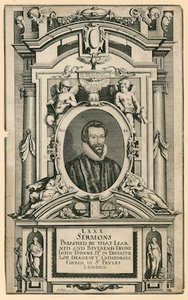
A Legacy of Precision: The Life and Art of Matthäus Merian the Younger
In the grand tapestry of the seventeenth century, few threads are as intricate or as vital as those woven by Matthäus Merian the Younger. Born in the historic Swiss city of Basel in 1621, Merian was destined to inherit a profound artistic lineage. As the eldest son of the renowned engraver Matthäus Merian the Elder, his very existence was intertwined with the burgeoning world of scientific illustration and cartographic excellence. His early years were shaped by a rigorous apprenticeship under Dietrich Meyer in Zürich, where he mastered the foundational principles of Renaissance composition. This early training instilled in him a reverence for detail that would later define his career, allowing him to bridge the gap between the raw observation of nature and the refined elegance of Baroque artistry.
The journey of Merian’s development was one of constant movement across the vibrant cultural hubs of Europe. His travels took him through the artistic heartlands of Paris, Amsterdam, and London, where he encountered the transformative energies of the era's greatest masters. It is whispered in the annals of art history that his time in London brought him into the orbit of Anthonis van Dyck, an encounter that undoubtedly deepened his understanding of psychological depth and the regal grace required for high-society portraiture. These wanderings were not merely for leisure but were essential pilgrimages of style; by absorbing the dramatic chiaroscuro of the Caravaggisti and the atmospheric realism found in the Low Countries, Merian developed a versatile hand capable of both the microscopic precision of an engraver and the sweeping grandeur of a painter.
The Architect of Landscapes and the Cartographic Vision
While his talent for portraiture earned him prestige among the nobility, Merian’s most enduring contribution to the historical record lies in his monumental work as a publisher and topographical illustrator. Following the passing of his father in 1650, Merian, alongside his brother Caspar, took up the mantle of the family publishing house in Frankfurt. This period marked the height of his collaborative genius. Together, they continued the production of the Topographia Germaniae and the Theatrum Europaeum—works that were far more than mere maps. They were breathtaking visual encyclopedias that captured the very soul of the German landscapes, documenting cities, flora, fauna, and the shifting political boundaries of a continent in flux.
To look upon a Merian engraving is to witness a marriage of science and art. His work demanded an unparalleled level of accuracy, yet it was never devoid of aesthetic wonder. He possessed the rare ability to render the rugged textures of a forest or the intricate architecture of a cathedral with such fidelity that his prints served as essential tools for both scholars and travelers alike. This dedication to scientific observation ensured that his name would be forever linked to the Age of Enlightenment, providing a visual foundation upon which future generations of naturalists and historians would build their understanding of the natural world.
Portraiture, Altarpieces, and Final Reflections
Beyond the meticulous lines of his maps, Merian the Younger achieved significant acclaim as a portraitist of the European elite. His ability to capture the dignity of his subjects was perhaps most famously demonstrated during the coronation of Leopold I in Frankfurt in 1658. Whether he was portraying the Swedish military leader Carl Gustaf Wrangel or creating intimate, symbolic works like The Pregnant Countess Wrangel, Merian infused his subjects with a sense of timelessness and grace. His skill extended even into the sacred realm, where he composed moving altarpieces for prestigious locations such as the Bamberg Cathedral and the Barfüßerkirche in Frankfurt, proving that his artistic range could encompass both the secular majesty of kings and the spiritual devotion of the church.
As the seventeenth century drew to a close, Merian’s influence continued to resonate through the works of his pupils, including the talented Bartholomäus Kilian. Though the family publishing house eventually saw a decline in output, the artistic standard set by Matthäus remained an unshakeable benchmark. When he passed away in Frankfurt on February 15, 1687, he left behind a world that was more clearly mapped, more beautifully documented, and more artistically enriched. His life remains a testament to the power of observation—a legacy where every etched line serves as a window into the splendor of the Baroque era.
질의응답
Matthäus The Younger Merian 작가의 출신 국가는 어디인가요?
Matthäus The Younger Merian은(는) Switzerland에서 태어났습니다.
Matthäus The Younger Merian 작가의 작품을 감상할 수 있는 3D 가상 투어가 있나요?
Matthäus The Younger Merian의 작품은 작가의 3D 뮤지엄 페이지에 마련된 3D 갤러리에서 감상하실 수 있습니다.
Matthäus The Younger Merian의 출생지와 출생 연도는 언제인가요?
Matthäus The Younger Merian은(는) 1621년 Basel에서 태어났습니다.