Robert Barker: The Pioneer of the Panorama
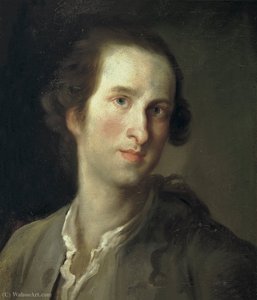
Born in Kells, County Meath, Ireland, in 1739, Robert Barker’s life was a fascinating blend of artistic innovation and entrepreneurial ambition. While often overshadowed by his invention – the panorama – Barker himself remains a somewhat enigmatic figure within art history. His career spanned decades, marked by a relentless pursuit of capturing expansive views and transforming them into immersive experiences for the public. Initially a portrait painter in London, Barker’s true legacy lies not just in individual paintings but in his groundbreaking creation of the panoramic spectacle.
Barker's early artistic training remains somewhat obscure, though he likely honed his skills within the established circles of London’s art scene. However, it was his keen observation and understanding of perspective – a subject increasingly explored during this period – that laid the foundation for his later success. He wasn’t simply copying landscapes; he was meticulously constructing them to create an illusion of vastness, a feat demanding considerable technical skill and a deep appreciation for spatial relationships.
The Birth of the Panorama
The genesis of the panorama can be traced back to 1792 when Barker unveiled his “Edinburgh from Calton Hill” in Leicester Square. This wasn’t merely a painting; it was a cylindrical canvas, meticulously painted to depict the city as seen from Calton Hill. Viewers stood on a central platform, gazing upwards at the panoramic scene, experiencing an unprecedented sense of immersion. The term "panorama" itself, derived from Greek words meaning “all-seeing,” perfectly captured the experience.
Barker’s innovation was revolutionary. He had effectively created a moving picture – albeit a static one – offering a comprehensive survey of a city that would have been impossible to achieve through traditional means. This concept quickly caught on, and Barker rapidly established himself as a hugely successful showman. His success wasn't just about the visual spectacle; it tapped into a growing public appetite for entertainment and a fascination with the burgeoning industrial world.
A Commercial Phenomenon
The demand for panoramic experiences was immense, leading Barker to construct a dedicated building in Leicester Square – a purpose-built panorama house. This structure allowed him to showcase larger and more detailed panoramas, further solidifying his position as a pioneer of the medium. He wasn’t just an artist; he was a shrewd businessman, recognizing the commercial potential of his invention and meticulously managing every aspect of the operation, from canvas production to ticket sales.
Barker's influence extended beyond London. He soon replicated his panoramas in other major cities across Europe, including Paris and Rome, adapting them to reflect local landscapes and architectural features. The concept of the panorama spread rapidly, inspiring artists like Franz Roubaud in Russia to create similar immersive experiences depicting historical battles and events.
Technique and Influence
Barker’s mastery of perspective was central to his success. He employed a complex system of foreshortening and aerial projection to create the illusion of depth and distance, techniques that were remarkably advanced for his time. His work demonstrated an understanding of how viewers would perceive space, anticipating the principles of visual perception that would later be formalized by artists like Leonardo da Vinci.
While often overshadowed by more celebrated painters of the era, Barker’s contribution to art history is undeniable. He didn't simply create beautiful paintings; he fundamentally altered the way people experienced and understood space. His invention paved the way for subsequent developments in visual media, including photography and cinema. His legacy endures not just through his original panoramas but also through the very concept of immersive viewing that continues to captivate audiences today.
Connections to Other Artists
Barker’s career intersected with several prominent figures in the art world. He was associated with Francis Towne, a contemporary watercolourist known for his landscapes and innovative techniques. Charles Jervas, another portrait painter of the period, also influenced Barker's approach to perspective and composition. These connections highlight the vibrant artistic community that flourished in London during the late 18th century.
Furthermore, Barker’s work reflects the broader intellectual currents of his time, including a growing interest in the picturesque – a concept emphasizing the beauty of natural landscapes and the charm of rural settings. His panoramas captured this aesthetic sensibility, offering viewers a romanticized vision of both urban and natural environments.