Le Prince의 초상화

갤러리 엄선, 가장 유명한 Le Prince 작품 32선

11월 2026 업데이트 · 인기 점수 기준 순위 (각 작품의 검색, 방문 및 주문 수) · 33점의 Le Prince 작품 (당사 카탈로그 기준)

요약하자면

Le Prince가 남긴 모든 원작 중 가장 유명한 작품은 파리의 Musée Cognacq-Jay에 소장된 The Sultana (1701)입니다. 그 뒤를 이어 The Balalaika Player (1764)와 Portrait of a Man (1765)가 뒤를 잇습니다. Le Prince의 작품 33점을 보유하고 있습니다. 갤러리는 세계가 가장 찬사하는 32점을 엄선하여 각 작품의 제작 연도, 소장 미술관 및 작품에 담긴 이야기를 함께 소개합니다.

1734 – 1781, Metz 최다 소장처: Musée Cognacq-Jay

Le Prince의 베스트 작품 10선: 갤러리 선정

1
The Sultana (1701) 의 Le Prince

The Sultana

1701 · Oil · Musée Cognacq-Jay, 파리

The scene unfolds within an oval frame, a quiet window into an 18th-century fantasy. A woman reclines, her body a series of soft, curvilinear lines that catch the light from the upper left. She is draped in fabrics that suggest the weight of silk and the softness of fur. Beside her, a man leans in, his presence defined by the voluminous, patterned trousers and the structured shape of a turban.…

2
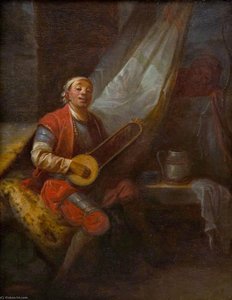
The Balalaika Player (1764) 의 Le Prince

The Balalaika Player

1764 · Oil · Musée Cognacq-Jay, 파리

The scene unfolds in The Balalaika Player, an oil painting by the artist Le Prince. Created about 1764, the work captures a quiet moment of communal life. A group of peasants gathers in a rustic setting, their presence filling the space with a sense of everyday reality. The atmosphere feels lived-in and grounded, as if the viewer has just stumbled upon a private gathering in the countryside.

3
Portrait of a Man (1765) 의 Le Prince

Portrait of a Man

1765 · Oil · Staatliche Kunsthalle Karlsruhe, 카를스루에

This three-quarter view portrait depicts a middle-aged man positioned slightly off-center, gazing toward the left of the frame. The subject is characterized by a thick, textured beard and a voluminous fur hat, which contribute to a sense of physical weight and warmth. He wears a wide collar in a striking mauve or dusty rose color, which contrasts against a palette dominated by deep browns, muted golds, and dark blacks. The…

4
The Secret Lover (1774) 의 Le Prince

The Secret Lover

In the Rococo-style oil painting "The Secret Lover" by Le Prince, the composition is organized around three central figures seated upon a stone bench. This arrangement is set within a lush, classical garden. A woman occupies the center of the bench, wearing an elegant white and gold gown. To her left, a young man leans toward her, his posture directed at her hand as he performs a kiss. On the…

5
Portrait of an Oriental (1769) 의 Le Prince

Portrait of an Oriental

1769 · Oil On Canvas · Staatliche Kunsthalle Karlsruhe, 카를스루에

In this formal portrait, titled Portrait of an Oriental by Le Prince, we encounter a single subject seated centrally, though slightly offset to the left. The man is depicted in a dignified pose, dressed in traditional attire that suggests a sense of quiet authority. He wears an elaborate turban and a long red kaftan lined with white fur, paired with voluminous light-colored trousers. The composition is vertical, focusing our attention…

6
The Seesaw (1769) 의 Le Prince

The Seesaw

1769 · Etching

The monochrome etching depicts a group of children engaged in play upon a seesaw. This central apparatus bisects the frame diagonally, creating a sense of movement across the composition. Figures are positioned in various clusters around the seesaw, some seated and others standing, which establishes a dynamic interaction within the park-like setting. In the background, the silhouette of a building or pavilion provides a sense of architectural depth. The entire…

7
The Russian Dance (1769) 의 Le Prince

The Russian Dance

1769 · Charcoal

We are looking at The Russian Dance, a work by the artist Le Prince. This piece dates to 1769, a period when the artist was deeply engaged with the cultural nuances of the Russian Empire. It is a monochrome drawing, stripped of color to focus entirely on the interplay of light and shadow through tonal variation.

8
A Guardroom, or: The Love of Glory (1776) 의 Le Prince

A Guardroom, or: The Love of Glory

1776 · Oil

In the dim, heavy air of a 1776 interior, A Guardroom, or: The Love of Glory unfolds. The artist, Le Prince, captures a specific, fleeting moment where the rigid discipline of military life gives way to the warmth of human connection. Within this cramped setting, the soldiers exist in various states of rest and revelry, their presence filling the space with a sense of lived experience. One can almost hear…

9
Portrait of General François Marceau des Graviers (1769-1796) (1830) 의 Le Prince

Portrait of General François Marceau des Graviers (1769-1796)

1830 · Oil On Canvas · 카르나발레 박물관, 파리

The composition centers on General François Marceau des Graviers, captured in a moment of decisive action amidst the chaos of a battlefield. He is positioned vertically, slightly off-center, his right hand gesturing toward an unseen movement that drives the energy of the scene. A red sash at his waist provides a sharp contrast to the muted, earthy palette of browns, greys, and deep greens that define the rugged terrain. The…

10
The Russian Baptism (1765) 의 Le Prince

The Russian Baptism

1765 · Oil On Canvas · 루브르 박물관, 파리

In the grand tapestry of eighteenth-century art, few works capture the intersection of spiritual transformation and political destiny as profoundly as Jean-Baptiste Le Prince’s The Russian Baptism. Completed in 1765, this monumental canvas serves as a window into a pivotal epoch of human history, immortalizing the moment when the pagan traditions of ancient Rus’ were formally embraced by Christian Orthodoxy through the baptism of Tsar Ivan IV. The scene is…

Le Prince 컬렉션이 계속됩니다, 11부터 32까지

Le Prince의 시선을 사로잡은 주제들

이 오리지널 작품들에서 가장 자주 등장하는 네 가지 주제와 그 정수를 보여주는 대표작들.

Le Prince의 원작을 소장하고 있는 미술관

이 페이지에 있는 작품을 가장 많이 소장하고 있는 8개의 미술관

소장 미술관 도시 Le Prince의 작품 이 목록의 작품들
Musée Cognacq-Jay, 파리Musée Cognacq-Jay 파리 2 The Sultana, The Balalaika Player
Staatliche Kunsthalle Karlsruhe, 카를스루에Staatliche Kunsthalle Karlsruhe 카를스루에 2 Portrait of a Man, Portrait of an Oriental
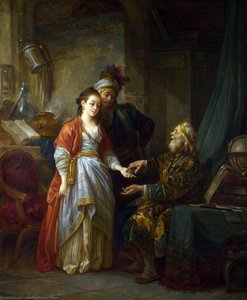
에르미타주 박물관, 상트페테르부르크에르미타주 박물관 상트페테르부르크 2 Visit to a Palmist, Scene from Russian Everyday Life
바이에른 주립 회화 컬렉션, 뮌헨바이에른 주립 회화 컬렉션 뮌헨 1 The Secret Lover
카르나발레 박물관, 파리카르나발레 박물관 파리 1 Portrait of General François Marceau des Graviers (1769-1796)
루브르 박물관, 파리루브르 박물관 파리 1 The Russian Baptism
톨레도 미술관, 톨레도톨레도 미술관 톨레도 1 Fear (La Crainte)
디트로이트 미술관, 디트로이트디트로이트 미술관 디트로이트 1 Landscape with Cowherd

Le Prince 연도별 작품: 각 시대를 정의하는 오리지널 작품들

이 컬렉션은 1764년부터 1776년까지 13년 동안 Le Prince의 작품 중 매년 가장 뛰어난 오리지널 작품들을 엄선하였습니다.

연도별 작품 수

연도를 선택하여 원작을 확인해 보세요.

Le Prince의 작품에 관한 컬렉터들의 질문

Le Prince의 가장 대표적인 작품은 무엇인가요?정답 확인하기

The Sultana (1701), Musée Cognacq-Jay, 파리. 다음은 The Balalaika Player (1764)와 Portrait of a Man (1765)입니다.

Le Prince의 가장 유명한 작품 10가지는 무엇인가요?정답 확인하기

The Sultana, The Balalaika Player, Portrait of a Man, The Secret Lover, Portrait of an Oriental, The Seesaw, The Russian Dance, A Guardroom, or: The Love of Glory, Portrait of General François Marceau des Graviers (1769-1796) 및 The Russian Baptism. 위 순위는 각 작품의 제작 연도와 소장 박물관을 나타냅니다.

Le Prince 작가가 남긴 작품은 몇 점인가요?정답 확인하기

저희 카탈로그에는 1764년부터 1776년 사이의 Le Prince 작가의 작품 33점이 수록되어 있습니다.

Le Prince의 걸작은 어느 박물관에 전시되어 있나요?정답 확인하기

대부분 Musée Cognacq-Jay (파리), Staatliche Kunsthalle Karlsruhe (카를스루에) 및 에르미타주 박물관 (상트페테르부르크)에 소장되어 있습니다. 위의 박물관 목록에서 전체 목록을 확인하실 수 있습니다.

Le Prince의 가장 유명한 작품들은 어느 연도에 그려졌나요?정답 확인하기

1769 동안: 이 페이지의 총 32점의 작품 중 4점이 해당 시기에 제작되었으며, 그중 Portrait of an Oriental점입니다.

Le Prince의 첫 번째와 마지막 유명 원작은 무엇인가요?정답 확인하기

이 페이지에서 가장 오래된 작품은 The Balalaika Player (1764)이며, 가장 최근 작품은 A Guardroom, or: The Love of Glory (1776)입니다.

Le Prince 작가가 가장 자주 선택한 주제는 무엇인가요?정답 확인하기

이 페이지의 32점의 작품에 걸쳐 있는 Man (5), Music (4) 및 Clothing (4)

Le Prince 작가가 가장 많이 사용한 기법은 무엇인가요?정답 확인하기

이 페이지의 총 32점의 작품 중 5점의 Oil

Musée Cognacq-Jay에는 어떤 Le Prince의 작품이 전시되어 있나요?정답 확인하기

The Sultana 및 The Balalaika Player: Musée Cognacq-Jay, 파리은(는) 이 페이지에 있는 작품 중 2점을 소장하고 있습니다.

Le Prince: 생애와 작품 세계

The Illustrious Journey of Jean-Baptiste Le Prince

Born in the historic city of Metz on September 17, 1734, Jean-Baptiste Nicolas Le Prince emerged as a vital figure in the tapestry of eighteenth-century French art. His early years were marked by a profound connection to his native roots, yet his artistic destiny was destined for much broader horizons. After honing his fundamental painting techniques in Metz, the young artist’s talent caught the attention of influential patrons, leading him to Paris around 1750. Under the prestigious sponsorship of Charles Louis Auguste Fouquet de Belle-Isle, Le Prince entered the orbit of the great François Boucher. Studying under such a master of the Rococo style, Le Prince absorbed the delicate grace, fluid lines, and playful elegance that defined the era, an influence that would remain visible in the early lightness of his compositions.

However, Le Prince was far more than a mere disciple of the Rococo; he was an artist of immense curiosity and geographical breadth. In 1758, his career took a transformative turn when he journeyed to Russia to serve the court of Catherine the Great. Working within the splendor of the Imperial Palace in St. Petersburg under the direction of the renowned architect Francesco Bartolomeo Rastrelli, Le Prince experienced a world of imperial grandeur. His travels during this period were nothing short of epic, as he ventured through Finland, Lithuania, and even into the vast, mysterious reaches of Siberia. These excursions provided him with a unique reservoir of visual experiences, allowing him to capture the essence of diverse cultures and landscapes, ranging from the intimate details of Russian everyday life to more exotic, far-reaching vistas.

A Mastery of Style and Subject

As his career matured, Le Prince’s work began to reflect a sophisticated blend of his Rococo training and an emerging interest in more grounded, narrative subjects. He became a highly skilled etcher and painter, capable of navigating between the whimsical and the poignant. His oeuvre is characterized by a remarkable versatility that allows him to move seamlessly from the lightheartedness of pastoral scenes to the profound gravity of historical or ethnographic studies. In works such as Two Men & a Lady, one can witness his ability to evoke an atmosphere of idyllic beauty and musical harmony, utilizing soft lighting and delicate textures to enchant the viewer.

His technical prowess is perhaps most evident in his ability to utilize light and shadow to create depth and emotion. Whether he was depicting a Scene from Russian Everyday Life or the rustic charm of The Russian Cradle, Le Prince employed meticulous detail and emotive lighting to breathe life into his subjects. His later works often leaned toward a more structured approach, foreshadowing the shift toward Neoclassicism that would soon dominate the European art scene. This transition is beautifully captured in pieces like Visit to a Palmist, where the artist demonstrates a masterful command of social composition and portraiture, showcasing a meticulous attention to the textures of fabric and the subtle expressions of his figures.

Legacy and Artistic Significance

The historical significance of Jean-Baptiste Le Prince lies in his role as a cultural bridge. He was an artist who connected the refined salons of Paris with the burgeoning imperial splendor of Russia, and the delicate aesthetics of Boucher with the more robust, observational styles that would follow. His ability to document both the aristocratic elegance of the Enlightenment and the rugged realities of distant territories makes his body of work an invaluable historical record.

Though often overshadowed by the monumental figures of the Neoclassical movement who followed him, Le Prince’s contributions remain indispensable. His legacy is found in:

  • Technical Versatility: The seamless integration of Rococo grace with a burgeoning realism and ethnographic detail.
  • Cultural Documentation: His unique perspective as an artist who traveled extensively through the Russian Empire, capturing scenes that would otherwise have remained unknown to Western Europe.
  • Influence on Printmaking: His skill as an etcher, which helped disseminate much of his visual narrative across the continent.

Today, the works of Jean-Baptiste Le Prince continue to captivate collectors and historians alike, serving as a window into a transformative era of European history where art, travel, and empire were inextricably linked.