John Runciman의 초상화

John Runciman 회화: 갤러리의 시선으로 선별한 가장 유명한 작품 12선

11월 2026 업데이트 · 인기 점수 기준 순위 (각 작품의 검색, 방문 및 주문 수) · 12점의 John Runciman 작품 (당사 카탈로그 기준)

요약하자면

갤러리가 선정한 John Runciman의 가장 유명한 작품은 King Lear in the Storm (1767)이며, 원작은 에든버러의 스코틀랜드 국립 미술관에 전시되어 있습니다. Mary and Joseph Outside the Inn (1763)와 Christ Taking Leave of his Mother (1760)가 더해져 누구나 한눈에 알아볼 수 있는 완벽한 트리오를 완성합니다. John Runciman의 작품 12점 중, 갤러리는 가장 유명한 12점을 아래와 같이 소개합니다. 각 작품은 제작 연도, 소장 미술관 및 작품의 특징을 포함한 독창적인 원작입니다.

1744 – 1766, Edinburgh 최다 소장처: 스코틀랜드 국립 미술관

갤러리 베스트 10 John Runciman 작품

1
King Lear in the Storm (1767) 의 John Runciman

King Lear in the Storm

1767 · Oil On Panel · 스코틀랜드 국립 미술관, 에든버러

The sky is a bruised weight of gray and shadow. Below, the sea churns in violent, diagonal strokes, a chaotic movement that mirrors the internal collapse of a monarch. In this 1767 oil on panel, the elements do not merely surround the figures; they invade them. The salt spray and the wind are physical manifestations of a psyche unraveling. A king stands amidst the wreckage of his own authority, caught…

2
Mary and Joseph Outside the Inn (1763) 의 John Runciman

Mary and Joseph Outside the Inn

1763 · Oil On Panel · 예일 영국 미술관, 뉴헤이븐

In Mary and Joseph Outside the Inn, John Runciman captures a somber biblical scene unfolding within a heavy, atmospheric landscape. The composition leans heavily to one side, where a large, dark, and dilapidated building dominates the left frame, casting a sense of enclosure over the travelers. This asymmetrical arrangement creates a tension between the solid, weathered structure and the open, hazy expanse to the right. Two adults stand together near…

3
Christ Taking Leave of his Mother (1760) 의 John Runciman

Christ Taking Leave of his Mother

1760 · Oil · 스코틀랜드 국립 미술관, 에든버러

In this intimate scene, we find ourselves witnessing a profound moment of transition. The painting depicts Christ taking leave of his mother, Mary, a subject that carries a heavy weight of impending sorrow and divine purpose. The figures are positioned in close proximity, their physical closeness underscoring the emotional gravity of their parting. Jesus holds a baby in his arms, a detail that adds a layer of tenderness to the…

5
Salome Receiving Saint John the Baptist's Head (1760) 의 John Runciman

Salome Receiving Saint John the Baptist's Head

1760 · Oil · 스코틀랜드 국립 미술관, 에든버러

In Salome Receiving Saint John the Baptist's Head, John Runciman presents a heavy, dramatic moment from biblical narrative. The composition centers on the figure of Salome as she receives the head of John the Baptist, which is held upon a platter. This central exchange is framed by a backdrop of a building featuring a prominent stone wall, providing a sense of architectural permanence to the unfolding scene. The artist has…

6
The Good Samaritan (1760) 의 John Runciman

The Good Samaritan

1760 · Oil · 스코틀랜드 국립 미술관, 에든버러

The Good Samaritan is a work by the Scottish painter John Runciman. Created around 1760, this piece emerged from a period of significant development for the artist. Runciman, who was born in Edinburgh, Scotland, was the younger brother of the artist Alexander Runciman. His early years in Edinburgh provided the foundation for a career marked by a deep interest in religious and historical narratives.

8
Three Heads: The Witches of Macbeth (1768) 의 John Runciman

Three Heads: The Witches of Macbeth

1768 · Gouache · 스코틀랜드 국립 초상화 갤러리, Edinburgh

In the hauntingly ephemeral sketch Three Heads: The Witches of Macbeth, the viewer is thrust into a realm where the boundaries between reality and nightmare dissolve. Created around 1768 by the Scottish artist John Runciman, this work serves as a visceral window into the late eighteenth-century fascination with the macabre and the theatrical. The subject matter—the prophetic, unsettling trio from Shakespeare’s most famous tragedy—is rendered not through grand, sweeping strokes,…

9
John Runciman (1744–1768), Artist, Self Portrait (1767) 의 John Runciman

John Runciman (1744–1768), Artist, Self Portrait

A hand rests against a chin, a gesture of quiet contemplation. In this 1767 self-portrait, the artist captures himself amidst the shadows of Rome. He wears a hat and formal attire, the tie at his neck a sharp detail against the soft contours of his face. The light finds the ridge of his nose and the thoughtful set of his eyes, leaving the background to dissolve into an indistinct, dark…

10
The Baptism of Christ 의 John Runciman

The Baptism of Christ

Oil On Panel

In this oil on panel, we find ourselves within a rugged, cavernous grotto where the physical world meets the celestial. The composition is anchored by a powerful verticality, a singular beam of light that descends from the upper right to illuminate the figure of Christ. This light does not merely illuminate; it defines the space, cutting through the shadows of the rocky enclosure to touch the water and the pale,…

11위부터 12위까지의 John Runciman 작품

John Runciman의 시선을 사로잡은 주제들

이 오리지널 작품들에서 가장 자주 등장하는 네 가지 주제와 그 정수를 보여주는 대표작들.

John Runciman의 원작을 소장하고 있는 미술관

이 페이지에 있는 작품을 가장 많이 소장하고 있는 4개의 미술관

소장 미술관 도시 John Runciman의 작품 이 목록의 작품들
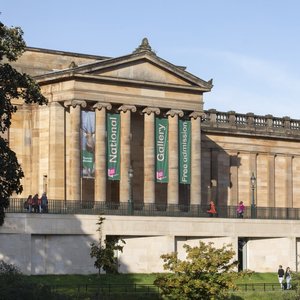
스코틀랜드 국립 미술관, 에든버러스코틀랜드 국립 미술관 에든버러 7 King Lear in the Storm, Christ Taking Leave of his Mother, The Flight into Egypt
스코틀랜드 국립 초상화 갤러리, Edinburgh스코틀랜드 국립 초상화 갤러리 Edinburgh 2 Three Heads: The Witches of Macbeth, John Runciman (1744–1768), Artist, Self Portrait
예일 영국 미술관, 뉴헤이븐예일 영국 미술관 뉴헤이븐 1 Mary and Joseph Outside the Inn
The Hunterian Museum and Art Gallery, 글래스고The Hunterian Museum and Art Gallery 글래스고 1 Hagar and the Angel

John Runciman, 매년 선보이는 대표작

7년 동안, 1760년부터 1766년까지, John Runciman의 연대기적 경력을 이 페이지에서 확인해 보세요. 가장 유명한 원작들을 통해 연도별로 정리된 짧은 여정을 만나보실 수 있습니다.

연도별 작품 수

연도를 선택하여 원작을 확인해 보세요.

John Runciman의 작품: 갤러리의 해답

John Runciman의 작품 중 가장 유명한 작품은 무엇인가요?정답 확인하기

King Lear in the Storm (1767), 스코틀랜드 국립 미술관, 에든버러. 다음은 Mary and Joseph Outside the Inn (1763)와 Christ Taking Leave of his Mother (1760)입니다.

John Runciman의 대표작 10점은 무엇인가요?정답 확인하기

King Lear in the Storm, Mary and Joseph Outside the Inn, Christ Taking Leave of his Mother, The Flight into Egypt, Salome Receiving Saint John the Baptist's Head, The Good Samaritan, Christ with his Disciples on the Road to Emmaus, Three Heads: The Witches of Macbeth, John Runciman (1744–1768), Artist, Self Portrait 및 The Baptism of Christ. 위 순위는 각 작품의 제작 연도와 소장 박물관을 나타냅니다.

John Runciman의 작품은 몇 점인가요?정답 확인하기

저희 카탈로그에는 1760년부터 1766년 사이의 John Runciman 작가의 작품 12점이 수록되어 있습니다.

John Runciman의 가장 유명한 원작들은 어디에 전시되어 있을까요?정답 확인하기

대부분 스코틀랜드 국립 미술관 (에든버러), 스코틀랜드 국립 초상화 갤러리 (Edinburgh) 및 예일 영국 미술관 (뉴헤이븐)에 소장되어 있습니다. 위의 박물관 목록에서 전체 목록을 확인하실 수 있습니다.

John Runciman의 가장 유명한 작품들은 언제 제작되었나요?정답 확인하기

1760 동안: 이 페이지의 총 12점의 작품 중 6점이 해당 시기에 제작되었으며, 그중 Christ Taking Leave of his Mother점입니다.

John Runciman의 초기 및 후기 대표작은 무엇인가요?정답 확인하기

이 페이지에서 가장 오래된 작품은 Christ Taking Leave of his Mother (1760)이며, 가장 최근 작품은 Hagar and the Angel (1766)입니다.

John Runciman 작가가 가장 자주 다룬 주제는 무엇인가요?정답 확인하기

이 페이지의 12점의 작품에 걸쳐 있는 Man (6), People (4) 및 Landscape (4)

John Runciman 작가가 가장 많이 사용한 매체는 무엇인가요?정답 확인하기

이 페이지의 총 12점의 작품 중 6점의 Oil On Panel

스코틀랜드 국립 미술관이(가) 소장하고 있는 John Runciman의 원작은 무엇인가요?정답 확인하기

King Lear in the Storm, Christ Taking Leave of his Mother 및 The Flight into Egypt: 스코틀랜드 국립 미술관, 에든버러은(는) 이 페이지에 있는 작품 중 7점을 소장하고 있습니다.

John Runciman: 작가

John Runciman: A Brief, Dramatic Life of an Eighteenth-Century Scottish Artist

John Runciman (1744 – c. 1768 or 1769), a name largely absent from mainstream art history, nevertheless produced a remarkably potent body of work during his tragically short career. Born in Edinburgh, Scotland, into a family with strong connections to the shipping industry—his father, Walter Runciman, was a prominent figure—Runciman’s artistic path diverged significantly from the established norms of the time, marked by an intense emotionalism and a fascination with biblical narratives and historical scenes. His life, tragically cut short at the age of just twenty-four or twenty-five, is as compelling as the dramatic paintings he created, offering a poignant glimpse into the world of a struggling artist in the late 18th century.

Runciman’s early artistic training occurred within the framework of the Foulis Academy in Glasgow, a renowned institution that fostered a generation of Scottish artists. He apprenticed under Robert Norie, a landscape painter, and later partnered with his brother, Alexander Runciman, also an artist. This collaboration initially focused on landscapes, but Runciman quickly gravitated towards more emotionally charged subjects—particularly biblical scenes—demonstrating a willingness to experiment with style and technique. Crucially, he benefited from the patronage of Robert Alexander of Edinburgh, who provided financial support that enabled him to pursue his artistic ambitions in Rome between 1767 and 1768. This period proved formative, exposing him to the works of masters like Rembrandt and allowing him to develop a distinctive style characterized by dramatic lighting, intense color palettes, and a palpable sense of movement.

Runciman’s artistic output during this Roman sojourn was remarkably prolific, producing self-portraits, studies of biblical figures, and several finished paintings. His most celebrated works from this period include “Flight into Egypt,” currently housed in the National Gallery of Scotland, a powerfully evocative depiction of Mary and Joseph fleeing to Egypt, imbued with an almost theatrical quality. The painting’s use of chiaroscuro—the dramatic contrast between light and dark—creates a sense of urgency and emotional intensity. Another significant work is “King Lear in the Storm,” a monumental canvas depicting Shakespeare's tragic king confronting a raging tempest at sea. This piece, also held by the National Gallery, showcases Runciman’s ability to capture both the physical drama of the scene and the psychological turmoil of its central figure. The painting’s composition—a dynamic interplay of figures against a turbulent sky—demonstrates his growing mastery of perspective and color.

Despite his artistic promise, Runciman's career was plagued by personal difficulties and ultimately cut short by illness. His health deteriorated rapidly in 1768, and he reportedly destroyed many of his works, partly due to the harsh criticism from fellow artist James Nevay. This act, often interpreted as a rejection of his own art, speaks volumes about the pressures faced by artists during that era—the constant need to prove one’s worth and the vulnerability to negative critique. His untimely death in Naples at the age of twenty-four or twenty-five left behind a relatively small but intensely expressive body of work. However, Runciman's legacy endures through his paintings, which continue to captivate viewers with their dramatic intensity and emotional depth.

Runciman’s Style and Influences

Runciman’s artistic style can be characterized as a synthesis of influences—a blend of Baroque drama, Rembrandt’s chiaroscuro technique, and the emerging Romantic sensibility. His use of light and shadow is particularly striking, creating a sense of theatricality and emotional intensity that sets his work apart from many of his contemporaries. He was deeply influenced by the works of Rembrandt, evident in his masterful manipulation of light and his ability to convey complex emotions through subtle gestures and expressions. The influence of Caravaggio is also apparent in his dramatic compositions and use of tenebrism.

Furthermore, Runciman’s work reflects the broader artistic trends of the late 18th century—a growing interest in biblical narratives, a fascination with historical subjects, and an increasing emphasis on emotional expression. His paintings are not merely depictions of events; they are explorations of human experience—of faith, suffering, and redemption. The dramatic lighting and dynamic compositions contribute to this sense of heightened emotion, creating works that resonate deeply with viewers.

Major Works

John Runciman’s oeuvre is relatively small, but his major works stand as testaments to his artistic talent and expressive power. Among the most significant paintings are:

Historical Significance

Despite his relatively obscure status in art history, John Runciman's work holds a significant place within the context of 18th-century Scottish painting. He represents a bridge between the more traditional landscape traditions of the era and the emerging Romantic movement—a period characterized by emotional intensity, dramatic subject matter, and an interest in exploring the darker aspects of human experience. Runciman’s paintings are not merely aesthetically pleasing; they offer a valuable window into the artistic and cultural currents of his time. His tragically short life serves as a poignant reminder of the challenges faced by artists—particularly those who dared to break from established conventions and pursue their own unique vision.