John D. Batten의 초상화

갤러리 엄선, 가장 유명한 John D. Batten 작품 9선

11월 2026 업데이트 · 인기 점수 기준 순위 (각 작품의 검색, 방문 및 주문 수) · 10점의 John D. Batten 작품 (당사 카탈로그 기준)

요약하자면

John D. Batten가 남긴 모든 원작 중 가장 유명한 작품은 Eve and the Serpent (1895)입니다. 그 뒤를 이어 Pandora (1913)와 Snowdrop and the seven little men (1897)가 뒤를 잇습니다. John D. Batten의 작품 10점을 보유하고 있습니다. 갤러리는 세계가 가장 찬사하는 9점을 엄선하여 각 작품의 제작 연도, 소장 미술관 및 작품에 담긴 이야기를 함께 소개합니다.

1865 – 1932, Plymouth 최다 소장처: The University of Reading

John D. Batten의 베스트 작품 10선: 갤러리 선정

1
Eve and the Serpent (1895) 의 John D. Batten

Eve and the Serpent

1895 · Tempera

John D. Batten’s Eve and the Serpent, created about 1895, captures a pivotal moment of theological narrative within the Garden of Eden. The work focuses on the encounter between Eve and the serpent, a scene central to the biblical story of temptation. Batten utilizes the subject to explore the intersection of myth and human emotion through a structured, detailed lens.

2
Pandora (1913) 의 John D. Batten

Pandora

1913 · Tempera · The University of Reading, Reading

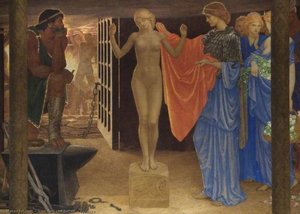
In this 1913 work, the artist John D. Batten presents a depiction of the mythological figure Pandora. The scene captures the pivotal moment in which she opens the box, an act that releases all the evils into the world. It is a composition that focuses on the weight of this singular, transformative action.

3
Snowdrop and the seven little men (1897) 의 John D. Batten

Snowdrop and the seven little men

1897 · Tempera On Panel · 뉴사우스웨일스 주립 미술관, 시드니

Snowdrop and the seven little men by John D. Batten presents a narrative scene from folklore within a horizontal composition. The central focus is a woman resting in a large, canopy bed. Surrounding her are several small, gnome-like figures, creating a scene of interaction between a sleeping figure and industrious, miniature creatures. The arrangement utilizes a shallow, stage-like perspective, where depth is established through the overlapping of figures and the…

4
Beauty and the Beast (1904) 의 John D. Batten

Beauty and the Beast

1904 · Oil On Canvas · 버밍엄 미술관, 버밍엄

In this work, Beauty and the Beast, John D. Batten constructs a scene of profound emotional tension within the quiet confines of an enclosed garden. The composition relies on a deliberate imbalance; on the left, the verticality of a woman in a long, flowing blue gown draws the eye upward, her face turned toward the sky with an expression of either anguish or ecstasy. This movement is countered on the…

John D. Batten의 시선을 사로잡은 주제들

이 오리지널 작품들에서 가장 자주 등장하는 네 가지 주제와 그 정수를 보여주는 대표작들.

John D. Batten의 원작을 소장하고 있는 미술관

이 페이지에 있는 작품을 가장 많이 소장하고 있는 3개의 미술관

소장 미술관 도시 John D. Batten의 작품 이 목록의 작품들
The University of Reading, ReadingThe University of Reading Reading 1 Pandora
뉴사우스웨일스 주립 미술관, 시드니뉴사우스웨일스 주립 미술관 시드니 1 Snowdrop and the seven little men
버밍엄 미술관, 버밍엄버밍엄 미술관 버밍엄 1 Beauty and the Beast

John D. Batten의 시대별 걸작: 시대를 정의하는 오리지널 작품들

연대별 작품 수

그 시대를 정의하는 오리지널 작품을 만나보려면 연대를 선택하세요.

John D. Batten의 작품에 관한 컬렉터들의 질문

John D. Batten의 가장 대표적인 작품은 무엇인가요?정답 확인하기

Eve and the Serpent (1895). 다음은 Pandora (1913)와(과) Snowdrop and the seven little men (1897)입니다.

Eve and the Serpent이(가) 제작되었을 당시 John D. Batten의 나이는 몇 살이었나요?정답 확인하기

30세: Eve and the Serpent은(는) 1895년 작품이며, John D. Batten은(는) 1865년에 태어났습니다.

John D. Batten 작가가 남긴 작품은 몇 점인가요?정답 확인하기

저희 카탈로그에는 1886년부터 1922년 사이의 John D. Batten 작가의 작품 10점이 수록되어 있습니다.

John D. Batten의 걸작은 어느 박물관에 전시되어 있나요?정답 확인하기

대부분 The University of Reading (Reading), 뉴사우스웨일스 주립 미술관 (시드니) 및 버밍엄 미술관 (버밍엄)에 소장되어 있습니다. 위의 박물관 목록에서 전체 목록을 확인하실 수 있습니다.

John D. Batten의 가장 유명한 작품들은 어느 연도에 그려졌나요?정답 확인하기

1880s 동안: 이 페이지의 총 9점의 작품 중 2점이 해당 시기에 제작되었으며, 그중 The Family점입니다.

John D. Batten의 첫 번째와 마지막 유명 원작은 무엇인가요?정답 확인하기

이 페이지에서 가장 오래된 작품은 The Family (1886)이며, 가장 최근 작품은 Atlanta and Milanion (detail for the fresco painting 'Atlanta's Race') (1922)입니다.

John D. Batten 작가가 가장 자주 선택한 주제는 무엇인가요?정답 확인하기

이 페이지의 9점의 작품에 걸쳐 있는 Woman (4) 및 Garden (2)

John D. Batten 작가가 가장 많이 사용한 기법은 무엇인가요?정답 확인하기

이 페이지의 총 9점의 작품 중 2점의 Tempera

John D. Batten: 생애와 작품 세계

The Tempera Revivalist

To understand the impact of John Dickson Batten, one must look at the specific technical vacuum he helped fill during the Edwardian era. He did not merely paint; he revived a dying language. By turning to egg tempera, Batten moved away from the heavy, oily textures common in his time, opting instead for a medium that demanded precision and a certain luminous austerity. His work is defined by this discipline. He was a man of dualities, beginning his professional life reading law at Trinity College, Cambridge, before abandoning the legal career of a barrister to study at the Slade School of Fine Arts. This transition from the rigid logic of law to the meticulous observation of art shaped a style that was both intellectually structured and visually detailed.

His early fascination with ornithology and the mechanics of animal flight provided a scientific foundation for his later, more imaginative works. This wasn't mere whimsy. There is a structural accuracy in his depictions of movement that separates his illustrations from the purely decorative. He brought a researcher's eye to the mythological and the allegorical, ensuring that even his most fantastical subjects possessed a tangible, physical presence.

Narrative and Myth

Batten’s output was vast, ranging from small-scale book illustrations to large-scale frescoes. He possessed a specific ability to translate complex folklore into visual narratives. His work often focused on the intersection of myth and human emotion, utilizing the delicate qualities of tempera to bring light to ancient stories. His repertoire included:

His involvement with the Society of Painters in Tempera was not a side interest; it was a central part of his professional identity. Alongside figures like Arthur Gaskin, he helped establish a renewed appreciation for the medium's expressive potential. His 1913 work, Pandora, which was presented to Reading University, remains a primary example of his ability to handle large-scale narrative depth through the tempera technique.

A Legacy of Precision

The significance of Batten lies in his refusal to settle for the easy or the ephemeral. While many of his contemporaries were moving toward more fluid or abstract expressions, he doubled down on the technical rigors of the past. He was a prolific writer as well, producing volumes of poetry and an article on the practice of tempera painting, proving that his interest in art was as much academic as it was creative. He understood the mechanics of his craft from the inside out.

His work remains a vital point of reference for anyone studying the revival of traditional painting methods in Britain. He did not just illustrate stories; he gave them a specific, luminous weight. From the detailed rendering of a bird's flight to the somber emotion of a religious portrait, Batten’s career was a sustained argument for the power of meticulous, disciplined art.