Jan Vonck의 초상화

Jan Vonck 회화: 갤러리의 시선으로 선별한 가장 유명한 작품 20선

11월 2026 업데이트 · 인기 점수 기준 순위 (각 작품의 검색, 방문 및 주문 수) · 22점의 Jan Vonck 작품 (당사 카탈로그 기준)

요약하자면

갤러리가 선정한 Jan Vonck의 가장 유명한 작품은 Dog attacking a cat (1650)이며, 원작은 바르샤바의 바르샤바 국립 박물관에 전시되어 있습니다. Hunting still-life with hanging hare and birds (1657)와 Dead Game가 더해져 누구나 한눈에 알아볼 수 있는 완벽한 트리오를 완성합니다. Jan Vonck의 작품 22점 중, 갤러리는 가장 유명한 20점을 아래와 같이 소개합니다. 각 작품은 제작 연도, 소장 미술관 및 작품의 특징을 포함한 독창적인 원작입니다.

1631 – 1664, Toruń 최다 소장처: 바르샤바 국립 박물관

갤러리 베스트 10 Jan Vonck 작품

1
Dog attacking a cat (1650) 의 Jan Vonck

Dog attacking a cat

1650 · Oil · 바르샤바 국립 박물관, 바르샤바

In this oil painting, a light-colored dog occupies the lower right foreground, its head turned upward with an alert expression. The animal's fur is rendered with fine brushwork, showing the texture of individual hairs against the darker background. To the left, a collection of animals and game is draped over a mound or basket, including a central dead hare and a bird. A cat is partially visible, peering from the…

2
Hunting still-life with hanging hare and birds (1657) 의 Jan Vonck

Hunting still-life with hanging hare and birds

1657 · Oil · 스트라스부르 미술관, 스트라스부르

The air in the room feels heavy, thick with the stillness that follows a sudden, violent movement. A large hare hangs suspended by its hind legs, its weight pulling at a thin, taut chain that cuts through the darkness. The creature's fur, rendered in soft ochre and cream, catches a sliver of light, revealing the tactile reality of its texture against the void. Beside it, a white and grey bird…

3
Dead Game 의 Jan Vonck

Dead Game

Oil

A dark, shadowed environment provides the stage for this visceral encounter between life and death. In the center of the composition, a bird lies lifeless, its head severed, surrounded by other avian figures and a dead animal. The scene is set in a dim, perhaps subterranean or nocturnal space, where the natural order is stripped to its most primal elements. Small birds are scattered throughout the darkness, adding layers of…

4
Dead Swan (1655) 의 Jan Vonck

Dead Swan

1655 · Oil On Canvas · Groninger Museum, 흐로닝언

Created in 1655, this work emerges from the tradition of 17th-century Dutch still life. It captures a moment of absolute repose, where the vitality of the natural world has been replaced by a profound quiet. The painting explores the tension between the softness of the feathers and the hard reality of death. It is a meditation on the cycle of existence, rendered with a precision that makes the silence feel…

5
Vanitas Still Life (1654) 의 Jan Vonck

Vanitas Still Life

1654 · Oil · Groninger Museum, 흐로닝언

Shadows stretch across a dark, stone-like ledge, claiming the space where life once resided. A human skull rests heavily in the center, its weathered surface catching a sharp, directional light that spills from the upper left. Beside it, a small candle sits in its holder, its flame extinguished, leaving only a tiny, ghostly wisp of smoke that curls upward into the darkness. The air feels heavy with the silence of…

6
Still Life with Dead Birds and a Flower Pot (1652) 의 Jan Vonck

Still Life with Dead Birds and a Flower Pot

1652 · Oil On Canvas · Museum Boijmans Van Beuningen, 로테르담

This 1652 oil painting presents a somber and dramatic Dutch still life set within a dark, atmospheric environment. The composition is characterized by an asymmetrical arrangement, featuring a cluster of hanging birds on the left side that is balanced by birds resting on a stone ledge in the lower right. The scene is rendered in a chiaroscuro style, utilizing a strong directional light source from the upper left to illuminate…

7
Dead birds on a stone ledge (1660) 의 Jan Vonck

Dead birds on a stone ledge

1660 · Oil On Panel · Dordrechts Museum, 도르드레흐트

A collection of dead birds rests upon a thick, grey stone ledge, their forms arranged centrally against a dark, shadowed background. The composition is horizontal, emphasizing the weight of the stone protrusion that extends from the left. Light enters from the upper left, casting a sharp chiaroscuro effect across the scene. This illumination catches the granular texture of the stone and the delicate, downy layers of plumage, while leaving the…

8
Still Life of Dead Birds (1660) 의 Jan Vonck

Still Life of Dead Birds

1660 · Oil · 미니애폴리스 미술관, 미니애폴리스

A heavy silence rests upon the stone ledge. Several dead birds lie in a quiet, asymmetrical arrangement, their forms slumped against the hard, cold surface. The composition pulls the eye downward, where the weight of the subjects settles in the lower half of the frame. Deep browns and charcoal grays dominate the shadows, creating a space of profound stillness. Through the gloom, sudden flashes of crimson, orange, and white emerge…

10
Game Birds (1650) 의 Jan Vonck

Game Birds

1650 · Oil On Canvas · Bergen Kunstmuseum, 베르겐

A heavy, silent weight settles over the ledge where a collection of game birds lies in a dense, horizontal cluster. The scene is caught in a moment of profound stillness, a quiet aftermath of the hunt. Deep browns and ochres dominate the palette, grounding the composition in earthy tones that feel as though they have risen from the forest floor itself. Amidst the muted greens and creams, a sudden flash…

11위부터 20위까지의 Jan Vonck 작품

Jan Vonck의 시선을 사로잡은 주제들

이 오리지널 작품들에서 가장 자주 등장하는 네 가지 주제와 그 정수를 보여주는 대표작들.

Jan Vonck의 원작을 소장하고 있는 미술관

이 페이지에 있는 작품을 가장 많이 소장하고 있는 8개의 미술관

소장 미술관 도시 Jan Vonck의 작품 이 목록의 작품들
바르샤바 국립 박물관, 바르샤바바르샤바 국립 박물관 바르샤바 2 Dog attacking a cat, Dog attacking a cat
Groninger Museum, 흐로닝언Groninger Museum 흐로닝언 2 Dead Swan, Vanitas Still Life
Museum Boijmans Van Beuningen, 로테르담Museum Boijmans Van Beuningen 로테르담 2 Still Life with Dead Birds and a Flower Pot, Dead Birds
Dordrechts Museum, 도르드레흐트Dordrechts Museum 도르드레흐트 2 Dead birds on a stone ledge, Trompe-l'œil Still Life with Dead Birds
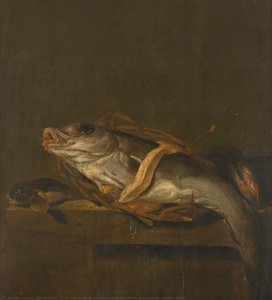
국립 미술관, 암스테르담국립 미술관 암스테르담 2 Still Life with a Haddock and Gurnard, Jan Vonck, 1640 - 1662, Dead Birds, Jan Vonck, 1640 - 1662
애슈몰린 미술관, 옥스퍼드애슈몰린 미술관 옥스퍼드 2 Still Life of dead Birds, Still Life of Game on a stone Sill
스트라스부르 미술관, 스트라스부르스트라스부르 미술관 스트라스부르 1 Hunting still-life with hanging hare and birds
미니애폴리스 미술관, 미니애폴리스미니애폴리스 미술관 미니애폴리스 1 Still Life of Dead Birds

Jan Vonck, 매년 선보이는 대표작

이 페이지에 표시된 Jan Vonck의 경력은 1650년부터 1663년까지 총 14년이며, 각 연도별 가장 유명한 원작들이 나열되어 있습니다.

연도별 작품 수

연도를 선택하여 원작을 확인해 보세요.

Jan Vonck의 작품: 갤러리의 해답

Jan Vonck의 작품 중 가장 유명한 작품은 무엇인가요?정답 확인하기

Dog attacking a cat (1650), 바르샤바 국립 박물관, 바르샤바. 다음은 Hunting still-life with hanging hare and birds (1657)와 Dead Game입니다.

Jan Vonck이(가) Dog attacking a cat을(를) 완성했을 당시의 나이는 몇 살이었나요?정답 확인하기

19세: Dog attacking a cat은(는) 1650년 작품이며, Jan Vonck은(는) 1631년에 태어났습니다.

Jan Vonck의 대표작 10점은 무엇인가요?정답 확인하기

Dog attacking a cat, Hunting still-life with hanging hare and birds, Dead Game, Dead Swan, Vanitas Still Life, Still Life with Dead Birds and a Flower Pot, Dead birds on a stone ledge, Still Life of Dead Birds, Dead Birds 및 Game Birds. 위 순위는 각 작품의 제작 연도와 소장 박물관을 나타냅니다.

Jan Vonck의 작품은 몇 점인가요?정답 확인하기

저희 카탈로그에는 1650년부터 1663년 사이의 Jan Vonck 작가의 작품 22점이 수록되어 있습니다.

Jan Vonck의 가장 유명한 원작들은 어디에 전시되어 있을까요?정답 확인하기

대부분 바르샤바 국립 박물관 (바르샤바), Groninger Museum (흐로닝언) 및 Museum Boijmans Van Beuningen (로테르담)에 소장되어 있습니다. 위의 박물관 목록에서 전체 목록을 확인하실 수 있습니다.

Jan Vonck의 가장 유명한 작품들은 언제 제작되었나요?정답 확인하기

1660 동안: 이 페이지의 총 20점의 작품 중 3점이 해당 시기에 제작되었으며, 그중 Dead birds on a stone ledge점입니다.

Jan Vonck의 초기 및 후기 대표작은 무엇인가요?정답 확인하기

이 페이지에서 가장 오래된 작품은 Dog attacking a cat (1650)이며, 가장 최근 작품은 Trompe-l'œil Still Life with Dead Birds (1663)입니다.

Jan Vonck 작가가 가장 자주 다룬 주제는 무엇인가요?정답 확인하기

이 페이지의 20점의 작품에 걸쳐 있는 Feathers (10), Dead birds (8) 및 Stone ledge (5)

Jan Vonck 작가가 가장 많이 사용한 매체는 무엇인가요?정답 확인하기

이 페이지의 총 20점의 작품 중 6점의 Oil

바르샤바 국립 박물관이(가) 소장하고 있는 Jan Vonck의 원작은 무엇인가요?정답 확인하기

Dog attacking a cat 및 Dog attacking a cat: 바르샤바 국립 박물관, 바르샤바은(는) 이 페이지에 있는 작품 중 2점을 소장하고 있습니다.

Jan Vonck: 작가

Jan Vonck: A Dutch Master of Living Birds

Born in Torun, Poland, in 1631, Jan Vonck’s artistic journey began amidst the turmoil of a shifting political landscape. His early life was shaped by his father, Elias Vonck – also a painter – who instilled in him a deep appreciation for depicting the natural world, particularly its feathered inhabitants. This familial legacy proved pivotal, establishing a foundation rooted in meticulous observation and a commitment to capturing the vitality of birds within their environments. Vonck’s career unfolded primarily in Amsterdam, a vibrant hub of artistic activity during the Dutch Golden Age, where he honed his skills and established himself as a respected artist specializing in a remarkably specific yet captivating genre: the still life of living birds.

Vonck's artistic development was profoundly influenced by the masters who preceded him. He clearly drew inspiration from the techniques of Joannes Fijt, Jan Baptist Weenix, Alexander Adriaenssen, and Melchior Hondecoeter – all renowned for their masterful depictions of animals in natural settings. These artists established a precedent for portraying birds with an astonishing level of realism, capturing not just their physical appearance but also their inherent movement and alertness. Vonck’s work can be seen as a continuation of this tradition, building upon the foundations laid by his predecessors while imbuing it with his own unique style.

The Art of the Living Still Life

Vonck's fame rests almost entirely on his series of still life paintings featuring birds. These weren’t simply depictions of animals; they were carefully constructed narratives, often set within richly detailed landscapes. He frequently portrayed hunting scenes – a common motif during that era – showcasing dead poultry alongside the living birds, creating a poignant commentary on the cycle of life and death. The inclusion of elements like flower pots, fruits, and other domestic objects added layers of meaning to these compositions, suggesting themes of abundance, mortality, and the relationship between humanity and nature.

What distinguishes Vonck’s work is his extraordinary ability to convey a sense of immediacy and dynamism. He meticulously rendered each feather, capturing its texture and sheen with remarkable precision. His birds weren't static subjects; they appeared poised for flight, alert to their surroundings, or engaged in various behaviors – preening, foraging, or observing the viewer. This attention to detail, combined with his skillful use of light and shadow, created a powerful illusion of life within the painted surface.

Notable Works and Influences

Among Vonck’s most celebrated works is “Stilleven met dode vogels en een bloempot” (Still Life with Dead Birds and a Flower Pot), currently housed at the Rijksmuseum in Amsterdam. This painting exemplifies his signature style, seamlessly blending elements of realism, symbolism, and narrative. Another significant piece is "Dode Vogels" (Dead Birds), also held by the Rijksmuseum, which further demonstrates his ability to evoke emotion through the juxtaposition of life and death.

Interestingly, Vonck’s work has been linked to the landscapes of Jacob van Ruysdael. There are documented instances where he painted birds within Ruysdael's compositions, suggesting a collaborative relationship or an exchange of ideas between these two masters. This association highlights the broader artistic context in which Vonck operated and underscores his position as a key figure in the Dutch Golden Age.

Legacy and Historical Significance

Jan Vonck’s career was tragically cut short at the relatively young age of 32, dying in Amsterdam in 1664. Despite his brief life, he left behind a significant body of work that continues to captivate art lovers today. His meticulous depictions of birds have earned him a place among the most accomplished artists of the Dutch Golden Age, and his influence can be seen in the works of subsequent generations of painters.

Vonck’s legacy extends beyond his technical skill; he represents a pivotal moment in the history of still life painting. By elevating the depiction of animals to an art form, he demonstrated that nature itself could serve as a source of profound beauty and intellectual inquiry. His work remains a testament to the power of observation, the artistry of representation, and the enduring fascination with the natural world.