


1


11월 2026 업데이트 · 인기 점수 기준 순위 (각 작품의 검색, 방문 및 주문 수) · 4점의 Henry Pierce Bone 작품 (당사 카탈로그 기준)
요약하자면
Full-Length Portrait of Henry-Philip Hope (1802)은(는) Henry Pierce Bone의 작품 중 가장 많은 시선을 사로잡는 회화이며, 원작은 파리에 위치한 Musée Cognacq-Jay에 소장되어 있습니다. 그다음 시선은 Portrait of the Countess of Bedford, after Anton Van Dyck (1844)와 Portrait of William, Earl of Craven (1852)로 향합니다. 우리 카탈로그에 수록된 Henry Pierce Bone의 작품 4점 중, 가장 유명한 4점을 소개합니다. 각 작품은 제작 연도, 소장 박물관, 그리고 시대를 초월해 사랑받는 이유와 함께 독창적인 원작으로 제시됩니다.


This meticulously crafted hand-painted reproduction captures the essence of Sir Henry De la Beche, a prominent figure within the Geological Society of London in 1848. Engraved by Walker after the original miniature painted by the esteemed Henry Pierce Bone, this artwork offers a window into the intellectual fervor and burgeoning scientific exploration characteristic of Victorian England. The image isn't merely a likeness; it’s a testament to the era’s fascination with…
이 페이지에 있는 작품을 가장 많이 소장하고 있는 3개의 미술관
| 소장 미술관 | 도시 | Henry Pierce Bone의 작품 | 이 목록의 작품들 |
|---|---|---|---|
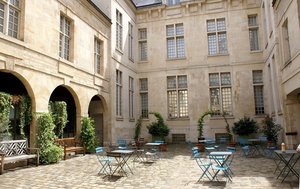 Musée Cognacq-Jay |
파리 | 2 | Full-Length Portrait of Henry-Philip Hope, Portrait of the Countess of Bedford, after Anton Van Dyck |
 Rhode Island School of Design Museum of Art |
프로비던스 | 1 | Portrait of William, Earl of Craven |
 Science Museum |
런던 | 1 | Sir Henry De la Beche V.P.R.S. |
그 시대를 정의하는 오리지널 작품을 만나보려면 연대를 선택하세요.
Full-Length Portrait of Henry-Philip Hope (1802), Musée Cognacq-Jay, 파리. 다음은 Portrait of the Countess of Bedford, after Anton Van Dyck (1844)와 Portrait of William, Earl of Craven (1852)입니다.
23세: Full-Length Portrait of Henry-Philip Hope은(는) 1802년 작품이며, Henry Pierce Bone은(는) 1779년에 태어났습니다.
저희 카탈로그에는 1802년부터 1852년 사이의 Henry Pierce Bone 작가의 작품 4점이 수록되어 있습니다.
대부분 Musée Cognacq-Jay (파리), Rhode Island School of Design Museum of Art (프로비던스) 및 Science Museum (런던)에 소장되어 있습니다. 위의 박물관 목록에서 전체 목록을 확인하실 수 있습니다.
1840s 동안: 이 페이지의 총 4점의 작품 중 2점이 해당 시기에 제작되었으며, 그중 Portrait of the Countess of Bedford, after Anton Van Dyck점입니다.
이 페이지에서 가장 오래된 작품은 Full-Length Portrait of Henry-Philip Hope (1802)이며, 가장 최근 작품은 Portrait of William, Earl of Craven (1852)입니다.
Full-Length Portrait of Henry-Philip Hope 및 Portrait of the Countess of Bedford, after Anton Van Dyck: Musée Cognacq-Jay, 파리은(는) 이 페이지에 있는 작품 중 2점을 소장하고 있습니다.
In the delicate, luminous world of nineteenth-century British art, few names evoke the meticulous precision and royal splendor associated with enamel painting quite like Henry Pierce Bone. Born in London on November 6, 1779, Bone was destined for a life steeped in artistic tradition. As the son of the celebrated enamel painter Henry Bone and Elizabeth van der Meulen—a descendant of the illustrious battle-painter Adam Frans van der Meulen—his very lineage was woven from the threads of fine art. This heritage provided him with an early, intimate education in the demanding techniques of his craft, a foundation that would eventually lead him to serve the highest echelons of the British monarchy.
Bone’s artistic journey was one of evolution and stylistic shifts. While he initially trained under his father's guidance, his early forays into the medium of oils allowed him to explore a broader range of expression. By the age of twenty, he had already begun exhibiting portraits that showcased a burgeoning talent for capturing character and light. However, it was in 1806 that Bone embarked on a significant period of creative exploration, turning his attention toward classical subjects. For nearly three decades, he immersed himself in the themes of antiquity, utilizing bold and skillful designs to breathe life into classical and scripture-based narratives. This era of his career demonstrated a profound ability to translate grand, epic tales onto much more intimate scales.
In 1833, Bone made a pivotal decision to return to the specialized art form of his father: enameling. This transition marked a period where his technical skill met a refined sense of decorative elegance. Enamel painting is an arduous process, requiring the application of pigmented glass to metal surfaces and subsequent firing in a kiln—a method that demands absolute precision, as even a single error can ruin the piece. While art historians often note that Bone’s enamels did not quite reach the transcendent heights of his father's legendary works, they nonetheless possess a remarkable vitality. His ability to act as a rapid sketcher allowed him to infuse his small-scale works with a sense of movement and spontaneity that is rare in such a rigid medium.
The brilliance of Bone’s work lies in the intersection of his classical training and the luminous properties of enamel. His compositions, often centered on scripture and mythological motifs, utilized the inherent glow of the medium to create a sense of divine or heroic light. This mastery of color and detail did not go unnoticed by the era's most influential figures. His talent earned him prestigious appointments, serving as the enamel painter to Adelaide of Saxe-Meiningen and later to the iconic duo of Queen Victoria and Prince Albert. To be entrusted with the portraiture and decorative arts of the royal court was the ultimate testament to his skill and social standing within the London art scene.
Though the era of grand enamel painting eventually gave way to new artistic movements, the contributions of Henry Pierce Bone remain a vital chapter in the history of British decorative arts. His work serves as a bridge between the classical traditions of the eighteenth century and the refined, ornamental tastes of the Victorian age. Through his portraits and religious subjects, he captured the spirit of an era that valued both historical continuity and exquisite craftsmanship.
Today, the traces of Bone’s artistry can be found in prestigious institutions, ensuring his place in the annals of art history:
Henry Pierce Bone passed away on October 21, 1855, leaving behind a body of work that reflects a life dedicated to the pursuit of beauty within the smallest of canvases. His ability to marry the grand scale of classical storytelling with the delicate intimacy of enamel remains a profound achievement in the history of English painting.