

1


11월 2026 업데이트 · 인기 점수 기준 순위 (각 작품의 검색, 방문 및 주문 수) · 44점의 Harry Callahan 작품 (당사 카탈로그 기준)
요약하자면
갤러리가 선정한 Harry Callahan의 대표작은 Alley, Chicago (1948)입니다. Eleanor, Chicago (1949)와 Eleanor, Chicago (1949)가 더해져 누구나 한눈에 알아볼 수 있는 완벽한 트리오를 완성합니다. Harry Callahan의 작품 44점 중, 갤러리는 가장 유명한 44점을 아래와 같이 소개합니다. 각 작품은 제작 연도, 소장 미술관 및 작품의 특징을 포함한 독창적인 원작입니다.
 Rome1968
12
 Siena, Italy1968
13
 Provincetown1972
14
 Campeche, Mexico1973
15
 Villahermosa, Mexico1973
16
 Untitled New York1971
17
 Cuzco, Peru1974
18
 Providence, Rhode Island1974
19Untitled New York Skyscrapers1971
20
 Sunlight on Water1943
21
 Dearborn Street, Chicago1948
22
 Detroit1945
23
 Port Huron, Michigan1952
24
 Ivy Tentacles on Glass, Chicago1952
25
 Skyscraper, Chicago1953
26
 Spruce Trees1950
27
 Wells Street, Chicago1949
28
 Collage, Chicago1957
29
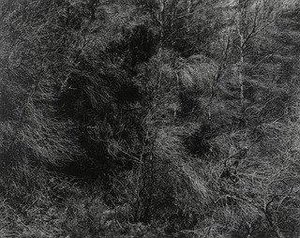 Trees, Aix en Provence1957
30
 Barbara1954
31
 Tree, Chicago1956 · Georgia Museum of Art
32
 Lake Michigan1954
33
 Michigan1960
34
 Eleanor, Aix en Provence, France1958
35
 Rocks and Grasses, Wisconsin1959
36
 Spider Web, Aix en Provence1958
37
 Providence1961
38
 Rhode Island1965
39
 Horseneck Beach, Massachusetts1965
40
 (Untitled) ( 372)1972
41
 Cape Cod1972
42
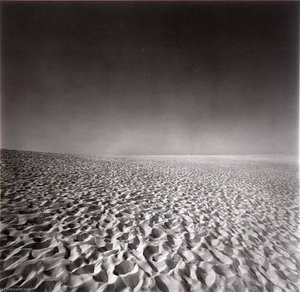 Cape Cod1972
43
 Ireland1979
44
 Atlanta1984
이 오리지널 작품들에서 가장 자주 등장하는 네 가지 주제와 그 정수를 보여주는 대표작들.
이 페이지에 있는 작품을 가장 많이 소장하고 있는 1개의 미술관
| 소장 미술관 | 도시 | Harry Callahan의 작품 | 이 목록의 작품들 |
|---|---|---|---|
 Georgia Museum of Art |
애슨스 | 1 | Tree, Chicago |
그 시대를 정의하는 오리지널 작품을 만나보려면 연대를 선택하세요.


Alley, Chicago (1948). 다음은 Eleanor, Chicago (1949)와(과) Eleanor, Chicago (1949)입니다.
36세: Alley, Chicago은(는) 1948년 작품이며, Harry Callahan은(는) 1912년에 태어났습니다.
Alley, Chicago, Eleanor, Chicago, Eleanor, Chicago, Eleanor, Chicago, 1949, Collage, Collages, Eleanor, Port Huron, Cutouts, Eleanor, Wisconsin 및 Multiple Exposure. 위 순위는 각 작품의 제작 연도와 소장 박물관을 나타냅니다.
저희 카탈로그에는 1943년부터 1984년 사이의 Harry Callahan 작가의 작품 44점이 수록되어 있습니다.
대부분 Georgia Museum of Art (애슨스)에 소장되어 있습니다. 위의 박물관 목록에서 전체 목록을 확인하실 수 있습니다.
1950s 동안: 이 페이지의 총 44점의 작품 중 17점이 해당 시기에 제작되었으며, 그중 Collage점입니다.
이 페이지에서 가장 오래된 작품은 Sunlight on Water (1943)이며, 가장 최근 작품은 Atlanta (1984)입니다.
이 페이지의 44점의 작품에 걸쳐 있는 Landscape (2), American art (2) 및 Black and white (2)
이 페이지의 원작들을 기준으로 볼 때, Contemporary realism
Harry Morey Callahan (1912-1999) wasn’t a name that frequently echoed through the halls of 20th-century art circles during his lifetime. Yet, beneath the surface of his seemingly quiet dedication to photography lay an artist of profound depth and innovation—a chronicler of urban life, a master of subtle shifts in light and form, and a deeply personal observer of human relationships. Born in Detroit amidst the industrial heartland of America, Callahan’s journey was one marked by both pragmatic beginnings and a relentless pursuit of artistic expression, ultimately establishing him as a pivotal figure in American photography.
Callahan's early life offered a stark contrast to the world he would later capture through his lens. He began working at Chrysler Motors as a young man, a practical step that provided stability but also fueled a desire for something more intellectually stimulating. This led him to pursue an engineering degree at Michigan State University, though he ultimately dropped out and returned to Chrysler, joining its camera club—a seemingly serendipitous turn of events that ignited his passion for photography. A pivotal moment arrived in 1941 when Ansel Adams’s lecture profoundly impacted Callahan, inspiring him to treat his craft with the seriousness it deserved. This marked a shift from casual experimentation to a deliberate and focused approach.
His early collaborations, particularly with Todd Webb, proved invaluable. Webb's experience and guidance helped refine Callahan’s technique, while their shared enthusiasm fostered a creative dialogue. The 1941 trip to Rocky Mountain State Park, though ultimately unsuccessful in producing photographs, served as an important formative experience, solidifying his commitment to the medium. The invitation to teach at the Institute of Design in Chicago in 1946, under the mentorship of László Moholy-Nagy—a leading figure in avant-garde art and photography—represented a significant step forward. This move brought him into contact with other influential artists and designers, exposing him to new ideas and techniques.
Callahan's photographic style was characterized by an almost obsessive dedication to daily observation. He developed a unique method—a deliberate walk through his chosen city each morning, followed by hours spent meticulously crafting proof prints from that day’s best negatives in the afternoon. This process yielded remarkably few finished images – often no more than six per year – yet each one was imbued with a remarkable intensity and precision. He wasn't interested in grand narratives or dramatic compositions; instead, he sought to capture the quiet poetry of everyday life.
His photographs frequently featured urban landscapes—the gritty streets of Detroit, the bustling avenues of Chicago, and the industrial scenes of Rhode Island. However, his work extended far beyond mere documentation. Callahan possessed a keen eye for line, form, and light, skillfully manipulating these elements to create images that were both visually arresting and emotionally resonant. He was particularly adept at capturing the interplay of light and shadow, using them to evoke mood and atmosphere. A defining element of his style was his use of multiple exposures, creating layered effects that added depth and complexity to his compositions.
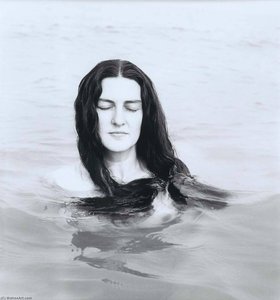
Perhaps most notably, Callahan’s work consistently centered around his wife, Eleanor Knapp. From 1947 until her death in 1960, she became the primary subject of his photographs—a constant presence in his urban explorations. These images weren't simply portraits; they were intimate studies of a relationship, capturing moments of shared experience and quiet intimacy amidst the backdrop of city life. The inclusion of Eleanor, often as a small counterpoint to expansive landscapes or architectural vistas, created a powerful juxtaposition between the personal and the monumental.
Callahan’s influence extended far beyond his own artistic output. He recognized the transformative power of photography and dedicated himself to nurturing the next generation of artists. In 1961, he established a photography program at the Rhode Island School of Design, where he taught for nearly two decades. His approach was unconventional—he encouraged students to document their own lives, fostering a sense of personal connection to their work. He didn’t provide prescriptive techniques; instead, he demonstrated through his own practice how to observe, analyze, and ultimately translate those observations into compelling images.
He famously eschewed formal teaching methods, relying on example and observation rather than lectures or assignments. His student Aaron Siskind, a prominent abstract photographer, benefited greatly from Callahan’s guidance, further spreading the artist's innovative approach. Callahan left behind an extensive archive of negatives and proof prints—a testament to his prolific activity—which is now housed at the Center for Creative Photography at the University of Arizona. His work continues to be exhibited and studied, solidifying his place as a significant figure in American art history.
Harry Callahan’s body of work encompasses a vast range of subjects and techniques. Some notable examples include:
Throughout his career, Callahan received numerous accolades, including the Edward MacDowell Medal in 1993 and the National Medal of Arts in 1996. His work has been featured in major exhibitions at institutions such as the Museum of Modern Art (MoMA) and the Art Institute of Chicago. His influence can be seen in the work of countless photographers who followed in his footsteps, cementing his legacy as a pioneer of American photography.


