A Symphony of Color and Heritage
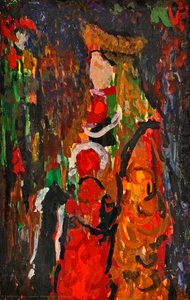
The art of George Ștefănescu-Râmnic serves as a vibrant bridge between the deep-rooted traditions of Romania and the bold, experimental spirit of European modernism. Born in the commune of Plăinești, within the Vrancea region, his early life was shaped by a landscape rich in cultural textures. As a painter, he achieved a rare synthesis of styles, blending the graphic precision of his training with a profound, almost primal connection to folk aesthetics. His work is often described as a masterful display of colorism, where intense hues are not merely decorative but act as the very essence of the subject matter, much like the fragrance of a flower luring one to its heart.
His artistic journey began with a foundational apprenticeship under the church painter Constantinescu, a period that likely instilled in him an appreciation for the spiritual and symbolic weight of imagery. This early exposure to sacred art paved the way for his formal studies at the Academy of Creative Arts in Bucharest, where he studied under the notable Nicolae Dărăscu. Through this rigorous academic training, Ștefănescu-Râmnic developed a technique that allowed him to navigate between the structured world of graphics and the fluid, emotive realms of expressionism and Fauvism.
The Language of Expression and Light
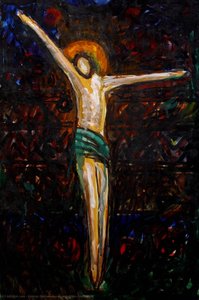
To encounter a painting by Ștefănescu-Râmnic is to enter a world where color takes center stage to support and illustrate profound ideas. He was celebrated as a great colorist, a man who dared to bring together intense, clashing colors in a way that recalled the legendary Fauvist era. Yet, his use of palette was never chaotic; rather, it possessed a secret harmony derived from the traditions of Romanian glass painting and other folk arts. This unique heritage allowed him to create works that felt both contemporary and ancient, capturing a sense of timelessness through dynamic brushstrokes and thick impasto.
His repertoire includes a diverse array of subjects that showcase his ability to manipulate medium and emotion:
- The Little Prince: An oil painting that utilizes swirling blues and a bold red figure to create an emotionally charged, symbolic atmosphere.
- Red Nude: A powerful example of abstract expressionism, where vibrant reds and energetic textures command the viewer's attention.
- Adam and Eve: A captivating watercolor and ink piece that uses dynamic figures to explore themes of connection and human origin.
- The Red Torero: An exploration of movement and symbolic depth through bold colors and striking composition.
Legacy of a Romanian Master
Throughout his active years, which spanned from the mid-1930s until the early 21st century, George Ștefănescu-Râmnic remained a vital force in the landscape of Romanian and German contemporary art. His ability to integrate the progress of modern graphics with the soulful inheritance of his homeland allowed him to reach a unique artistic synthesis. He did not merely paint scenes; he captured essences, using color as a tool to invite the viewer into a deeper feeling of the subject's true nature.
His historical significance lies in this very ability to harmonize the intense and the delicate, the modern and the traditional. By drawing inspiration from the folk arts of Romania while embracing the avant-garde movements of Europe, he created a body of work that remains a testament to the power of color to communicate the unspoken depths of the human experience.
Q&A
조지 스테퍼네스쿠-름닉의 작품을 연도순으로 어디에서 볼 수 있나요?
조지 스테퍼네스쿠-름닉의 작품은 작품 연대기 페이지에서 연도순으로 확인하실 수 있습니다.
조지 스테퍼네스쿠-름닉의 작품 중 조회수가 가장 높은 것은 무엇인가요?
조지 스테퍼네스쿠-름닉의 방문 통계 페이지에서는 이 사이트에 등록된 작가의 작품들을 바탕으로 산출된 통계 정보를 제공합니다.
조지 스테퍼네스쿠-름닉 작가는 어떤 사조의 작품 활동을 했나요?
조지 스테퍼네스쿠-름닉 작가의 작품을 예술 사조별로 모아둔 모든 미술 사조 페이지에서 해당 작가가 활동했던 사조를 확인하실 수 있습니다.