

1


11월 2026 업데이트 · 인기 점수 기준 순위 (각 작품의 검색, 방문 및 주문 수) · 3점의 Françoise Duparc 작품 (당사 카탈로그 기준)
요약하자면
Young Woman at Work; formerly known as La Tricoteuse (1750)은(는) Françoise Duparc의 작품 중 가장 많은 시선을 사로잡는 회화이며, 원작은 마르세유에 위치한 Musée des Beaux-Arts de Marseille에 소장되어 있습니다. 그다음 시선은 Girl with Cap (bust) (1750)와 The Herbal Tea Seller로 향합니다. 우리 카탈로그에 수록된 Françoise Duparc의 작품 3점 중, 가장 유명한 3점을 소개합니다. 각 작품은 제작 연도, 소장 박물관, 그리고 시대를 초월해 사랑받는 이유와 함께 독창적인 원작으로 제시됩니다.
이 페이지에 있는 작품을 가장 많이 소장하고 있는 2개의 미술관
| 소장 미술관 | 도시 | Françoise Duparc의 작품 | 이 목록의 작품들 |
|---|---|---|---|
 Musée des Beaux-Arts de Marseille |
마르세유 | 2 | Young Woman at Work; formerly known as La Tricoteuse, The Herbal Tea Seller |
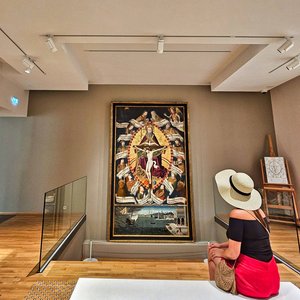 Musée Hyacinthe Rigaud |
페르피냥 | 1 | Girl with Cap (bust) |
여기에 표시된 모든 Françoise Duparc의 원작은 1750년도 작품으로, 유명도 순으로 나열되어 있습니다.
연도를 선택하여 원작을 확인해 보세요.
Young Woman at Work; formerly known as La Tricoteuse (1750), Musée des Beaux-Arts de Marseille, 마르세유. 다음은 Girl with Cap (bust) (1750)와 The Herbal Tea Seller입니다.
24세: Young Woman at Work; formerly known as La Tricoteuse은(는) 1750년 작품이며, Françoise Duparc은(는) 1726년에 태어났습니다.
저희 카탈로그에는 Françoise Duparc의 작품 3점이 있습니다.
대부분 Musée des Beaux-Arts de Marseille (마르세유) 및 Musée Hyacinthe Rigaud (페르피냥)에 소장되어 있습니다. 위의 박물관 목록에서 전체 목록을 확인하실 수 있습니다.
1750 동안: 이 페이지의 총 3점의 작품 중 2점이 해당 시기에 제작되었으며, 그중 Young Woman at Work; formerly known as La Tricoteuse점입니다.
Young Woman at Work; formerly known as La Tricoteuse 및 The Herbal Tea Seller: Musée des Beaux-Arts de Marseille, 마르세유은(는) 이 페이지에 있는 작품 중 2점을 소장하고 있습니다.
In the sun-drenched landscape of Murcia, Spain, a child was born to a French sculptor named Antoine Duparc and a local woman, Gabrielle Negrela. This union of cultures meant that Françoise Duparc would grow up with a foot in two worlds, though her family would soon find their way back to the bustling streets of Marseille. It was within the walls of her father's studio that the first seeds of her vocation were sown. She did not merely observe the art of her household; she lived it, absorbing the tactile lessons of form and shadow that her father mastered in stone.
Her talent soon demanded a more formal discipline. Between 1742 and 1745, she entered the workshop of Jean-Baptiste van Loo in Aix-en-Provence. This apprenticeship was a formative period that shaped her hand and her eye, teaching her the nuances of portraiture and the quiet dignity of the human figure. She was a student of light and character, developing a skill so precise that it was said she could replicate the works of her master with a fidelity that blurred the line between original and copy.
The life of Françoise Duparc was one of movement, a wandering path that took her across the borders of Europe. She was not a painter confined to a single studio, but an artist whose presence was felt in the salons of Paris and the galleries of London. Her work reached the eyes of the public in London during the years 1763 and 1766, suggesting a woman of significant ambition and professional reach. Even the distant city of Wrocław saw her presence, as she spent time there alongside her sister, Claire.
Despite her travels, the pull of her adopted home remained strong. She eventually returned to Marseille, where her status as a painter was formally recognized. Her achievements included:
When we look at the remnants of her output, we find a painter who preferred the humble reality of the street to the grandiosity of the court. Her style was marked by a profound simplicity, stripping away unnecessary embellishments to find the truth in a face or a gesture. She turned her gaze toward the common people—the workers, the sellers, and the elderly—capturing them in their homes or amidst their labors. This focus on genre scenes and portraiture gave her work a grounded, honest quality that echoed the traditions of Dutch painting and the quiet realism of the Le Nain brothers.
The true measure of her legacy survives in the four paintings she bequeathed to the city of Marseille, works that have been preserved in the Musée des beaux-arts de Marseille. These pieces, including depictions of a tea merchant and an old woman, reveal a woman who found beauty in the unadorned. She did not seek to idealize her subjects; instead, she sought to honor their presence. Though much of her studio was lost to time, the street named Rue Françoise Duparc in Marseille remains a quiet tribute to a woman who saw the world exactly as it was.

