메뉴 펼치기
무료 아트 컨설팅

1627 - 1709

주요 정보

  • Art period: Early Modern
  • Museums on APS:
    • Monasterio de El Escorial
    • Monasterio de El Escorial
    • Monasterio de El Escorial
    • Monasterio de El Escorial
    • Monasterio de El Escorial
  • Top-ranked work: Vase of Flowers
  • Lifespan: 82 years
  • Died: 1709
  • Top 3 works:
    • Vase of Flowers
    • Vase Of Flowers
  • 더 보기…
  • Nationality: Italy
  • Also known as: francisco perez sierra
  • Works on APS: 2
  • Born: 1627, Naples, Italy
  • Copyright status: Public domain

예술 상식 퀴즈

각 질문의 정답은 하나뿐입니다.

질문 1:
Francisco Pérez Sierra was born in:
질문 2:
What artistic style is most associated with Francisco Pérez Sierra?
질문 3:
Francisco Pérez Sierra gained fame for his depictions of:
질문 4:
Where did Francisco Pérez Sierra spend most of his artistic career?
질문 5:
Francisco Pérez Sierra's technique involved:

Francisco Pérez Sierra: A Baroque Master of Battle and Floral Still Life

Francisco Pérez Sierra (1627 – 1709) stands as a pivotal figure in Spanish Baroque art, renowned for his dramatic depictions of battle scenes alongside exquisitely rendered floral compositions. Born in Naples, Italy, he embarked on an artistic journey that would ultimately solidify his reputation as one of the era’s foremost painters, particularly celebrated for capturing the dynamism and grandeur of warfare while simultaneously conveying the serene beauty of nature. His legacy continues to inspire admiration for its technical prowess and emotional depth.

Early Life and Training

Sierra's formative years were spent in Naples under the tutelage of Aniello Falcone, a master of battle painting who instilled in him a meticulous approach to capturing movement and emotion on canvas. Falcone’s influence extended beyond mere technique; he championed a style characterized by theatrical lighting—tenebrism—a hallmark of Baroque art that aimed to heighten dramatic impact through stark contrasts between light and shadow. This training honed Sierra's skills and established him firmly within the artistic traditions of his time, preparing him for a distinguished career at court in Madrid.

Madrid Years and Patronage

Sierra’s relocation to Madrid coincided with the ascension of Juan de Toledo to the throne, marking the beginning of an era marked by royal patronage that propelled Sierra's artistic endeavors. He benefited from commissions undertaken by the Habsburg monarchs, who recognized his talent and commissioned him to decorate palaces and churches throughout the capital. Notably, he undertook monumental fresco projects for the Huerta de Sora, residence of the Marquis of Eliche, demonstrating his mastery of large-scale painting techniques and cementing his position as a favored artist within the royal court. Collaborations with fellow artists like Matías de Torres and Francisco Rizi further enriched his artistic repertoire and exposed him to diverse stylistic influences.

Notable Works: Battle Scenes

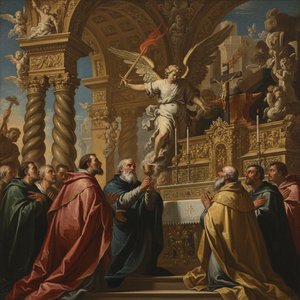
Sierra’s battle paintings exemplify the Baroque fascination with heroic narratives and dramatic spectacle. His depictions of conflicts—often inspired by historical events—are characterized by meticulous detail, conveying not only the physicality of combat but also its psychological intensity. The “Battle of Pavia” (1674), housed in the Museo Nacional del Prado, exemplifies this stylistic commitment. Sierra’s masterful use of tenebrism creates a palpable sense of urgency and terror, capturing the chaos and brutality of warfare with unflinching realism. He skillfully rendered armor, weaponry, and facial expressions to convey the emotions of soldiers engaged in battle—a testament to his artistic vision and technical skill.

Notable Works: Floral Still Lifes

Alongside his dramatic battle scenes, Sierra achieved considerable acclaim for his exquisitely crafted floral still lifes—a genre that reflects the Baroque’s appreciation for decorative elegance and sensual beauty. His “Vase of Flowers” (circa 1675), currently residing in the Museo Nacional de Bellas Artes Reina Sofía, showcases a breathtaking array of blossoms arranged with meticulous precision. Sierra's technique involved layering translucent glazes to achieve luminous color palettes and capturing subtle nuances of texture—a hallmark of Baroque painting that distinguishes it from earlier artistic styles. The delicate rendering of petals, stems, and leaves demonstrates his profound understanding of botanical observation and artistic representation.

Legacy and Influence

Francisco Pérez Sierra’s contribution to Spanish Baroque art is undeniable. His unwavering dedication to realism combined with theatrical lighting established him as a pioneer in capturing the emotional power of visual storytelling—a legacy that continues to resonate within the broader history of European painting. He served as an inspiration for subsequent generations of artists, shaping stylistic trends and elevating standards of artistic excellence. Sierra’s enduring fame rests upon his ability to convey both the grandeur of heroic action and the tranquil serenity of natural beauty—a duality that encapsulates the essence of Baroque art itself.