
1


11월 2026 업데이트 · 인기 점수 기준 순위 (각 작품의 검색, 방문 및 주문 수) · 1점의 Emilio De Fabris 작품 (당사 카탈로그 기준)
요약하자면
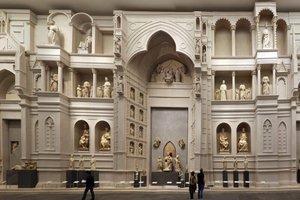
Emilio De Fabris가 남긴 모든 원작 중 가장 유명한 작품은 피렌체의 두오모에 소장된 West façade (1887)입니다. Emilio De Fabris의 작품 1점을 보유하고 있습니다. 갤러리는 세계가 가장 찬사하는 1점을 엄선하여 각 작품의 제작 연도, 소장 미술관 및 작품에 담긴 이야기를 함께 소개합니다.
이 페이지에 있는 작품을 가장 많이 소장하고 있는 1개의 미술관
| 소장 미술관 | 도시 | Emilio De Fabris의 작품 | 이 목록의 작품들 |
|---|---|---|---|
 두오모 |
피렌체 | 1 | West façade |
West façade (1887)
저희 카탈로그에는 Emilio De Fabris의 작품 1점이 있습니다.
대부분 두오모 (피렌체)에 소장되어 있습니다. 위의 박물관 목록에서 전체 목록을 확인하실 수 있습니다.
Emilio De Fabris stands as a monumental figure in the architectural tapestry of Italy, a visionary whose name is forever etched into the very stone of Florence. Born into the nobility of Florence on October 28, 1808, his life was destined to be an intersection of classical heritage and transformative innovation. His early years were steeped in the rich artistic atmosphere of his birthplace, where he received formal training at the prestigious Academy of Fine Arts. This foundational period did more than teach him the mechanics of design; it instilled in him a profound reverence for sculptural artistry and the delicate balance of form and ornament. As a young man, De Fabris embarked on extensive travels across Europe, wandering through the ancient streets of Rome and the storied canals of Venice. These journeys were transformative, allowing him to absorb the weight of Roman neoclassicism and the refined elegance of Parisian Beaux-Arts aesthetics, influences that would later coalesce into his unique architectural language.
The true measure of De Fabris’s genius, however, was revealed in his response to one of the most daunting challenges in architectural history: the redesign of the west façade of the Santa Maria del Fiore cathedral. The original design by Giotto, while venerable, had become a relic of a bygone era, and the city sought a new face for its spiritual heart—one that could bridge the gap between the fading grandeur of the Gothic tradition and the burgeoning humanist ideals of the Renaissance. In 1871, De Fabris emerged victorious in a series of rigorous competitions. His vision was not merely to replace what was lost, but to synthesize two distinct epochs into a singular, breathtaking harmony. Working alongside Michelangelo Maiorfi, he meticulously crafted a design that utilized polychrome marble panels in striking shades of red, green, and white, creating a vibrant tapestry of stone that breathed new life into the Duomo.
Beyond the monumental scale of the cathedral, De Fabris’s artistic identity was deeply rooted in the nuances of sculptural mastery. His ability to capture human emotion and weave complex narratives through stone allowed his work to transcend mere structural utility. He possessed a rare talent for ornamentation that felt organic to the architecture itself, ensuring that every intricate detail served a higher spiritual or aesthetic purpose. This skill is perhaps most evident in his role as a professor at the Florentine Academy of Fine Arts, where he passed on his dedication to artistic synthesis to a new generation of creators. His career was marked by significant civic contributions, including his collaborative work on the Palazzo della Borsa in Florence, which further cemented his status as an architect capable of handling both the sacred and the secular with equal grace.
The historical significance of Emilio De Fabris lies in his role as a bridge between eras. He did not seek to erase the past but to elevate it, using the tools of modern innovation to honor the architectural soul of Florence. His work on the Duomo remains one of the most recognizable landmarks in the world, a testament to his ability to navigate the tension between tradition and progress. When he passed away on June 3, 1883, he left behind more than just buildings; he left a legacy of aesthetic unity that continues to inspire awe in all who stand before the magnificent, multicolored face of the Florentine cathedral. His life remains a profound example of how an artist can take the fragments of history and assemble them into a timeless masterpiece.