

1


11월 2026 업데이트 · 인기 점수 기준 순위 (각 작품의 검색, 방문 및 주문 수) · 3점의 Edith Corbet 작품 (당사 카탈로그 기준)
요약하자면
Lady Adelaide Chetwynd-Talbot, Countess Brownlow (1844-1917) (1885)은(는) Edith Corbet의 작품 중 가장 많은 시선을 사로잡는 회화이며, 원작은 Grantham에 위치한 Belton House에 소장되어 있습니다. 그다음 시선은 Macgillicuddy's Reeks (1892)와 Cicero's Villa and the Bay of Baiae (1909)로 향합니다. 우리 카탈로그에 수록된 Edith Corbet의 작품 3점 중, 가장 유명한 3점을 소개합니다. 각 작품은 제작 연도, 소장 박물관, 그리고 시대를 초월해 사랑받는 이유와 함께 독창적인 원작으로 제시됩니다.
이 페이지에 있는 작품을 가장 많이 소장하고 있는 2개의 미술관
| 소장 미술관 | 도시 | Edith Corbet의 작품 | 이 목록의 작품들 |
|---|---|---|---|
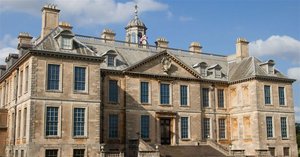 Belton House |
Grantham | 1 | Lady Adelaide Chetwynd-Talbot, Countess Brownlow (1844-1917) |
 뉴사우스웨일스 주립 미술관 |
시드니 | 1 | Macgillicuddy's Reeks |
그 시대를 정의하는 오리지널 작품을 만나보려면 연대를 선택하세요.
Lady Adelaide Chetwynd-Talbot, Countess Brownlow (1844-1917) (1885), Belton House, Grantham. 다음은 Macgillicuddy's Reeks (1892)와 Cicero's Villa and the Bay of Baiae (1909)입니다.
39세: Lady Adelaide Chetwynd-Talbot, Countess Brownlow (1844-1917)은(는) 1885년 작품이며, Edith Corbet은(는) 1846년에 태어났습니다.
저희 카탈로그에는 1885년부터 1909년 사이의 Edith Corbet 작가의 작품 3점이 수록되어 있습니다.
대부분 Belton House (Grantham) 및 뉴사우스웨일스 주립 미술관 (시드니)에 소장되어 있습니다. 위의 박물관 목록에서 전체 목록을 확인하실 수 있습니다.
이 페이지에서 가장 오래된 작품은 Lady Adelaide Chetwynd-Talbot, Countess Brownlow (1844-1917) (1885)이며, 가장 최근 작품은 Cicero's Villa and the Bay of Baiae (1909)입니다.
Edith Corbet enters the historical record on 28 December 1846, born in Goulburn, New South Wales, Australia. She is the second daughter and fifth child of Henry Edenborough and Margaret Stedman. Her father, a sea captain, had made several voyages to Australia between 1833 and 1837 before deciding to settle there in 1840. The family establishes a life on a farm south of Goulburn known as 'Wollogorang,' a property featuring a two-storey brick and stone rubble building with distinctive French windows. This pastoral existence remains the family's reality until 1854.
The landscape of her childhood shifts when the family sells the Wollogorang property and returns to England. The Edenborough family, originally from Leicestershire, settles in London. There, they transition into the life of prosperous merchants, dealing in hosiery and silk. By 1861, the family is living in Kensington, Middlesex, with Edith aged fourteen. The domestic scene is marked by the loss of her father, Henry, who died in 1855 at Chesham Lodge in Surrey.
The move to Rome marks a definitive shift in her trajectory. Following her marriage to the Victorian painter and illustrator Arthur Murch, she settles into the Italian landscape. Here, the focus turns toward the direct observation of nature. She begins working alongside Giovanni Costa, the leader of the Macchiaioli group, from the mid-1870s onwards. The collaboration is more than mere proximity; Costa holds her artistic gifts in high regard, remembering their excursions to paint from nature at Fusino.
The light of the Mediterranean becomes her primary subject. In 1876, she and Costa travel to Venice. This period of movement and shared study defines her immersion in the Macchiaioli circle, as she moves away from traditional studio constraints to capture the immediate effects of natural light.
By 1871, Corbet is already a presence in the London art scene, exhibiting her work in the city. Her career gains momentum through the 1880s. During this decade, she becomes a frequent contributor to the Grosvenor Gallery and the New Gallery, placing her landscapes within the competitive pulse of Victorian exhibition culture.
The scope of her reach extends beyond the British Isles. In 1893, her work travels to the Palace of Fine Arts at the World's Columbian Exposition in Chicago, Illinois. This international exposure marks a significant moment in her professional trajectory. Following her marriage to Matthew Ridley Corbet in 1891, her exhibition pattern shifts. She moves away from the previous galleries to exhibit mainly at the Royal Academy, maintaining a presence in London for the remainder of her life.
The influence of the Macchiaioli group—often referred to as the Tuscans or the Etruscans—defines her approach to the landscape. She rejects the rigid constraints of academic tradition, choosing instead to work outdoors. This practice allows her to capture the immediate effects of natural light as they shift across the terrain. Her focus remains on the way light interacts with the environment, seeking to render the atmosphere through direct observation.
Her compositions frequently adopt a panoramic format. She utilizes elongated horizontal canvases to accommodate these wide vistas. This choice of scale dictates the way she organizes space, stretching the view to encompass the breadth of the scenery. The physical shape of the canvas works in tandem with her subject matter to emphasize the expansive nature of the landscapes she depicts.
Color application in her work follows a specific logic. She maintains a preoccupation with harmonious and subdued opaque colour. Rather than relying on high-contrast intensity, she builds her scenes through these controlled tones. This method creates a sense of atmospheric unity across the elongated surfaces, prioritizing the subtle shifts in light and tone over dramatic chromatic shifts.

