Dora Hitz: A Pioneer of Symbolist Portraiture
Dora Hitz (30 March 1856, Altdorf bei Nürnberg – 20 November 1924 Berlin) was a Romanian court painter and influential figure in the Berlin Secession. Her artistic journey spanned from early studies in Munich’s Damenmalschule der Frau Staatsrat Weber to her celebrated frescoes adorning Peleș Castle and her enduring legacy as a champion of female artists. Hitz's work embodies a distinctive blend of
Impressionism,
Symbolism, and
Expressionism, reflecting the intellectual currents of her time while establishing herself as one of Germany’s foremost portrait painters.
- Early Life & Education: Born in Bavaria, Dora Hitz’s family moved to Ansbach when she was young, shaping her formative years amidst a burgeoning artistic environment. Recognizing her talent early on, she enrolled at Munich’s Damenmalschule der Frau Staatsrat Weber, where she honed her skills under Wilhelm von Lindenschmit the Younger, laying the foundation for her future stylistic explorations.
- Meeting Elisabeth of Wied & Romanian Patronage: A pivotal encounter with Elisabeth of Wied—the Queen consort of Romania—transformed Hitz’s life trajectory. This connection secured her position as court painter, granting her access to royal patronage and allowing her to immerse herself in the opulent artistic milieu of Bucharest.
- Parisian Influences & Artistic Development: Seeking further inspiration, Hitz relocated to Paris in 1880, immersing herself in a vibrant artistic landscape populated by luminaries like Luc-Olivier Merson, Gustave Courtois, Jean-Joseph Benjamin-Constant and Eugène Carrière. These mentors profoundly impacted her style, propelling her towards Impressionistic techniques while simultaneously nurturing her fascination with Symbolist aesthetics.
- Berlin Secession & Artistic Recognition: In 1892 Hitz joined the Verein Berliner Künstlerinnen und Kunstfreundinnen (Association of Female Artists), gaining invaluable connections within Berlin’s artistic circles and securing commissions from prominent clients. Her participation in the Berlin Secession—founded in 1892—solidified her position as a vanguard artist, aligning herself with fellow innovators who challenged conventional artistic norms.
- Legacy & Notable Achievements: Hitz received the Villa Romana Prize in 1906, providing crucial financial support for a year spent studying in Florence – an experience that further enriched her artistic vision. Throughout her life she continued to produce captivating portraits and monumental frescoes, notably those adorning Peleș Castle, cementing her place as one of Romania’s most celebrated artists and securing her enduring recognition within the annals of art history.
Style & Technique: Impressionism Meets Symbolism
Hitz's artistic style evolved from early Symbolist explorations to embrace Impressionistic principles, particularly evident in her landscapes and portraits. She skillfully employed
light and color—characteristics central to
Impressionism—to capture
fleeting moments of emotion and atmosphere. Simultaneously, she infused her canvases with Symbolist motifs—recurring symbols and archetypal imagery—reflecting a deeper engagement with philosophical ideas and psychological complexities. Her meticulous brushwork and nuanced tonal gradations contributed to the expressive power of her artworks.
- Color Palette: Hitz favored vibrant hues alongside muted tones, creating harmonious compositions that conveyed both visual beauty and emotional resonance.
- Brushstrokes: Loose, visible brushstrokes—a hallmark of Impressionism—were combined with delicate blending techniques to achieve textural richness and luminosity.
- Compositional Considerations: Hitz’s canvases often featured asymmetrical arrangements and unconventional perspectives, mirroring the spirit of Symbolist art's preoccupation with inner experience and psychological depth.
Peleș Castle Frescoes & Artistic Patronage
Perhaps Hitz’s most enduring achievement resides in her monumental frescoes adorning Peleș Castle—the opulent residence of Romania’s
royal family during Elisabeth of Wied's reign. These ambitious projects showcased her mastery of
fresco technique and cemented her reputation as a visionary artist capable of transforming architectural spaces into immersive artistic narratives. The frescoes depict scenes from Romanian folklore and history, reflecting Hitz’s commitment to celebrating national identity while elevating the castle’s grandeur through breathtaking visual artistry.
Influence & Artistic Circle
Dora Hitz cultivated connections with prominent artists of her era—including Wilhelm von Lindenschmit the Younger, Luc-
Olivier Merson and Gustave Courtois—who served as mentors and collaborators. Her participation in the Berlin Secession fostered dialogue among innovative thinkers and artists, shaping the artistic landscape of Germany at the turn of the century. Furthermore, she established a women’s art school in Berlin, nurturing the talents of aspiring female painters and advocating for greater inclusivity within the artistic profession.
Concluding Remarks: A Lasting Impression
Dora Hitz's
artistic legacy transcends mere stylistic innovation; it embodies a profound engagement with humanist values—particularly those championed by women artists—and a steadfast devotion to capturing the essence of human experience through evocative imagery and masterful technique. Her enduring influence continues to inspire artists today, ensuring that her contribution to
art history remains vividly present in our collective memory.


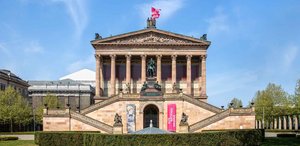 알테 나치오날갈레리
