동기창의 초상화

동기창 회화: 갤러리의 시선으로 선별한 가장 유명한 작품 54선

11월 2026 업데이트 · 인기 점수 기준 순위 (각 작품의 검색, 방문 및 주문 수) · 54점의 동기창 작품 (당사 카탈로그 기준)

요약하자면

갤러리가 선정한 동기창의 가장 유명한 작품은 明 董其昌 荊谿招隱圖 卷 Invitation to Reclusion at Jingxi (1611)이며, 원작은 뉴욕의 메트로폴리탄 미술관에 전시되어 있습니다. 明 董其昌 倣倪瓚山水圖 軸 Landscape with Trees in the Manner of Ni Zan (1301–1374) (1622)와 Excerpt from Xie Huilian’s Prose Poem “On Snow”가 더해져 누구나 한눈에 알아볼 수 있는 완벽한 트리오를 완성합니다. 동기창의 작품 54점 중, 갤러리는 가장 유명한 54점을 아래와 같이 소개합니다. 각 작품은 제작 연도, 소장 미술관 및 작품의 특징을 포함한 독창적인 원작입니다.

1555 – 1636, 송강 최다 소장처: 메트로폴리탄 미술관

갤러리 베스트 10 동기창 작품

1
明 董其昌 荊谿招隱圖 卷 Invitation to Reclusion at Jingxi (1611) 의 동기창

明 董其昌 荊谿招隱圖 卷 Invitation to Reclusion at Jingxi

1611 · Ink On Paper · 메트로폴리탄 미술관, 뉴욕

Snow clings to the jagged edges of the landscape, a pale weight upon the earth. In this ink-washed world, trees stand scattered like silent witnesses to the season. A few figures move through the white expanse, their presence small against the vastness of the mountains. The scene is a study in stillness, where the cold air seems to settle between the brushstrokes. It is a landscape of retreat, where the…

2
明 董其昌 倣倪瓚山水圖 軸 Landscape with Trees in the Manner of Ni Zan (1301–1374) (1622) 의 동기창

明 董其昌 倣倪瓚山水圖 軸 Landscape with Trees in the Manner of Ni Zan (1301–1374)

1622 · Ink On Paper · 메트로폴리탄 미술관, 뉴욕

A quiet forest breathes upon the paper, captured in a moment of profound stillness. Trees with skeletal branches and delicate leaves reach upward, their forms etched with a deliberate, calligraphic grace. This is not a scene of lush, overwhelming growth, but rather a study in sparse, rhythmic elegance. The ink flows in varying shades of grey, creating a sense of depth through the subtle interplay of light and shadow. Each…

4
Eight Views of Autumn Moods-6 의 동기창

Eight Views of Autumn Moods-6

In this composition, we find ourselves amidst a quietude that only the changing seasons can provide. The scene unfolds with a sense of profound stillness, where mountains rise in the background, their forms softened by the atmosphere. Trees surround the landscape, their presence felt through delicate brushwork that suggests the weight of the season. Scattered throughout this terrain are several figures, some positioned near the water's edge while others find…

5
Untitled (AQR4UL) (1603) 의 동기창

Untitled (AQR4UL)

1603 · Ink On Paper

The ink rests upon the paper, still holding the energy of the hand that guided it. In this work from 1603, Chinese characters emerge from the void, their forms shifting and turning as if caught in a slow, rhythmic movement. There is a profound sense of time held within these strokes; some characters appear bold and commanding, while others drift with a lighter, more ethereal grace. The composition avoids a…

6
Mt. Qingbian (1617) 의 동기창

Mt. Qingbian

1617 · Ink On Paper · 클리블랜드 미술관, 클리블랜드

This vertical scroll painting, executed in 1617, presents a rugged mountainous terrain rendered in monochrome ink. The composition utilizes a high-distance perspective, guiding the eye from a detailed foreground of rocky outcrops and dense vegetation upward through winding paths. The terrain is characterized by towering peaks and steep cliffs that recede into the background. Atmospheric perspective is achieved through varying ink densities, where the distant mountain tops appear lighter and…

7
Reminiscence of Jian River (1621) 의 동기창

Reminiscence of Jian River

1621 · Ink On Paper · 예일 대학교 미술관, 뉴헤이븐

The vertical composition of this 1621 ink and light color work presents a landscape of jagged mountain peaks and winding water. In the foreground, gnarled trees and rocky outcrops are rendered with fine, dark brushwork. These elements lead the eye upward through middle-ground hills that are partially obscured by pale grey washes. The upper register of the painting features towering, distant peaks that emerge from a layer of mist. The…

9
Transcription of the "Prose-poem on Promenading in the Back Garden" by Xie Tiao (464–499) and "Zuoyouming" by Cui Yuan (77–142) (1616) 의 동기창

Transcription of the "Prose-poem on Promenading in the Back Garden" by Xie Tiao (464–499) and "Zuoyouming" by Cui Yuan (77–142)

1616 · Ink

This work is a Transcription of the "Prose-poem on Promenading in the Back Garden" by Xie Tiao (464–499) and "Zuoyouming" by Cui Yuan (77–142). The piece was executed by Dong Qichang, a Chinese art theorist, calligrapher, painter, and politician. It dates to about 1616, originating from the later period of the Ming dynasty.

10
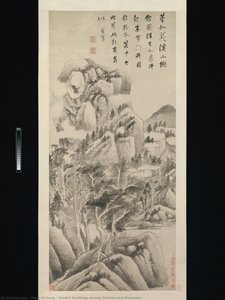
明 董其昌 溪山樾館圖 軸 紙本 Shaded Dwellings among Streams and Mountains (1622) 의 동기창

明 董其昌 溪山樾館圖 軸 紙本 Shaded Dwellings among Streams and Mountains

1622 · Ink On Paper

We are looking at 明 董其昌 溪山樾館圖 軸 紙本 Shaded Dwellings among Streams and Mountains, a significant work by the Ming dynasty artist Dong Qichang. Created in 1622, this piece is a vertical Chinese landscape painting, or Shanshui, rendered on paper. It represents a moment in the artist's career when his theories on the Southern School of painting were deeply integrated into his personal practice.

11위부터 54위까지의 동기창 작품

11Landscape in the Style of Mi Fu (1612) 의 동기창Landscape in the Style of Mi Fu1612 · 메트로폴리탄 미술관 12Poem in Cursive Script (1622) 의 동기창Poem in Cursive Script1622 13Poem Commemorating an Imperially Bestowed Feast (1632) 의 동기창Poem Commemorating an Imperially Bestowed Feast1632 · 메트로폴리탄 미술관 14River and Mountains on a Clear Autumn Day (1625) 의 동기창River and Mountains on a Clear Autumn Day1625 · 클리블랜드 미술관 15Poet Commemorating an Imperially Bestowed Feast (1632) 의 동기창Poet Commemorating an Imperially Bestowed Feast1632 16Poem by Wang Wei (1632) 의 동기창Poem by Wang Wei1632 17明 董其昌 山水圖 冊 紙本 Landscapes after old masters (1630) 의 동기창明 董其昌 山水圖 冊 紙本 Landscapes after old masters1630 · 메트로폴리탄 미술관 18Spring Mountains over Warm Greenery (1630) 의 동기창Spring Mountains over Warm Greenery1630 · 메트로폴리탄 미술관 19明 董其昌 山水圖詩 冊 Landscapes and Poems (1625) 의 동기창明 董其昌 山水圖詩 冊 Landscapes and Poems1625 · 메트로폴리탄 미술관 20English Five character Poem in Running Script (1644) 의 동기창English Five character Poem in Running Script1644 21Misty Trees and Mountain Range (1670) 의 동기창Misty Trees and Mountain Range1670 · 미니애폴리스 미술관 22Summer Landscape 의 동기창Summer Landscape메트로폴리탄 미술관 23Autumn Mountains 의 동기창Autumn Mountains메트로폴리탄 미술관 24Du Fu’s Poems in Running Script (1626) 의 동기창Du Fu’s Poems in Running Script1626 25Calligraphy after ancient masters (1600) 의 동기창Calligraphy after ancient masters1600 26Epitaph for Wang Jihuan and his Wife, Madame Min (1622) 의 동기창Epitaph for Wang Jihuan and his Wife, Madame Min1622 27Shaded Dwellings among Streams and Mountains (1622) 의 동기창Shaded Dwellings among Streams and Mountains1622 · 메트로폴리탄 미술관 28Steep Mountains and Silent Waters (1632) 의 동기창Steep Mountains and Silent Waters1632 · 킴벨 미술관 29Landscape in the Style of Ni Zan 의 동기창Landscape in the Style of Ni Zan 30Letter 의 동기창Letter 31River Landscape, in Ming style 의 동기창River Landscape, in Ming style 32"Guitian fu" by Zhang Pingzi 의 동기창"Guitian fu" by Zhang Pingzi 33Scene in Jiangnan 의 동기창Scene in Jiangnan 34Letter 의 동기창Letter 35Eight Views of Autumn Moods-8 의 동기창Eight Views of Autumn Moods-8China Modern and Contemporary Art Document Research Center 36Eight Views of Autumn Moods-5 의 동기창Eight Views of Autumn Moods-5China Modern and Contemporary Art Document Research Center 37Calligraphy 의 동기창Calligraphy 38COUPLET IN RUNNING SCRIPT 의 동기창COUPLET IN RUNNING SCRIPT 39CALLIGRAPHY AFTER ZHONG YOU 의 동기창CALLIGRAPHY AFTER ZHONG YOU 40CALLIGRAPHY IN CURSIVE SCRIPT 의 동기창CALLIGRAPHY IN CURSIVE SCRIPT 41CALLIGRAPHY IN RUNNING SCRIPT 의 동기창CALLIGRAPHY IN RUNNING SCRIPT 42LANDSCAPE 의 동기창LANDSCAPE 43Eight Views of Autumn Moods-3 의 동기창Eight Views of Autumn Moods-3China Modern and Contemporary Art Document Research Center 44LONELY TREES IN AN ISOLATED VILLAGE 의 동기창LONELY TREES IN AN ISOLATED VILLAGE 45Eight Views of Autumn Moods-4 의 동기창Eight Views of Autumn Moods-4China Modern and Contemporary Art Document Research Center 46Eight Views of Autumn Moods-2 의 동기창Eight Views of Autumn Moods-2China Modern and Contemporary Art Document Research Center 47LETTERS 의 동기창LETTERS 48COLLECTION OF LETTERS 의 동기창COLLECTION OF LETTERS 49CI POEMS IN RUNNING SCRIPT 의 동기창CI POEMS IN RUNNING SCRIPT 50LANDSCAPE AND CALLIGRAPHY 의 동기창LANDSCAPE AND CALLIGRAPHY 51ODE TO THE RED CLIFF IN RUNNING SCRIPT 의 동기창ODE TO THE RED CLIFF IN RUNNING SCRIPT 52Eight Views of Autumn Moods-1 의 동기창Eight Views of Autumn Moods-1China Modern and Contemporary Art Document Research Center 53AUTUMN MOUNTAIN WITH RED TREES 의 동기창AUTUMN MOUNTAIN WITH RED TREES 54Mountain landscape (1617) 의 동기창Mountain landscape1617 · 국립 미술관 빅토리아

동기창의 시대별 명작

동기창의 시선을 사로잡은 주제들

이 오리지널 작품들에서 가장 자주 등장하는 네 가지 주제와 그 정수를 보여주는 대표작들.

동기창의 원작을 소장하고 있는 미술관

이 페이지에 있는 작품을 가장 많이 소장하고 있는 7개의 미술관

소장 미술관 도시 동기창의 작품 이 목록의 작품들
메트로폴리탄 미술관, 뉴욕메트로폴리탄 미술관 뉴욕 10 明 董其昌 荊谿招隱圖 卷 Invitation to Reclusion at Jingxi, 明 董其昌 倣倪瓚山水圖 軸 Landscape with Trees in the Manner of Ni Zan (1301–1374), Landscape in the Style of Mi Fu
China Modern and Contemporary Art Document Research Center, 베이징China Modern and Contemporary Art Document Research Center 베이징 7 Eight Views of Autumn Moods-6, Eight Views of Autumn Moods-8, Eight Views of Autumn Moods-5
클리블랜드 미술관, 클리블랜드클리블랜드 미술관 클리블랜드 2 Mt. Qingbian, River and Mountains on a Clear Autumn Day
미니애폴리스 미술관, 미니애폴리스미니애폴리스 미술관 미니애폴리스 2 Studies of Traditional Trees and Rocks, Misty Trees and Mountain Range
예일 대학교 미술관, 뉴헤이븐예일 대학교 미술관 뉴헤이븐 1 Reminiscence of Jian River
킴벨 미술관, 포트워스킴벨 미술관 포트워스 1 Steep Mountains and Silent Waters
국립 미술관 빅토리아, 멜버른국립 미술관 빅토리아 멜버른 1 Mountain landscape

동기창, 10년마다 탄생한 대표작 한 점

연대별 작품 수

그 시대를 정의하는 오리지널 작품을 만나보려면 연대를 선택하세요.

동기창의 작품: 갤러리의 해답

동기창의 작품 중 가장 유명한 작품은 무엇인가요?정답 확인하기

明 董其昌 荊谿招隱圖 卷 Invitation to Reclusion at Jingxi (1611), 메트로폴리탄 미술관, 뉴욕. 다음은 明 董其昌 倣倪瓚山水圖 軸 Landscape with Trees in the Manner of Ni Zan (1301–1374) (1622)와 Excerpt from Xie Huilian’s Prose Poem “On Snow”입니다.

동기창이(가) 明 董其昌 荊谿招隱圖 卷 Invitation to Reclusion at Jingxi을(를) 완성했을 당시의 나이는 몇 살이었나요?정답 확인하기

56세: 明 董其昌 荊谿招隱圖 卷 Invitation to Reclusion at Jingxi은(는) 1611년 작품이며, 동기창은(는) 1555년에 태어났습니다.

동기창의 대표작 10점은 무엇인가요?정답 확인하기

明 董其昌 荊谿招隱圖 卷 Invitation to Reclusion at Jingxi, 明 董其昌 倣倪瓚山水圖 軸 Landscape with Trees in the Manner of Ni Zan (1301–1374), Excerpt from Xie Huilian’s Prose Poem “On Snow”, Eight Views of Autumn Moods-6, Untitled (AQR4UL), Mt. Qingbian, Reminiscence of Jian River, Studies of Traditional Trees and Rocks, Transcription of the "Prose-poem on Promenading in the Back Garden" by Xie Tiao (464–499) and "Zuoyouming" by Cui Yuan (77–142) 및 明 董其昌 溪山樾館圖 軸 紙本 Shaded Dwellings among Streams and Mountains. 위 순위는 각 작품의 제작 연도와 소장 박물관을 나타냅니다.

동기창의 작품은 몇 점인가요?정답 확인하기

저희 카탈로그에는 1600년부터 1632년 사이의 동기창 작가의 작품 54점이 수록되어 있습니다.

동기창의 가장 유명한 원작들은 어디에 전시되어 있을까요?정답 확인하기

대부분 메트로폴리탄 미술관 (뉴욕), China Modern and Contemporary Art Document Research Center (베이징) 및 클리블랜드 미술관 (클리블랜드)에 소장되어 있습니다. 위의 박물관 목록에서 전체 목록을 확인하실 수 있습니다.

동기창의 가장 유명한 작품들은 언제 제작되었나요?정답 확인하기

1620s 동안: 이 페이지의 총 54점의 작품 중 9점이 해당 시기에 제작되었으며, 그중 明 董其昌 倣倪瓚山水圖 軸 Landscape with Trees in the Manner of Ni Zan (1301–1374)점입니다.

동기창의 초기 및 후기 대표작은 무엇인가요?정답 확인하기

이 페이지에서 가장 오래된 작품은 Calligraphy after ancient masters (1600)이며, 가장 최근 작품은 Poem Commemorating an Imperially Bestowed Feast (1632)입니다.

동기창 작가가 가장 자주 다룬 주제는 무엇인가요?정답 확인하기

이 페이지의 54점의 작품에 걸쳐 있는 Mountains (8), Trees (8) 및 Calligraphy (8)

동기창 작가가 가장 많이 사용한 매체는 무엇인가요?정답 확인하기

이 페이지의 총 54점의 작품 중 15점의 Ink On Paper

메트로폴리탄 미술관이(가) 소장하고 있는 동기창의 원작은 무엇인가요?정답 확인하기

明 董其昌 荊谿招隱圖 卷 Invitation to Reclusion at Jingxi, 明 董其昌 倣倪瓚山水圖 軸 Landscape with Trees in the Manner of Ni Zan (1301–1374) 및 Landscape in the Style of Mi Fu: 메트로폴리탄 미술관, 뉴욕은(는) 이 페이지에 있는 작품 중 10점을 소장하고 있습니다.

동기창: 작가

먹에 헌신한 삶: 동기창의 세계

동기창(1555–1636)은 단순한 화가 그 이상이었다. 그는 서예와 회화, 그리고 예술 이론에 대한 깊은 헌신이 삶의 결마다 촘촘히 얽혀 있는 명나라 말기 사대부의 전형이었다. 현대 상하이 인근인 화정에 평범한 선비 가문에서 태어난 동기창의 초기 야망은 예술적 성취가 아닌, 황실 관료 체계 내에서 자리를 잡는 것에 있었다. 그가 처음 치른 과거 시험은 실패로 돌아갔는데, 이는 주로 서예 실력이 서툴다는 평가 때문이었다. 훗날 그가 중국 역사상 가장 위대한 서예가 중 한 명으로 칭송받게 될 것을 생각하면 참으로 아이러니한 대목이다. 그러나 이러한 좌절은 오히려 그를 혹독한 자기 수양의 길로 이끌었고, 그는 필법뿐만 아니라 중국 문학 및 예술 표현의 풍부한 전통을 완벽히 체득하게 되었다.

동기창의 인내심은 34세의 나이로 최고위급 과거 시험에 합격하며 결실을 보았고, 이는 그가 명나라 정부의 고위직으로 승진하는 화려한 관직 생활의 시작점이 되었다. 하지만 그의 관직 생활이 늘 평탄했던 것만은 아니다. 타협하지 않는 엄격한 기준과 때때로 거칠게 드러나는 성격 탓에 여러 논란에 휩싸이기도 했으며, 이로 인해 은퇴 생활을 하거나, 억울함을 호소하러 온 여인들을 모욕했다는 이유로 분노한 군중에게 집이 습격당하는 사건을 겪기도 했다. 이러한 역경 속에서도 동기창은 예술적 탐구를 멈추지 않았다. 그는 예술을 자신의 정체성을 형성하는 핵심 요소이자, 자신이 깊이 믿어온 철학적 신념을 표현하는 유일한 수단으로 여겼다.

두 학파와 남종의 이상

동기창의 가장 영속적인 유산은 단순히 그의 회화 작품에만 머물지 않고, 그가 정립한 혁신적인 예술 이론에 깃들어 있습니다. 그는 중국의 산수화를 '북종화'와 '남종화'라는 두 개의 뚜렷한 학파로 구분하였습니다. 그의 친구인 모석룡이 처음 제안한 이 분류 방식은 지리적 구분이 아닌, 선불교에 뿌리를 둔 철학적 토대에 근거한 것이었습니다. 동기창의 주장에 따르면, 북종화는 세밀한 묘사와 화려한 색채, 그리고 점진적인 기술 습득을 강조하며 기술적 숙련도와 대중적인 미감을 추구했습니다. 반면, 남종화는 표현적인 필치와 서예적 즉흥성, 그리고 본질에 대한 직관적인 파악을 우선시하며, 상업적 이익보다는 자기 수양을 위해 그림을 그렸던 문인 사대부들의 정신을 구현했습니다.

그는 남종화를 중국 예술 전통의 진정한 계승자로 옹호하며, 그 수행자들이 직접적인 표현을 통해 더욱 심오한 깨달음에 도달한다고 믿었습니다. 이러한 이상향의 중심에는 서예 그 자체가 자리 잡고 있었습니다. 서예는 단순한 장식적 글쓰기가 아니라, 예술가의 내면적 인격과 정신적 상태가 발현되는 통로로 간주되었습니다. 동기창은 미불과 니찬 같은 거장들을 흠모하며 그들을 이러한 개성적 화풍의 전형으로 보았습니다. 그는 예술가란 선대 거장들이 닦아놓은 토대 위에서 단순히 전통을 모방하는 것에 그치지 않고, 전통을 변모시킴으로써 작품을 통해 일종의 '돈오(Sudden Enlightenment)'를 성취해 나가야 한다고 믿었습니다.

독창적인 산수화 스타일: 왜곡과 표현

동기창의 회화는 그의 이론적 신념을 고스란히 투영하고 있습니다. 그는 매끄럽고 정형화된 기교나 감상적인 표현을 의도적으로 멀리하는 대신, 공간적 특징을 과감하게 왜곡하고 표현력이 풍부한 필치에 집중한 산수화를 선보였습니다. 그의 작품은 원나라 시대 거장들, 특히 '원사(元四家'라고 불리는 네 명의 거장들로부터 그 뿌리를 두고 있으면서도, 지극히 개인적이고 독자적인 세계관을 구축했습니다. 그는 사진과 같은 사실주의를 추구하기보다는, 화면 전체에 흐르는 분위기와 정서, 그리고 영적인 울림을 불러일으키는 데 온 힘을 쏟았습니다.

바위와 나무를 초기에 연구한 흔적이 담긴 그의 스케치북은 그의 분석적인 예술적 과정을 엿볼 수 있는 귀중한 자료를 제공합니다. 겉보기에는 단순해 보이는 이 스케치들은 자연에 대한 그의 세밀한 관찰력과 다양한 구도적 가능성을 탐구했던 치열한 노력을 여실히 보여줍니다. 추산(Autumn Mountains)과 같은 성숙기 작품들은 그의 탁월한 수묵 기법을 잘 보여주며, 명상에 잠기게 하는 고요한 풍경을 창조해냅니다. 그의 그림 속에는 안개에 싸인 웅장한 산맥과 굽이치는 강물, 그리고 인적이 드문 고요한 풍경이 펼쳐지며, 이 모든 요소는 절제된 통제와 즉흥적인 자유로움 사이의 섬세한 균형 속에서 구현됩니다.

유산과 영향력

동기창이 후대 중국 화가들에게 미친 영향은 실로 심오하고도 방대했습니다. 그가 정립한 남북종론(南北宗論) 이론은 미학적 담론의 중심에 깊이 뿌리내렸으며, 이후 수 세기 동안 산수화가 나아갈 방향을 결정짓는 이정표가 되었습니다. 그의 예술적 행보는 자신의 표현 양식과 철학적 접근법을 계승하고자 했던 이른바 '개성파' 화가들의 거대한 물결을 일으켰습니다.

청나라 초기에는 '사대승(四代僧)'과 '사왕(四王)'을 비롯한 여러 저명한 예술가들이 등장했는데, 이들은 모두 동기창의 작품 세계로부터 직접적인 영향을 받았습니다. 특히 숭창과 양주 같은 부유한 지역의 수집가들은 그의 작품과 그를 따르는 화가들의 그림을 간절히 구하며, 거장으로서 그의 명성을 더욱 공고히 했습니다. 오늘날까지도 동기창은 중국 미술사에서 가장 중요한 인물 중 한 명으로 추앙받고 있습니다. 그는 먹과 붓에 헌신함으로써 단순히 회화 기법을 바꾼 것에 그치지 않고, 예술가가 전통 속에서 자신의 위치를 어떻게 이해해야 하는가에 대한 근본적인 관점 자체를 변화시킨 선비 관료였습니다.

  • 주요 주제: 선비 문화, 선불교, 산수 미학, 개인적 표현
  • 영향을 준 인물: 조맹부, 문징명, 미부, 니찬, 원나라 화가들
  • 핵심 특징: 왜곡된 공간적 특징, 표현적인 필치, 수묵 기법, 서예적 즉흥성