
1


11월 2026 업데이트 · 인기 점수 기준 순위 (각 작품의 검색, 방문 및 주문 수) · 2점의 Daniel Sarrabat 작품 (당사 카탈로그 기준)
요약하자면
갤러리가 선정한 Daniel Sarrabat의 가장 유명한 작품은 Noah and His Children Giving Thanks to God for Having Escaped the Deluge (1688)이며, 원작은 리옹의 Musée des Beaux-Arts de Lyon에 전시되어 있습니다. Daniel Sarrabat의 작품 2점 중, 갤러리는 가장 유명한 2점을 아래와 같이 소개합니다. 각 작품은 제작 연도, 소장 미술관 및 작품의 특징을 포함한 독창적인 원작입니다.
이 페이지에 있는 작품을 가장 많이 소장하고 있는 2개의 미술관
| 소장 미술관 | 도시 | Daniel Sarrabat의 작품 | 이 목록의 작품들 |
|---|---|---|---|
 Musée des Beaux-Arts de Lyon |
리옹 | 1 | Noah and His Children Giving Thanks to God for Having Escaped the Deluge |
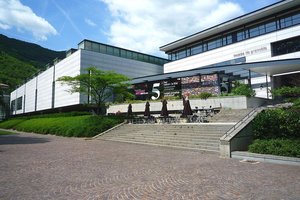 Musée de Grenoble |
그르노블 | 1 | Saint Nicolas dote les trois jeunes filles pauvres |
이 페이지에 있는 Daniel Sarrabat의 모든 원화는 1688년에 제작되었습니다. 가장 유명한 작품부터 차례대로 만나보세요.
연도를 선택하여 원작을 확인해 보세요.
Noah and His Children Giving Thanks to God for Having Escaped the Deluge (1688)
22세: Noah and His Children Giving Thanks to God for Having Escaped the Deluge은(는) 1688년 작품이며, Daniel Sarrabat은(는) 1666년에 태어났습니다.
저희 카탈로그에는 Daniel Sarrabat의 작품 2점이 있습니다.
대부분 Musée des Beaux-Arts de Lyon (리옹) 및 Musée de Grenoble (그르노블)에 소장되어 있습니다. 위의 박물관 목록에서 전체 목록을 확인하실 수 있습니다.
Born in 1666, Daniel Sarrabat entered a world where art and intellect were woven into the very fabric of his domestic life. He was raised within a family of artists and scholars, a lineage that seemed destined to shape his hands and his mind. This creative inheritance was not a solitary one; his brother, Isaac Sarrabat, would eventually find his own path as a popular engraver. The family's connection to the craft ran deep, reaching back to his uncle, Daniel Sarrabat I, who had been a skilled engraver and stonecutter.
The boy's early years were spent absorbing the traditions of his kin, yet his talent required the guidance of masters to truly flourish. He sought out the instruction of Bon Boullogne, a teacher who would help refine his developing eye and technique. Through this apprenticeship, the foundations of his skill were laid, preparing him for the rigorous path that lay ahead. His training was not merely a matter of technique, but a preparation for a life spent translating history and emotion onto canvas.
The promise of his talent became undeniable when he secured the prestigious Prix de Rome in 1688. This victory opened the gates to Italy, allowing him to immerse himself in the classical traditions that would shape his hand. He arrived in Rome to study at the French Academy, a period of intense observation and growth that would define his early years as a painter.
His time in the Eternal City was marked by significant achievement. In 1690, he demonstrated his command of composition and narrative by winning first prize in Rome. This honor was earned through his painting of "Noah and his family out of the ark," a work that showcased his ability to handle complex biblical scenes. His presence in Rome lasted from about 1685 until 1694, a long sojourn that allowed him to absorb the light and form of the Italian masters before he eventually returned to France.
After his time in Rome, Sarrabat settled in Lyon in 1695, making the city the foundation of his professional life. He did not merely exist within the local scene but became a central figure in its artistic landscape. His career reached its peak between 1716 and 1732, a period when his hand was sought after for various commissions. He moved through the city's social circles, working as both a history artist and a portraitist, capturing the likenesses of his contemporaries while also tackling grander, more complex narratives.
In his approach to the canvas, Sarrabat remained steadfast in his devotion to the classical tradition. While the tastes of the era began to shift toward the lighter, more decorative impulses of the Rococo, he chose to follow the artistic ideal of Nicolas Poussin. This commitment to a more structured and rational style defined his output. His works sought to uphold the dignity of history painting, maintaining a sense of order and classical poise that stood apart from the more whimsical trends emerging in the French court.
