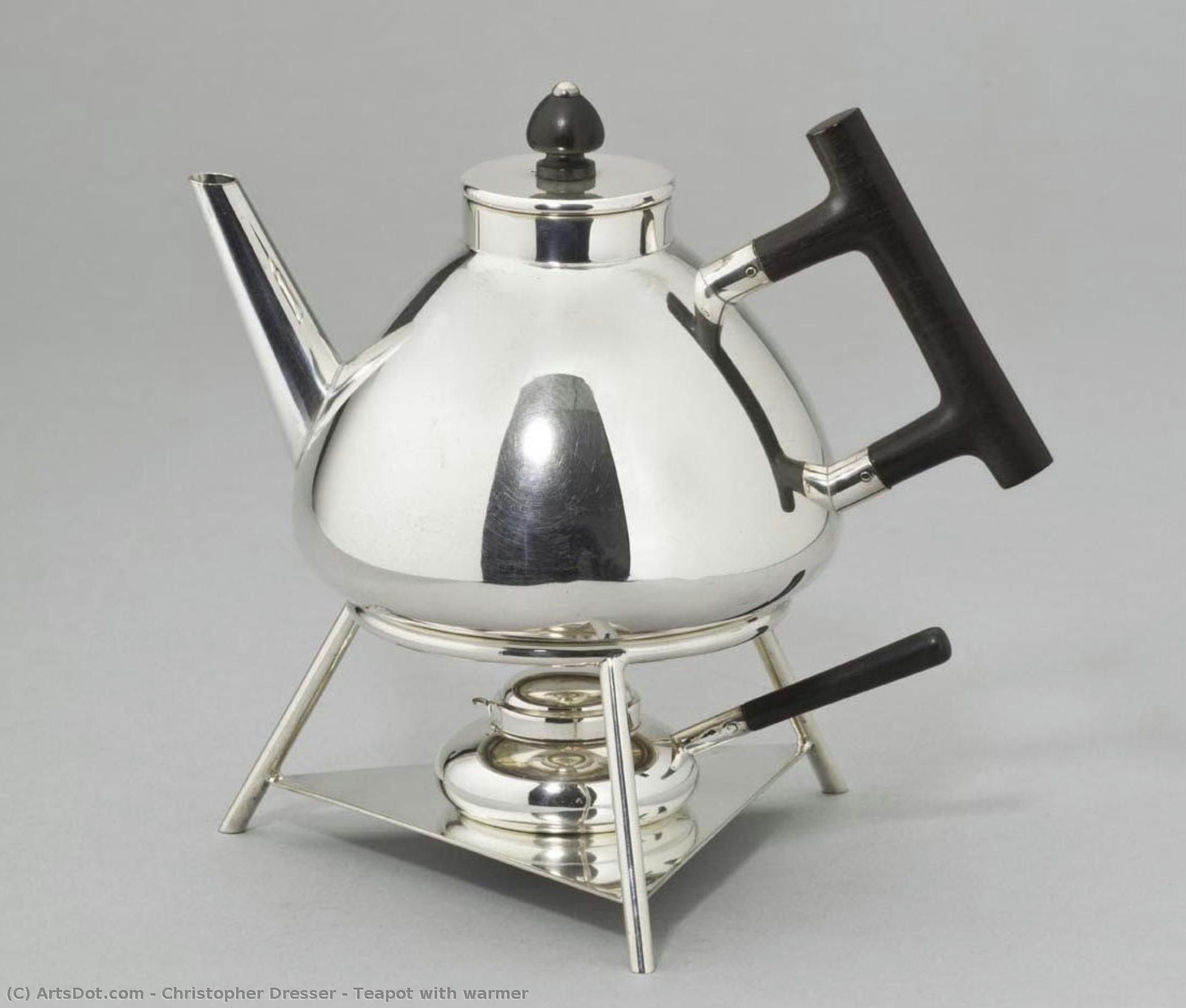
Christopher Dresser: The Father of Industrial Design
Christopher Dresser (1834–1904) stands as a monumental figure in Victorian design, recognized today as arguably the first industrial designer and a pivotal contributor to both the Aesthetic Movement and Anglo-Japanese style—influences that continue to resonate across artistic disciplines. Born in Glasgow, Scotland, Dresser’s early life was marked by an interest in botany and natural sciences, shaping his worldview and informing his aesthetic sensibilities. This fascination would become central to his groundbreaking approach to design, prioritizing functionality alongside beauty – a radical departure from prevailing Victorian tastes dominated by ornate decoration.
- Early Career & Influences: Dresser began his artistic journey as a decorative painter and designer of wallpaper, establishing himself in London’s burgeoning art scene. He was profoundly impacted by Japanese art and craftsmanship during his travels to Japan in 1870, absorbing the principles of asymmetry, simplicity, and natural materials—elements that would become hallmarks of the Anglo-Japanese style.
- The Aesthetic Movement & Design Reform: Dresser championed the Aesthetic Movement, advocating for a rejection of academic conventions and embracing artistic freedom. He argued passionately for “design reform,” asserting that art should serve practical purposes while elevating human experience. This conviction fueled his tireless pursuit of innovation in various mediums.
A Diverse Artistic Output: Ceramics, Glassware & Furniture
Dresser’s creative output spanned an astonishing range of disciplines—
ceramics, glassware, furniture design, textiles, and silver plating. He meticulously studied the techniques of artisans from around the globe, incorporating elements of Japanese craftsmanship into his creations. His
ceramics, particularly the
Jardinière – a celebrated piece housed in
The Baltimore Museum of Art – exemplify his masterful blending of form and function. This vase showcases Dresser’s ability to transform natural materials like stoneware into elegant sculptural objects. Similarly, his glassware designs prioritized clarity and simplicity, reflecting the influence of Japanese aesthetics.
- Notable Projects: Among Dresser's most significant achievements were collaborations with renowned manufacturers like Josiah Wedgwood & Sons, where he spearheaded transformative innovations in ceramic production. His furniture designs embraced minimalist silhouettes combined with natural textures—a stylistic hallmark of the Anglo-Japanese aesthetic.
The Anglo-Japanese Style: A Synthesis of Tradition and Innovation
Dresser’s embrace of Japanese aesthetics wasn't merely an admiration for exotic beauty; it represented a deliberate effort to reimagine Western design principles. He believed that studying Japanese craftsmanship could inspire new approaches to artistic expression, prioritizing natural materials, understated ornamentation, and harmonious proportions. This fusion of Eastern and Western traditions resulted in a distinctive style characterized by refined elegance and intellectual depth—a style that continues to captivate designers and artists today.
Legacy & Historical Significance
Christopher Dresser’s impact on the history of design is undeniable. He fundamentally challenged Victorian artistic conventions, advocating for a more rational and aesthetically informed approach to craftsmanship. His pioneering spirit paved the way for the emergence of
industrial design as a recognized field, establishing Dresser as a visionary ahead of his time. Today, his work remains celebrated for its enduring beauty and its profound contribution to shaping the visual culture of the late
nineteenth century—a testament to the transformative power of artistic innovation.