

1


11월 2026 업데이트 · 인기 점수 기준 순위 (각 작품의 검색, 방문 및 주문 수) · 49점의 Charles Brooking 작품 (당사 카탈로그 기준)
요약하자면
Shipping in a Rough Sea (1741)은(는) Charles Brooking의 작품 중 가장 많은 시선을 사로잡는 회화이며, 원작은 웨이크필드에 위치한 Nostell Priory에 소장되어 있습니다. 그다음 시선은 A Flagship before the Wind with other Vessels (1744)와 A Two-Decker on Fire at Night off a Fort (1740)로 향합니다. 우리 카탈로그에 수록된 Charles Brooking의 작품 49점 중, 가장 유명한 49점을 소개합니다. 각 작품은 제작 연도, 소장 박물관, 그리고 시대를 초월해 사랑받는 이유와 함께 독창적인 원작으로 제시됩니다.


 An English Vice-Admiral of the Red and his Squadron at Sea1754 · 국립 해양 박물관
12
 An East Indiaman in a Fresh Breeze1755 · 국립 해양 박물관
13
 Ships in a Light Breeze1754 · 국립 해양 박물관
14
 Commodore Walker's Action: the Privateer 'Boscawen' Engaging a Fleet of French Ships, 23 May 17451750 · 국립 해양 박물관
15
 Shipping Becalmed in the Solent1750 · 국립 해양 박물관
16
 An English Squadron Going to Windward1750 · 국립 해양 박물관
17
 A Dutch Beach Scene with a Man-of-War in the Distance1749 · 국립 해양 박물관
18
 The Capture of the 'Marquise d'Antin' and 'Louis Erasme' by the English Privateers 'Duke' and 'Prince Frederick', 10 July 17451745 · 국립 해양 박물관
19
 The Capture of the 'Glorioso', 8 October 17471747 · 국립 해양 박물관
20
 Men of War in Harbour1750 · 워커 아트 갤러리
21
 The Capture of the "Marquis d'Antin" and the "Louis Erasme"1750 · 예일 영국 미술관
22
 The Coast near Scheveningen with Fishing Pinks on the Shore1755 · 예일 영국 미술관
23
 English Ships Under Sail in a Very Light Breeze1752 · 예일 영국 미술관
24
 A two-decker and a frigate running Into the Thames off Gravesend1756 · 국립 해양 박물관
25
 English Ships Running before a Gale1759 · 예일 영국 미술관
26
 A Smack Under Sail in a Light Breeze in a River1756 · 예일 영국 미술관
27
 A Merchantman and a Royal Yacht Beating to Windward off Dover국립 해양 박물관
28
 Shipping in Light Airs in the Thames Estuary국립 해양 박물관
29
 A cutter close-hauled on the port tack국립 해양 박물관
30
 A bomb-ketch, a two-decker and other shipping in a fresh breeze국립 해양 박물관
31
 Fishing Smacks Becalmed near a Shore
32
 Two Men-of-war in a Gale
33
 The flagship 'Admiral of the Blue' firing a gun and another two-decker getting underway at dawn
34
 Frigates shortening sails offshore
35
 A Beach Scene near Scheveningen국립 해양 박물관
36
 East Indiamen in a Gale국립 해양 박물관
37
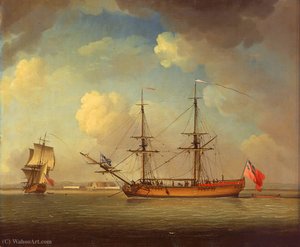 A naval snow국립 해양 박물관
38
 Ship wrecked on a rocky coast예일 영국 미술관
39
 Shipping in a Calm
40
 Cutter Close Hauled in a Fresh Breeze, with Other Shipping예일 영국 미술관
41
 A Cutter in a Strong Breeze예일 영국 미술관
42
 A Dutch Beach Scene with a Man-of-War in the DistanceFondation Custodia
43
 A Royal Yacht Firing a Salute
44
 The Capture of a French Ship by Royal Family Privateers
45
 Ship on fire at night예일 영국 미술관
46
 Shipping in the English Channel예일 영국 미술관
47
 An English Flagship Under Easy Sail in a Moderate Breeze예일 영국 미술관
48
 Fishing Boats in a Calm Sea예일 영국 미술관
49
 A Lugger and a Smack in Light Airs예일 영국 미술관
이 오리지널 작품들에서 가장 자주 등장하는 네 가지 주제와 그 정수를 보여주는 대표작들.
이 페이지에 있는 작품을 가장 많이 소장하고 있는 7개의 미술관
| 소장 미술관 | 도시 | Charles Brooking의 작품 | 이 목록의 작품들 |
|---|---|---|---|
 국립 해양 박물관 |
런던 | 21 | Greenland Fishery: English Whalers in the Ice, A Galley with Other Vessels Wrecked on a Rocky Coast, Royal Yachts in a Storm |
 예일 영국 미술관 |
뉴헤이븐 | 14 | A Two-Decker on Fire at Night off a Fort, The Capture of the "Marquis d'Antin" and the "Louis Erasme", The Coast near Scheveningen with Fishing Pinks on the Shore |
 Saltram House |
플리머스 | 2 | British Warship firing Salvoes in a Calm with Other Boats, Schooner in a Storm |
 Nostell Priory |
웨이크필드 | 1 | Shipping in a Rough Sea |
 Anglesey Abbey |
1 | Fishing Boats on a Calm Sea | |
 워커 아트 갤러리 |
리버풀 | 1 | Men of War in Harbour |
 Fondation Custodia |
Paris | 1 | A Dutch Beach Scene with a Man-of-War in the Distance |
20년의 긴 여정, 1740년부터 1759년까지: Charles Brooking의 가장 유명한 원작들을 연도별로 만나보세요.
연도를 선택하여 원작을 확인해 보세요.


1750의 더 많은 작품
 #8 A Galley with Other Vessels Wrecked on a Rocky Coast
 #9 Royal Yachts in a Storm
 #10 East Indiamen Driven Ashore in a Storm
#14 Commodore Walker's Action: the Privateer 'Boscawen' Engaging a Fleet of French Ships, 23 May 1745
#15 Shipping Becalmed in the Solent
#16 An English Squadron Going to Windward
#20 Men of War in Harbour


1756의 더 많은 작품

Shipping in a Rough Sea (1741), Nostell Priory, 웨이크필드. 다음은 A Flagship before the Wind with other Vessels (1744)와 A Two-Decker on Fire at Night off a Fort (1740)입니다.
18세: Shipping in a Rough Sea은(는) 1741년 작품이며, Charles Brooking은(는) 1723년에 태어났습니다.
Shipping in a Rough Sea, A Flagship before the Wind with other Vessels, A Two-Decker on Fire at Night off a Fort, Fishing Boats on a Calm Sea, British Warship firing Salvoes in a Calm with Other Boats, Schooner in a Storm, Greenland Fishery: English Whalers in the Ice, A Galley with Other Vessels Wrecked on a Rocky Coast, Royal Yachts in a Storm 및 East Indiamen Driven Ashore in a Storm. 위 순위는 각 작품의 제작 연도와 소장 박물관을 나타냅니다.
저희 카탈로그에는 1740년부터 1759년 사이의 Charles Brooking 작가의 작품 49점이 수록되어 있습니다.
대부분 국립 해양 박물관 (런던), 예일 영국 미술관 (뉴헤이븐) 및 Saltram House (플리머스)에 소장되어 있습니다. 위의 박물관 목록에서 전체 목록을 확인하실 수 있습니다.
1750 동안: 이 페이지의 총 49점의 작품 중 9점이 해당 시기에 제작되었으며, 그중 Greenland Fishery: English Whalers in the Ice점입니다.
이 페이지에서 가장 오래된 작품은 A Two-Decker on Fire at Night off a Fort (1740)이며, 가장 최근 작품은 English Ships Running before a Gale (1759)입니다.
이 페이지의 49점의 작품에 걸쳐 있는 Beach (4), Boats (4) 및 Scenes (2)
Greenland Fishery: English Whalers in the Ice, A Galley with Other Vessels Wrecked on a Rocky Coast 및 Royal Yachts in a Storm: 국립 해양 박물관, 런던은(는) 이 페이지에 있는 작품 중 21점을 소장하고 있습니다.
In the mid-18th century, as Britain’s maritime influence began to surge across the globe, a new kind of visual language was emerging on canvas—one that moved away from static academicism toward a more visceral, breathing realism. At the heart of this transition stood Charles Brooking (c. 1723–1759), an artist whose brief but luminous career helped define the dawn of naval Romanticism. To look upon a Brooking seascape is to feel the salt spray and the tension of the wind; his work does not merely document ships, but captures the very soul of the ocean’s unpredictable temperament.
Brooking’s artistic DNA was deeply rooted in the traditions of craftsmanship and meticulous observation. Born in London, he was the son of Charles Brooking Sr., a skilled painter and decorator associated with the prestigious Greenwich Hospital. This early exposure to the maritime atmosphere of Greenwich provided more than just a livelihood; it offered a masterclass in topographical accuracy. Through his apprenticeship under his father, Brooking developed an exacting eye for the structural complexities of naval vessels, a skill that would later allow him to imbulate his paintings with a profound sense of authenticity that resonated with both sailors and connoisseurs alike.
The trajectory of Brooking’s career was irrevocably altered in 1754 by a landmark commission from the Foundling Hospital in London. Tasked with creating “A Flagship Before the Wind Under Easy Sail,” Brooking moved beyond the realm of mere maritime illustration into the territory of monumental fine art. This undertaking, supported by Treasurer Taylor White, required him to engage deeply with the contemporary masters of his era. He drew inspiration from the works of Peter Monamy, whose depictions of fleets provided a blueprint for capturing movement, yet Brooking infused these scenes with a burgeoning emotional intensity that hinted at the Romantic movement to come.
His development was further enriched by his relationship with artists like Dominic Serres, who acknowledged Brooking’s significant influence on his own evolving style. This period of his life was marked by an increasing ability to balance the technical rigors of ship portraiture with the atmospheric drama of the elements. Whether depicting a cutter caught in a strong breeze or the terrifying majesty of a shipwreck against a rocky coast, Brooking possessed a unique talent for using light and shadow to suggest the immense, often overwhelming power of the sea.
Though his life was tragically short, ending in 1759, the impact of Charles Brooking’s work echoed through the subsequent generations of British marine painters. He bridged the gap between the documentary precision of the early 18th century and the sweeping, emotive landscapes of the later Romantic era. His ability to render the textures of canvas, wood, and churning water with such fidelity ensured that his paintings served as both historical records and emotional experiences.
Today, Brooking’s significance is preserved in the collections of great institutions like the Tate, where his works continue to captivate viewers with their dramatic tension. His legacy remains defined by several key artistic contributions:
In the annals of art history, Charles Brooking remains a pivotal figure—a painter who looked upon the sea not just as a subject for study, but as a living, breathing protagonist in the grand drama of human endeavor.

