


1


11월 2026 업데이트 · 인기 점수 기준 순위 (각 작품의 검색, 방문 및 주문 수) · 5점의 Benet Mercadé 작품 (당사 카탈로그 기준)
요약하자면
갤러리가 선정한 Benet Mercadé의 가장 유명한 작품은 Church of Cervara (Papal States) (1864)이며, 원작은 바르셀로나의 카탈루냐 국립 미술관에 전시되어 있습니다. Portrait of Teresita Wearing Blue Bows (1872)와 Portrait of Senyora Anita (1874)가 더해져 누구나 한눈에 알아볼 수 있는 완벽한 트리오를 완성합니다. Benet Mercadé의 작품 5점 중, 갤러리는 가장 유명한 5점을 아래와 같이 소개합니다. 각 작품은 제작 연도, 소장 미술관 및 작품의 특징을 포함한 독창적인 원작입니다.
이 페이지에 있는 작품을 가장 많이 소장하고 있는 2개의 미술관
| 소장 미술관 | 도시 | Benet Mercadé의 작품 | 이 목록의 작품들 |
|---|---|---|---|
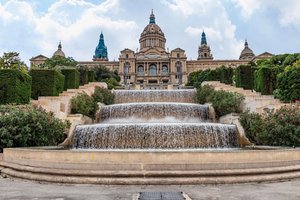 카탈루냐 국립 미술관 |
바르셀로나 | 4 | Church of Cervara (Papal States), Portrait of Teresita Wearing Blue Bows, Portrait of Senyora Anita |
 Biblioteca Museu Víctor Balaguer |
빌라데칸스 | 1 | Teresita |
그 시대를 정의하는 오리지널 작품을 만나보려면 연대를 선택하세요.


Church of Cervara (Papal States) (1864), 카탈루냐 국립 미술관, 바르셀로나. 다음은 Portrait of Teresita Wearing Blue Bows (1872)와 Portrait of Senyora Anita (1874)입니다.
43세: Church of Cervara (Papal States)은(는) 1864년 작품이며, Benet Mercadé은(는) 1821년에 태어났습니다.
저희 카탈로그에는 1864년부터 1897년 사이의 Benet Mercadé 작가의 작품 5점이 수록되어 있습니다.
대부분 카탈루냐 국립 미술관 (바르셀로나) 및 Biblioteca Museu Víctor Balaguer (빌라데칸스)에 소장되어 있습니다. 위의 박물관 목록에서 전체 목록을 확인하실 수 있습니다.
1870s 동안: 이 페이지의 총 5점의 작품 중 3점이 해당 시기에 제작되었으며, 그중 Portrait of Teresita Wearing Blue Bows점입니다.
이 페이지에서 가장 오래된 작품은 Church of Cervara (Papal States) (1864)이며, 가장 최근 작품은 Teresita (1897)입니다.
Church of Cervara (Papal States), Portrait of Teresita Wearing Blue Bows 및 Portrait of Senyora Anita: 카탈루냐 국립 미술관, 바르셀로나은(는) 이 페이지에 있는 작품 중 4점을 소장하고 있습니다.
In the quiet town of La Bisbal d'Empordà, a young boy watched his father apply gold leaf to ornaments, learning the delicate patience required of a gilder. This early exposure to the luster of metal and the precision of fine detail would later find its way into the brushstrokes of Benet Mercadé. His path was not one of immediate ease; in 1838, he arrived in Barcelona with little more than an ambition to learn. To sustain himself, he labored as a shoemaker's assistant, a humble existence that stood in stark contrast to the lofty halls of the Escola de la Llotja where he began his formal studies. During these formative years, he balanced the grit of manual labor with the technical experimentation of daguerreotypes and ornamental painting.
As his hands grew accustomed to the weight of the brush, his gaze moved toward Madrid. At the Escuela de Bellas Artes de San Fernando, he sought the guidance of Carlos Luis de Ribera, a teacher who helped refine his burgeoning talent. This period of academic rigor provided the foundation for a career that would eventually span the great art capitals of Europe. He was a man of movement, drifting from the classrooms of Spain to the streets of Paris and finally to the storied atmosphere of Rome. In the Italian capital, he found himself among a circle of Spanish painters and intellectuals, often gathering at the Antico Caffè Greco to discuss the changing tides of art.
The evolution of his style mirrored the shifting sensibilities of the nineteenth century. His early works bore the quiet, structured influence of the Nazarene movement, characterized by a focus on religious themes and clear, deliberate lines. This spiritual gravity is evident in his depictions of sacred figures, where a certain solemnity prevails. However, as he matured, the rigid boundaries of his earlier training began to soften into the more direct observations of Realism. He turned his attention toward historical scenes and portraits that sought to capture the weight of truth rather than idealized perfection.
His ability to render history was recognized on the grandest stages. In 1858, he presented works concerning Don Quixote and Christopher Columbus at the National Exhibition of Fine Arts, earning an honorable mention for his depiction of the explorer at La Rábida. The pinnacle of his international recognition arrived in 1866, when his painting, Traslación de San Francisco de Asís, earned him a Grand Prize in Paris. This work, which focused on the passing of a saint, demonstrated a mastery of composition that would later earn him a first-class medal in Madrid. Even as his eyesight began to fail him, forcing an eventual retreat from the canvas, he remained a pillar of the academic community, holding a professorship at the Escola de Bellas Artes de San Jorge.
Though his later years were marked by the physical struggle of declining vision, the impact of his work remained etched in the institutions of Catalonia. His paintings found homes in prestigious collections, including the Museu Nacional d’Art de Catalunya and the Museo Del Prado. He possessed a particular gift for portraits that felt alive with personality, such as his Retrato vermell de la señora Annita, where a restrained use of color allowed the sitter's character to emerge from the shadows.
Benet Mercadé left behind more than just canvases; he left a record of an era defined by the transition from romanticized tradition to the starker truths of modern life. His journey from a shoemaker's assistant in Barcelona to a celebrated professor and prize-winner in Paris remains a story of persistence. Even today, the streets of his birthplace bear his name, ensuring that the man who once captured the light of history is not forgotten by the land that raised him.

